



Antique Campana Porcelain Urns
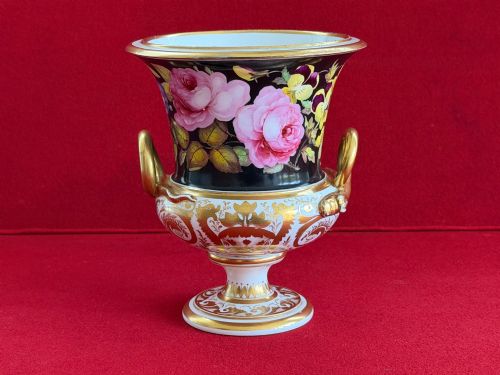
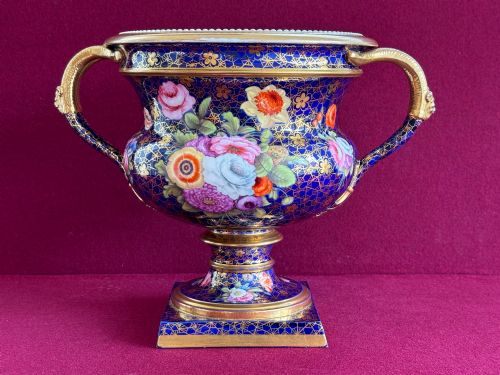
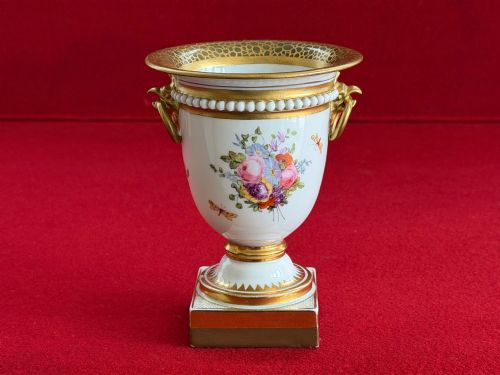
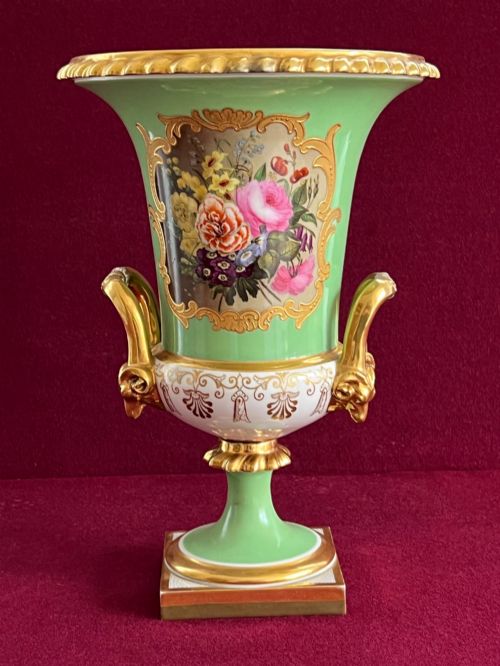
These antique campana porcelain urns bring classical form and hand-painted detail into a room, offering a distinct focal point for a mantelpiece.

Antique Campana Porcelain Urns
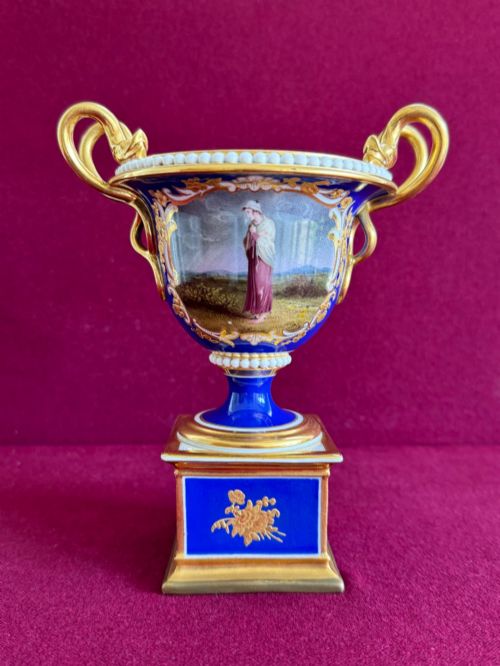
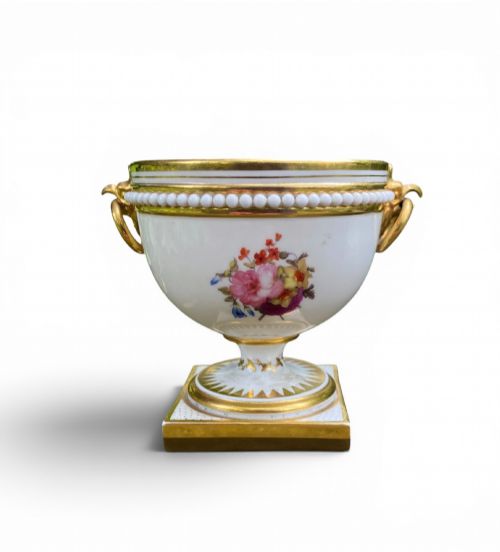
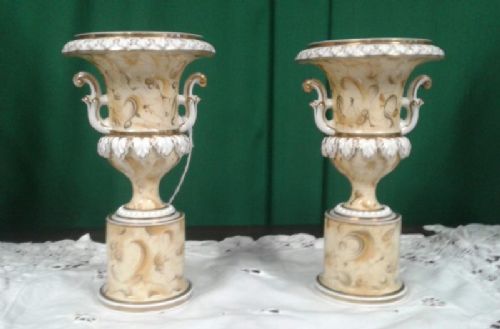
Antique campana porcelain urns take their goblet-like silhouette from classical pottery, designed with a flared rim, deep bowl and stepped pedestal base. On this page, buyers encounter decorative vases and urns originating from Georgian, Regency, Victorian and nineteenth century periods.
The selections span English and French production, featuring notable works by factories such as BFB Worcester, Flight, Barr and Barr, Coalport, Ridgeways, Samson and Wedgwood. Forms range from matched pairs with topographical or armorial decoration to single specimens modelled in hard-paste porcelain and jasperware.
How they were made
Manufacturers shaped hard-paste porcelain and stoneware into the characteristic campana profile before applying hand-painted polychrome enamel and intricate gilding with gold leaf. Certain factories incorporated applied white bas-reliefs, as seen in blue jasperware examples produced during the nineteenth century.
Makers such as those at Worcester employed skilled artists like Thomas Lowe to hand-paint topographical scenes directly onto the porcelain surface. The combination of high-temperature firing, detailed enamel work and raised gilding defined the production standards of the period.
Antique Campana Porcelain Urns Retail Price Guide 2026
Typical asking prices for campana porcelain urns among the pieces listed under this phrase on Sellingantiques today, from the lower quarter to the upper quarter. They describe what is for sale here now, not the wider market.
Listings feature 19th Century, Regency, Georgian and Victorian periods, utilising porcelain, gold leaf, enamel, gilt, gilding, jasperware, stoneware and hard-paste porcelain.
What varies in quality
The standard of an antique campana porcelain urn rests upon the precision of its hand-painted decoration and the crispness of its moulded details. Works featuring named topographical views or armorial crests by established houses demand greater attention than standard floral motifs.
Original matching pairs command particular interest from collectors due to the survival rate over two centuries. The application of gold leaf and the subtlety of the enamel palette dictate the refinement of each individual piece.
BFB Worcester·Flight Barr and Barr·Coalport·Ridgeways·Samson·Wedgwood
The Antique Campana Porcelain Urns Glossary
- Campana
- A bell-shaped vessel form derived from ancient Roman pottery, featuring an inverted bell bowl on a pedestal base. This silhouette defines the traditional urn shape seen across nineteenth century decorative arts.
- Jasperware
- A type of fine stoneware developed by Wedgwood, characterised by a vitrified unglazed body and contrasting applied white bas-reliefs. Blue variants are typical of nineteenth century production.
- Hard-paste porcelain
- A durable ceramic composition fired at high temperatures, composed of kaolin and petuntse. It provides a bright white body suitable for detailed enamel painting and gilding.
- Gilding
- The application of gold leaf or powdered gold onto the ceramic surface to highlight handles, rims and bases. This decorative technique is central to Regency and Victorian luxury wares.
- Armorial
- A design incorporating a coat of arms or heraldic family crest painted onto the body of the vessel. Such bespoke decoration indicates high-status commission work.
Antique Campana Porcelain Urns: Frequently Asked Questions
How do I date an antique porcelain urn?
Dating relies on identifying factory marks on the underside, combined with stylistic evidence from the Georgian, Regency or Victorian eras.
Hand-painted details, gilding styles and the specific formulation of the porcelain body also provide clear indications of the period of manufacture.
Where were these urns made?
These decorative urns were produced across renowned European ceramic centres, notably in England and France.
English factories in Worcester and Staffordshire operated alongside French porcelain houses to create these classical revival ornaments.
How should I display urns at home?
Antique urns suit placement on prominent flat surfaces such as console tables, mantels or within dedicated display cabinets.
Pairs look balanced when arranged symmetrically, while single larger vases function effectively as standalone sculptural objects.