

Gilded Porcelain Urn Pair
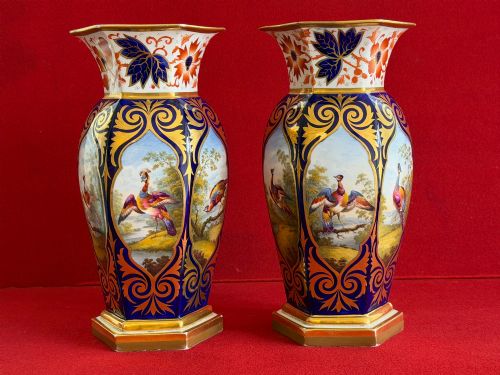
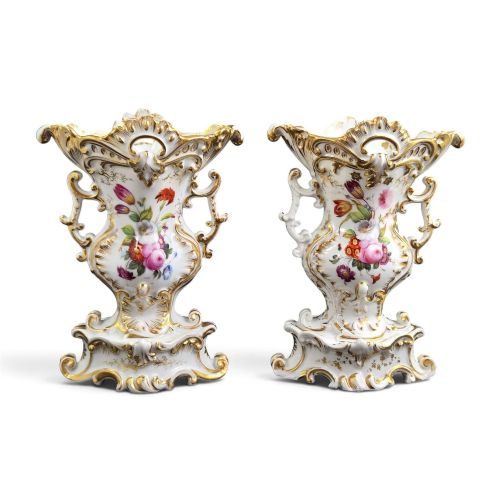
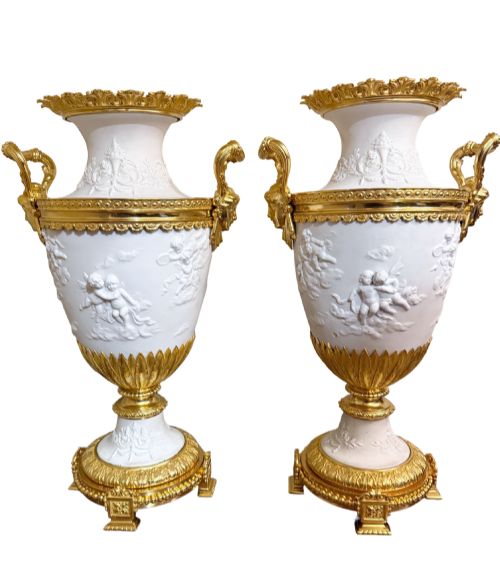
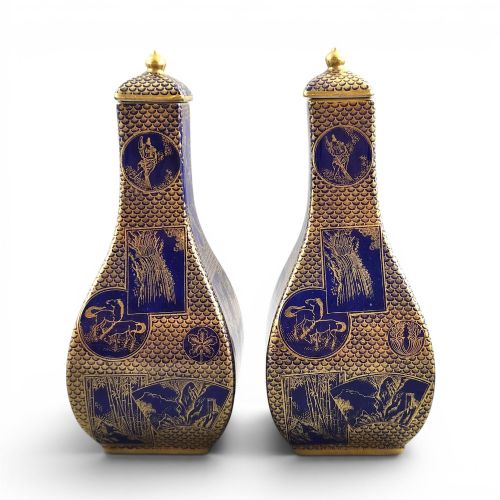
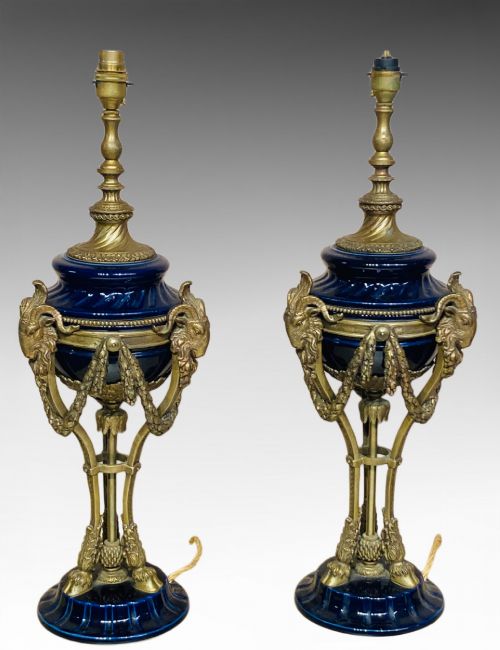
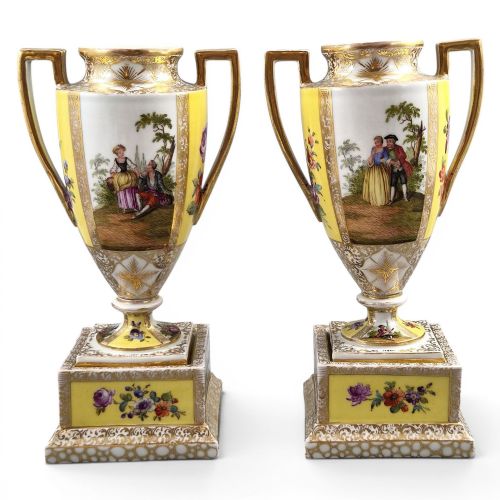
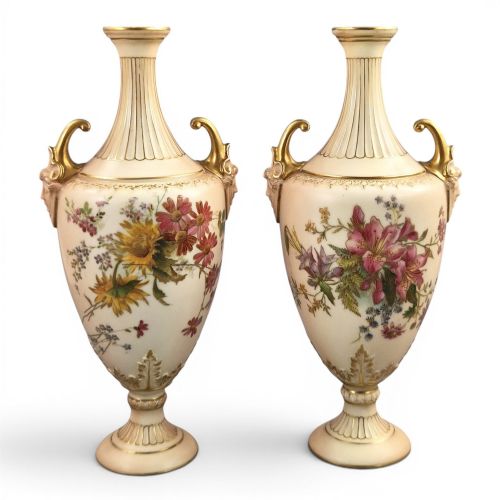
A gilded porcelain urn pair brings matched symmetry and rich metalwork into a room, offering classical form combined with painted detail.

Gilded Porcelain Urn Pair
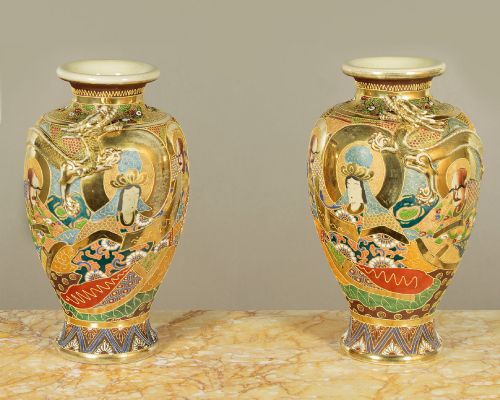
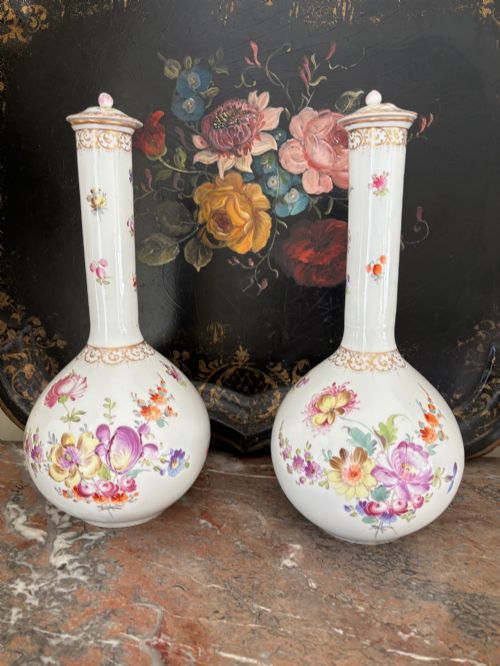
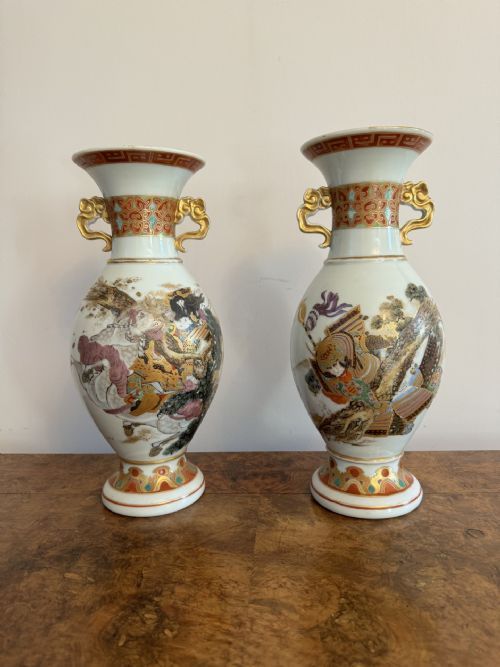
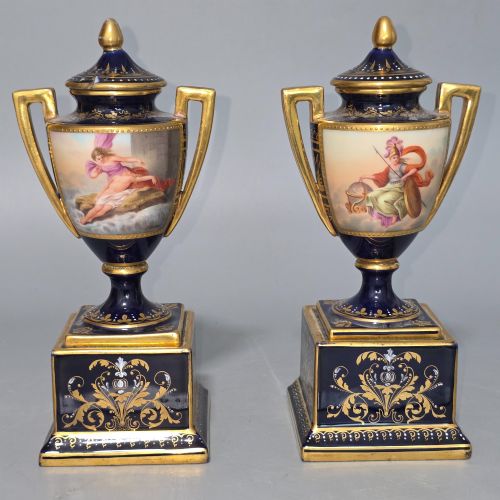
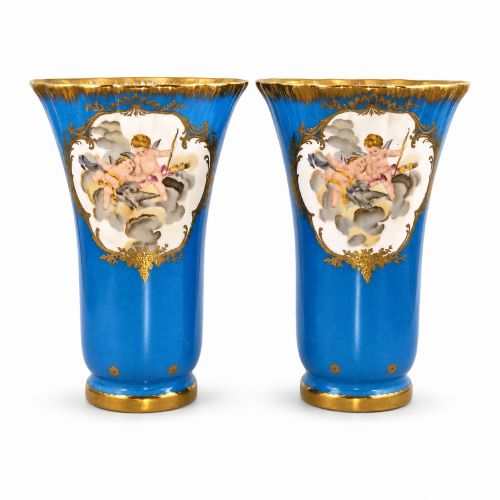
A gilded porcelain urn pair consists of matching decorative vessels shaped for display, often featuring handles, covers, or pedestal bases. When searching for a gilded porcelain urn pair, buyers encounter works ranging from Regency English porcelain to Japanese Satsuma and French Sevres style pieces.
The forms span from campana shapes and amphora vases to lidded urns and ice pails. Many examples incorporate hand-painted floral decoration, landscapes, or figural scenes framed by rich gold leaf accents.
Origins stretch across European factories such as Worcester, Vienna, and Paris, alongside East Asian traditions from the Meiji period. This combination of ceramic bodies and metallic gilding provides a strong visual centrepiece for sideboards and mantelpieces.
Materials and manufacture
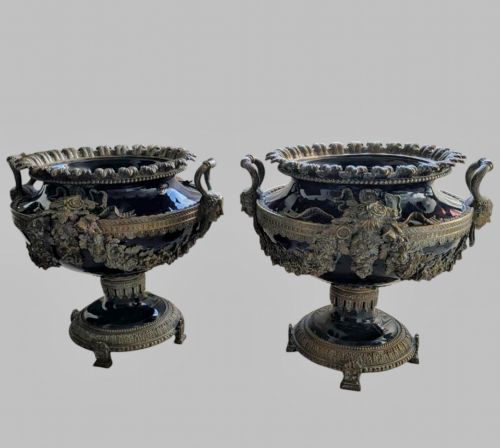
Makers shaped porcelain and earthenware bodies using throwing or moulding techniques before applying detailed hand-painted enamel designs. Artisans frequently integrated bronze mounts, ormolu, or wood bases to support larger vessel forms.
The finishing stage relied on gold leaf or liquid gilding applied to rims, handles, and borders, often fired to fuse the metal onto the ceramic glaze. Skilled painters also utilised cobalt blue ground, blush ivory, and mazarine blue glazes beneath or beside the gilt highlights.
Several Satsuma vases proudly bear intricate mon symbols, reminding us that even antique flower holders had family pride.
Assessing quality in matched vessels
Quality rests upon the precision of the hand-painted decoration and the crispness of the porcelain moulding. Finely executed floral scenes, signed artistic panels, and intricate gilding separate standard production pieces from exhibition quality works.
The uniformity of the pair dictates its success, ensuring that matching vessels share identical glaze tones, dimensions, and weight. Well-preserved original mounts, covers, and maker signatures further elevate the standing of the work.
Flight Barr and Barr·Jacob Petit·Sitzendorf·Spode·Mason·Samson Paris·Helena Wolfsohn·Chamberlain Worcester·Royal Worcester·Manpei·Kato Sanhei·Carlton Ware·Tagawa·Hododa
The Gilded Porcelain Urn Pair Glossary
- Campana
- A bell-shaped vessel with a flaring rim and a footed base, frequently utilised for classical urns. This silhouette forms the basis of many nineteenth-century decorative designs.
- Ormolu
- Gilded bronze applied as mounts, handles, or feet to ceramic bodies. It provides structural support and decorative contrast to the porcelain.
- Imari
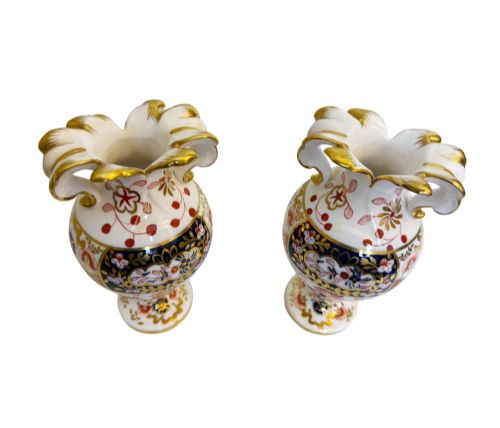
- A style of Japanese ceramic decoration featuring iron red, cobalt blue, and gold over a white ground. These wares were widely exported and imitated by European factories.
- Satsuma
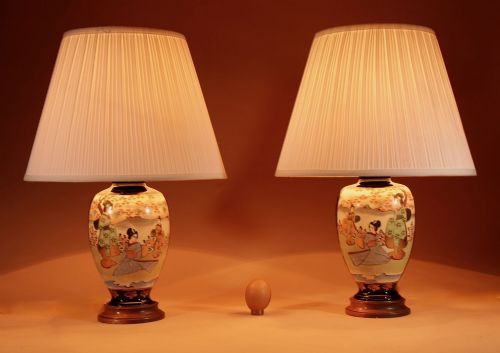
- Earthenware pottery from Japan characterised by a crackled ivory glaze and detailed polychrome enamel designs enriched with gold. Many pieces bear artist signatures or clan mon marks.
- Amphora
- A two-handled jar with a narrow neck, modelled after ancient Greek and Roman storage vessels. These forms often appear in nineteenth-century neoclassical revival pieces.
Gilded Porcelain Urn Pair: Frequently Asked Questions
How do I style a matched pair?
Matched urns work best when placed symmetrically on either side of a fireplace, mirror, or large piece of furniture. Their balanced proportions create a formal anchor point for a room.
Ensure the display surface is sturdy enough to support ceramic and metal objects. Keeping them away from direct heat sources helps protect the glaze and gilding over time.
How do I identify Japanese Satsuma wares?
Satsuma pieces feature a distinctive fine crackle glaze across an earthenware body, decorated with detailed enamel paintings and heavy gold highlights. Many examples include Japanese characters, artist names, or family mon symbols on the base.
They emerged strongly during the Meiji period, reflecting both traditional motifs and items created specifically for export to Western markets.
What is the difference between porcelain and earthenware?
Porcelain is fired at extremely high temperatures, resulting in a dense, non-porous white body that often rings when struck. Earthenware, used in items like Satsuma, is fired at lower temperatures and is more opaque and porous beneath the glaze.
Both materials accept painted enamels and gilding, but porcelain typically allows for sharper moulded details and finer walls.