


French Decorative Mantel Urns
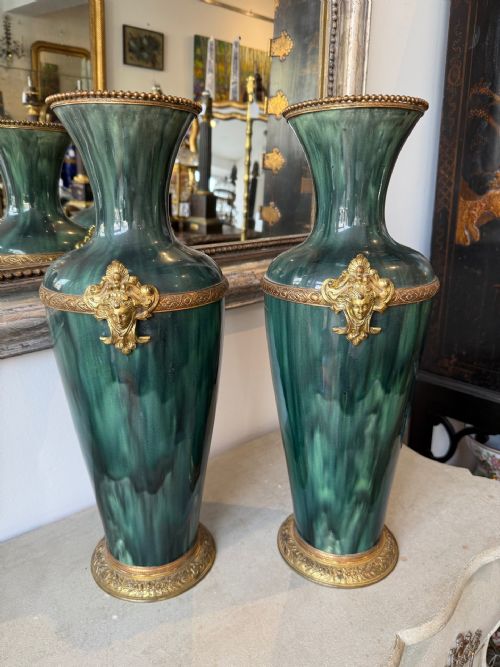
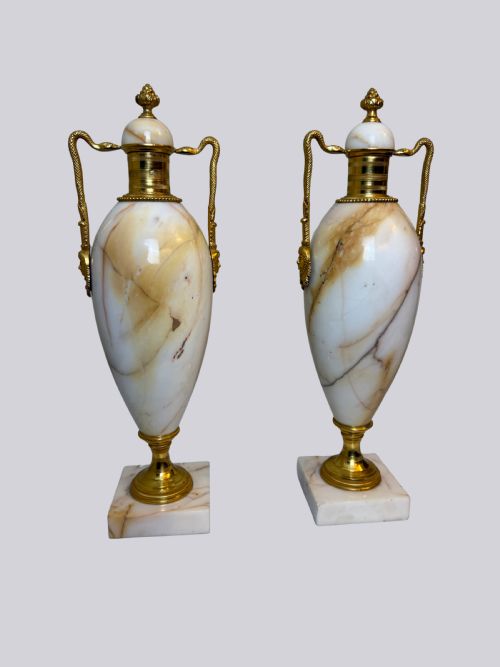
French decorative mantel urns bring formal nineteenth-century interior display to life through classical form, gilt bronze, and rich marble.
French Decorative Mantel Urns
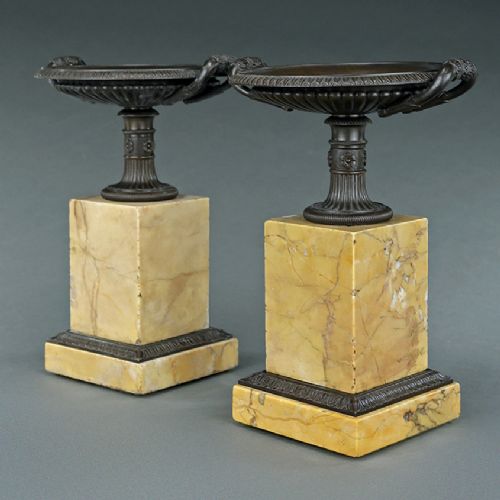
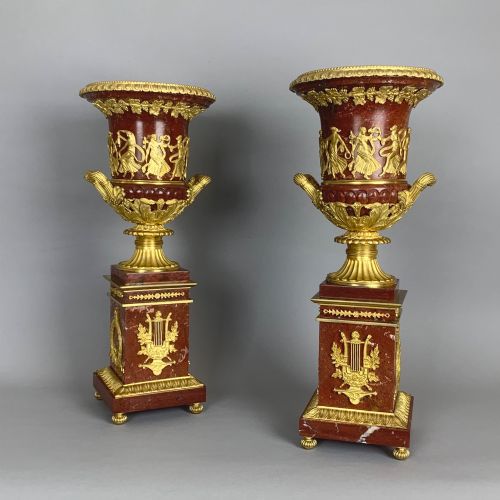
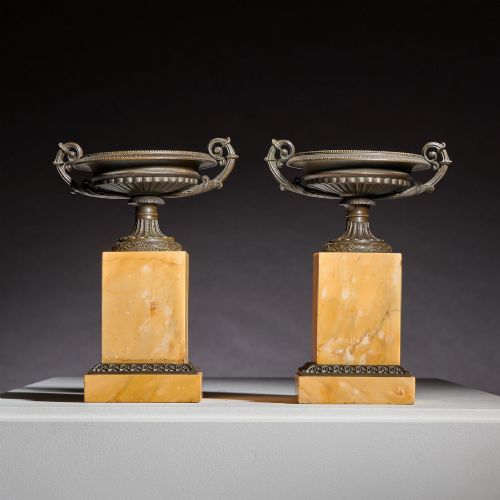
French decorative mantel urns encompass ornamental vessels, campana shapes, cassolettes, and tazzas designed to sit upon fireplace mantelpieces or console tables. They emerge principally from the nineteenth century, drawing upon French Empire, Neoclassical, and Louis XVI revival styles.
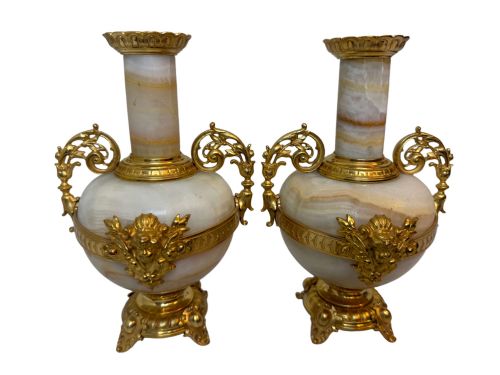
The selection on this page relies heavily on matched pairs created to flank a central mantel clock as part of a garniture set. These objects take many forms, incorporating porcelain bodies, cast metals, and stone bases to create symmetry and visual weight in a room.
How they were made
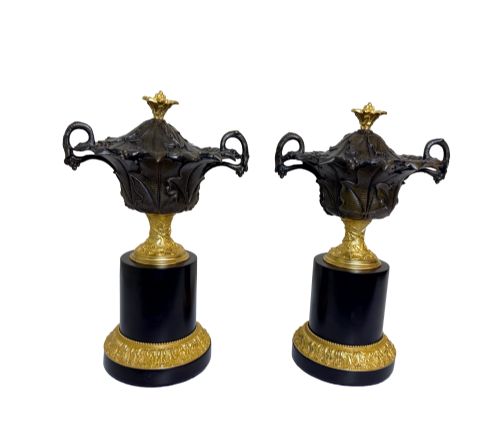
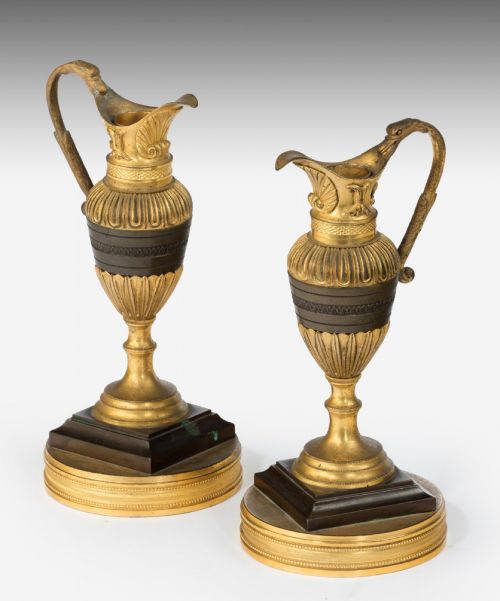
Foundry work combined cast bronze, ormolu, and spelter, frequently enhanced with chased floral ornamentation and applied masks. Artisans mounted these metal bodies onto turning-lathe shaped bases of white marble, Siena marble, green marble, or white onyx.
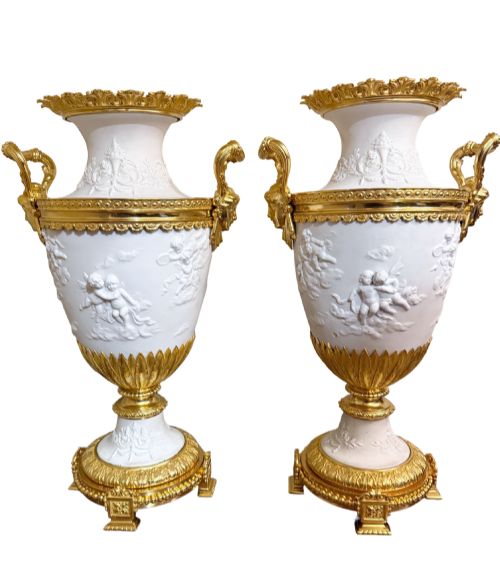
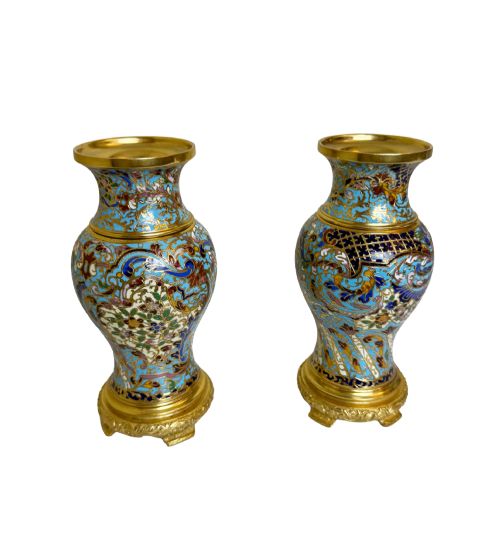
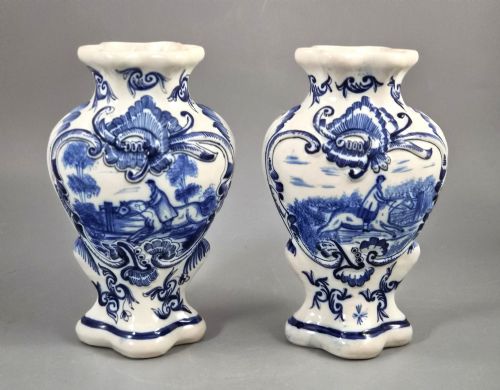
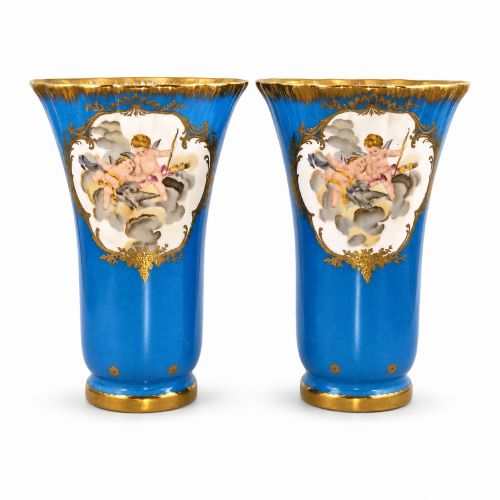
Ceramic elements utilise porcelain bodies from factories such as Sèvres, Old Paris, and Berlin, often decorated with enamel and gilt accents. Champlevé enamel and hand-painted scenes frequently add colour and texture to the metal and porcelain surfaces.
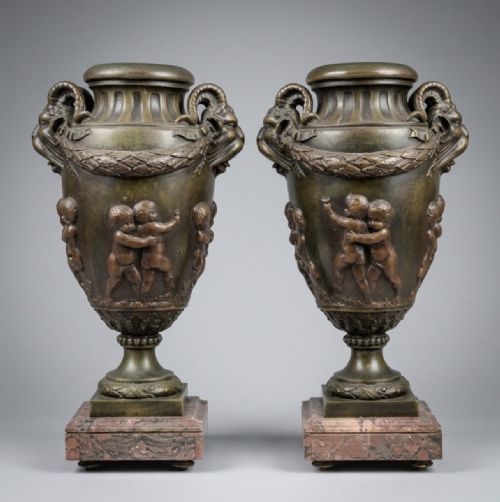
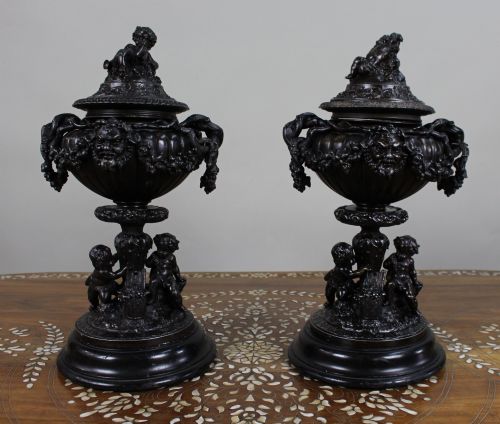
Bacchic masks and leaping putti peer out from nineteenth-century metal urns, bringing an enduring theatrical cheer to the mantelpiece.
What varies in quality
The precision of the metal casting and the depth of the subsequent chasing dictate the refinement of the piece. Crisp details in foliate mounts, figures, and handles separate superior foundry work from softer, mass-produced castings.
Material selection marks the distinction between standard and exceptional examples, particularly in the density and figuring of the marble bases and the hand-painting quality on porcelain bodies. Original fire-gilding retains a warm, durable lustre that lesser plating methods fail to match.
Fourmaintraux-Courquin·Robert T Lallement·KPM Berlin·Samson Paris
The French Decorative Mantel Urns Glossary
- Ormolu
- Gilded bronze produced by applying a mercury-gilding amalgam to cast bronze. This technique creates a rich golden surface found on nineteenth-century mounts and decorative objects.
- Cassolette
- A dual-purpose decorative vessel featuring a reversible lid that transforms from an urn to a burner or vase. These pieces usually incorporate marble and gilt bronze mounts.
- Garniture set
- A matched group of three or more ornamental objects designed for display together on a mantelpiece. A central clock flanked by two matching urns is the standard configuration.
- Campana urn
- A bell-shaped vessel with a flaring rim and a pedestal foot, originating from classical antiquity. Nineteenth-century French makers revived this silhouette in bronze, spelter, and porcelain.
- Tazza
- A shallow cup or bowl mounted on a stem and a foot, displayed for ornamental effect. Antique examples frequently utilise bronze, marble, and classical relief decoration.
French Decorative Mantel Urns: Frequently Asked Questions
What is a garniture set?
A garniture set consists of a central mantel clock accompanied by two matching side pieces, such as urns or vases. They were designed to create a balanced, symmetrical arrangement across a fireplace mantel.
Twentieth-century and nineteenth-century interiors utilised these sets to anchor the decorative scheme of a formal room.
Where were these urns displayed?
These decorative urns sat principally upon fireplace mantelpieces, often accompanied by matching clocks or candelabra. They also adorned large console tables, chests of drawers, and architectural ledges within formal reception rooms.
Their balanced proportions made them ideal focal points for symmetrical interior display.
How do I identify Louis XVI revival style?
Louis XVI revival pieces draw on eighteenth-century classical restraint, featuring straight lines, architectural symmetry, and motifs such as urns, swags, and fluted columns. They contrast with the more exuberant curves of earlier Rococo designs.
Makers utilised gilt bronze mounts and white marble to emulate the luxury of the royal French court.
What is the difference between bronze and spelter?
Bronze is a durable copper and tin alloy that accepts fine detail and crisp chasing during casting. Spelter is a softer, zinc-based metal alloy that was frequently utilised as an economical alternative for nineteenth-century decorative urns.
Objects cast in bronze generally exhibit heavier weight and sharper surface definition than their spelter counterparts.