



Nineteenth Century Bronze Urns
Nineteenth century bronze urns bring classical elegance and decorative ambition to interiors through sculptural metalwork and ornamental mounts.
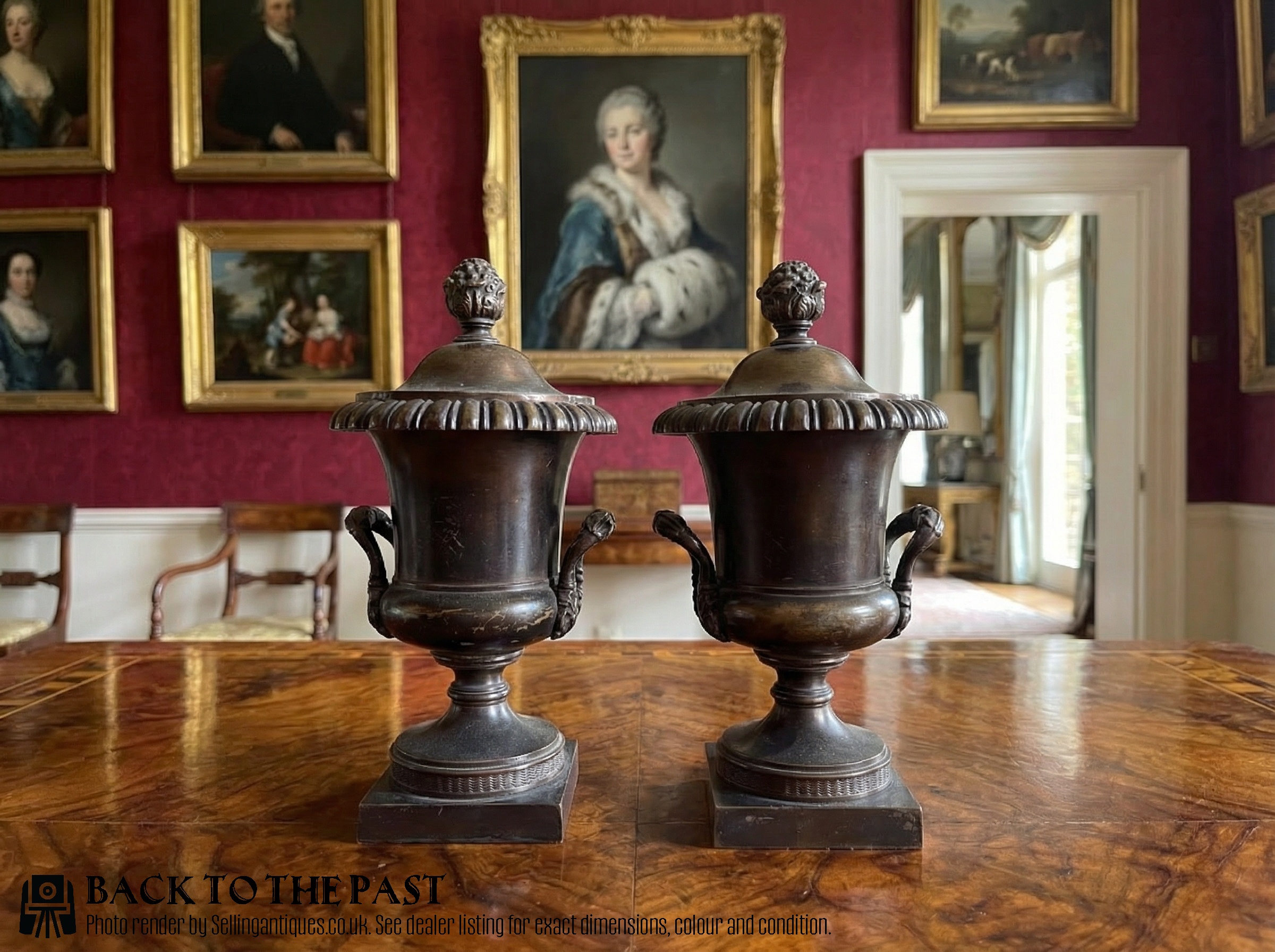
Nineteenth Century Bronze Urns
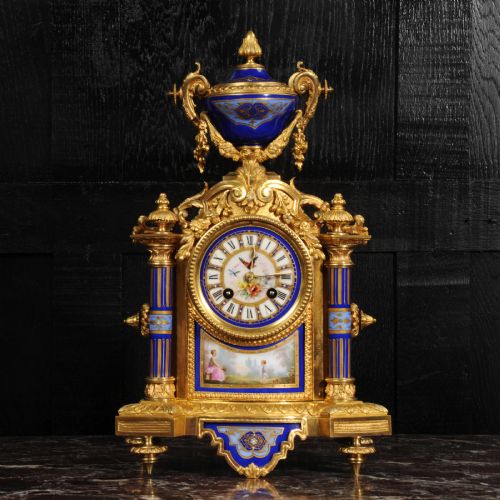
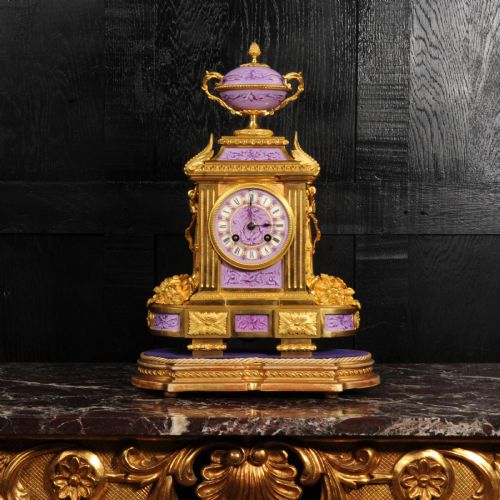
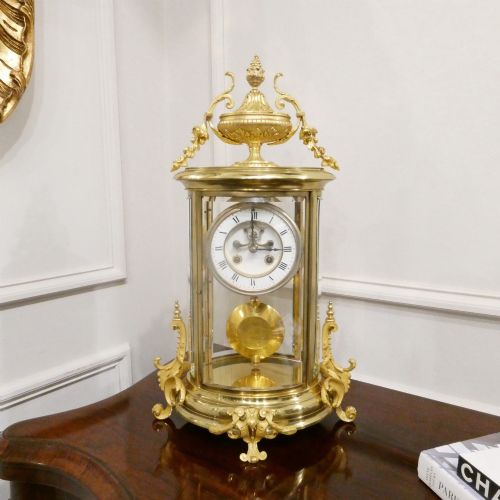
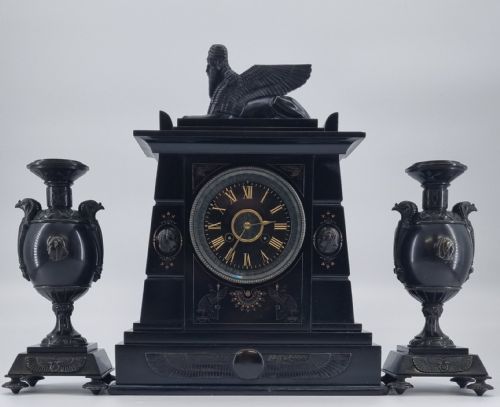
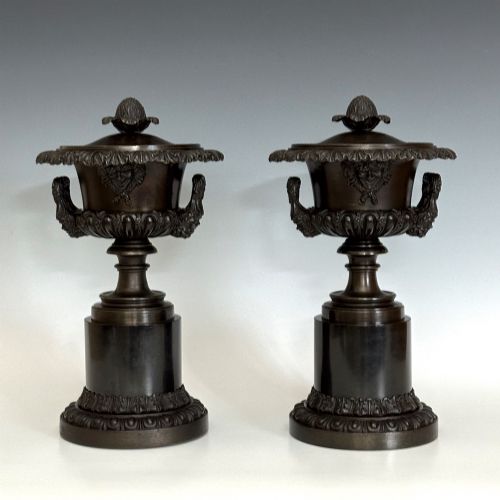
Nineteenth century bronze urns span decorative vessels, clock garnitures, and mounted vases created during the Victorian, Regency, and Empire periods. Buyers frequently encounter French workshop productions utilising classical campana shapes or Grand Tour designs.
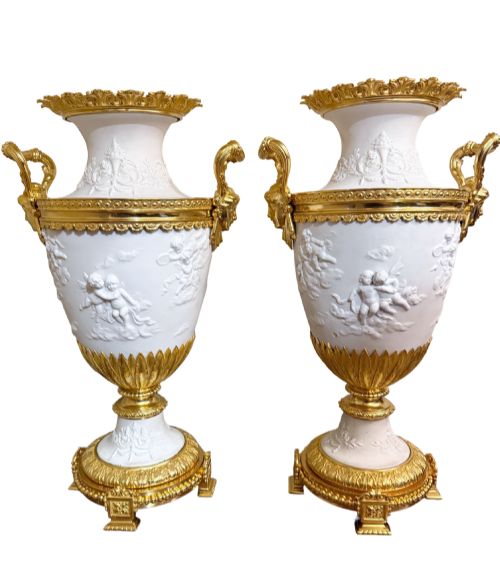
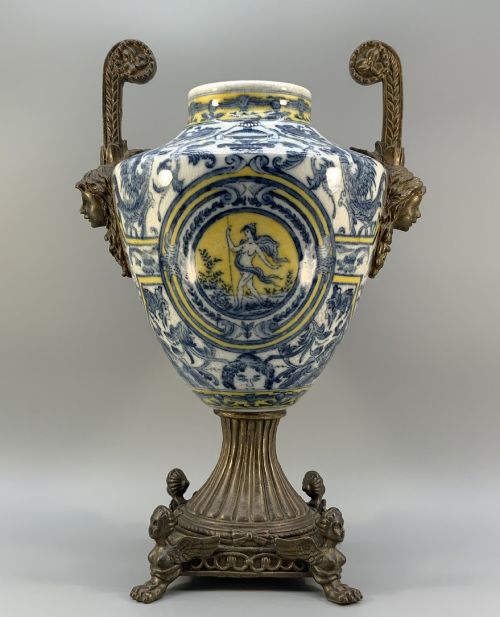
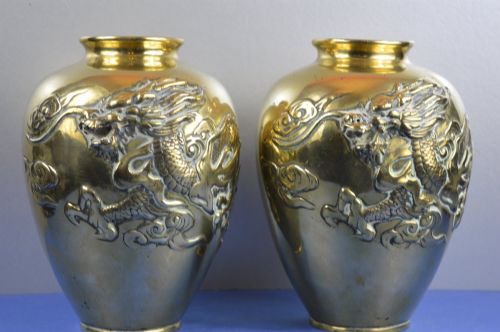
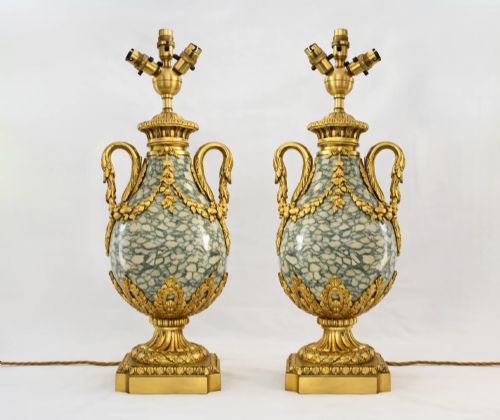
Many examples incorporate porcelain bodies from factories such as Sèvres, paired with cast metal mounts in Louis XVI or Neoclassical styles. Oriental and Japanese bronze vases with elaborate patination also appear alongside European mantel pieces.
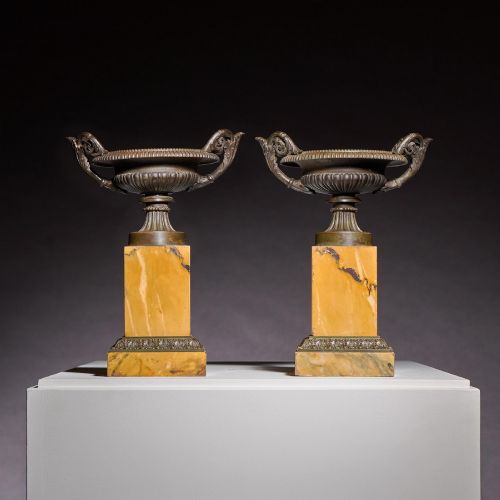
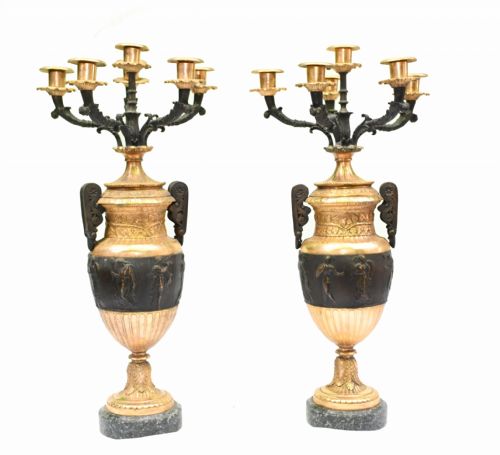
The selection ranges from pairs of heavy cast metal handled vessels on marble bases to lidded cassolettes and centrepiece bowls. These objects served as focal points for nineteenth-century mantelpieces and console tables.
Materials and Technique
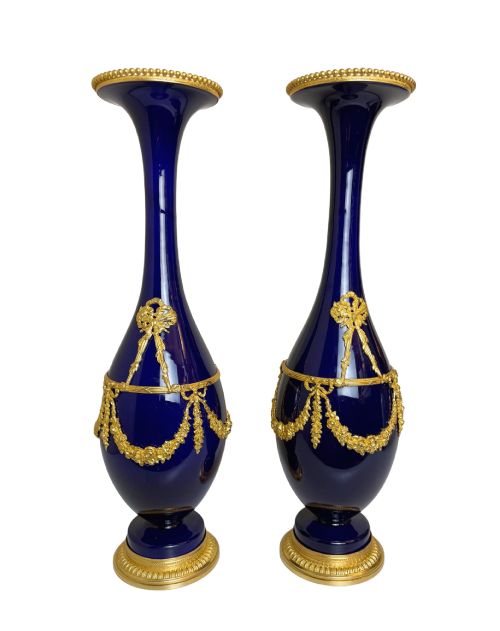
Foundry casting formed the primary structural method, utilising bronze, brass, or spelter combined with mercury gilding to produce ormolu finishes. Artisans chased and chased the metal surfaces to highlight fine details on foliage, drapery, and figural mounts.
Inlaid elements frequently feature genuine hardstones like siena or rouge marble plinths, alongside hand-painted porcelain panels and champlevé enamel. Glass, onyx, and ceramic bodies provide contrasting textures to the heavy metal mounts.
Listings feature nineteenth century bronze urns incorporating Sèvres porcelain, siena marble, and champlevé enamel across various revival styles.
Craftsmanship and Proportion
The refinement of the casting and the depth of the subsequent chasing determine the definition in ornamental friezes and figural handles. Crisp, sharply articulated foliage and figures separate superior studio outputs from softer, repetitive commercial castings.
The quality of the gilding and the integration of secondary materials, such as closely fitted marble bases and hand-painted porcelain, dictate the overall harmony and visual weight of the piece.
Japy Freres·Achille Brocot·Samuel Marti·Vincenti of Paris
The Nineteenth Century Bronze Urns Glossary
- Ormolu
- Gilt bronze produced by applying a mercury and gold amalgam to a bronze base and firing it. This technique creates a durable, warm metallic lustre characteristic of French decorative arts.
- Campana
- A classical bell-shaped form derived from ancient pottery and metalwork. These vessels feature a flared rim and a tapering body mounted on a circular foot.
- Garniture
- A set of three or more matching decorative objects, typically comprising a central clock flanked by matching urns, candelabras, or vases.
- Grand Tour
- The cultural journey undertaken by wealthy Europeans to classical sites in Italy and Greece. Souvenirs brought back included miniature bronze urns and marble architectural models.
Nineteenth Century Bronze Urns: Frequently Asked Questions
What are nineteenth century bronze urns made of?
These pieces combine cast bronze, brass, or gilded metals with decorative components like porcelain, enamel, and marble.
Craftsmen utilised mercury gilding for ormolu highlights and employed stone bases to provide structural weight and visual contrast.
How were clock garnitures used?
Clock garnitures functioned as balanced mantelpiece arrangements designed to display symmetry and wealth in nineteenth-century drawing rooms.
Matched pairs of urns or candelabras flanked a central mantel clock to create a unified decorative scheme.
How do I care for gilt bronze?
Gilt bronze surfaces require gentle dusting with a soft, dry brush to prevent the accumulation of dirt within chased recesses.
Harsh chemical cleaners and abrasive cloths must be avoided to protect the delicate gold leaf and mercury gilding.