
Nest of Side Tables
A nest of side tables groups several graduated surfaces together under a single footprint, offering versatile display space that tucks away neatly when floor area is at a premium.
Nest of Side Tables
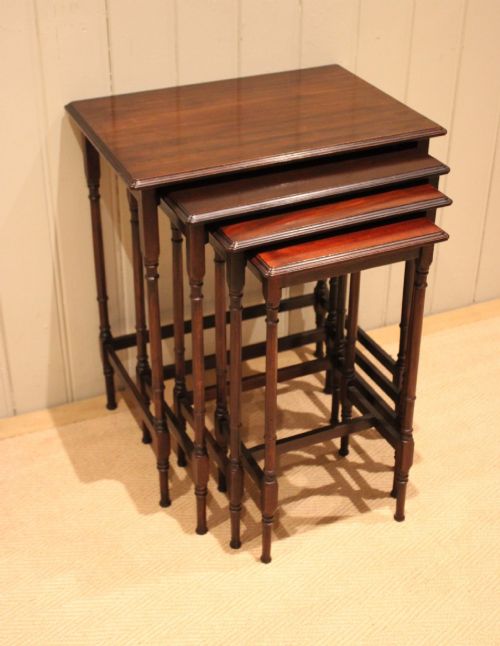
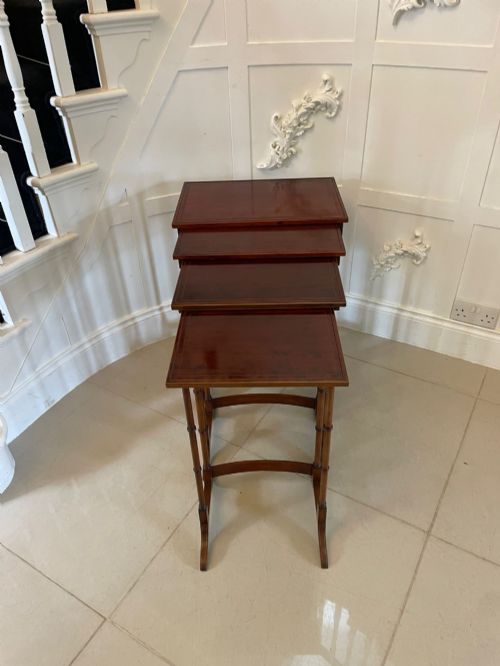
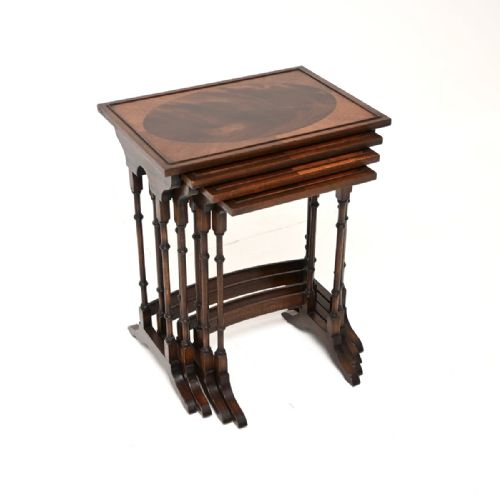
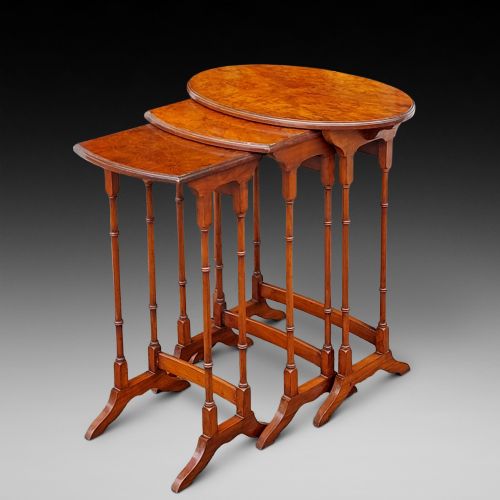
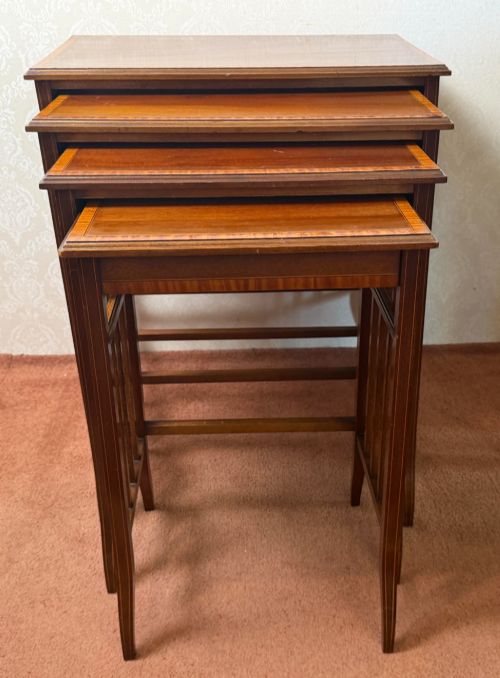
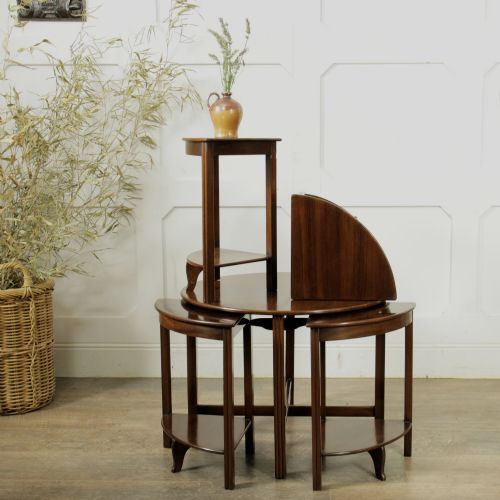
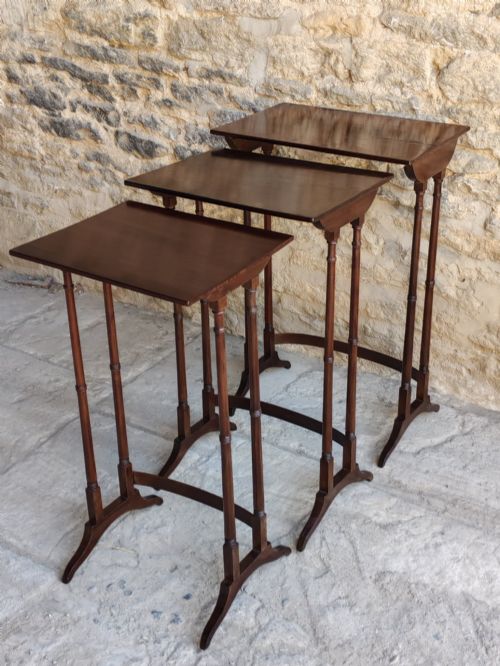
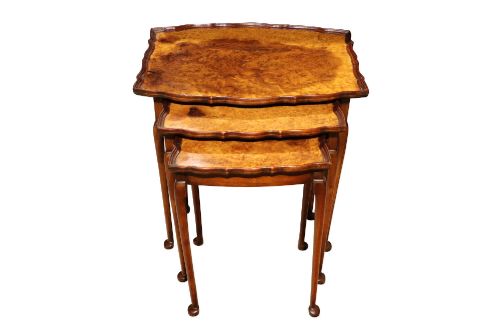
A nest of side tables brings together sets of three, four, or five graduated tables designed to slide beneath one another for compact storage. The search phrase spans centuries of craftsmanship, though Edwardian and mahogany iterations appear most frequently alongside walnut and rosewood expressions.
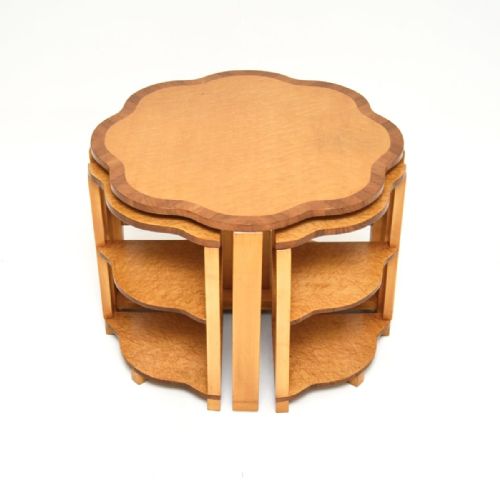
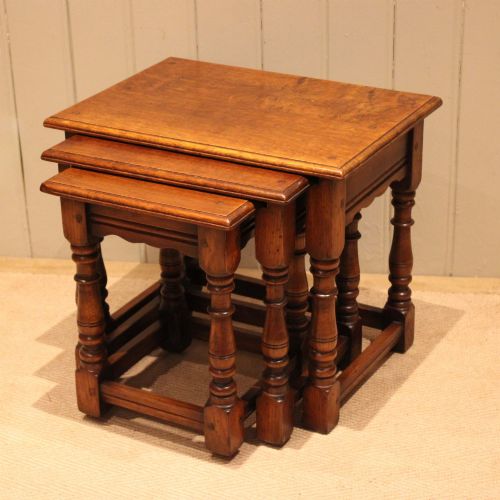
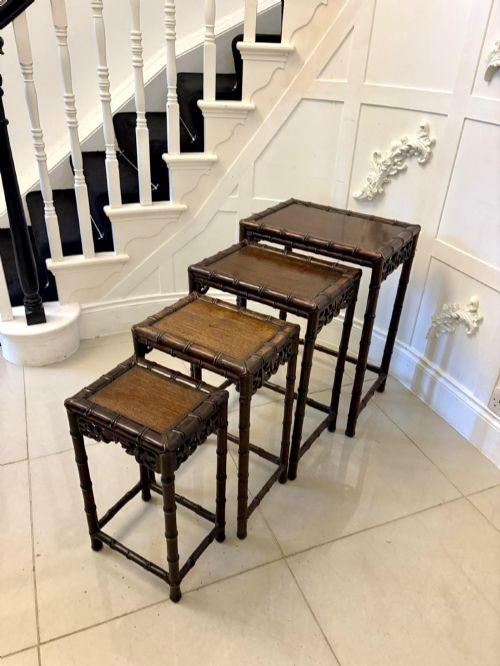
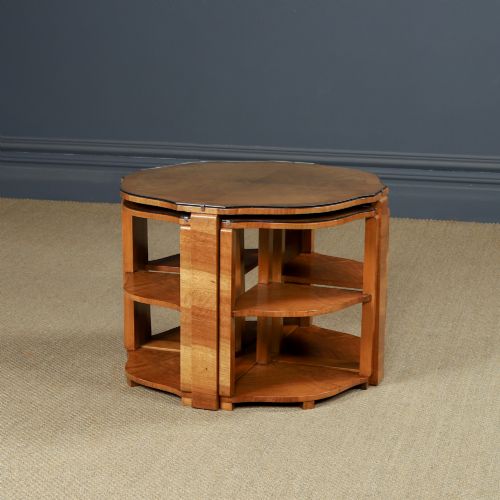
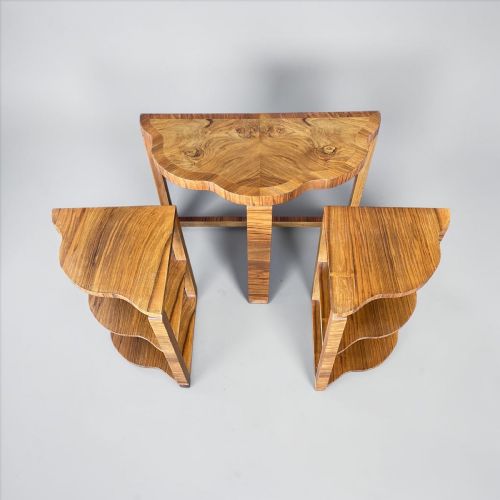
Makers adapted these stacking sets across numerous stylistic revivals, producing Georgian proportions, Regency rosewood quartettos, and streamlined Art Deco curves in both circular and rectangular formats. Examples range from simple English country oak to ornate Chinese hardwood and Chinoiserie lacquered finishes.
Timbers and construction
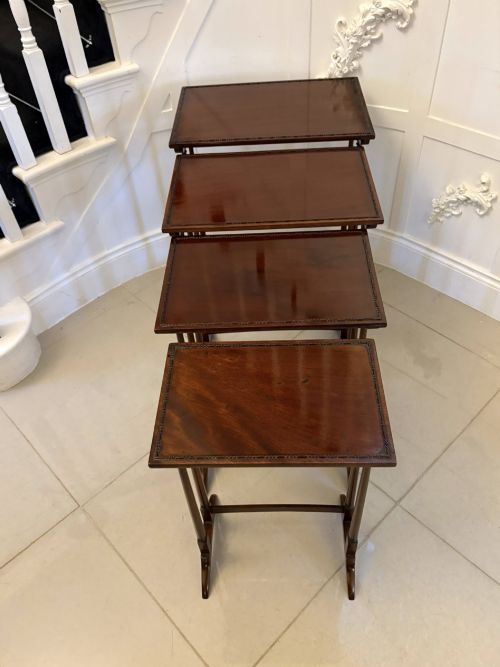
Cabinetmakers relied on dense hardwoods like mahogany, walnut, and rosewood for structural integrity, utilising satinwood, burr walnut, and boxwood for contrasting cross-banding and fine string inlay. Joinery prioritized lightweight stability so individual tables could be lifted and nested repeatedly without loosening.
Finer pieces incorporate specialised decorative techniques including brass inlay, hand-painted floral motifs, Japanese lacquer, and carved bamboo effects. Table tops occasionally feature contrasting leather inserts or figured wood grains chosen for visual depth.
One exceptional nineteenth-century rosewood quartetto set cleverly conceals an integrated chess table within its stacking layers.
Evaluating craftsmanship
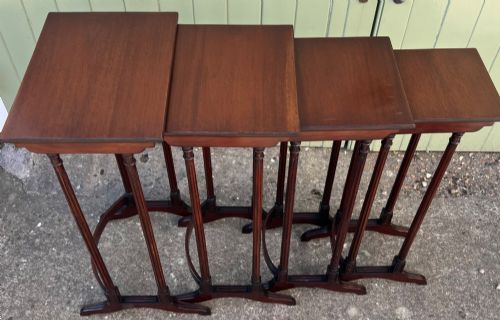
Quality rests in the precision of the graduated sizing and the smoothness of the sliding action, ensuring each smaller table slips effortlessly into its designated slot. Superior examples maintain sturdy joints and balanced proportions across all tiers rather than sacrificing stability in the smallest units.
The choice of timber grain and the crispness of inlay work separate standard utility items from high-end cabinetmaking. Original surfaces with rich, unblemished polish and intact decorative elements command greater regard than heavily refinished pieces.
Émile Gallé·Harry and Lou Epstein·Gillows
The Nest of Side Tables Glossary
- Quartetto
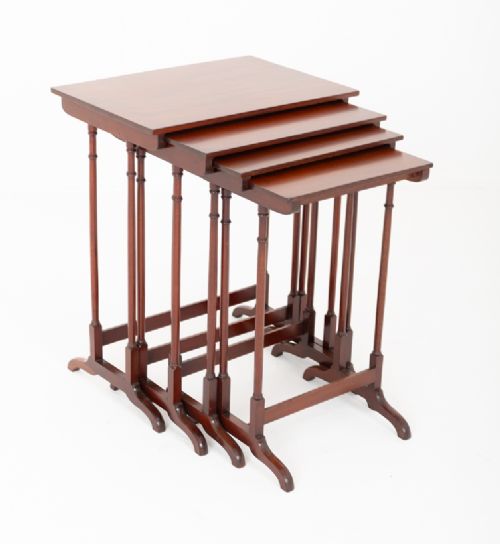
- A matched set of four stacking tables designed to nest together. This term appears frequently in Regency and Edwardian cataloguing.
- Cross-banding
- A decorative border of veneer laid with the grain running perpendicular to the main surface. It frames table tops to create visual contrast.
- Stringing
- Thin inlay lines of a contrasting timber, such as boxwood, used to outline geometric patterns on table edges and legs.
Nest of Side Tables: Frequently Asked Questions
What is a quartetto table set?
A quartetto set consists of four individual tables built in graduated sizes to slide neatly beneath one another. This configuration gained popularity during the Regency period and returned in various Edwardian revivals.
Collectors prize complete quartetto sets for their space-saving utility and unified design, which allows all four surfaces to deploy independently across a room.
How were nesting tables used historically?
These tables served primarily as flexible furniture for drawing rooms and parlours, deployed only when guests required extra surfaces for tea, writing, or card games. Their stacking design kept floor space open during daily routines.
As domestic spaces evolved, they transitioned into versatile lamp stands, coffee tables, and side surfaces that adapted easily to changing room layouts.
How do I distinguish Edwardian sets from 19th-century originals?
Nineteenth-century examples often display denser rosewood or mahogany timbers with hand-carved details or brass inlay characteristic of the Regency and Victorian eras. Edwardian reproductions frequently feature lighter mahogany, satinwood stringing, and inlaid satinwood motifs.
Examining the underside, secondary woods, and construction wear helps confirm the age and workshop practices behind each tier.
Can I use antique nesting tables daily?
These pieces were built for functional domestic use from durable hardwoods like mahogany and walnut, making them well-suited for everyday placement beside armchairs or sofas. Gentle handling protects historical veneer and polish.
Using coasters and avoiding direct sunlight preserves the timber grain and maintains the structural integrity of the sliding frames.