

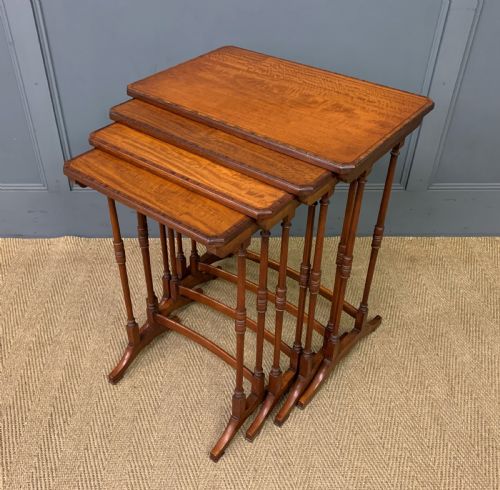


Nested Tea Tables
These nested tea tables offer clever space-saving designs that slip one beneath another, combining practical utility with refined period craftsmanship.
Nested Tea Tables
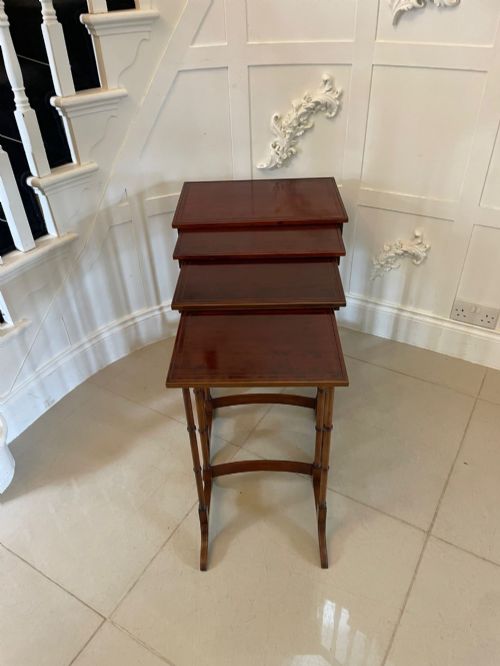
Nested tea tables provide a set of graduated tables designed to slide neatly together when not in use. You will most frequently encounter Edwardian and nineteenth-century examples in mahogany or hardwood on this page.
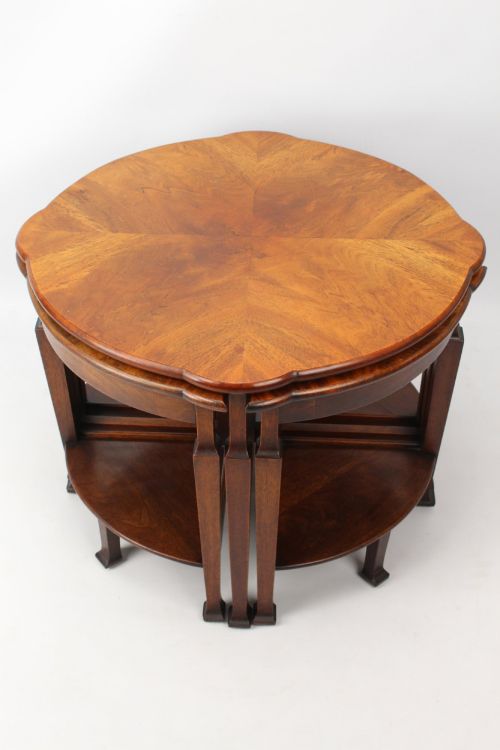
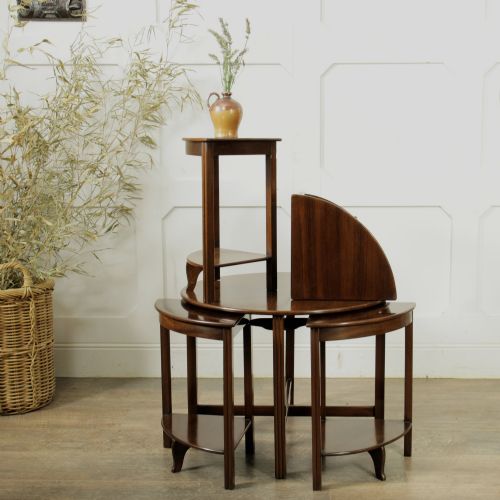
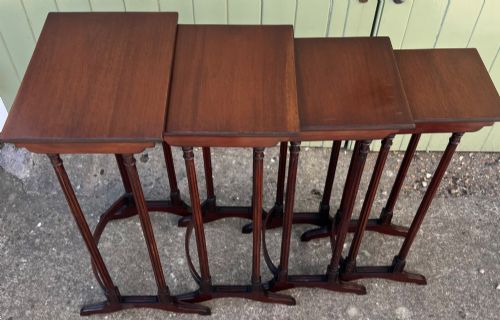
The form ranges from standard quartetto sets of four tables to circular arrangements and occasional tables. These pieces served drawing rooms and parlours where additional surface area was needed temporarily for tea or writing.
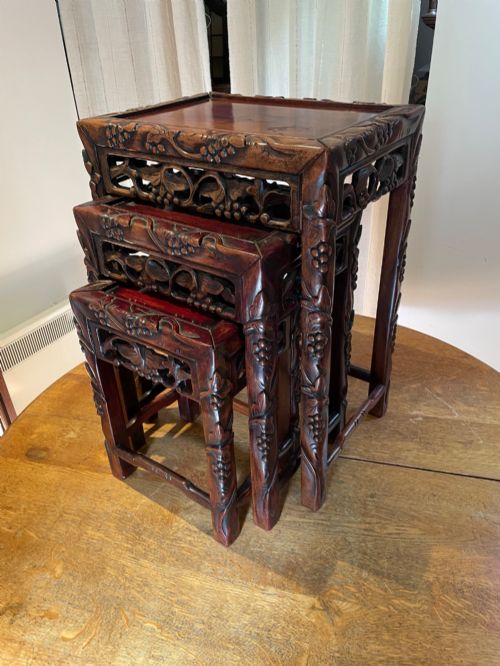
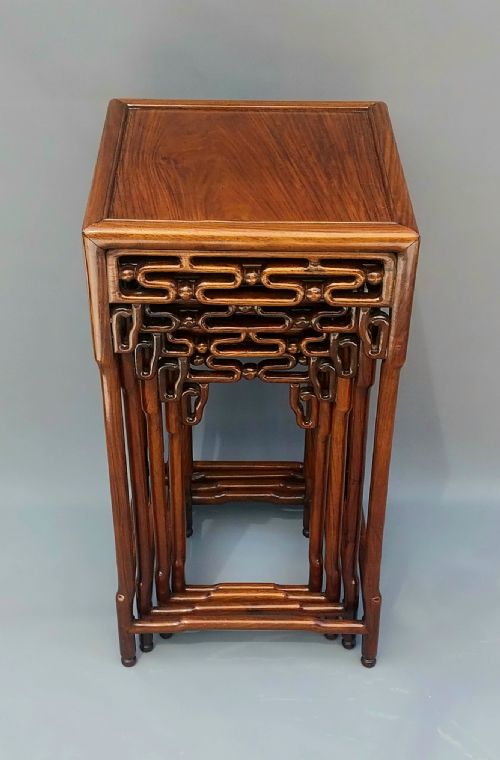
Origins span British cabinetmaking traditions alongside Chinese export and Qing Dynasty pieces in hongmu or teak. Georgian styles and Art Deco interpretations also appear regularly among the selection.
Materials and Construction
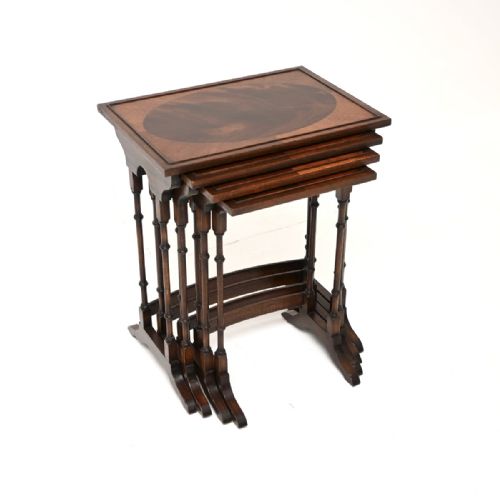
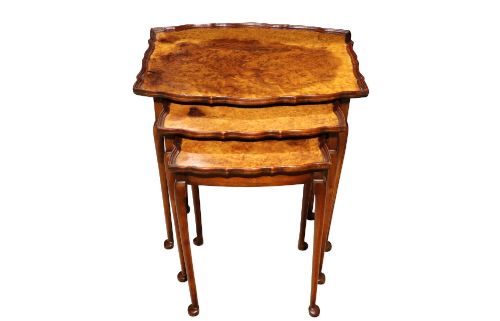
Cabinetmakers utilised dense timbers such as mahogany, teak, and burr walnut alongside exotic hardwoods like hongmu. Finer examples incorporate decorative boxwood inlay and contrasting veneers to accent the tops.
Traditional joinery secures the legs and frames to withstand frequent sliding and daily use. Lacquer and Chinoiserie decoration adorn specific oriental pieces, adding layered surface finishes.
Nested Tea Tables Retail Price Guide 2026
Typical asking prices for nested tea tables among the pieces listed under this phrase on Sellingantiques today, from the lower quarter to the upper quarter. They describe what is for sale here now, not the wider market.
Brass trolley tables bring an unexpected metallic gleam to the traditional wooden nesting family.
Assessing Quality
Quality rests upon the selection of timber figures, such as burr walnut or figured mahogany, and the crispness of any boxwood inlay. Superior sets maintain structural alignment so each smaller table tracks smoothly into the next.
The finesse of hand-carved details on hardwood frames or the precision of lacquer work distinguishes finer workshops from standard production. Construction solidity in the smaller, lower tables dictates overall longevity.
Maison Baguès
The Nested Tea Tables Glossary
- Quartetto
- A matched set of four small occasional tables designed to nest together. The term originates from nineteenth-century furniture nomenclature.
- Hongmu
- A traditional Chinese category of dense, dark hardwoods often translated as red wood. It includes dense timbers like rosewood used in export furniture.
- Veneer
- A thin layer of choice wood adhered to a secondary timber base to display decorative grain patterns. Burr walnut frequently appears in this format.
- Chinoiserie
- European decorative style reflecting Chinese artistic motifs. It involves lacquered surfaces and painted gilt designs on furniture.
- Boxwood
- A pale, dense wood utilised for delicate contrasting stringing and inlay work. It stands out sharply against dark mahogany.
Nested Tea Tables: Frequently Asked Questions
How were nested tea tables used?
Victorian and Edwardian households deployed these sets in drawing rooms to accommodate guests during tea service. The smaller tables separated easily to hold cups or books before sliding back into a compact stack.
This modular approach allowed homeowners to maximise floor space without sacrificing surface area for entertaining.
What woods are common in these tables?
Mahogany forms the majority of British pieces, often enhanced with boxwood inlay or satinwood accents. Oriental examples frequently employ dense hardwoods like hongmu and teak.
Burr walnut also appears on twentieth-century pieces, providing striking natural grain patterns across the table tops.
How do I date a set?
Dating relies on timber selection, structural styling, and decorative techniques like inlay or lacquer work. Edwardian and Victorian examples display specific leg profiles and joinery methods characteristic of those decades.
Nineteenth-century Chinese export pieces often feature traditional joinery and dense hongmu construction distinct from later Western revivals.
Are all sets four tables?
While traditional quartetto sets consist of four graduated tables, many variations exist. Selections on this page include sets of three, five, and individual occasional pieces.
Construction size and number depend on the specific maker's design and the intended function within the room.