



Neoclassical Female Figurine
A neoclassical female figurine channels ancient Greek and Roman ideals through nineteenth-century bronze, marble, and porcelain.
Neoclassical Female Figurine
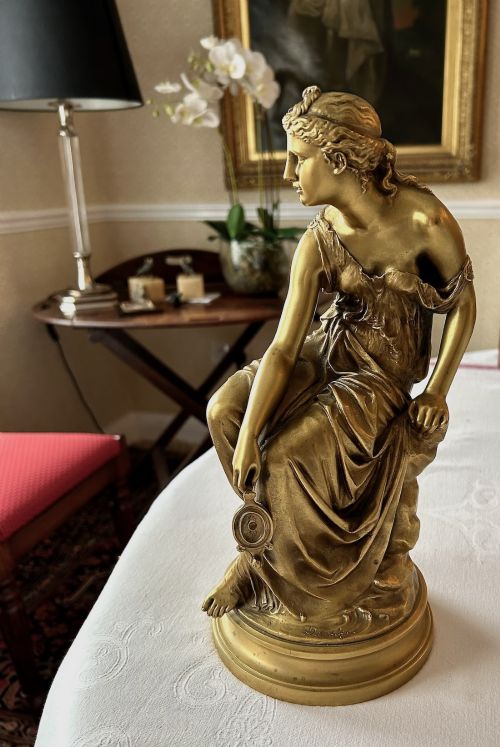
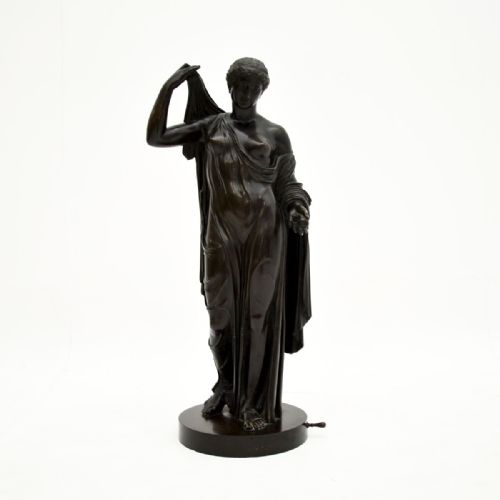
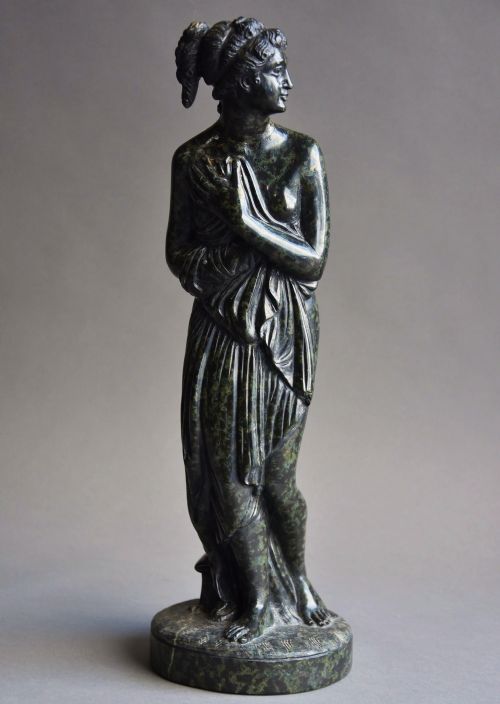
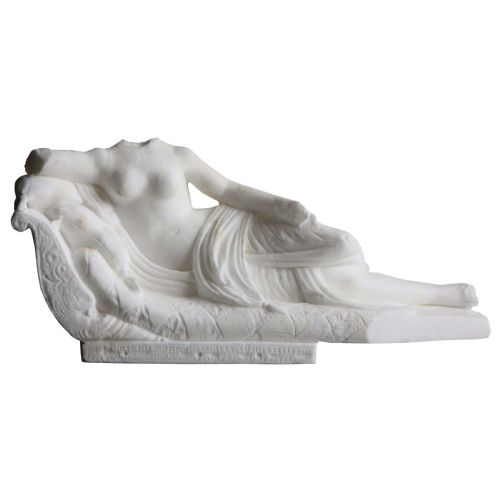
A neoclassical female figurine represents goddesses, maidens, and allegorical subjects sculpted during the nineteenth century, drawing heavily on classical antiquity and Grand Tour traditions. These works adopt diverse forms, ranging from monumental carved marble and cast bronze to delicate parian and bisque porcelain.
Most examples encountered on this page date from the Victorian era and French workshops, capturing mythological figures such as Venus, Hebe, and Diana alongside classical ladies in draped attire. Makers translated ancient prototypes into domestic sculptures suited for nineteenth-century drawing rooms and libraries.
Materials and Methods
Foundry-cast bronze forms the backbone of many pieces, often utilising lost-wax techniques or sand casting before undergoing fine hand-chasing and patination. French foundries combined metalwork with gilt finishes or dark patinas to accentuate the classical drapery and contours.
Carved marble and alabaster pieces rely on skilled hand-chiselling to achieve smooth flesh tones and intricate folds of fabric, while ceramic workshops moulded parian, bisque, and soft-paste porcelain to create matte white statuettes.
Assessing Quality
The standard of a casting or carving determines the visual success of the piece, separating mass-produced items from works by renowned founders and sculptors. Crisp detail in the hair, hands, and drapery denotes superior craftsmanship.
The choice of medium alters the character of the object, as high-grade Carrara marble and heavy, finely chased bronze demand greater artisan skill than moulded ceramic variants.
Etienne-Henri Dumaige·Antonio Canova·Ferdinand Barbedienne·James Pradier·Achille Mollica·Susse Freres
The Neoclassical Female Figurine Glossary
- Grand Tour
- A traditional trip through Europe undertaken by upper-class scholars and gentlemen, resulting in the acquisition of small bronzes and marbles as souvenirs. These tourist pieces often reproduced famous classical antiquities.
- Parian ware
- A type of biscuity porcelain developed in England during the nineteenth century to imitate carved marble. It gained popularity for classical figures due to its smooth, matte finish.
- Bisque porcelain
- Unglazed porcelain fired once to produce a porous, matte surface resembling marble. It found frequent use in French busts and allegorical figures.
- Patina
- The surface coloration and sheen developed on bronze over time or applied chemically by the founder. A good patina enhances depth and highlights sculptural details.
- Lost-wax casting
- A metal-casting method where a molten alloy replaces a wax model inside a mould. This technique allows for complex undercuts and fine surface textures.
Neoclassical Female Figurine: Frequently Asked Questions
What is a neoclassical female figurine?
These sculptures depict mythological goddesses, muses, and classical maidens modelled after ancient Greek and Roman art. Nineteenth-century artists reinterpreted these ancient forms in materials like bronze, marble, and porcelain.
They reflect the enduring European fascination with classical antiquity, particularly driven by archaeological discoveries and nineteenth-century travel traditions.
Where were these figures made?
Production centred primarily in France and Britain, involving major foundries, ceramic factories, and independent sculptors. French workshops excelled in bronze casting, while British potteries mastered parian ware.
Italian studios also produced many carved marble pieces and bronzes specifically for foreign travellers undertaking continental tours.
How do I care for marble and bronze?
Bronze requires only gentle dusting and occasional light waxing to protect the surface patina from moisture and handling. Avoid harsh chemical cleaners that strip the original finish.
Marble and alabaster benefit from dry cleaning with a soft brush, as liquids can stain porous stone. Keep them away from direct heat sources to prevent cracking.
How can I tell the period?
Dating relies on material composition, foundry marks, artist signatures, and style characteristics typical of the nineteenth century. Parian ware and specific bronze foundry stamps provide clear chronological markers.
Wear patterns on the base and the method of construction also help distinguish nineteenth-century production from later reproductions.