


Navy Wool Cushion
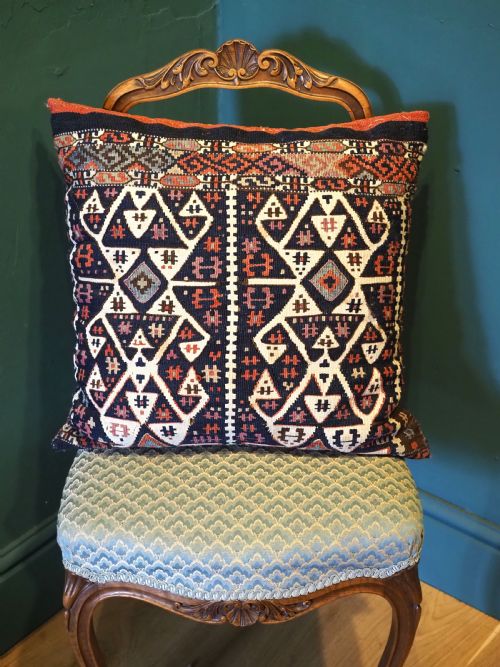
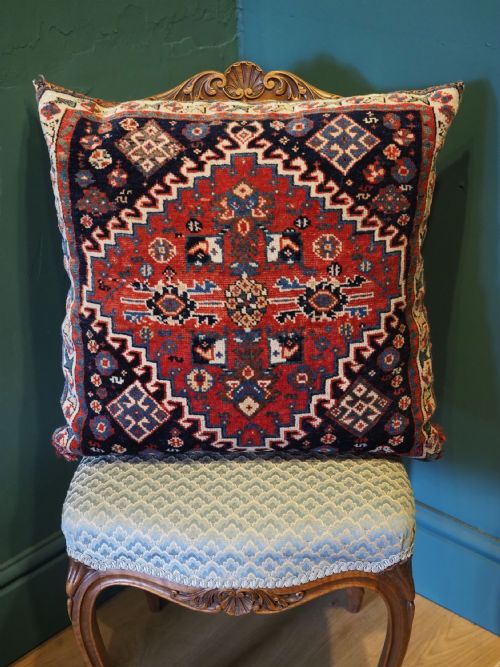
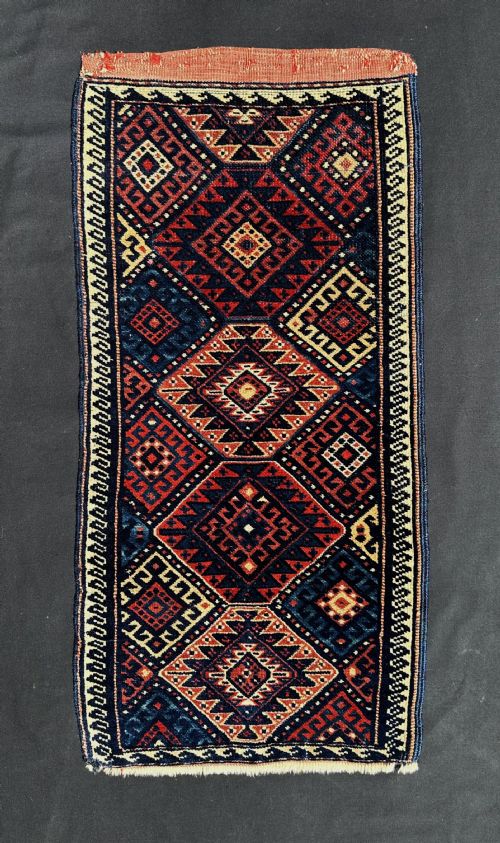
These navy wool cushion examples bring tribal textile history into a modern room, repurposed from antique saddle bags and rug fragments.
Navy Wool Cushion
A navy wool cushion repurposed from tribal bag faces and rug fragments brings nineteenth-century textile history into the home. These pieces originate from Persian, Anatolian, and Central Asian nomadic groups who wove durable transport containers for daily camp life. The selection here leans heavily towards saddle bags, pillow faces, and yastic fragments converted into decorative cushions.
Makers cut down functional items such as Qashqai, Baluch, and Afshar saddle bags to create these soft furnishings. The resulting navy wool cushion forms show diverse tribal iconography, including boteh motifs, bird and dragon designs, and banded weft work. Each textile retains the character of its original tribal context, from North-East Persia down to the Fars province.
Dating across the nineteenth and early twentieth centuries, these objects combine utilitarian origins with decorative utility. Buyers encounter formats ranging from square scatter sizes to rectangular pillow shapes. The presence of dark wool grounds provides a robust base for complex geometric and tribal patterns.
How they were made
Nomadic weavers utilised hand-spun wool and natural vegetable dyes to create the textiles that become a navy wool cushion. These materials yielded deep, durable tones that absorbed plant-based colourants over decades of use. The resulting fabrics combined high lanolin content in the wool with rich, stable dyes.
Construction involved dense flatweave and pile techniques such as soumak work and knotted carpets. Artisans worked on portable vertical looms set up in camps across Persia and Anatolia, producing sturdy structures designed for pack animals. This dense knotting and weaving ensures the surviving fragments withstand modern domestic placement.
Listings span periods from the early nineteenth century through to the early twentieth century, featuring wool and natural dyes.
What varies in quality
Quality rests upon the fineness of the weave, the retention of lustrous luminous wool, and the clarity of the tribal design. Pieces displaying intricate boteh motifs or complex bird and dragon iconography show superior workshop skill. The integrity of the original bag face dictates the visual impact of the finished object.
The depth of natural dyes and the preservation of hand-spun wool textures further separate examples. Tighter knotting or precise flatweave execution points to higher grade nomadic production. Condition of the antique textile surface determines how successfully the fragment translates into a cushion.
The Navy Wool Cushion Glossary
- Boteh
- A stylised almond or paisley motif found across Persian and Anatolian tribal weaving. It often symbolises life and eternity in traditional textile design.
- Yastic
- A traditional small Turkish rug or cushion face traditionally used for leaning against in a regional interior. These rectangular textiles form the basis of many scatter cushions.
- Soumak
- A flatweave technique involving wrapping weft threads over and under warp threads to produce a dense, textured surface. This method creates crisp diagonal pattern lines.
- Khorjin
- The Persian term for a double-sided saddle bag used by nomads for transport. Surviving faces from these bags are frequently converted into cushions.
- Lanolin
- The natural wax present in sheep's wool that gives traditional tribal textiles their soft handle and resilient sheen. High lanolin content protects the fibres from wear.
Navy Wool Cushion: Frequently Asked Questions
What is a navy wool cushion made from?
These cushions are constructed from antique tribal textile fragments, primarily utilising hand-spun wool dyed with natural plant colours.
Textiles derive from nineteenth-century nomadic saddle bags, bag faces, and rug fragments created by groups across Persia and Anatolia.
How do I care for my cushion?
Protect the antique wool surface by keeping the piece out of direct sunlight to prevent natural dye fade. Professional textile cleaning preserves the integrity of the vintage fibres.
Gentle handling ensures the historical flatweave and pile structures remain stable during everyday use in a modern interior.
Where do these textile fragments originate?
The fragments originate from tribal groups in Persia, Anatolia, and Central Asia, including Qashqai, Afshar, Baluch, and Shahsavan weavers.
Nomadic families produced these sturdy bags for camp storage and transport before dealers and collectors repurposed them into soft furnishings.
How can I tell the age of the textile?
Age is indicated by the use of hand-spun wool, natural vegetable dyes, and traditional tribal weaving structures dating from the nineteenth and early twentieth centuries.
Stylistic markers such as specific geometric layouts, regional boteh designs, and authentic wear patterns help date the original bag face.