





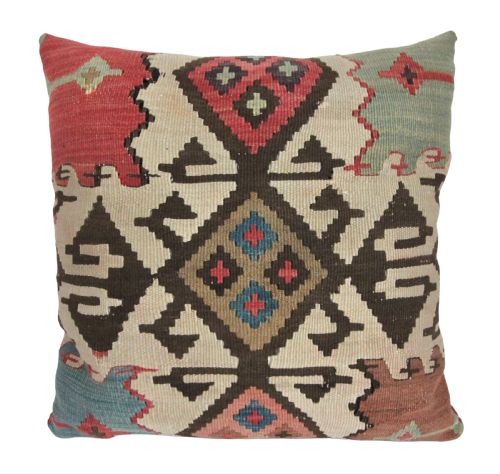
Tribal Kilim Cushion
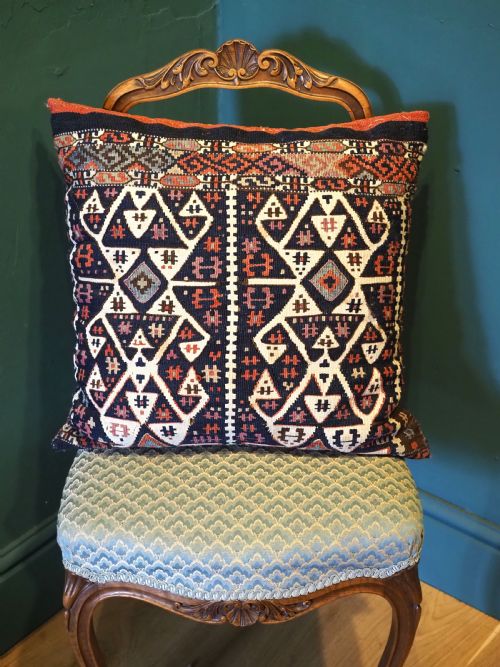
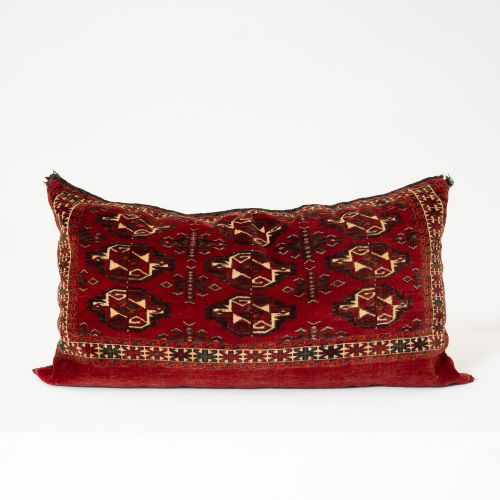
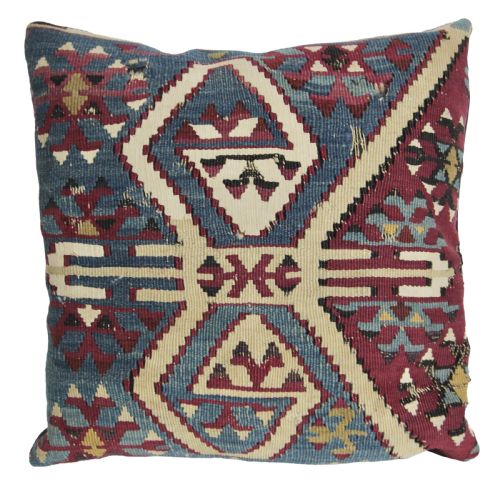
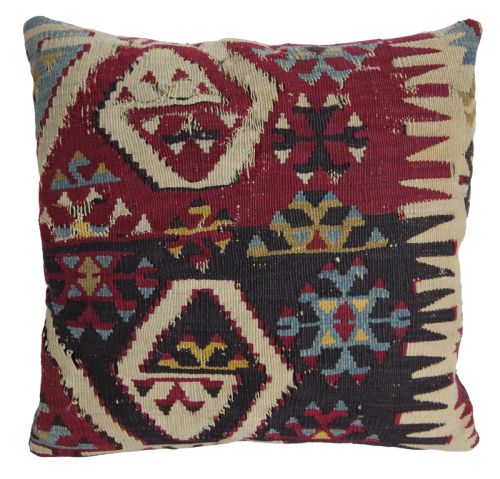
These tribal kilim cushion pieces are authentic flatweave textiles brought from nomadic origins into practical home use.
Tribal Kilim Cushion
When you search for a tribal kilim cushion, you look at repurposed nomadic textiles originating from Anatolian, Persian, and Central Asian regions. These items translate traditional flatweave carriers, storage bags, and animal trappings into decorative home furnishings.
The objects on this page most commonly appear as antique bag faces, saddle bags, and storage sacks converted into cushions. Pieces span the nineteenth and early twentieth centuries, reflecting diverse tribal traditions from groups such as the Turkmen, Bakhtiari, and Qashqa'i.
Nomadic makers wove these textiles for utility within pastoral daily life rather than export. Surviving examples retain geometric motifs and structural elements born from practical storage requirements.
How they were made
Weavers constructed these flatweaves predominantly from hand-spun wool and goat hair, employing interlocked weft-faced techniques to create crisp geometric patterns without pile. Natural dyes supplied the distinct colour palettes across each regional style.
Makers utilised sturdy warp-and-weft foundations designed to endure the physical rigours of nomadic transport and daily camp use. Artisans incorporated supplementary weft-work and banded designs to reinforce structural integrity while establishing intricate tribal iconography.
Many cushions retain the original sturdy backs and tassels once tasked with surviving life on the back of a camel.
What varies in quality
Quality rests upon the fineness of the flatweave structure and the integrity of the original wool or goat hair. Tightly beaten wefts and complex tribal pattern work distinguish superior village weaving from simpler utility pieces.
Condition and completeness alter the character of each piece. Surviving examples retaining original backs, tassels, and authentic structural proportions hold greater integrity than heavily altered fragments.
The Tribal Kilim Cushion Glossary
- Kilim
- A flatwoven textile produced by tightly interweaving warp and weft strands without knotting. This technique creates a smooth surface on both sides.
- Chuval
- A large Turkmen storage bag traditionally used for household goods inside a yurt. These often feature distinctive gul motifs and banded designs.
- Tacheh
- A traditional woven wheat-sack or storage bag produced by Luri and Bakhtiari tribes in Western Persia. They display practical utility work intended for agricultural transport.
- Mafrash
- A rectangular storage bag or chest cover utilised by nomadic groups for bedding and clothes. They display robust flatweave construction.
- Flatweave
- A textile woven without pile by passing coloured wefts strictly over and under warp threads. This method forms the foundational structure of kilims and storage bags.
Tribal Kilim Cushion: Frequently Asked Questions
How do I identify different tribal styles?
Identifying regional styles involves examining specific motif structures, weave densities, and colour palettes. Turkmen and Baluch pieces often display distinct repetitive guls, whilst Persian tribal work from groups like the Bakhtiari or Qashqa'i utilises characteristic banded weft designs.
Consulting the specific geographic origin in the description helps link the pattern vocabulary to a precise nomadic tradition.
Were these cushions originally made as pillows?
No, the original textiles served practical nomadic functions such as saddle bags, storage sacks, grain containers, and bedding carriers. Artisans adapted these durable flatweaves into cushions during later conservation.
This conversion preserves historic weaving traditions by integrating functional antique textiles into modern interior settings.
How do I care for antique wool cushions?
Maintenance requires gentle handling, avoiding direct sunlight to protect natural dyes, and occasional light vacuuming without a rotating brush. Professional textile cleaning is advised for heavier maintenance.
Proper placement away from intense heat sources preserves the natural lanolin and strength of the hand-spun wool and goat hair.