





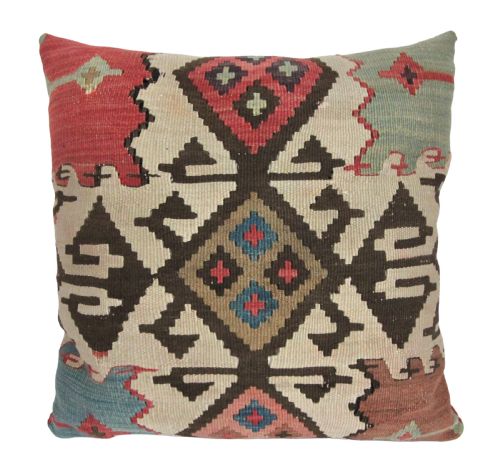


Geometric Turkish Pillow
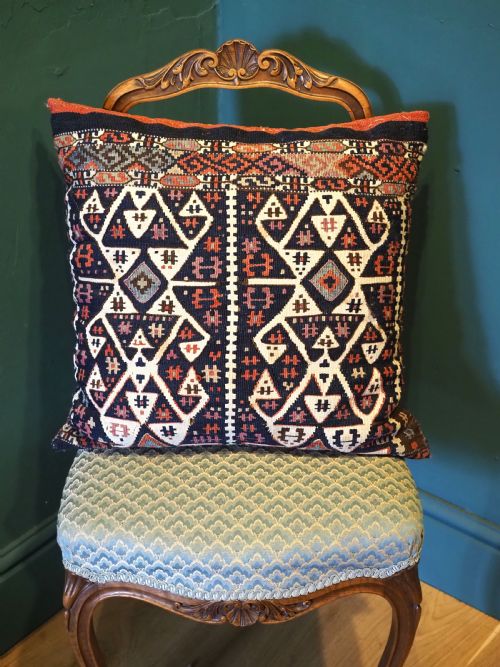
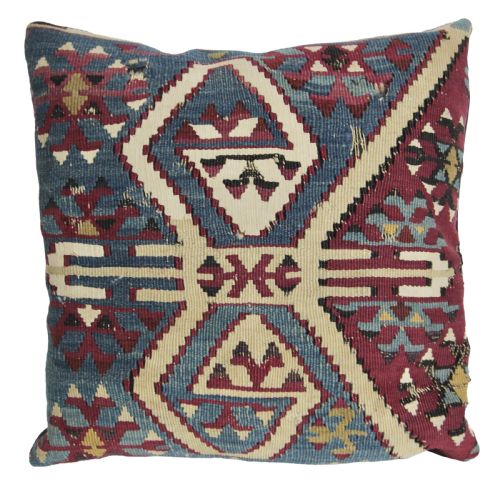
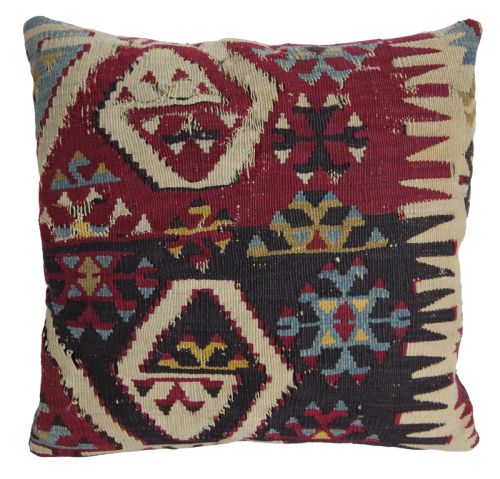
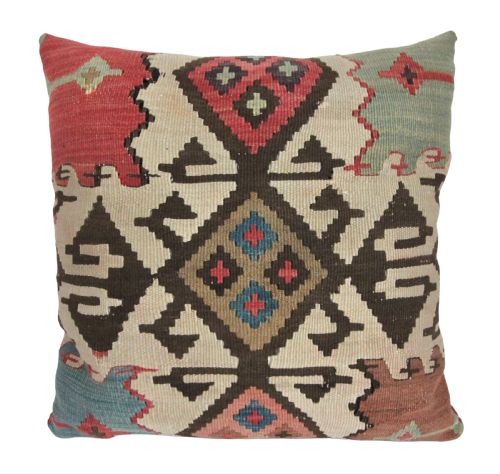
A geometric turkish pillow brings authentic tribal craft into a modern interior through flatweave textiles salvaged from antique saddle bags and floor rugs.
Geometric Turkish Pillow
A geometric turkish pillow transforms historic nomadic textiles into decorative home accessories. Buyers searching for a geometric turkish pillow typically encounter hand-woven kilim cushions fashioned from repurposed fragments originating in Anatolia. These items bridge historical village craft with contemporary domestic styling.
The selections available here draw on nineteenth and early twentieth-century origins, specifically spanning the years from 1850 to 1920. The forms consist entirely of cushions, throw cushions, and cushions and pillows adapted from larger pieces such as saddle bag faces.
Stylistically, these pieces align closely with Anatolian tribal, nomadic, and traditional Anatolian visual traditions. The resulting soft furnishings carry distinct geometric patterns born from tribal weaving traditions rather than factory production.
How they were made
The textile construction relies exclusively on wool and cotton fibres spun and woven by hand. Artisans utilised traditional flatweave techniques to create sturdy kilim surfaces intended originally for rigorous everyday utility as nomadic bags or floor coverings.
Makers constructed these flatweave fronts without a pile, interlocking the coloured wool weft threads tightly across cotton warps to form sharp geometric motifs. These historic fragments were later repurposed into finished cushions by backing and stuffing the durable woven faces.
What varies in quality
Quality rests primarily in the integrity of the flatweave and the precision of the surviving geometric motifs. Pieces featuring tight, even wool tension and well-preserved tribal patterns sit at the upper end of the range, reflecting superior initial weaving skill.
The character and condition of the repurposed textile face dictate visual success. Strong, stable wool surfaces with minimal historic repair hold greater presence in a room than heavily degraded fragments lacking structural strength.
The Geometric Turkish Pillow Glossary
- Kilim
- A flatweave textile produced without a pile by tightly interlocking coloured wefts over warps. This technique creates the thin, durable fabric characteristic of these historic cushions.
- Anatolian
- Pertaining to the historic region forming the Asian portion of Turkey. This geographic descriptor links the textiles to specific village and nomadic weaving traditions.
- Saddle bag
- A utilitarian double pouch once used on pack animals by nomadic tribes. The decorative faces of these bags are frequently salvaged today to make cushion covers.
- Tribal
- Describing artefacts made by indigenous nomadic or village groups for personal use or local trade. These items display traditional motifs passed down through generations.
Geometric Turkish Pillow: Frequently Asked Questions
How should I live with these cushions?
Integrate these cushions into living spaces where their textured flatweave surfaces can be appreciated up close. They suit sofas, armchairs, and beds as decorative accent pieces.
Protect the antique wool fibres from direct sunlight and heavy friction to preserve the historic weave. Spot cleaning is generally recommended to maintain the integrity of the nineteenth and early twentieth-century materials.
How do I tell the periods apart?
Dating these textiles relies on observing the weave density, wool quality, and natural dye characteristics seen across different decades. Pieces span from the mid-nineteenth century up to the early twentieth century.
Earlier examples often display specific village wool preparation methods and traditional tribal palettes. Comparing the specific geometric motifs helps place a cushion within the broader 1850 to 1920 timeframe.
What materials are used in these pillows?
The textile faces consist entirely of hand-spun wool and cotton fibres. Artisans wove these natural materials together using traditional flatweave techniques without any synthetic additions.
The backing materials and stuffing are typically modern additions to ensure comfort and usability. The exterior display surfaces, however, preserve the original historic fabric.