




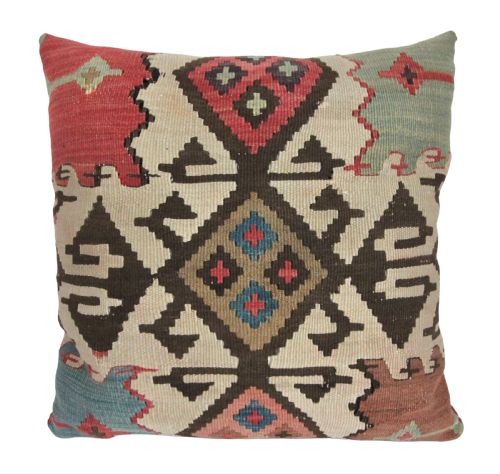


Handwoven Kilim Cushion
A handwoven kilim cushion brings nomadic flatweave textile history into a modern room through repurposed tribal bag faces and carpets.
Handwoven Kilim Cushion
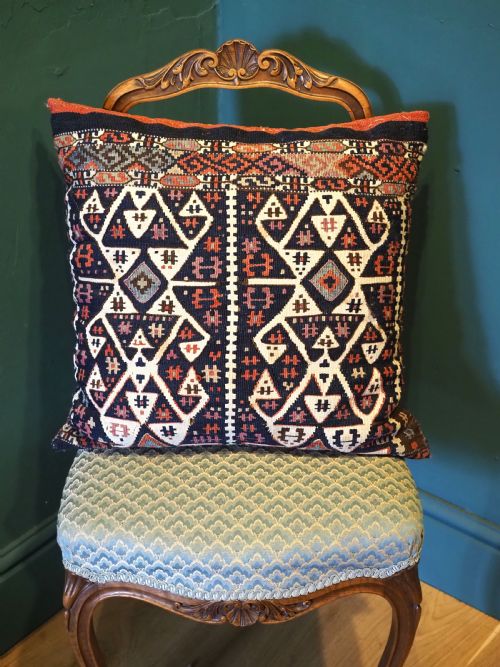
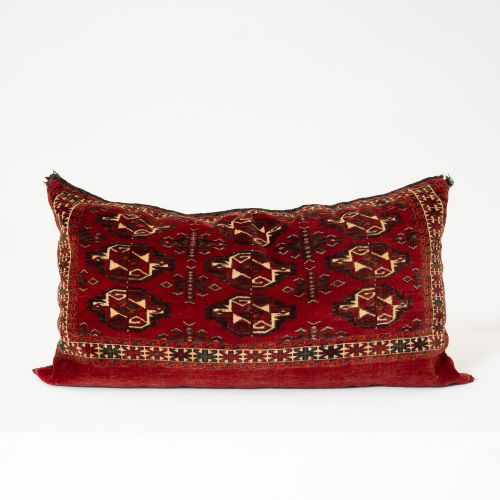
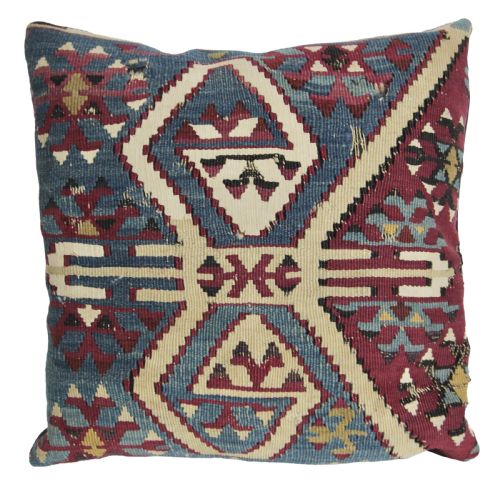
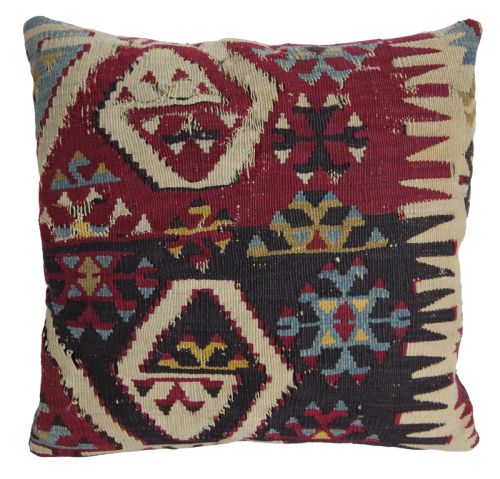
A handwoven kilim cushion transforms historical flatweave textiles, including saddlebags, torbas, chuvals, and wheat-sacks, into functional home furnishings. These pieces originate from tribal and nomadic groups across Anatolia, Persia, and Central Asia.
The objects seen here largely take the form of throw cushions and rectangular pillows fashioned from repurposed bag faces. They date from the mid-nineteenth century through to the early twentieth century, spanning periods such as 1850, 1870, 1880, 1890, 1900, 1910, and 1920.
What varies in quality
Quality depends upon the fineness of the weave and the tightness of the flatweave structure. Denser knotting and precise geometric layout distinguish superior tribal bag faces from simpler utility pieces.
The integrity of the original textile dictates the grade of the cushion. Pieces retaining vibrant natural dyes and intact wool or goat hair structures sit at the higher end of the range.
The inventory records regional styles spanning Anatolian, Turkmen, Persian, and Central Asian tribal traditions, alongside specific forms like saddlebags and wheat-sacks.
The Handwoven Kilim Cushion Glossary
- Kilim
- A flatweave textile produced by tightly interweaving warp and weft strands without creating a pile. This technique results in a smooth, tapestry-like surface.
- Chuval
- A large tent storage bag made by Turkmen tribes. The faces of these bags are frequently converted into cushions.
- Mafrash
- A rectangular storage bag or bedding chest panel woven by nomadic groups. These flatweave panels form distinctive banded cushions.
- Torba
- A small hanging bag produced in Central Asia. They often feature intricate geometric tribal designs suitable for cushion conversion.
- Tacheh
- A specific type of tribal grain or wheat sack from western Persia. These durable sacks provide robust geometric textiles for modern soft furnishings.
Handwoven Kilim Cushion: Frequently Asked Questions
How are antique kilim cushions made?
These items are constructed by repurposing historical flatweave tribal bags, such as saddlebags and wheat-sacks, into cushion covers. The original wool or goat hair textile is stitched together to form a functional pillow.
Artisans utilise the decorative face of nineteenth and early twentieth-century nomad weavings, preserving the historical flatweave surface while adapting the textile for contemporary seating.
Where do these tribal cushions originate?
The pieces originate from tribal and nomadic communities in Anatolia, Western Persia, and Central Asia. Specific groups represented include Turkmen, Bakhtiari-Lor, Luri, and Shahsavan tribes.
Each region contributes distinct geometric motifs and weaving structures, reflecting the traditional aesthetic of the specific maker culture.
How do I date a kilim cushion?
Dating relies on identifying the age of the source textile, which typically spans the mid-nineteenth century to the early twentieth century. Key indicators include the use of hand-spun wool and early natural dye palettes.
Structural elements like tribal bag face designs from periods such as 1850, 1890, or 1920 help place the item within a specific historical timeframe.
How do I care for a wool cushion?
Maintain the wool and goat hair textile by gentle vacuuming with a low suction setting without a rotating brush. Professional textile cleaning is recommended for deep maintenance to protect the natural dyes.
Avoid placing the flatweave cover in direct sunlight for extended periods to prevent fading of the historical plant and insect-based colours.