




Natural History Glass Dome
A natural history glass dome brings scientific study and Victorian taxidermy indoors, protecting delicate specimens beneath blown glass.
Natural History Glass Dome
A natural history glass dome encloses preserved animals, shells, and flora to shield them from dust and handling. These protective covers stand on wooden or ebonised wood bases, creating self-contained table displays from the Victorian and Edwardian eras.
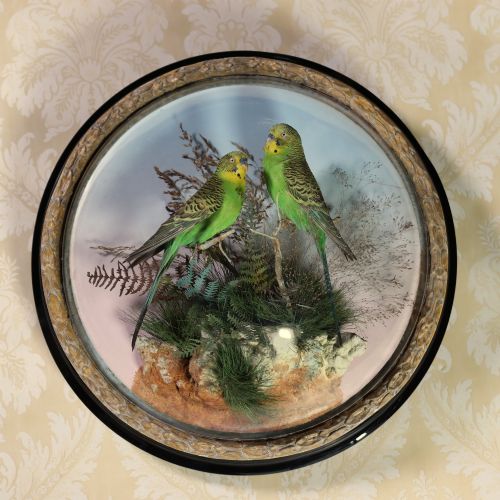
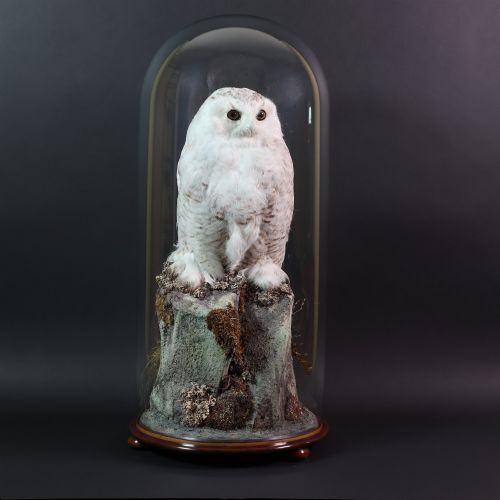
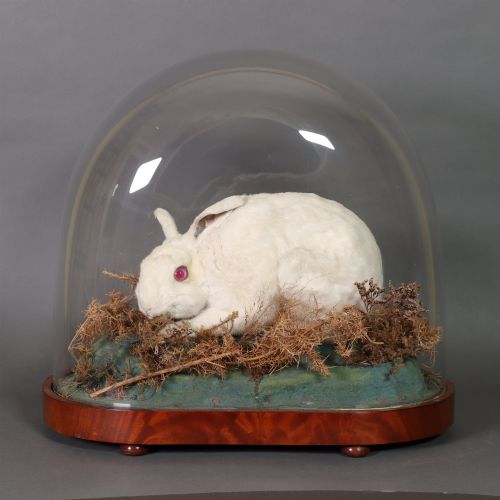
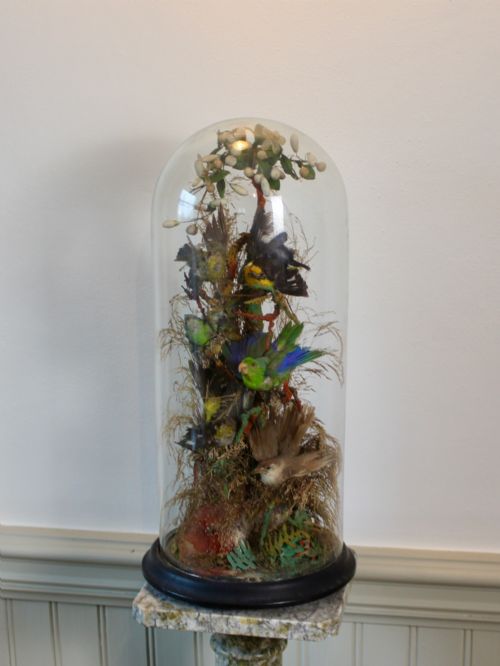
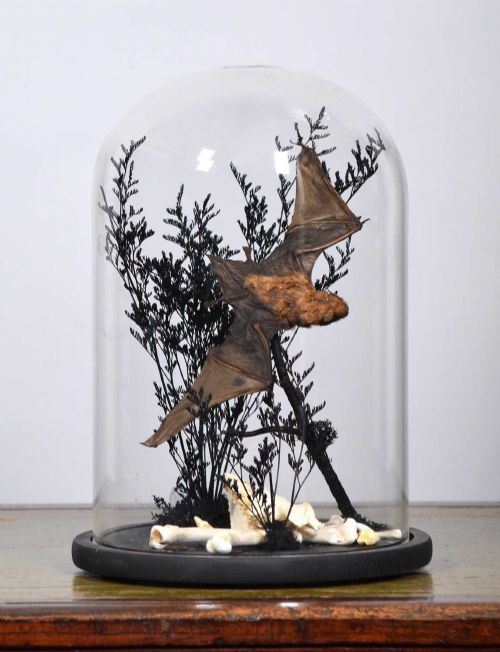
Most examples encountered here are Victorian or Edwardian creations housing taxidermy specimens. Buyers will find tall display domes, flat-sided domes, and showcases holding birds, bats, rabbits, and nautilus shells.
The objects range from simple botanical or shell arrangements to elaborate taxidermy compositions featuring birds of paradise. English makers constructed these pieces around the latter half of the nineteenth century and the early twentieth century.
How they were made
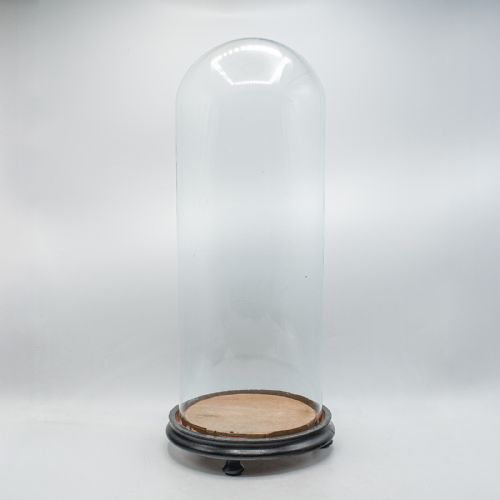
Glassblowers formed the transparent covers by hand, resulting in the characteristic clear bell shapes that drop over fitted timber bases. Makers turned timber and ebonised wood to create stable platforms and plinths for the displays.
Taxidermists prepared specimens using traditional methods of the nineteenth century, arranging birds, mammals, and natural vegetation inside the glass covers. Artisans secured compositions within flat-sided or tall cylindrical glass domes to preserve delicate feathers and fur.
Natural History Glass Dome Retail Price Guide 2026
Typical asking prices for natural history glass dome among the pieces listed under this phrase on Sellingantiques today, from the lower quarter to the upper quarter. They describe what is for sale here now, not the wider market.
Even snow buntings and bats found themselves immortalized under glass during the Victorian obsession with natural history.
What varies in quality
The skill of the taxidermist heavily influences the success of a natural history glass dome. Superior examples feature lifelike arrangements of birds or mammals with vibrant plumage and correct anatomical posture.
The clarity and weight of the glass cover also distinguish different pieces. Heavy, blown glass free of distortion complements finely turned ebonised wood bases and complex internal compositions.
James Gardner·Henry Ward London·A Pollard
The Natural History Glass Dome Glossary
- Ebonised wood
- Timber treated to resemble ebony, providing a dark, polished base for nineteenth-century display domes.
- Taxidermy specimen
- A preserved animal skin mounted over a form to simulate life, commonly housed beneath glass.
- Display dome
- A protective glass cover set upon a wooden plinth used to exhibit natural history specimens.
- Flat-sided dome
- A specialised glass cover with flattened sides, utilised for viewing specific multi-angled bird compositions.
Natural History Glass Dome: Frequently Asked Questions
Can I remove the glass cover?
Many Victorian domes lift straight off their timber or ebonised wood bases quite easily. Others may be sealed at the rim to protect the interior environment from humidity and pests.
Check the base of the piece carefully before attempting to lift the glass. If the dome feels secured with adhesive or putty, leave it in place to avoid damaging the antique glass.
Where should I place my dome?
Position your natural history glass dome away from direct sunlight to prevent fading in bird feathers and fur. A stable piece of furniture out of heavy traffic areas keeps the glass safe from accidental knocks.
Maintain a consistent room temperature to protect the antique timber bases and delicate taxidermy materials from moisture damage.
How do I date an antique dome?
Examine the thickness and clarity of the glass, as nineteenth-century production methods often leave subtle bubbles and variations. The turned style of the wooden base also points toward Victorian or Edwardian manufacturing traits.
Look for maker signatures or paper labels underneath the wooden base. Attributions to known taxidermists help narrow down the production period.