







Glass Case Bird Taxidermy
Glass case bird taxidermy preserves Victorian natural history within glazed wooden enclosures.
Glass Case Bird Taxidermy
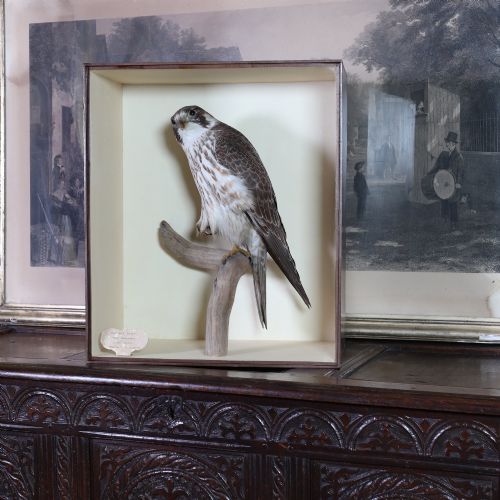
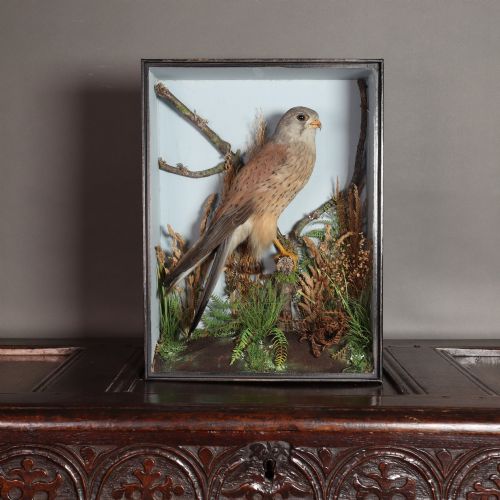
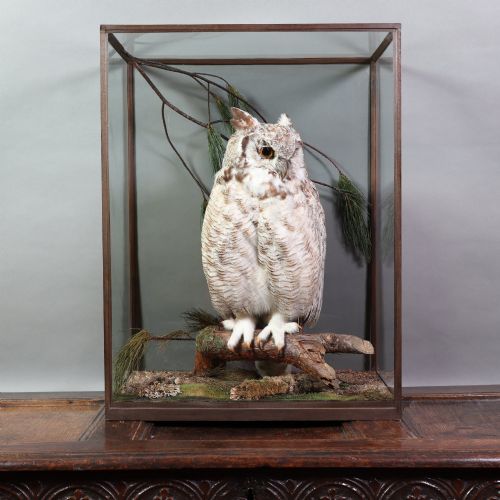
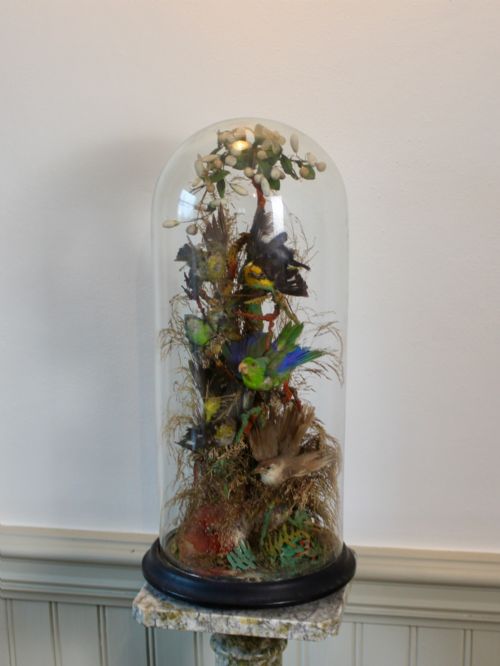
Glass case bird taxidermy comprises mounted avian specimens arranged inside protective wooden and glass enclosures, representing a prominent form of domestic natural history display during the nineteenth and early twentieth centuries. These pieces encompass single specimens such as owls, kestrels, and pheasants, alongside complex dioramas containing multiple colourful birds from regions including South America, Australia, and New Guinea.
Buyers seeking glass case bird taxidermy will encounter various formats, ranging from rectangular wooden display cases to flat-sided glass domes. The examples available span the Victorian, Edwardian, and early twentieth-century periods, capturing ornithological subjects framed by simulated natural habitats.
The objects serve as historical artefacts of domestic display, reflecting nineteenth-century scientific curiosity and interior decoration. Their construction protects delicate plumage from dust and damage while creating a permanent three-dimensional tableau.
How they were made
Makers constructed the enclosures using timber, often ebonised wood or painted frames, fitted with glass panels to protect the interior mount. Inside these cases, taxidermists arranged preserved avian specimens among dried vegetation, moss, flora, and paper elements to replicate natural environments.
The preparation of the birds required skilled taxidermy techniques to shape skins over artificial bodies while preserving the natural posture and vibrant colours of the feathers. Scenes featuring snow settings utilised specific materials to imitate winter landscapes surrounding subjects like snow buntings and waxwings.
Glass Case Bird Taxidermy Retail Price Guide 2026
Typical asking prices for glass case bird taxidermy among the pieces listed under this phrase on Sellingantiques today, from the lower quarter to the upper quarter. They describe what is for sale here now, not the wider market.
Listings feature Victorian, Edwardian, and early twentieth-century periods utilising glass, wood, feathers, moss, and ebonised timber.
What varies in quality
Quality in these specimens rests upon the taxidermist's ability to render a lifelike posture and anatomical accuracy in the mounted bird, reflecting the skill of established practitioners. Documented work by notable historical firms commands distinct regard compared to anonymous studio output.
The complexity and condition of the internal diorama further distinguish superior examples, particularly those incorporating detailed botanical elements, painted backdrops, or multiple interacting species. The clarity of the original glass and the structural integrity of the timber housing also influence the overall standard of the piece.
Rowland Ward Ltd·T. E. Gunn·James Gardner
The Glass Case Bird Taxidermy Glossary
- Taxidermy
- The art of preparing, stuffing, and mounting the skins of animals for display. This practice formed a central component of nineteenth-century natural history collections.
- Ebonised wood
- Timber treated to resemble ebony through a dark staining or finishing process. This material frequently frames Victorian taxidermy cases.
- Diorama
- A three-dimensional scene depicting wildlife within a recreated natural habitat. These settings often incorporate painted backgrounds and dried flora.
- Dome
- A rounded glass cover placed over a circular base to protect delicate displays. Flat-sided variations provided alternative viewing angles for enclosed specimens.
Glass Case Bird Taxidermy: Frequently Asked Questions
Where should I place glass case bird taxidermy at home?
Position these pieces away from direct sunlight to prevent the plumage colours from fading over time. Stable room temperatures protect the dried vegetation and wooden frames from warping or deterioration.
Keep displays away from damp areas such as unheated rooms or kitchens to safeguard the organic materials inside the enclosure.
How can I tell the period of a taxidermy case?
Examine the construction methods of the wooden frame, the type of glass used, and any internal paper labels or signatures. Victorian examples often feature ebonised timber and elaborate naturalistic groundwork.
Later pieces from the early twentieth century frequently utilise painted wooden cases and simplified interior compositions reflecting changing decorative tastes.
What is the difference between a case and a dome?
Cases are typically rectangular wooden boxes with glazed panels on one or more sides to view the specimens within. They often allow for more extensive multi-bird dioramas and complex botanical backgrounds.
Domes consist of a curved glass cover resting on a circular wooden base, presenting a self-contained display that can be viewed from all angles.