

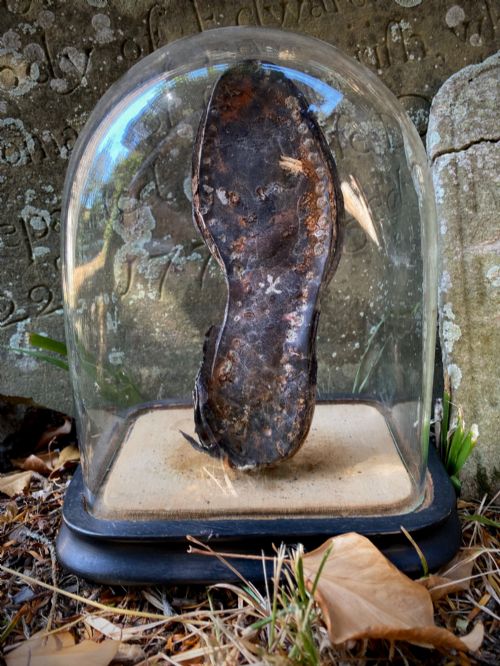
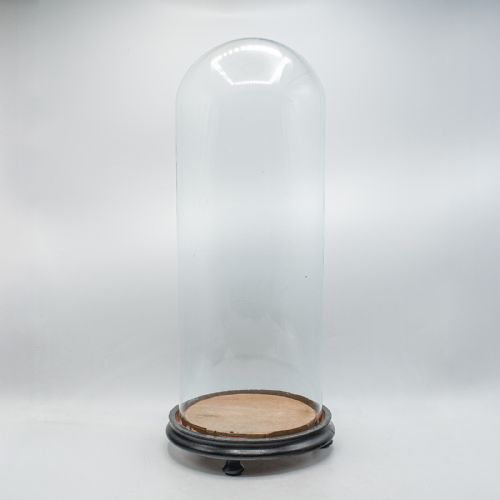


Ebonised Base Glass Cloche
An ebonised base glass cloche protects and frames delicate interior specimens beneath a clear blown cover, bringing Victorian and Edwardian display into the home.
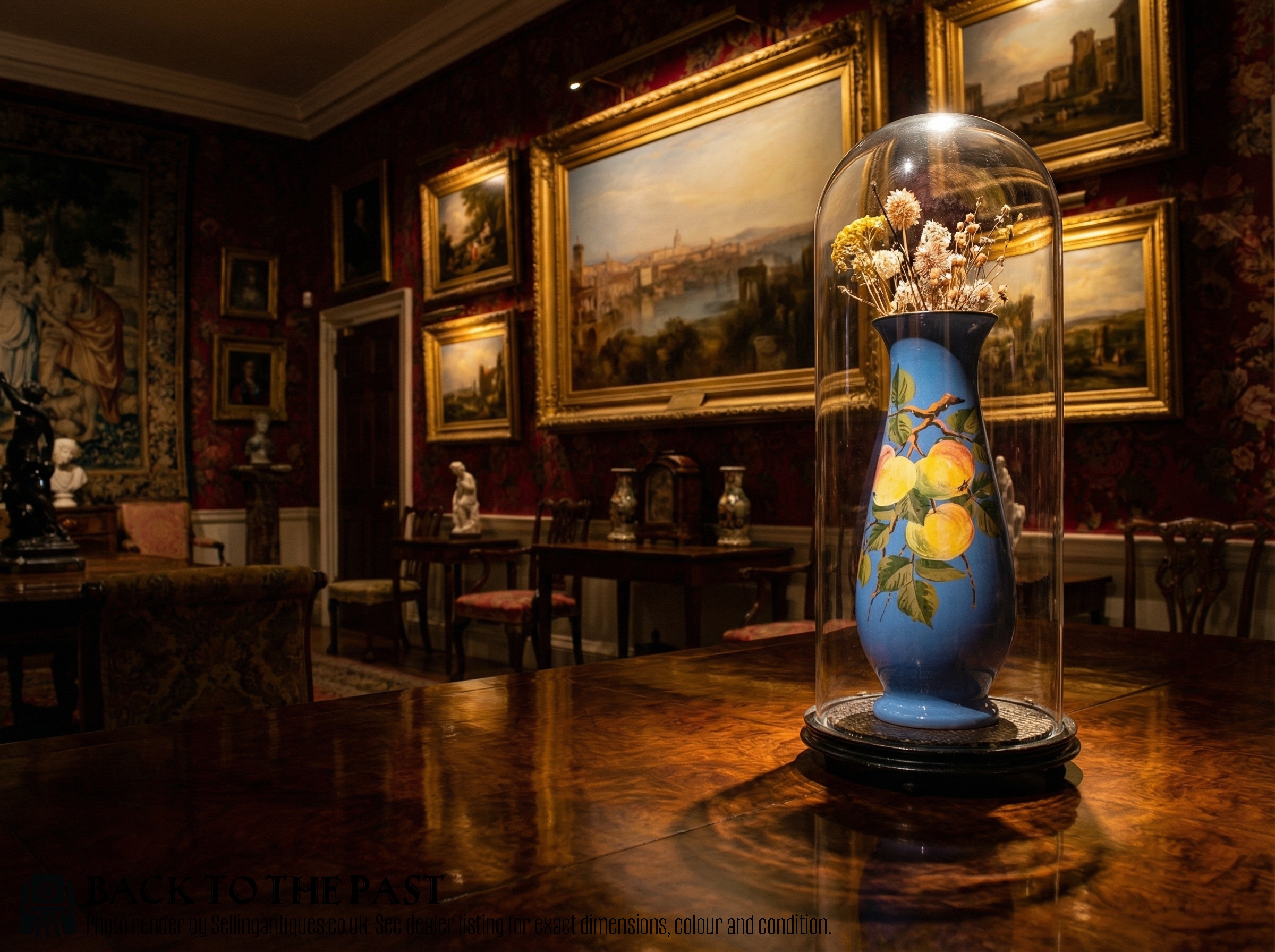
Ebonised Base Glass Cloche
An ebonised base glass cloche is an antique display dome designed to house taxidermy, botanical specimens, and decorative objects. These pieces range from tall showcases to wide clock domes.
The selections on this page stem from the Victorian and Edwardian periods, including late Victorian examples. English craftsmanship predominates across these collector cases and specimen showcases.
The form functions primarily to protect fragile items from dust while offering an unhindered view from all angles. Interiors often feature preserved birds, fruit still lifes, or clocks.
How they were made
Makers utilised mouth-blown glass to create the large, clear covers, which frequently display minor ripples and bubbles typical of nineteenth-century manufacture. These heavy glass domes rest securely on turned timber platforms.
The wooden bases were treated with a dark stain or finish to imitate ebony, creating a stark contrast with the light contents inside. Interior floors are typically lined with fabric such as velvet, felt, or baize to cushion the display items.
Ebonised Base Glass Cloche Retail Price Guide 2026
Typical asking prices for ebonised base glass cloche among the pieces listed under this phrase on Sellingantiques today, from the lower quarter to the upper quarter. They describe what is for sale here now, not the wider market.
Listings feature English glass domes and display cases spanning the Victorian and Edwardian periods, utilising timber, velvet, and baize.
What varies in quality
The clarity and thickness of the blown glass cover set individual examples apart, with heavier, distortion-free glass representing superior production. The height and proportions of the dome also dictate its desirability.
The quality of the ebonised wood base and its internal lining contribute significantly to the overall appeal. Bases featuring crisp turning and well-preserved velvet or baize elevate the piece.
A Pollard·James Gardner
The Ebonised Base Glass Cloche Glossary
- Ebonised
- Wood treated with a dark finish to resemble ebony. This technique was widely utilised during the Victorian era for display bases and picture frames.
- Cloche
- A bell-shaped glass cover used to protect delicate items. The term derives from the French word for bell.
- Baize
- A coarse woolen material resembling felt. It frequently lines the interior floors of these display bases to provide a soft surface for specimens.
- Taxidermy
- The art of preserving and mounting animal skins for display. Many glass domes house birds and other specimens prepared in this manner.
- Diorama
- A three-dimensional scene depicting wildlife or still life subjects. These arrangements are enclosed beneath glass for protection and viewing.
Ebonised Base Glass Cloche: Frequently Asked Questions
What fits under a glass cloche?
These glass covers traditionally house taxidermy specimens, botanical collections, and intricate still life arrangements of fruit. Mantel clocks and delicate ornaments also find protection beneath them.
Collectors today utilise the domes to display sculptural objects, minerals, and contemporary curiosities while keeping them free from dust.
How do I clean the glass?
The glass cover should be lifted carefully from its base and washed by hand with warm, soapy water. Avoid harsh chemical cleaners that might damage antique glass.
Allow the dome to dry completely before placing it back onto the wooden base to protect any sensitive interior materials from moisture.
How do I date an antique dome?
Dating relies on the manufacturing traits of the glass and the style of the wooden base. Nineteenth-century glass often exhibits small air bubbles and slight irregularities from manual blowing.
Victorian and Edwardian examples can also be identified through the materials used for internal linings, such as original velvet or baize.