
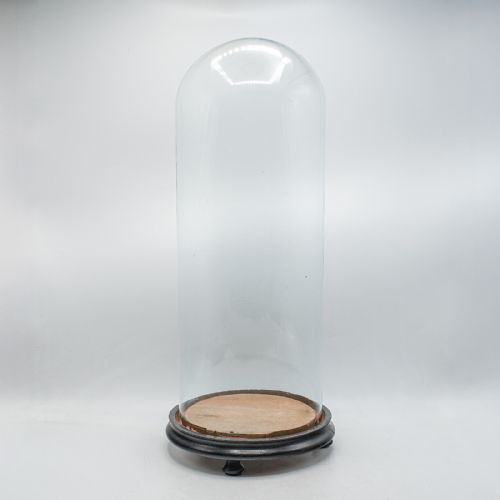
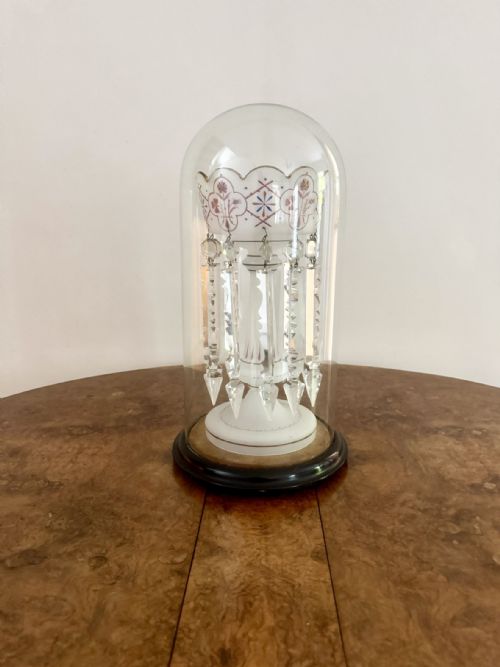
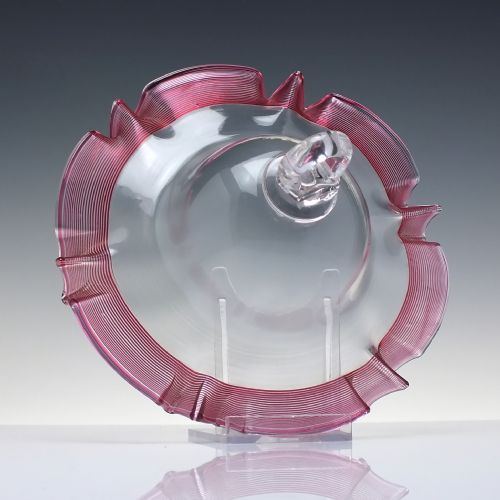


Clear Glass Cloche Dome
These clear glass cloche dome pieces protect delicate specimens and ornaments under transparent glass covers for formal domestic display.
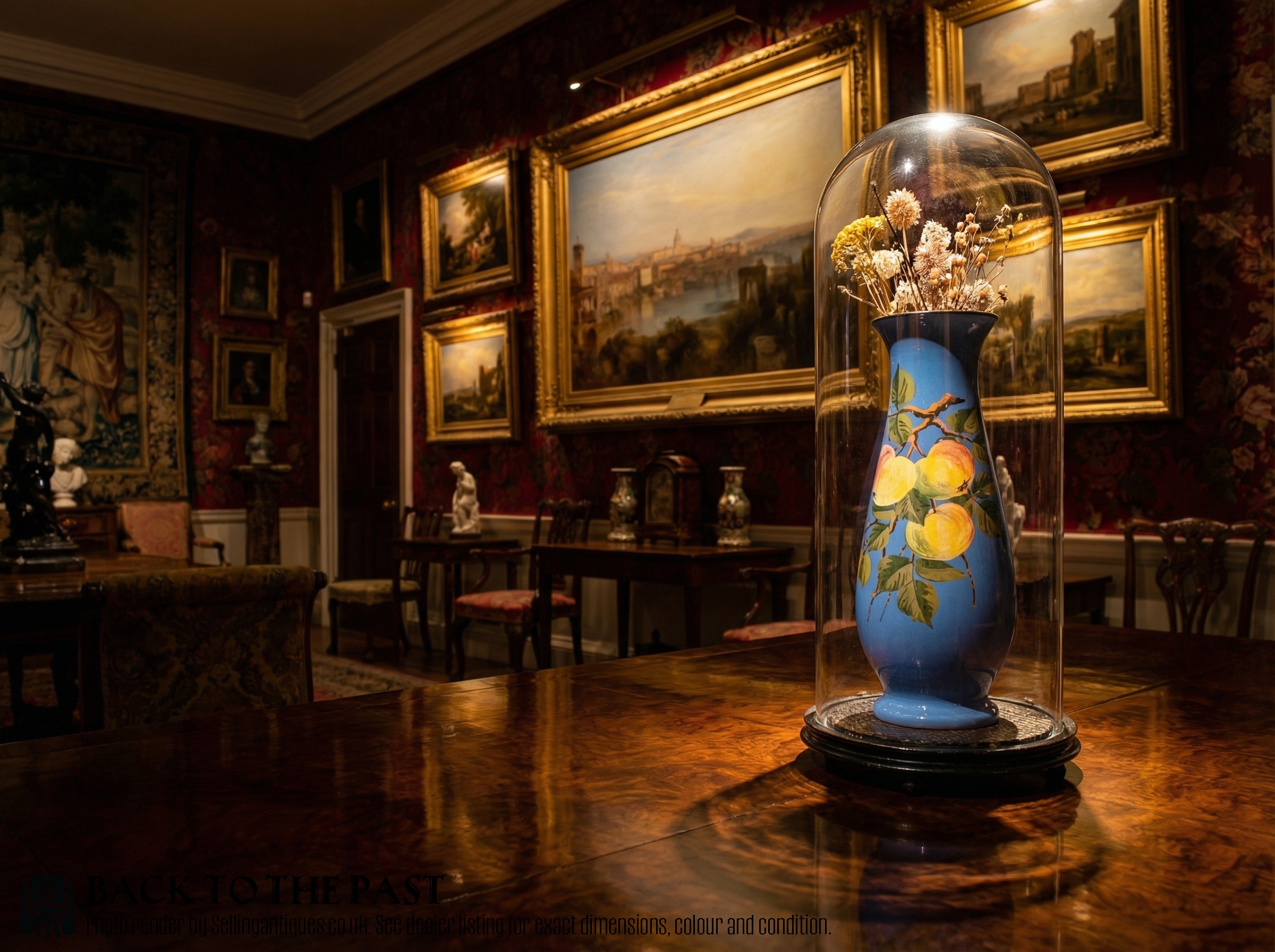
Clear Glass Cloche Dome
A clear glass cloche dome protects delicate interior arrangements from dust while maintaining complete visibility from every angle. The form appears primarily across Victorian and Edwardian periods, stretching from the late nineteenth century into the early twentieth century.
Buyers encounter various formats on this page, ranging from tall taxidermy showcases to wide clock cases and smaller dressing table displays. These items serve to cover specimens, clocks, and still life arrangements.
Most examples originate from English workshops, frequently paired with wooden bases constructed from beech, oak, or ebonised wood. The scale shifts from small cabinet items to large floor or mantel centrepieces.
Materials and Construction
Makers formed the transparent covers using blown glass techniques, producing smooth, curving surfaces that sit atop fitted wooden bases. These timber plinths frequently feature ebonised finishes, marquetry detailing, or plain turned edges.
Internal arrangements often incorporate velvet, felt, fabric, or baize linings to cushion displayed specimens, clocks, and botanical compositions. The base secures the glass cover while providing a stable foundation for heavier contents.
The listings span the Victorian and Edwardian periods, incorporating materials such as ebonised wood, felt, velvet, and marquetry.
Assessing Quality
Quality rests in the clarity and weight of the blown glass cover, where thinner, older examples display natural bubbles and slight distortions from period production methods. Superior pieces maintain uniform thickness across the entire curved surface.
The sophistication of the wooden base dictates the overall character of the piece, distinguishing plain pine supports from finely finished ebonised wood or detailed marquetry borders. The snugness of the fit between the glass dome and its channelled base also indicates superior craftsmanship.
The Clear Glass Cloche Dome Glossary
- Cloche
- A bell-shaped glass cover designed to protect plants, food, or decorative objects. The term shares its roots with the French word for bell.
- Ebonised
- Wood treated with a dark stain or finish to imitate ebony. This dark surface creates a sharp contrast against the clear glass above.
- Taxidermy
- The art of preparing, stuffing, and mounting the skins of animals for display. These specimens form a significant portion of the contents housed beneath the glass domes.
- Marquetry
- Decorative veneer applied to wood in geometrical patterns or pictures. This technique enhances the visual appeal of the base supporting the glass dome.
- Baize
- A coarse woolen material resembling felt, used to line the interior base of display cases. It provides a soft surface for resting delicate ornaments and specimens.
Clear Glass Cloche Dome: Frequently Asked Questions
What fits under a dome?
These glass covers accommodate a wide range of objects, including taxidermy birds, botanical specimens, carriage clocks, and still life arrangements of fruit.
Collectors historically used them to preserve fragile items from household dust and handling.
How do I date a dome?
Dating relies heavily on the style of the wooden base and the characteristics of the glass. Victorian examples often feature ebonised wood and heavier proportions, while Edwardian pieces sometimes utilise lighter timbers like oak or beech.
Slight imperfections in the glass bubble structure also point toward nineteenth-century manufacturing methods.
Are bases always included?
Most antique display domes survive with their original wooden bases, which feature specific grooves or channels to hold the glass securely in place. These plinths are integral to the stability and presentation of the piece.
Replacement bases alter the historic integrity of the item.
How should I clean the glass?
Clear glass covers require gentle cleaning with a soft cloth and mild glass cleaner to avoid scratching the historic surface. Care must be taken when lifting the heavy glass dome from its wooden base.
Harsh abrasives should be avoided entirely to preserve the original material.