
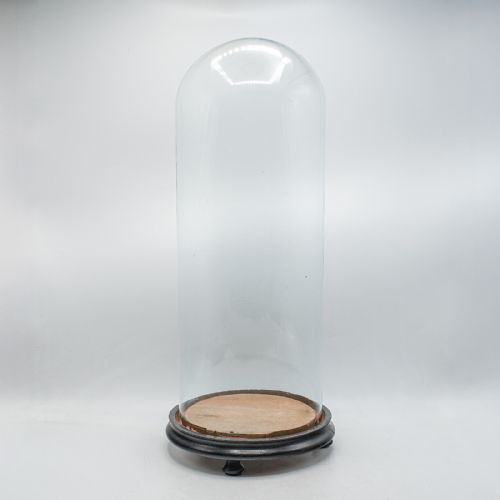


Black Wood Base Dome
A black wood base dome protects fragile specimens beneath blown glass from Victorian and Edwardian parlours.
Black Wood Base Dome
A black wood base dome brings together a blown glass cover and a dark timber plinth for displaying cherished curiosities. These pieces emerge predominantly from the Victorian and Edwardian eras, serving as protective enclosures for delicate objects.
The forms on this page span tall showcases, oval diorama cases, and wide specimen containers. Each iteration is designed to elevate and preserve the contents safely away from dust and disturbances.
Victorian examples often display deep proportions tailored for complex taxidermy or botanical arrangements. Edwardian variants continue this tradition with clean lines suited to similar display purposes.
Construction and materials
The glass elements are mouth-blown, resulting in characteristic subtle ripples, occasional air bubbles, and slight thickness variations across the curve. Makers shaped these clear bell covers over freehand forms or moulds to achieve tall and oval profiles.
Bases are constructed from timber finished in ebonised paint or dark stains to create a solid foundation. Internal floors are frequently lined with fabric or felt to cushion the displayed specimens securely.
Professor's specimen domes once safeguarded ambitious botanical discoveries from enthusiastic university cats.
Judging quality and character
Quality rests in the clarity of the blown glass and the integrity of the wooden plinth. Superior examples exhibit minimal distortion through the curved pane and tight joints in the base construction.
The presence of original felt or fabric linings enhances authenticity. Finer pieces demonstrate careful attention to proportion between the height of the glass dome and the depth of the timber base.
The Black Wood Base Dome Glossary
- Ebonised wood
- Timber treated with a dark stain or finish to imitate ebony. This dark surface provides a stark visual contrast to the specimens housed inside.
- Cloche
- A bell-shaped glass cover used to protect delicate items. The term derives from the French word for bell.
- Taxidermy showcase
- A specialised display enclosure designed to house preserved animals or birds. These cases protect fragile plumage and fur from dust and handling.
- Diorama
- A three-dimensional scene depicting animals or plants in a simulated natural setting. These arrangements require deep oval or rectangular glass covers.
Black Wood Base Dome: Frequently Asked Questions
What did people display inside these domes?
Victorian and Edwardian households utilised these glass covers for taxidermy birds, botanical specimens, and delicate clocks. They kept fragile curiosities clean and safe from everyday household dust.
Collectors also arranged dioramas and mineral collections on the felt or fabric bases. Each dome acted as a miniature private museum within the parlour.
How do I date a Victorian glass dome?
Examine the glass for handmade characteristics such as pontil marks, thickness variations, and small air bubbles trapped within the material. These traits point towards nineteenth-century production methods.
Consider the proportions of the ebonised base and the style of any internal felt lining. Late Victorian and Edwardian examples often feature heavier timber turnings and specific footprint shapes.
Can I display modern items under antique domes?
You can place modern sculptures, minerals, or dried plants beneath these glass covers. The neutral black wood base and clear glass complement contemporary objects just as well as historical specimens.
Ensure the dimensions of your chosen item leave adequate clearance beneath the dome to prevent the glass from resting against the object.