
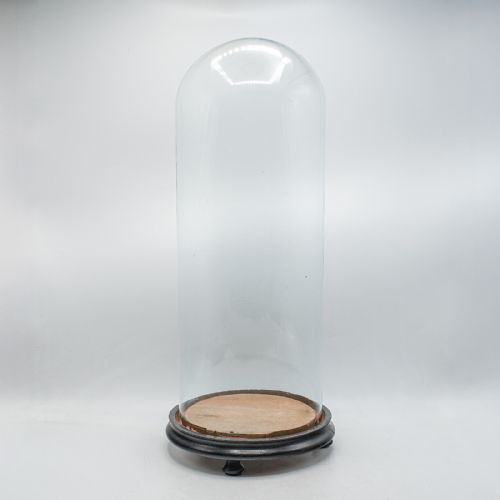


Vintage Glass Showcase Dome
These vintage glass showcase dome examples protect and display precious objects beneath clear blown covers.
Vintage Glass Showcase Dome
When you search for a vintage glass showcase dome, you encounter protective enclosures designed to display prized ornaments, clocks, and specimens. These items emerge primarily from the Victorian, Edwardian, and 1900 periods, reflecting an era when keeping dust away from delicate possessions was a household necessity.
The pieces on this page appear in various proportions, ranging from small specimens to tall structures suitable for taxidermy or carriage clocks. English origins dominate the selection, offering clear glass bell covers paired with fitted timber bases.
Most examples function as display domes and cloches, serving as focal points on tables and mantelpieces. Their traditional forms reveal how past households honoured curious finds, birds, floral arrangements, and mechanical timepieces.
How they were made
Makers fashioned the clear covers using blown glass techniques, shaping fluid material into smooth, curved bells that rested upon flat foundations. These transparent enclosures required steady heat and skilled manipulation to achieve even thickness without distortion.
The underlying platforms utilised seasoned woods such as ebonised wood, oak, beech, pine, and general timber, frequently turned or moulded at the edges. Interior surfaces often incorporated layers of fabric, velvet, or felt to cushion the displayed items and provide a contrasting background for specimens.
Past households hid miniature stuffed owls beneath these glass bells to keep dinner table conversations lively.
What varies in quality
The clarity and thickness of the blown glass define the upper tier of these pieces, showing fewer bubbles or striations within the transparent dome. Superior examples maintain a uniform curvature and sit flush against their designated wooden platforms without wobbling.
Base construction similarly separates standard items from finer creations, relying upon dense hardwoods and stable joints rather than soft timber. The integration of quality interior linings, such as well-preserved velvet or felt, enhances the overall presentation of the enclosed objects.
The Vintage Glass Showcase Dome Glossary
- Dome
- A rounded glass cover designed to protect and exhibit objects beneath it. These blown elements fit securely into grooves within wooden bases.
- Cloche
- A bell-shaped glass cover resembling a gardener's bell jar, adapted for interior display use. The term describes the specific silhouette of the transparent enclosure.
- Ebonised wood
- Timber treated with a dark finish to imitate expensive ebony wood. This dark surface creates a sharp visual contrast against the clear glass above.
- Taxidermy showcase
- An enclosure specifically configured to house preserved animal specimens. These taller versions protect delicate feathers and fur from dust and degradation.
Vintage Glass Showcase Dome: Frequently Asked Questions
What fits inside a vintage glass showcase dome?
These enclosures accommodate delicate ornaments, carriage clocks, and taxidermy specimens. Their interior height and width dictate the scale of the object placed beneath.
Collectors often utilise them to showcase preserved birds, floral displays, or small sculptures. The glass protects the contents from dust while allowing all-round visibility.
How do I date a glass display dome?
Dating relies heavily on the style of the wooden base and the characteristics of the glass. Victorian examples often feature turned timber plinths and heavier glass walls.
Edwardian pieces tend to show slightly lighter proportions and simpler base profiles. Examining the timber type and any interior fabric lining offers further clues to the period of manufacture.
Are the glass domes removable?
The glass bell lifts entirely away from the wooden base on almost all examples. This allows you to place your chosen object onto the internal platform before replacing the cover.
Care is required during handling because the heavy glass rests loosely within a routed groove on the base. Most units lack mechanical fasteners and rely purely on gravity and fit.
How should I clean the glass dome?
Cleaning requires removing the glass cover from its wooden base to prevent moisture or cleaning fluids from touching antique timber or fabric. Use a soft cloth and mild glass cleaner.
Avoid using harsh chemicals near the edges where the glass meets any original finishes. Ensure the glass is completely dry before placing it back onto the felt or velvet lining.