
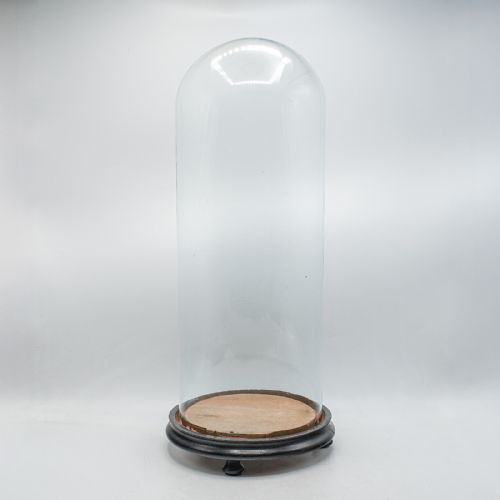


Ebonised Wood Glass Cloche
An ebonised wood glass cloche is a protective display vessel designed to showcase curiosities, and these examples combine dark timber bases with blown glass domes.
Ebonised Wood Glass Cloche
An ebonised wood glass cloche offers a traditional method for protecting delicate objects beneath a clear glass cover. These pieces primarily date from the Victorian and Edwardian periods, stretching back to around eighteen sixty.
The format usually involves a circular or oval wooden base finished in a dark ebonised tone, paired with a blown glass dome or cover. Such vessels served multiple domestic and scientific purposes, often housing taxidermy specimens, botanical displays, or ornamental items.
Visitors browsing this selection will encounter various display domes and cloches originating from English workshops. The proportions range from tall specimen cases to wide clock domes designed to fit over mantel timepieces or dioramas.
How they were made
The bases rely on timber such as pine, which underwent ebonising treatments to mimic more expensive dark hardwoods like ebony. Additional internal linings of fabric, felt, or bone frequently appear beneath the displayed objects.
The protective covers utilise blown glass fashioned into tall or wide domes, often shaped to fit precisely into grooves within the wooden plinths. Structural integrity depended on seasoned timber bases combined with robust glass enclosures capable of protecting fragile contents from dust.
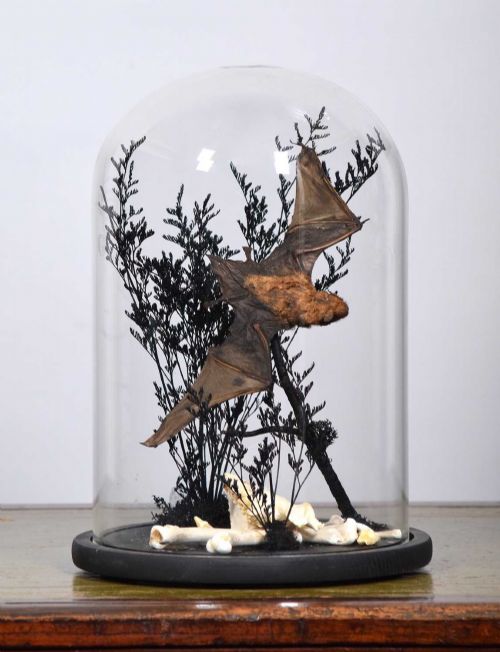
A solitary bat from eighteen seventy remains content inside its glass universe.
What varies in quality
Quality depends heavily on the clarity and thickness of the blown glass cover, with older vessels displaying subtle ripples and bubbles indicative of period manufacture. The precision of the ebonised wood finish and the soundness of the underlying timber plinth also dictate the standard of the piece.
The inclusion of original fitted bases, internal felt or fabric elements, and well-preserved taxidermy specimens elevates the integrity of the ensemble. Superior examples demonstrate careful balance between the proportions of the wooden base and the height of the glass dome.
James Gardner
The Ebonised Wood Glass Cloche Glossary
- Ebonised
- Timber treated with stain or paint to achieve the deep black appearance of ebony. This finish was widely applied to nineteenth-century display furniture and bases.
- Cloche
- A bell-shaped glass cover used to protect plants, food, or delicate objects. In interior contexts, it functions as a transparent display dome.
- Taxidermy
- The art of preparing, stuffing, and mounting the skins of animals for display. Victorian examples frequently occupy glass domes alongside botanical elements.
- Diorama
- A three-dimensional scene depicting historical, natural, or fictional subjects. These settings often sit protected beneath oval glass display domes.
- Specimen case
- A specialised enclosure intended to hold scientific or natural history objects. They range from tall professor cases to wide table showcases.
Ebonised Wood Glass Cloche: Frequently Asked Questions
What fits under an ebonised wood glass cloche?
These vessels house a variety of delicate objects including taxidermy specimens, botanical collections, and mantel clocks. The enclosed space protects fragile displays from dust and handling.
Historically, owners used them to exhibit birds, bats, and intricate ornaments as part of nineteenth-century interior decoration.
How do I date a glass dome?
Dating relies on examining the characteristics of the glass and the construction methods of the wooden base. Victorian and Edwardian examples often display distinct timber profiles and older glass-blowing traits.
Changes in proportion and materials help distinguish mid-nineteenth-century pieces from later Edwardian productions.
Are the glass covers original to the bases?
Many retain their original matching glass domes and fitted ebonised wood plinths. Careful inspection reveals whether the glass sits flush within the traditional grooves of the base.
Original pairings show consistent wear across both the wooden elements and the transparent cover.
How should I clean an antique glass dome?
Cleaning requires removing the glass cover carefully from the ebonised wood base to prevent damage to the display within. Mild glass cleaner applied with a soft cloth suffices for the exterior.
Internal cleaning is rarely necessary if the seal has remained intact over the decades, preserving the contents safely.