


Victorian Taxidermy Display Dome
A victorian taxidermy display dome brings natural history into the parlour behind blown glass and ebonised wood.
Victorian Taxidermy Display Dome
When you search for a victorian taxidermy display dome, you encounter complete glass enclosures designed to protect and exhibit preserved specimens. These pieces function as miniature ecosystems, keeping dust away from delicate feathers and fur while creating a clean focal point for a room.
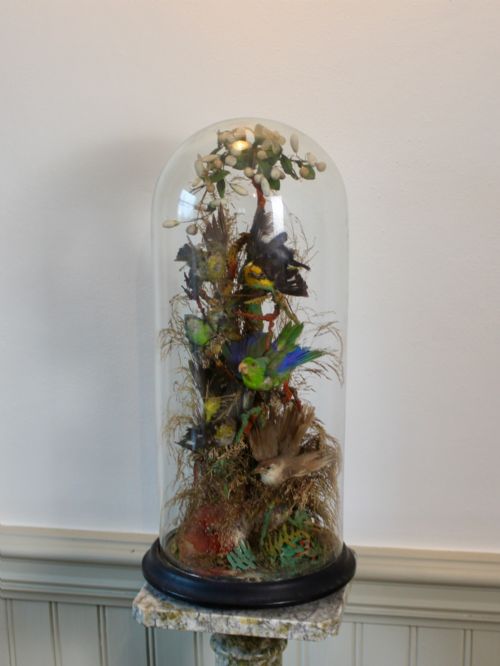
The most common examples on this page date from the Victorian and Edwardian periods, stretching from the mid-nineteenth century into the early twentieth century. They range from small tabletop specimens to tall showcases built to house complex avian compositions.
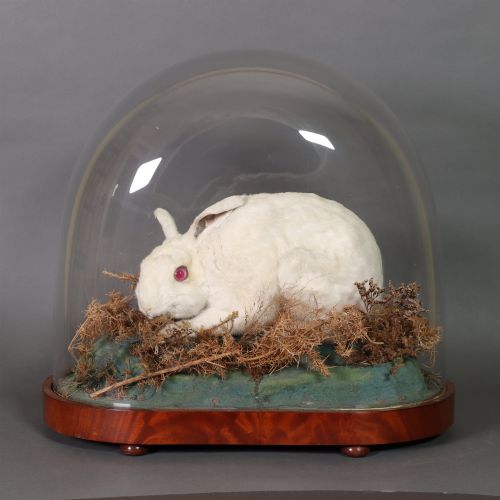
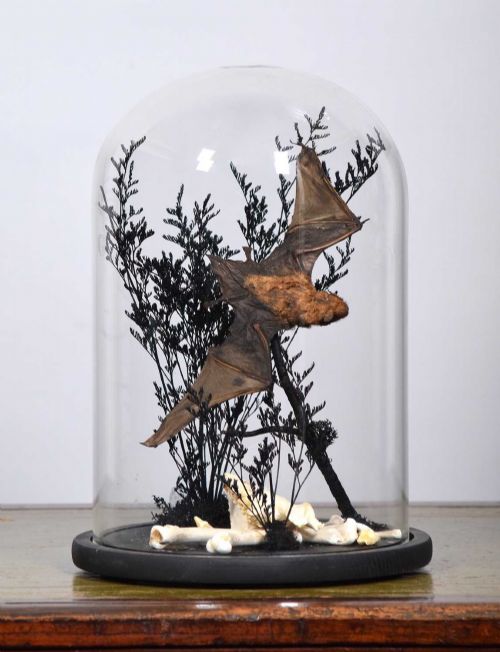
Inside the glass sits a variety of materials, including wood bases made from ebonised timber, oak, or mahogany. The specimens themselves span colourful exotic birds, bats, owls, rabbits, and animal skulls arranged over fabric, felt, or velvet linings.
Materials and Construction
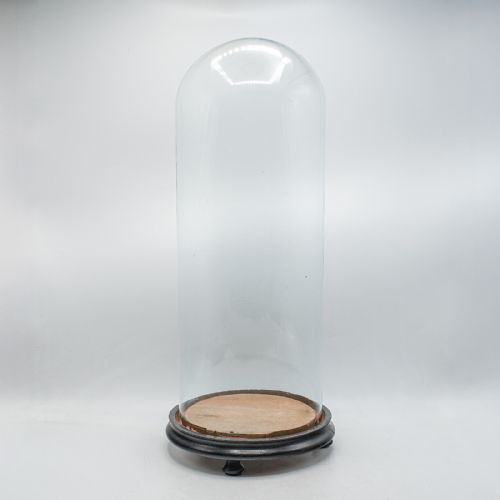
Makers constructed these display pieces using blown glass domes paired with turned wooden bases. The timber often received an ebonised finish to mimic expensive ebony, providing a dark contrast that made the brightly coloured specimens stand out.
Interior mountings relied on fabric backgrounds like velvet, felt, or plain cloth to cover the baseboards. Taxidermists positioned birds and animals with wire and pins, arranging them in naturalistic poses amidst faux foliage or branch work.
Some domes house an albino rabbit or a long-eared owl staring out at the room with permanent Victorian curiosity.
Judging the Standard
Quality rests upon the skill of the taxidermist and the clarity of the blown glass cover. Superior pieces retain the vibrant posture and plumage of birds like birds of paradise or owls, whereas lesser examples show stiff positioning or fading.
The base construction also dictates standard, with heavier woods and fitted channels holding the glass securely. Maker attribution to known firms adds significant distinction to an assembly.
James Gardner of London·Henry Ward London·A Pollard·Davis & Co Bristol
The Victorian Taxidermy Display Dome Glossary
- Cloche
- A bell-shaped glass cover used to protect delicate items. This term often appears interchangeably with display dome.
- Ebonised Wood
- Timber treated with a dark stain or finish to imitate true ebony. It forms the standard dark base found on most nineteenth-century specimens.
- Taxidermy Specimen
- A preserved animal prepared for exhibition. In these displays, creatures are mounted onto internal frames within the glass case.
- Display Showcase
- An alternative term for a dome setup that emphasises its function as a miniature museum cabinet. These pieces protect botanical or zoological items.
Victorian Taxidermy Display Dome: Frequently Asked Questions
What fits inside a display dome?
These enclosures house preserved animals, birds, skeletons, and botanical specimens. Common contents include owls, bats, rabbits, and multi-bird compositions arranged on velvet or felt.
Makers tailored the interior space to suit the specific scale of the taxidermy, ranging from single small bats to pairs of large exotic birds.
Were these made for homes or museums?
Victorian households utilised these glass displays as parlour ornaments to showcase natural history interests and exotic travel discoveries. They served as conversation pieces in drawing rooms.
At the same time, universities and professional collectors used similar tall domes for academic study and specimen preservation.
How do I date a glass dome?
Dating relies on the thickness and manufacturing marks of the glass, along with the timber used for the base. Ebonised wood and specific turning styles point toward the Victorian era.
Later Edwardian versions often feature simpler wooden plinths and different proportions compared to mid-nineteenth-century examples.