




Black Wood Glass Dome
Black wood glass dome pieces are protective glass covers set onto ebonised wooden bases, designed to preserve delicate Victorian and Edwardian specimens.
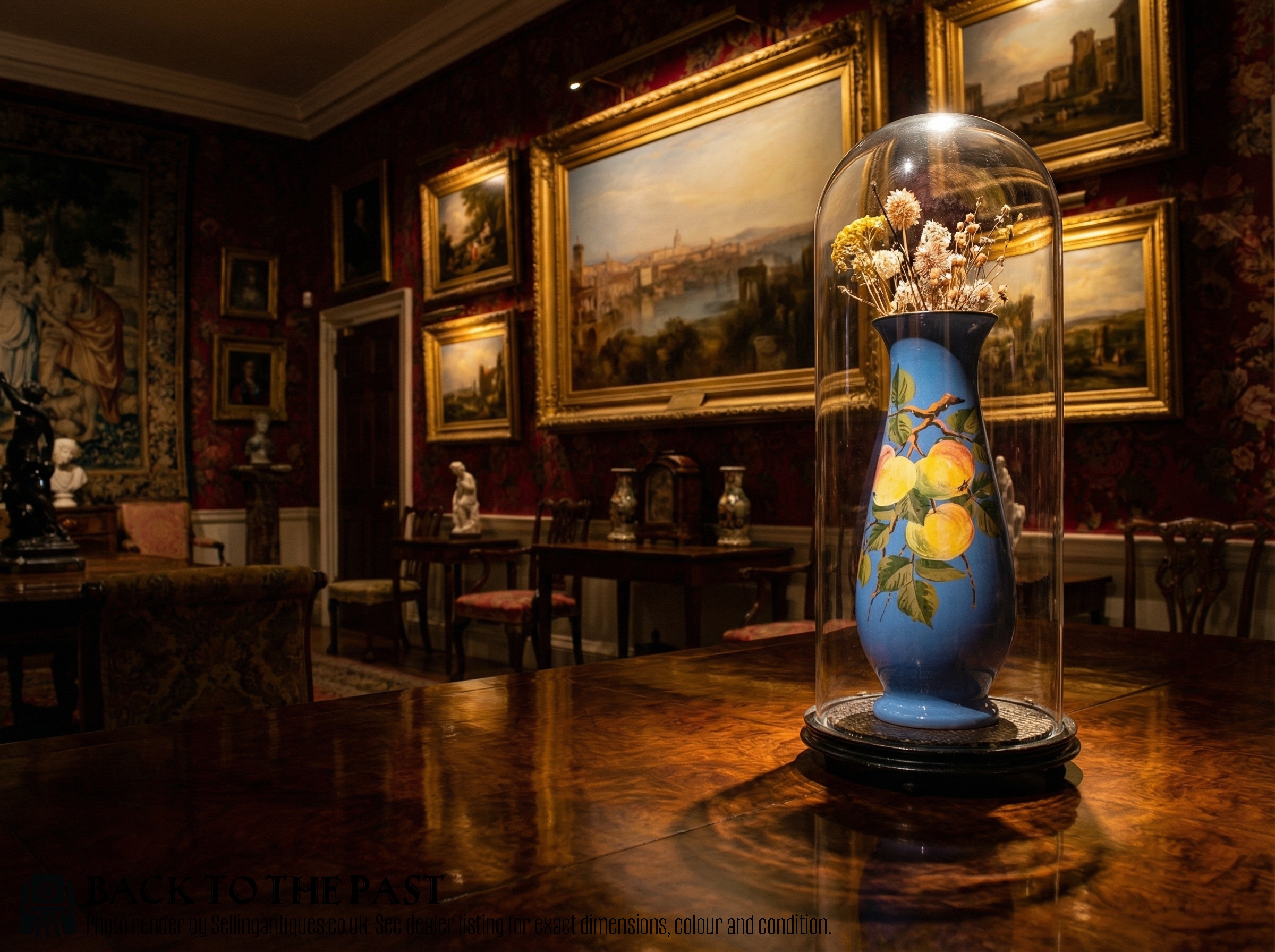
Black Wood Glass Dome
When you search for black wood glass dome, you are looking at nineteenth and early twentieth-century display vessels created to house delicate specimens, taxidermy, and botanical collections. These enclosures protect fragile items from dust and disturbance while allowing an all-round view.
The versions you are most likely to meet on this page hail from the Victorian and Edwardian eras, constructed in England. They take the form of tall, wide, or oval cloches and display cases resting upon timber plinths.
How they were made
Makers utilised blown glass to form the characteristic clear domes, shaping them over moulds to achieve tall or oval profiles. These transparent covers sit snugly upon timber bases finished with ebonised treatments to yield a deep, dark lustre.
Internal elements frequently incorporate fabric and felt layers affixed to the wooden floors to cushion botanical specimens, clocks, and taxidermy displays securely.
Black Wood Glass Dome Retail Price Guide 2026
Typical asking prices for black wood glass dome among the pieces listed under this phrase on Sellingantiques today, from the lower quarter to the upper quarter. They describe what is for sale here now, not the wider market.
Nineteenth-century professors clearly needed a great deal of glass protection, judging by the specialised specimen domes named in their honour.
What varies in quality
The clarity and weight of the blown glass set the foundation for quality, with superior examples displaying even thickness and minimal distortion. Thicker timber bases with careful ebonising also distinguish the finer specimens from simpler variants.
Proportion dictates the visual success of the piece, particularly where tall specimen domes or wide oval display cases balance the height of the glass against the depth of the wooden plinth.
The Black Wood Glass Dome Glossary
- Ebonised wood
- Timber treated with a dark stain or finish to imitate the appearance of ebony. This dark surface creates a sharp contrast against the clear glass dome above.
- Taxidermy showcase
- A specialised enclosure designed to house preserved animals and birds. These tall or wide glass domes protected fragile plumes and fur from household dust.
- Cloche
- A bell-shaped glass cover used for display. In these listings, it functions interchangeably with display domes to protect delicate botanical or taxidermy specimens.
- Diorama
- A three-dimensional scene enclosed within a glass case. Oval antique examples frequently house carefully arranged botanical or taxidermy subjects.
Black Wood Glass Dome: Frequently Asked Questions
What did people put inside black wood glass domes?
These vessels typically housed taxidermy specimens, botanical collections, and mantel clocks to shield them from dust in Victorian and Edwardian homes.
They also protected intricate handmade dioramas and delicate artefacts belonging to collectors and professors.
How do I date a glass dome?
Dating relies on the proportions of the glass, the cut of the timber base, and the style of any associated feet or interior fabric.
Victorian examples often feature heavier ebonised wooden plinths, while Edwardian versions frequently present sleeker profiles.
Are the glass domes removable?
The glass covers lift entirely off the ebonised wooden bases, allowing direct access to the interior specimens and display arrangements.
Care is required during removal due to the weight and fragile nature of the blown glass.
How do I clean a glass dome?
Gentle wiping with a soft cloth keeps the glass clear without disturbing the delicate ebonised finish on the wooden base below.
Harsh chemical sprays should be avoided to protect both the historic glass and the dark wooden surfaces.