


Ebonised Glass Display Dome
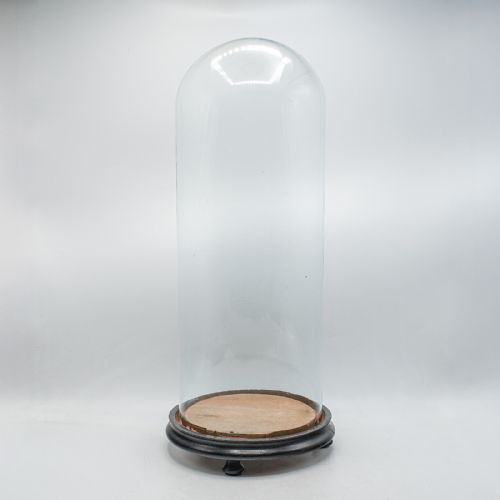
An ebonised glass display dome protects cherished ornaments and delicate specimens beneath clear blown glass upon a dark wooden base.
Ebonised Glass Display Dome
An ebonised glass display dome brings together a clear blown glass cover and a dark wooden base to shelter interior contents from dust. These pieces span the Victorian and Edwardian eras, emerging from nineteenth and early twentieth century workshops.
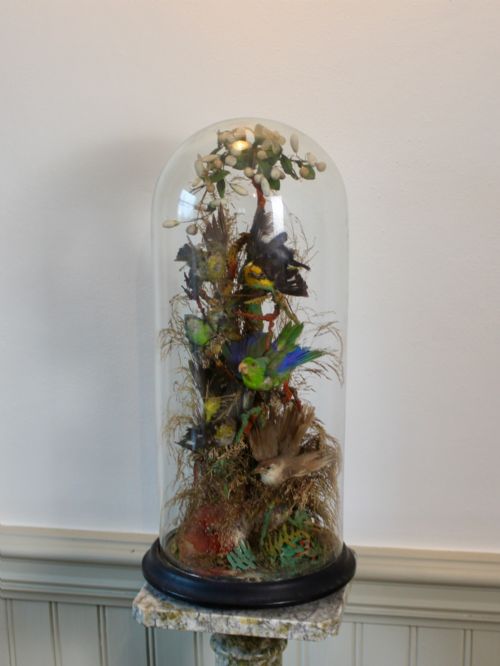
Most examples encountered here serve as showcases for taxidermy specimens, botanical arrangements, or decorative objects. The forms range from tall cylindrical vessels to flat sided and ovoid cases designed for specific displays.
Makers constructed these protective housings for collectors and naturalists wishing to exhibit fragile items safely. The prevailing aesthetic reflects the Victorian and Edwardian fascination with natural history and interior display.
Materials and construction methods
The glass component relies on traditional blowing techniques to create smooth, curved enclosures that fit securely onto prepared bases. Artisans shaped timber to form circular, oval, or wide platforms finished with an ebonised coating.
Interior presentations frequently incorporate fabric linings such as velvet, baize, felt, or plain cloth to support the mounted specimens. Wooden components utilise pine and other timbers painted or stained to resemble ebony.
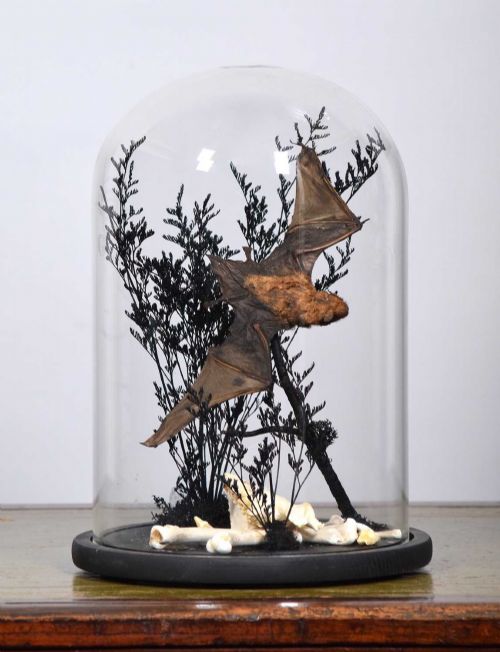
Victorian naturalists ensured even stuffed pipistrelle bats found permanent shelter beneath curved glass.
Distinguishing quality across examples
Superior pieces display exceptional clarity within the blown glass, remaining free of heavy bubbles or distortion. The ebonised finish on the wooden base shows even coverage and careful smoothing without crude joint work.
The interior arrangement dictates much of the visual success, where taxidermy specimens or botanical compositions demonstrate precise mounting and preservation. Well proportioned bases complement the height and curve of the glass dome above.
A Pollard·James Gardner
The Ebonised Glass Display Dome Glossary
- Ebonised wood
- Timber treated with stain, paint, or chemical processes to imitate the dark, dense appearance of genuine ebony. This finish provides a stark, dark contrast to the bright specimens sheltered inside.
- Cloche
- A bell shaped glass cover historically utilised in gardens or interiors to protect delicate items. The term frequently applies interchangeably with display domes.
- Taxidermy dome
- A glass enclosure specifically fitted to house preserved birds, mammals, or insects upon internal mounts. These assemblies often include naturalistic groundwork beneath the specimens.
- Ovoid
- An egg shaped profile seen in certain glass covers and bases. This curvature offers distinct optical properties compared to standard cylindrical or flat sided vessels.
- Baize
- A coarse woolen material utilised to cover the wooden interior floor of display bases. It provides a soft, uniform surface for arranging exhibits.
Ebonised Glass Display Dome: Frequently Asked Questions
What fits inside an ebonised glass display dome?
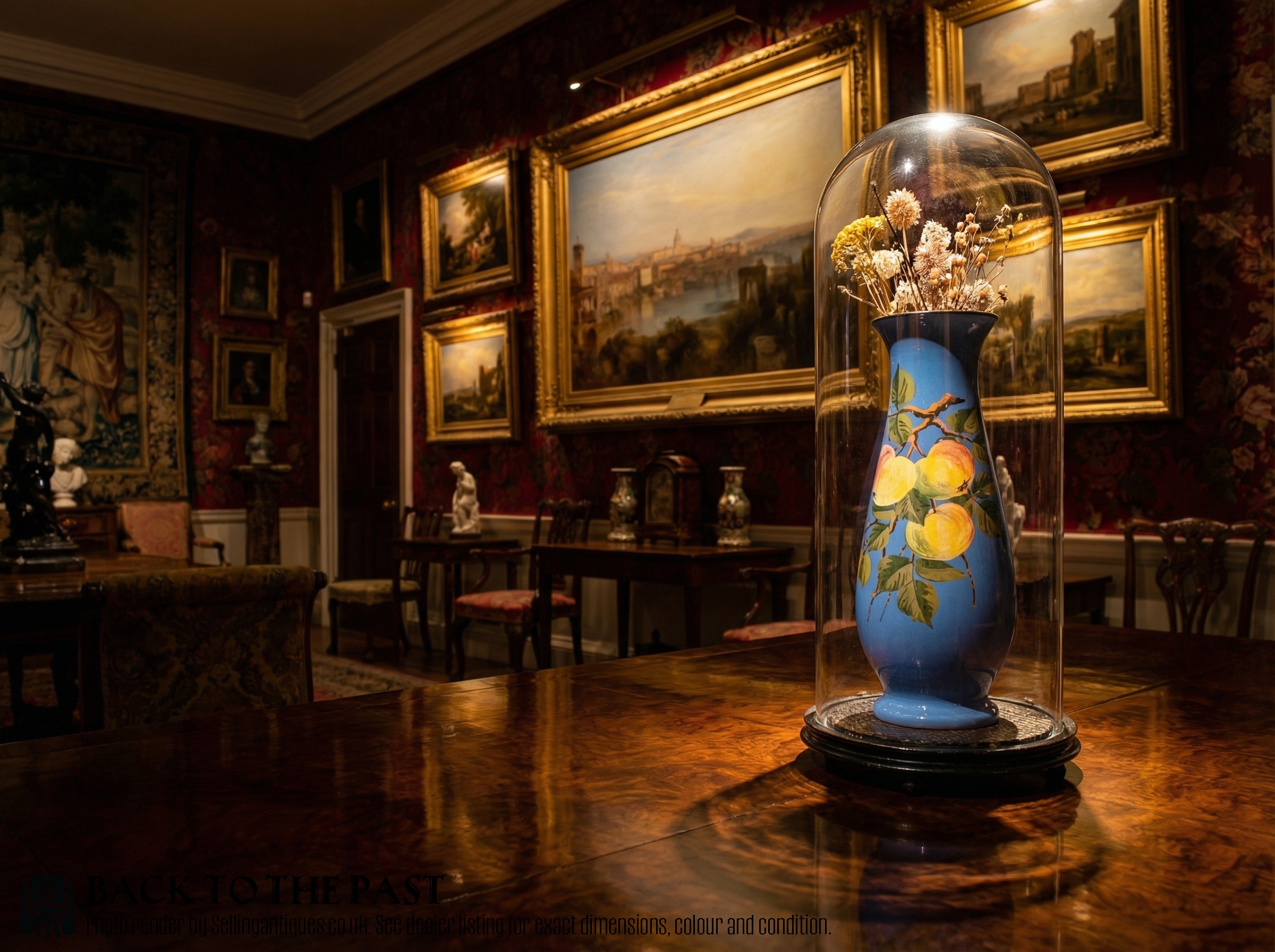
These enclosures traditionally house taxidermy specimens, botanical collections, and ornamental fruits. Collectors also utilise them to protect clocks and delicate decorative objects.
Interior arrangements rest upon lined wooden bases designed to complement the specific scale of the items displayed.
How do I distinguish Victorian from Edwardian domes?
Victorian examples generally date from the mid to late nineteenth century and often feature elaborate taxidermy compositions or Professor specimens. Edwardian pieces tend toward the early twentieth century with simpler proportions.
Examination of the timber, glass thickness, and internal mounting style helps determine the specific period of manufacture.
Can the glass cover be separated from the base?
The glass dome rests within a grooved channel on the ebonised wooden base without permanent adhesive. This removable design allowed naturalists to access the interior arrangement easily.
Exercise caution when lifting the cover to avoid chipping the lower edge of the blown glass against the timber.