



Taxidermy Specimen Display Case
A taxidermy specimen display case gathers preserved birds, fish, mammals, and natural history objects behind glass, keeping collections safe from dust and decay.
Taxidermy Specimen Display Case
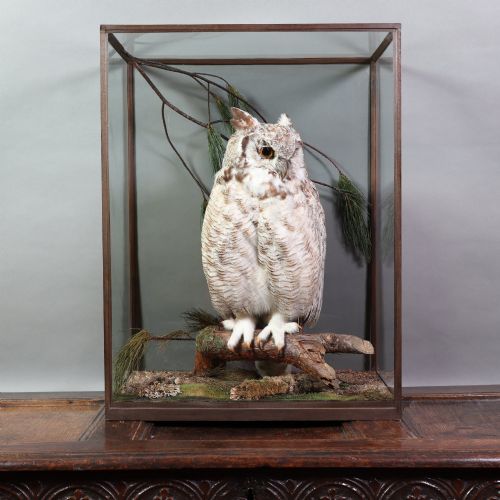
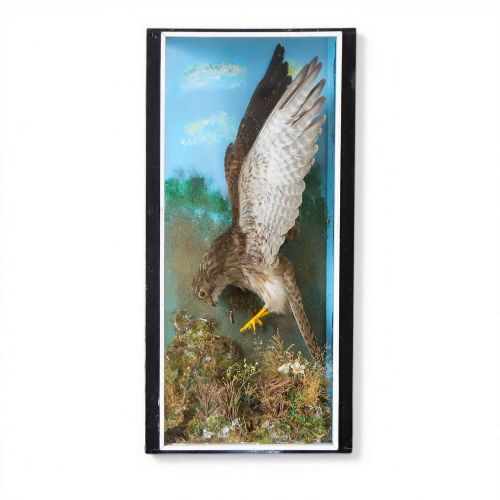
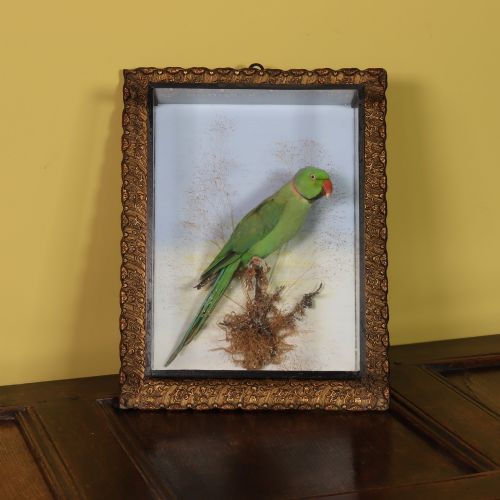
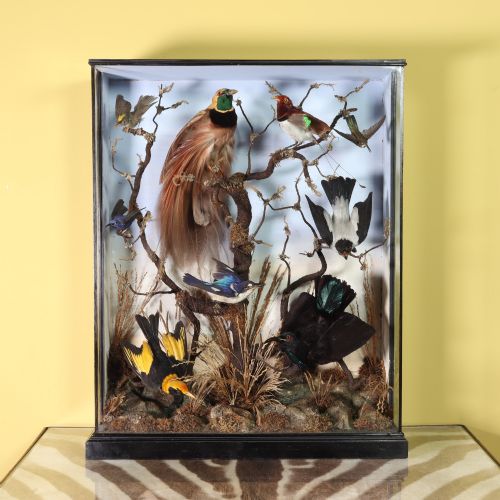
A taxidermy specimen display case brings together preserved animals, birds, fish, and insects housed behind glass for study and interior decoration. These objects appear in various forms, including rectangular wooden frames, picture frame cases, wall-hanging cabinets, and freestanding glass domes resting on bases.
Most examples found here date from the Victorian and Edwardian periods through the early twentieth century, spanning the eighteen-seventies to the nineteen-thirties. Makers ranged from local provincial workers to prominent London firms, housing everything from single songbirds to complex multi-species dioramas.
Buyers seek these pieces for curiosity cabinets, studies, and domestic rooms as historic examples of natural history art. The selection includes specific aquatic catches, large mammals, and botanical displays arranged alongside feathers, moss, and paper backgrounds.
How they were made
Cases combine glass panels with timber frames, often utilising ebonised wood, painted pine, or oak to enclose the interior. Taxidermy specimens inside are mounted and arranged around natural elements like moss, twigs, and painted paper backgrounds that mimic native habitats.
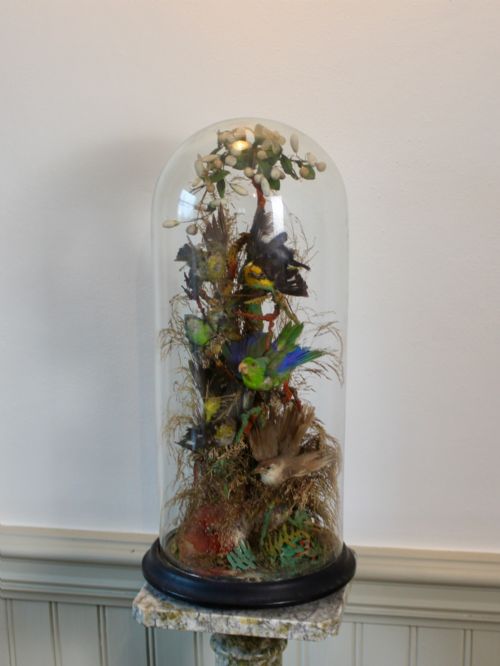
Freestanding circular and oval configurations employ blown glass domes set onto wooden or ceramic bases to protect delicate plumage and botanical specimens from atmospheric damage. Glazed frames utilise sealed wooden backboards to maintain dry internal environments for preserved creatures.
Some nineteenth-century crocodiles achieved immortality simply by holding a very still pose behind glass.
What varies in quality
Quality rests upon the skill of the taxidermist in capturing natural posture, anatomical proportion, and realistic expression within the creature. Well-executed compositions integrate background scenery, painted foliage, and preserved materials harmoniously without crowding the glass boundaries.
The construction of the enclosure itself dictates value, where clean joinery, original hand-blown glass, and robust framing preserve the contents effectively. Pieces bearing documented attribution to established practitioners or notable firms demonstrate superior workshop standards.
J Griffiths of Burford·Rowland Ward Ltd·William Bazeley And Sons·J Cooper And Sons·James Gardner·W F Homer·J Dobson
The Taxidermy Specimen Display Case Glossary
- Diorama
- A three-dimensional scene depicting wildlife within a recreated natural habitat. These arrangements use painted backdrops and preserved foliage to add depth.
- Ebonised wood
- Timber treated with a dark stain or finish to imitate ebony. This dark surface framing focuses attention directly on the specimen within.
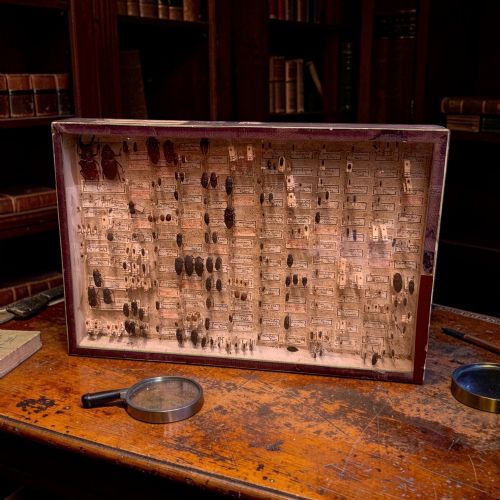
- Entomology case
- A shallow glazed box designed specifically for housing insect collections. These specimens are pinned neatly over paper layers for study.
- Cloche
- A bell-shaped glass cover set over a flat base to protect delicate objects. They provide clear all-round visibility for botanical and taxidermy displays.
- Specimen
- An individual animal, plant, or mineral selected for scientific study or display. Preserved examples form the central focus of natural history cabinets.
Taxidermy Specimen Display Case: Frequently Asked Questions
Where should I place a taxidermy case?
Position display cases away from direct sunlight, high humidity, and extreme temperature fluctuations to protect the feathers, fur, and paper components from fading and deterioration. Stable interior environments help preserve nineteenth-century natural history items.
Select sturdy shelves, tabletops, or dedicated cabinets that support the substantial weight of glass and timber enclosures safely. Wall-hanging picture frame cases require secure fixings matching the weight of the timber and glass assembly.
How do I identify a Victorian case?
Victorian examples frequently feature heavy ebonised wooden frames, hand-blown curved glass, and painted paper backgrounds depicting natural landscape details. Construction methods often include traditional joinery and older fixings characteristic of the nineteenth century.
Examine the interior taxidermy style, mounting materials, and accompanying handwritten labels or maker stamps if present. Edwardian and later twentieth-century pieces often adopt simpler, lighter oak frames or updated painted finishes.
What is an entomology case?
An entomology case is a shallow wooden box fitted with a glass lid designed to house and display collections of preserved insects. These specialised display boxes protect delicate specimens from dust while allowing clear observation.
Inside, insects are typically pinned securely above paper-lined backing boards, often accompanied by handwritten identification notes. They represent a distinct branch of nineteenth-century natural history collecting focused on classification.