




Taxidermy Display Dome
A taxidermy display dome preserves fragile specimens under clear glass while keeping them free from dust and handling.

Taxidermy Display Dome
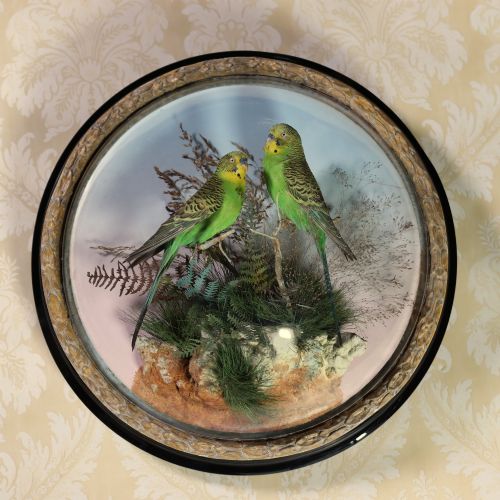
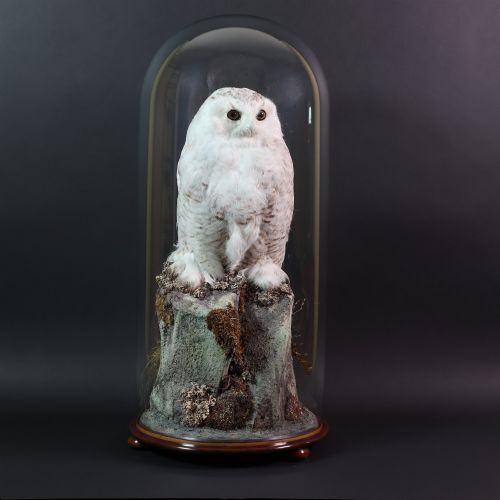
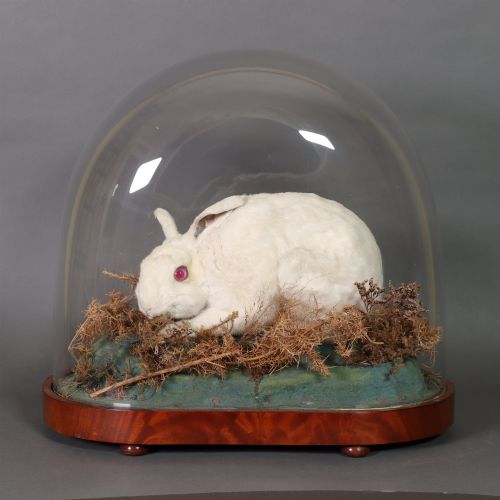
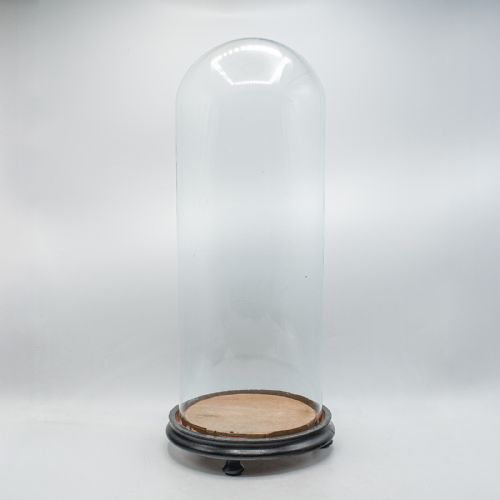
A taxidermy display dome consists of a blown or moulded glass cover resting upon a wooden or ebonised base, designed to showcase preserved natural history specimens. The pieces found here span the Victorian and Edwardian periods, stretching from the middle nineteenth century into the early twentieth century.
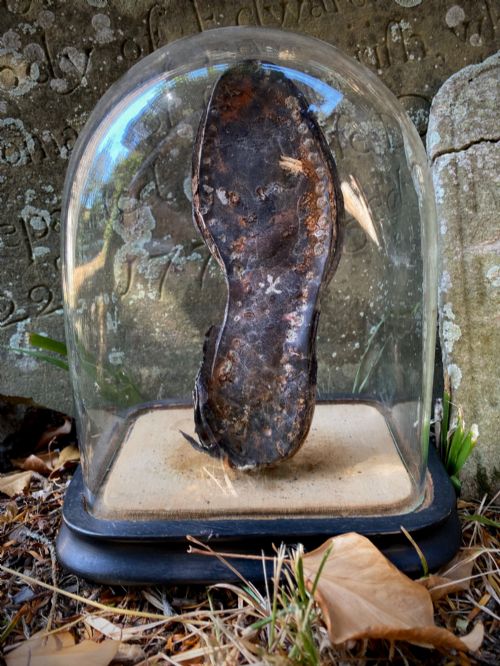
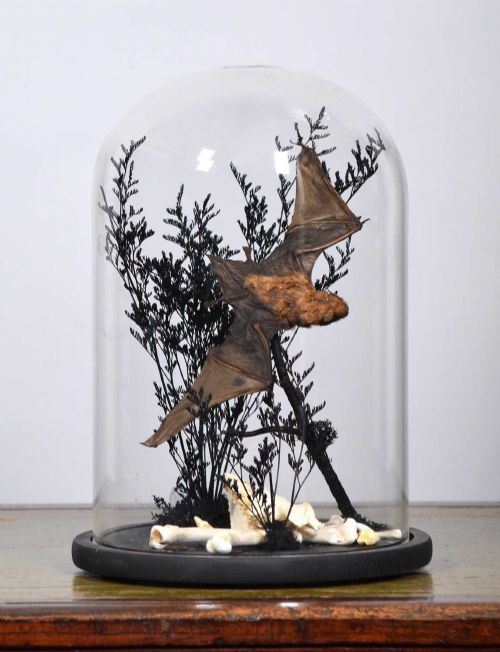
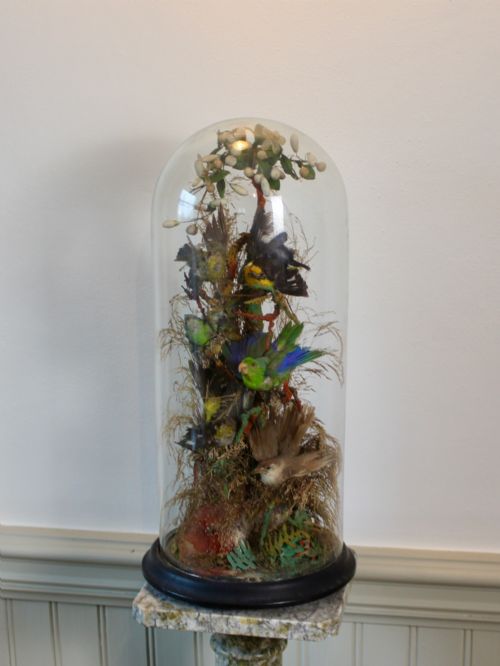
Most examples house birds, small mammals, or animal skulls, though some contain empty cloches or clock cases adapted for specimens. Collectors encounter tall, wide, and flat-sided shapes alongside ovoid and bell-bottomed variants intended for tabletops and mantels.
How they were made
Makers constructed these enclosures using blown glass paired with turned timber bases made from oak, beech, pine, or mahogany, often finished with an ebonised coating. Interior displays incorporated fabric, felt, velvet, and feathers to arrange taxidermy specimens and bone structures securely within the glass cover.
Workshops utilised specialised glass-blowing techniques to create clear, distortion-free bell jars and ovoid covers that fitted precisely into grooved wooden plinths. Taxidermists mounted birds and mammals upon internal perches or artificial foliage before lowering the glass dome over the composition.
Taxidermy Display Dome Retail Price Guide 2026
Typical asking prices for taxidermy display dome among the pieces listed under this phrase on Sellingantiques today, from the lower quarter to the upper quarter. They describe what is for sale here now, not the wider market.
Listings feature Victorian and Edwardian periods, utilising materials such as glass, ebonised wood, velvet, felt, feathers, and bone.
What varies in quality
Quality rests upon the clarity of the blown glass cover and the stability of the timber base, with thicker, uniform glass commanding higher regard among collectors. The precision of the joinery where the glass meets the grooved plinth dictates the overall integrity of the piece.
The sophistication of the internal taxidermy composition separates ordinary specimens from works by recognised natural history practitioners. Domes housing complex arrangements of exotic birds or unusual mammals demonstrate superior craftsmanship compared to simple single-specimen cases.
James Gardner·Henry Ward London·A Pollard·Davis and Co Bristol
The Taxidermy Display Dome Glossary
- Cloche
- A bell-shaped glass cover used to protect delicate items or display specimens on a tabletop. The term derives from the French word for bell.
- Ebonised
- Wood treated with a dark stain or finish to imitate ebony. This dark surface finish provides a high-contrast background for bright feathers and light-coloured bones.
- Diorama
- A three-dimensional scene depicting animals within a simulated natural habitat. These arrangements utilise artificial foliage and painted backgrounds inside the glass enclosure.
- Plinth
- The solid base upon which a glass dome rests. Plinths are typically turned from timber and feature a grooved channel to hold the glass securely.
Taxidermy Display Dome: Frequently Asked Questions
Where should I place a taxidermy dome?
Position the enclosure away from direct sunlight and damp environments to protect the fragile feathers, fabric, and bone specimens from fading or deterioration. Stable room temperatures prevent the historic timber bases from warping over time.
Place the piece on a sturdy tabletop or mantel where it remains secure from accidental knocks and heavy vibrations. Adequate clearance above allows for safe viewing without needing to move the heavy glass cover.
How can I tell Victorian from Edwardian domes?
Victorian examples, produced during the nineteenth century, frequently feature ebonised wood bases and elaborate multi-specimen natural history compositions. The glass on these pieces often displays subtle bubbles and minor irregularities characteristic of older manufacturing methods.
Edwardian pieces, dating from around the turn of the twentieth century, tend to utilise lighter woods such as oak and beech alongside simpler, more restrained display layouts. The glass on later specimens generally exhibits greater clarity and consistency in thickness.
Were these originally made for clocks?
Many glass domes and bases produced during the nineteenth century served as clock cases before being repurposed for taxidermy displays. Clock domes often feature circular timber plinths designed to accommodate mantel or carriage clock movements.
Collectors and dealers frequently adapted these spare glass covers to house specimens, bone displays, and botanical arrangements. The presence of an internal wooden platform or a central mounting hole often indicates this dual history.