

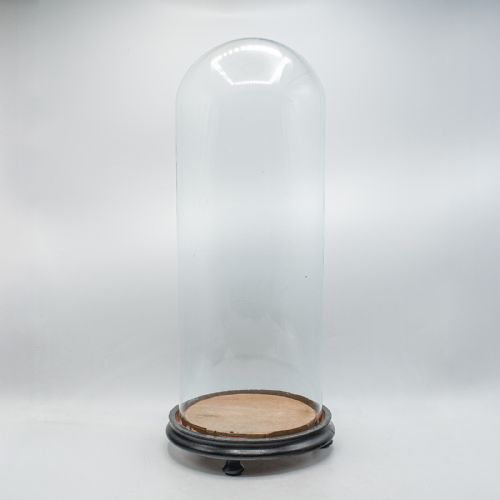


Glass Showcase Dome
A glass showcase dome protects fragile specimens and ornaments beneath clear blown glass while framing them securely on a timber base.
Glass Showcase Dome
A glass showcase dome is primarily designed to cover and preserve delicate items like taxidermy, clocks, and collectibles from dust and handling. These protective vessels appear frequently in Victorian and Edwardian interiors, functioning both as practical covers and as decorative display objects.
The pieces listed on this page span the Victorian and Edwardian periods, stretching from the mid-nineteenth century up to around 1910. Most examples take the form of tall or wide glass domes mounted on fitted bases, occasionally accompanied by larger shop vitrines and display cabinets.
Origins are predominantly English, reflecting the domestic demand for parlor displays during the late nineteenth and early twentieth centuries. Collectors encounter both cylindrical ovoid shapes and bell-bottom profiles designed to house specific specimens or mantel clocks.
Materials and construction methods
The blown glass covers are paired with turned timber bases fashioned from ebonised wood, oak, mahogany, beech, and pine. These wooden plinths often incorporate internal channels or grooves to seat the glass securely.
Bases are frequently lined with fabric such as velvet, felt, baize, or leather to cushion the displayed objects and create a finished presentation surface. Leather and woven textiles provide contrasting textures beneath glass and taxidermy specimens.
Glass Showcase Dome Retail Price Guide 2026
Typical asking prices for glass showcase dome among the pieces listed under this phrase on Sellingantiques today, from the lower quarter to the upper quarter. They describe what is for sale here now, not the wider market.
Victorian taxidermists needed steady hands to fit exotic birds beneath glass without ruffling a single feather.
Judging the quality of a glass showcase dome
Quality rests heavily on the clarity and weight of the blown glass cover, where older examples often display subtle bubbles or thickness variations characteristic of traditional manufacture. The crispness of the turning on the wooden base and the tightness of the fit between glass and timber also signal superior craftsmanship.
The choice of base timber elevates certain pieces, with dense hardwoods like mahogany and oak contrasting against simpler pine or ebonised softwoods. Intact period linings of velvet, baize, or leather further distinguish well-preserved examples from those with later replacements.
Davis & Co, Bristol
The Glass Showcase Dome Glossary
- Bell bottom
- A glass dome featuring a wider flared lower edge that sits directly upon a flat or recessed base. This distinctive profile provides extra interior clearance near the plinth.
- Ovoid
- A rounded, egg-like glass shape utilised for tall specimens and clocks. This curvature offers enhanced vertical space for towering taxidermy arrangements.
- Vitrine
- An enclosed glass display cabinet designed for shop or domestic use. These larger structures serve a similar protective function to smaller domes.
- Ebonised wood
- Timber treated with a dark stain or finish to imitate ebony. This dark treatment creates a formal framing contrast against the clear glass.
Glass Showcase Dome: Frequently Asked Questions
What fits inside a glass showcase dome?
These protective covers traditionally house taxidermy specimens, mantel clocks, carriage clocks, and delicate ornaments. The enclosed space keeps dust away from intricate feathers, fur, and delicate mechanisms.
Collectors also use them to display modern curiosities and preserved botanical specimens while maintaining a clear view from all angles.
How do I date a glass showcase dome?
Dating relies on the style of the wooden base, the type of timber utilised, and characteristics within the glass itself. Victorian examples often feature heavier ebonised or mahogany plinths with rich textile linings.
Edwardian pieces tend toward lighter woods like oak and beech while maintaining similar taxidermy and clock display functions.
Are the glass domes removable?
The glass covers lift off the wooden bases to allow access to the interior display space. This separation makes it possible to clean the glass and adjust the specimen positioned inside.
Care is required when lifting the glass due to the weight and fragile nature of blown vessels from the nineteenth century.
What is the lining usually made of?
Bases are commonly lined with fabric such as velvet, felt, baize, or leather to provide a stable surface for items. These materials cushion the base of a clock or taxidermy mount.
Original linings show period textures and wear patterns that help confirm the age of the overall assembly.