







Cased Bird Specimen Display
These cased bird specimen display pieces capture natural history through Victorian and Edwardian taxidermy, offering preserved birds housed in glass domes and wooden cases for interior decoration.
Cased Bird Specimen Display
When you search for a cased bird specimen display, you encounter Victorian and Edwardian natural history objects featuring preserved birds housed within glass cases, frames, and domes. These pieces originate primarily from the nineteenth and early twentieth centuries, spanning periods from the 1870s through to the 1930s.
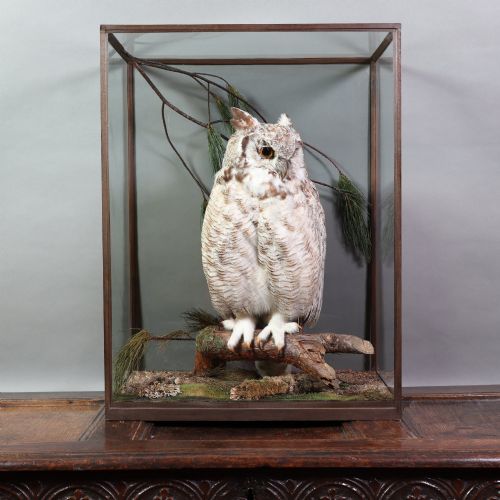
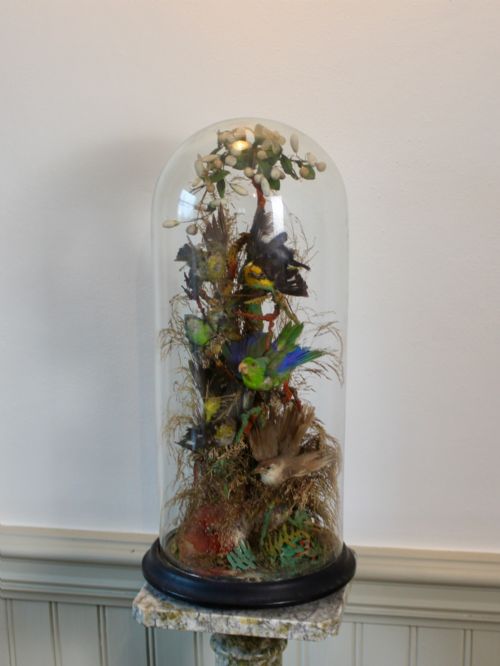
The forms vary from single specimen wooden cases holding a kestrel, jackdaw, or white pheasant to elaborate multi-species dioramas containing mixed exotic birds from New Guinea, South America, and Australia, alongside groupings of bantams or jays.
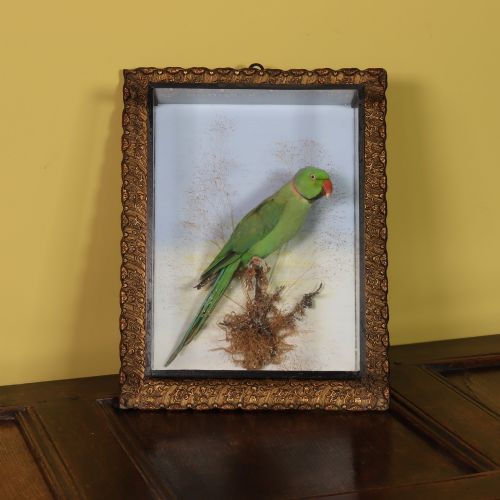
You are most likely to meet rectangular wooden display cases and glass domes containing single or grouped birds, reflecting the domestic curiosity cabinet decor popular in British households during the Victorian and Edwardian eras.
Materials and construction methods
Taxidermists utilised preserved specimens mounted alongside natural botanical elements such as moss, paper backings, and painted wooden backgrounds to recreate the natural habitat of each bird. The interior settings often include painted scenic backdrops inside custom-built wooden boxes.
Protection from dust and damage was achieved by enclosing the taxidermy compositions beneath blown glass domes or within glazed wooden display cases and picture frame cases, sealing the specimens for long-term preservation.
Cased Bird Specimen Display Retail Price Guide 2026
Typical asking prices for cased bird specimen display among the pieces listed under this phrase on Sellingantiques today, from the lower quarter to the upper quarter. They describe what is for sale here now, not the wider market.
Victorian households gathered around parrots, owls, and kingfishers frozen mid-flight inside glass boxes, treating the local taxidermist as a domestic magician.
Distinguishing quality in specimens and cases
The integrity of the glass and woodwork also influences the character of the piece, with painted dioramas and custom oak or glazed frames showing distinct craftsmanship compared to plain utilitarian boxes.
Rowland Ward Ltd·James Gardner·William Bazeley And Sons·J Griffiths Of Burford·W F Homer London
The Cased Bird Specimen Display Glossary
- Taxidermy
- The art of preparing, stuffing, and mounting the skins of animals for display in a lifelike state. This practice formed the foundation of natural history specimen preservation during the Victorian period.
- Diorama
- A three-dimensional scene depicting wildlife within a constructed natural habitat. These settings often incorporate painted backdrops and preserved foliage inside a glazed case.
- Curiosity cabinet
- A collection of diverse natural history specimens and artefacts displayed for study and wonder. Cased birds served as a primary decorative element within these domestic displays.
- Specimen case
- A protective wooden and glass enclosure built to house and preserve natural history objects. These cases shielded delicate feathers from dust and handling.
Cased Bird Specimen Display: Frequently Asked Questions
What are cased bird displays?
These pieces consist of preserved birds mounted within protective glass domes, wooden boxes, or picture frames. Taxidermists arranged the specimens alongside moss and painted backgrounds to simulate natural habitats.
Created primarily during the Victorian and Edwardian eras, they served as domestic ornaments for natural history collectors and households wishing to display exotic and British fauna.
How should I display them?
Place these pieces away from direct sunlight and high humidity to protect the delicate feathers and paper backgrounds from fading or deterioration. They function effectively on mantelpieces, tabletops, or within dedicated shelving units.
Their original purpose as curiosity cabinet decor suits studies, living rooms, and spaces styled with traditional or eclectic interior aesthetics.
How do I date a case?
Dating relies on the construction style of the wooden case, the framing materials, and documentation such as trade labels attached by the taxidermist. Victorian pieces often feature heavy wooden frames and detailed painted backdrops.
Later Edwardian and early twentieth-century examples shift slightly in framing techniques and cabinet construction, though stylistic overlap remains common across the decades.
Who made these taxidermy cases?
Professional taxidermists and specialised firms created these displays, ranging from local tradesmen to renowned London establishments. Prominent workshops employed skilled artisans to mount exotic birds brought back from expeditions.
Trade labels pasted inside the wooden backing or under the base frequently identify the maker and their business address.