

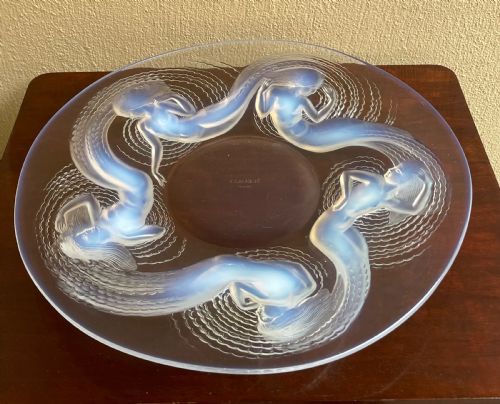


Moulded Glass Plate
These moulded glass plate selections bring tactile relief and catching light to a room, ranging from early Georgian service to Art Deco opalescence.
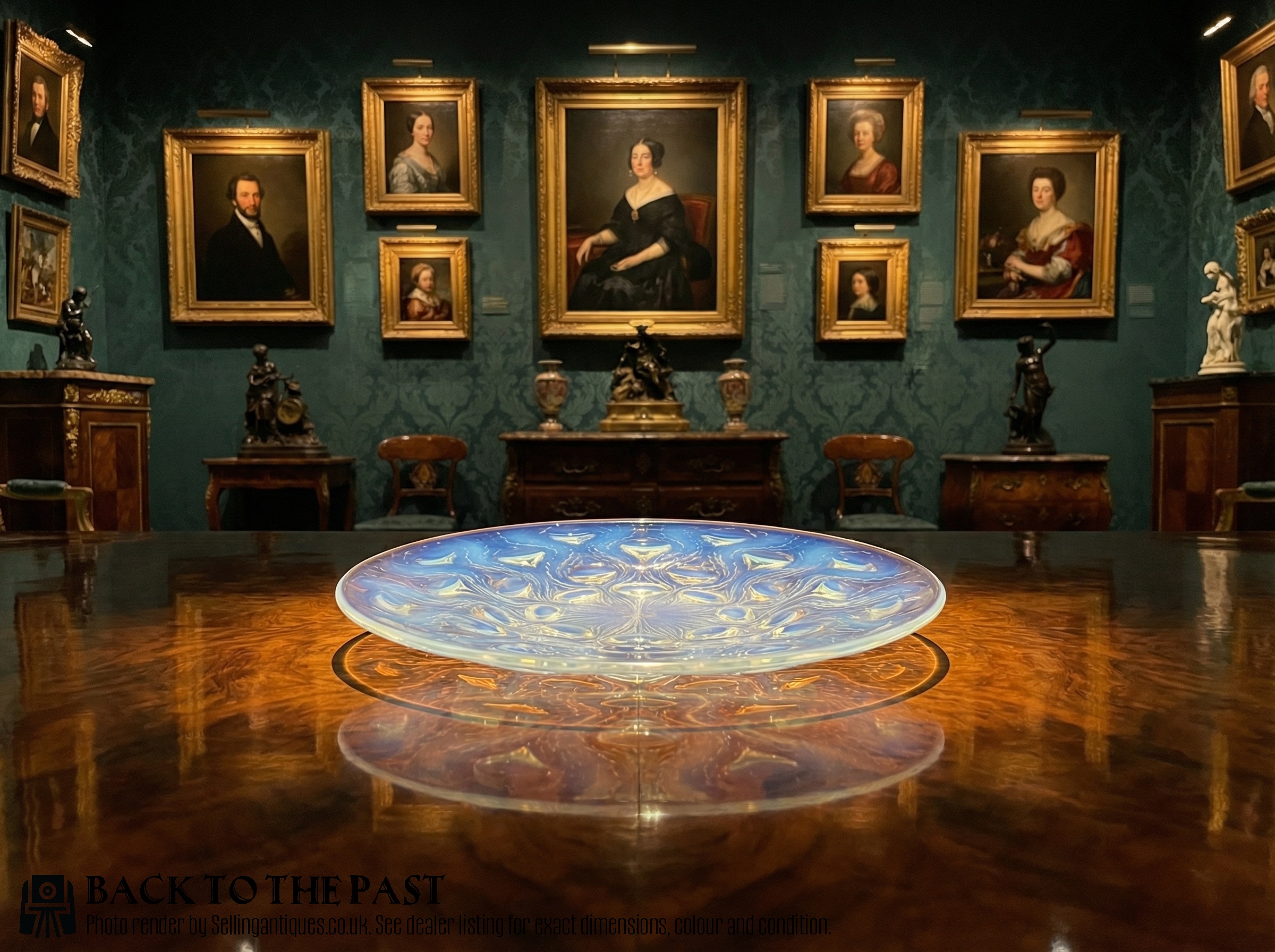
Moulded Glass Plate
A moulded glass plate is a tableware or decorative object shaped by pressing molten material into a metal form or matrix rather than blowing it freehand. The pieces found here span from Georgian ice plates through Victorian service up to twentieth-century Art Deco and Art Nouveau opalescent chargers.
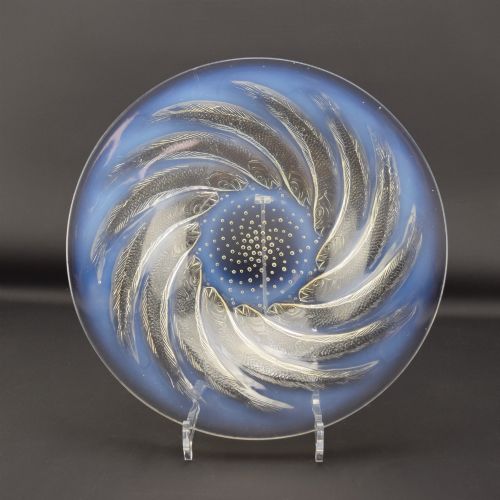
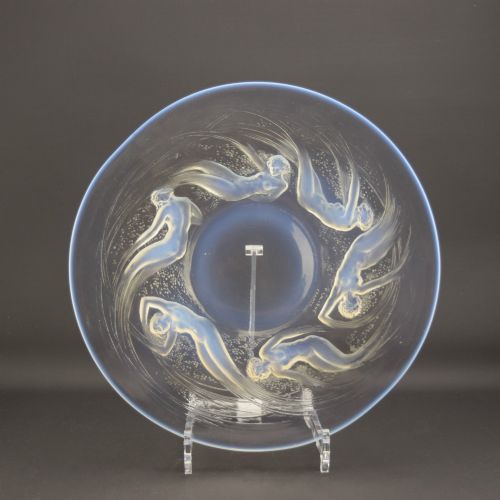
The twentieth-century examples dominate, particularly French opalescent and sepia-stained works featuring fish, fauna, and botanical motifs. Buyers encounter shallow bowls, coupes, and flat chargers alongside earlier domestic sweetmeat dishes.
How they were made
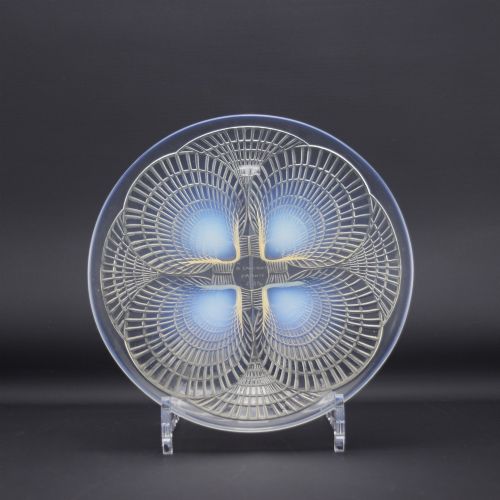
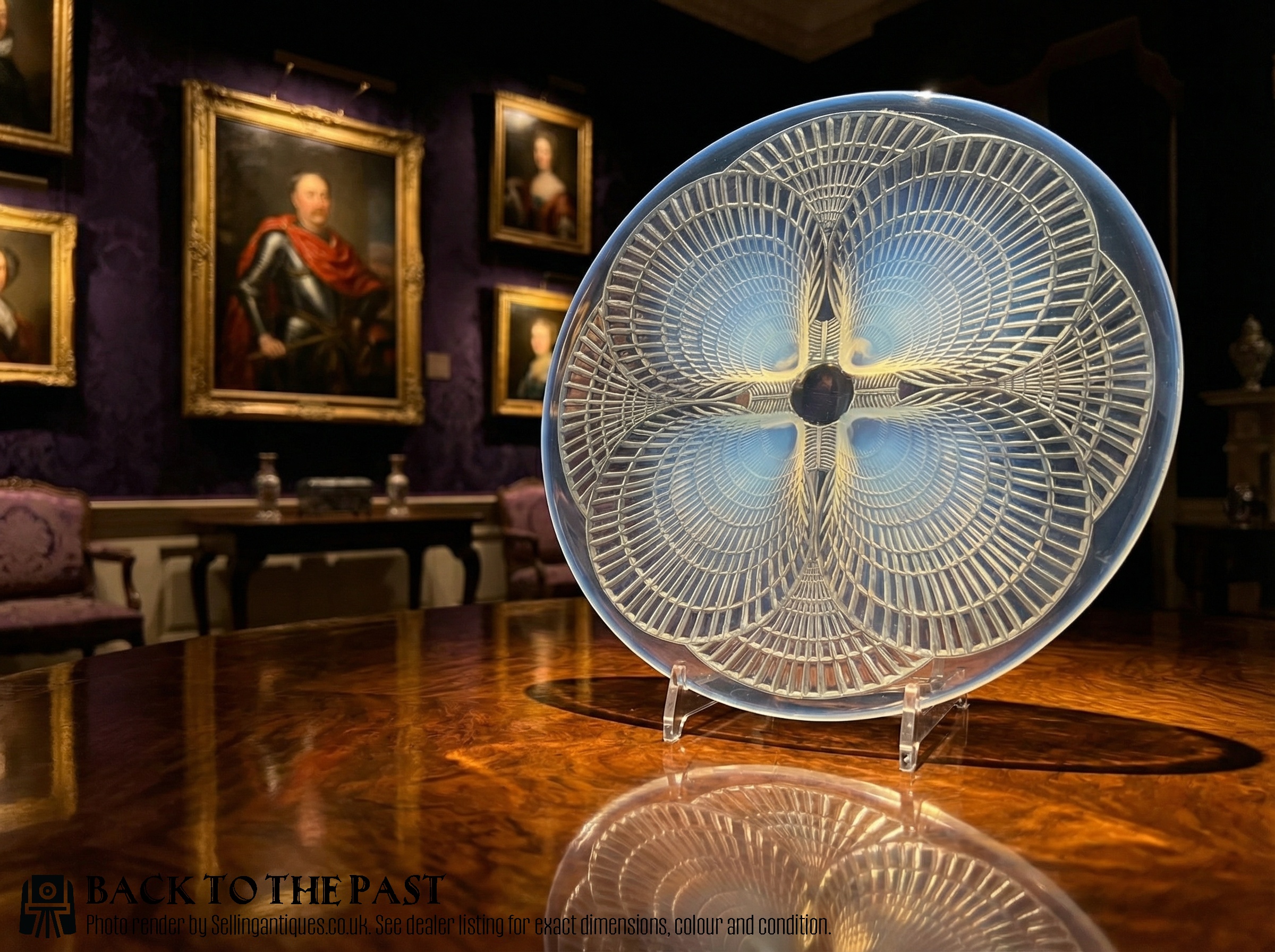
Moulding relies on pressing molten glass into pre-shaped metal moulds to impart both the front design and the structural rim in a single operation. This technique allows for repeating crisp patterns such as scales, feathers, or floral stems across the surface.
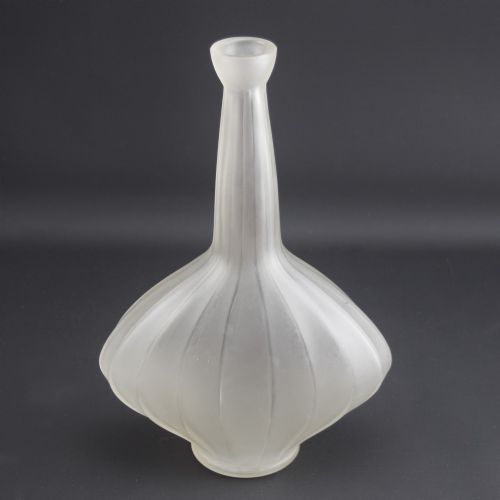
Makers utilised various treatments including opalescence to catch the light, frosted finishes for contrast, and sepia staining to sink dark pigment into the recessed moulded details.
Moulded Glass Plate Retail Price Guide 2026
Typical asking prices for moulded glass plate among the pieces listed under this phrase on Sellingantiques today, from the lower quarter to the upper quarter. They describe what is for sale here now, not the wider market.
What varies in quality
Quality rests on the crispness of the moulded relief and the subtlety of the glass chemistry itself, particularly how evenly the opalescent blue or milky glow diffuses across the surface. Stronger definition in feathers, fish scales, and botanical veins separates superior works from softer, blurred presses.
The depth of any added sepia stain or contrast colouring alters the visual impact, as does the thickness and weight of the glass body. Surviving pieces retain their intended surface texture without excessive wear to the high points of the mould.
Rene Lalique·Sabino·Verlys
The Moulded Glass Plate Glossary
- Opalescent Glass
- Glass containing agents that cause it to display a milky blue or amber glow when lit from the front, changing appearance against dark backgrounds.
- Coupe
- A shallow, rounded bowl or plate without a distinct flat rim, often used for serving fruit or as a decorative centrepiece.
- Charger
- A large decorative plate or salver used primarily for display or beneath smaller service courses rather than direct dining.
- Sweetmeat
- A small dish historically used for serving confectionery, nuts, or preserved fruits during formal meals.
- Sepia Stain
- A dark brown pigment applied to the recessed parts of a moulded design to provide contrast and highlight the relief details.
Moulded Glass Plate: Frequently Asked Questions
How are moulded plates cleaned?
Wash them gently by hand using lukewarm water and mild soap. Avoid harsh scrubbers that can scratch opalescent surfaces or remove sepia staining.
Dry them immediately with a soft lint-free cloth to prevent water spots from clouding the intricate moulded details.
Can these plates be used for dining?
Many historical pieces function primarily as decorative items or display chargers rather than everyday tableware. Earlier Georgian ice plates were made for service, but delicate opalescent surfaces demand careful handling.
Assess the glass thickness and condition before serving food, keeping them away from sudden temperature changes.
What causes the milky blue glow?
The milky blue or amber sheen results from specific chemical additives mixed into the molten batch during manufacture. When light strikes the glass, these compounds diffuse the rays to create the characteristic opalescence.
This optical effect shifts depending on whether the piece sits against a dark or light background.
How do I identify Art Deco pieces?
Art Deco examples typically feature stylised natural forms such as fish, birds, and floral arrangements rendered in symmetrical relief. They often employ heavy opalescent or frosted glass bodies characteristic of the interwar period.
Look for signature stampings or mould markings near the base edge.