



Blue Opalescent Plate
A blue opalescent plate catches the light with milky blue highlights that shift as you move it.
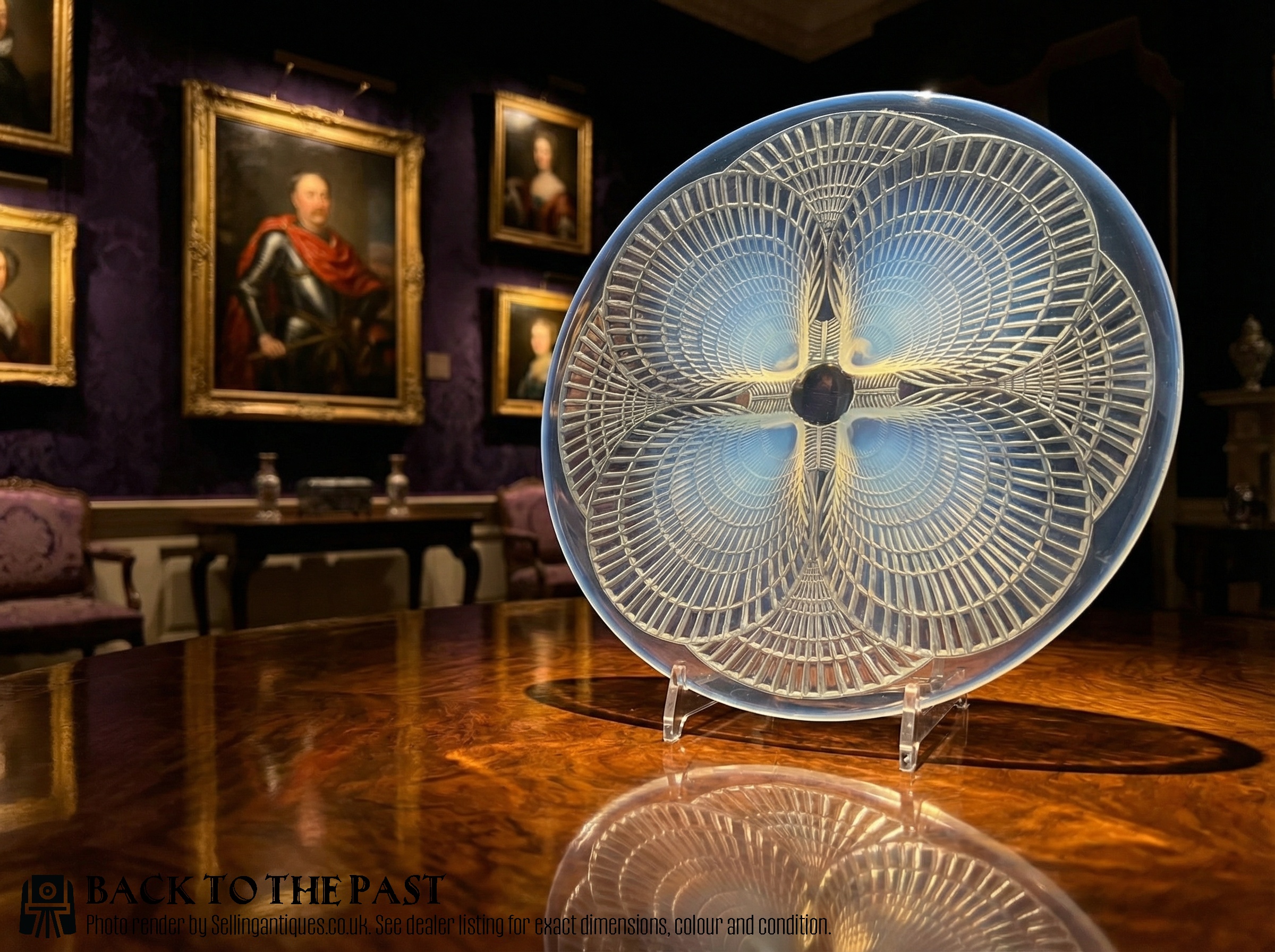
Blue Opalescent Plate
A blue opalescent plate displays a milky, translucent quality that shifts between soft blue and amber tones depending on the angle of the light. The pieces gathered under the blue opalescent plate search span the Victorian era up through the Art Deco period of the 1920s and 1930s. Most examples encountered here originate from the prominent glassworks of René Lalique, alongside Victorian pressed glass production.
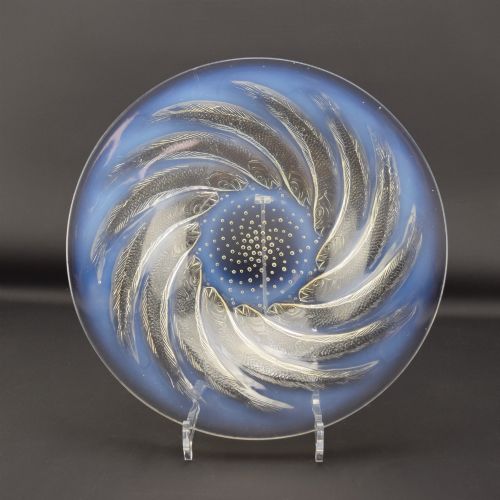
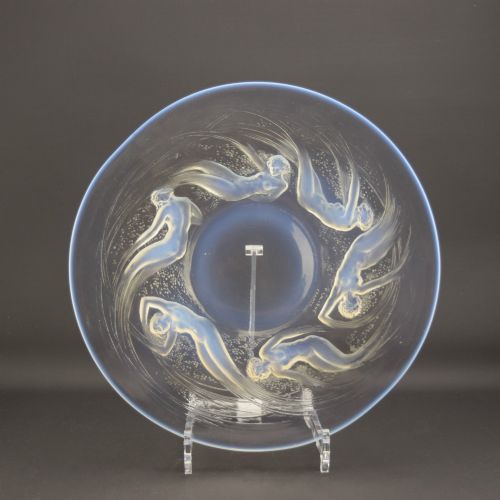
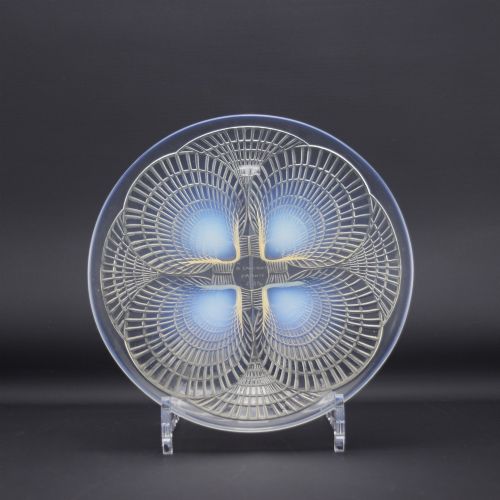
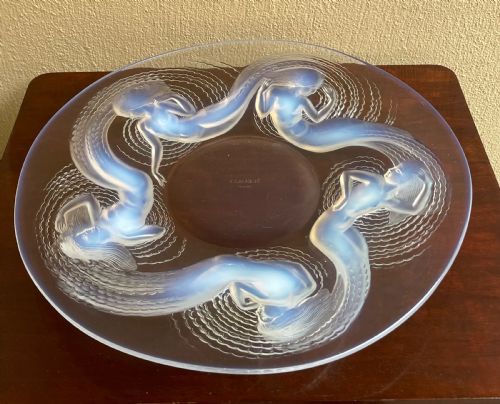
The forms range from flat decorative plates and shallow bowls to larger chargers and cake stands. Designs often incorporate botanical and aquatic motifs such as fish, shells, flowers, and feathers moulded into high relief. These objects function primarily as decorative vessels or centrepieces rather than everyday tableware.
Materials and manufacture
These items rely on pressed glass and opalescent glass, utilising chemical additives within the molten batch to scatter light and create the characteristic milky blue haze. Mould-blowing and pressing techniques allow makers to achieve deep relief patterns across the surface of each bowl or plate.
Frosted glass finishes are frequently applied to the background details, creating a textural contrast against the luminous, translucent highlights of the moulded motifs.
Fish swim endlessly across the glass surface of these plates, frozen mid-glide in milky blue tides.
Assessing quality
Quality rests upon the crispness of the moulded relief and the depth of the opalescent effect within the glass. Stronger contrast between the clear or tinted body and the milky blue highlights distinguishes superior modelling.
The finesse of the finishing work, particularly the subtlety of the frosting and the precision of the polish on the base, separates standard production from exceptional design.
Rene Lalique·Davidson·Verlys
The Blue Opalescent Plate Glossary
- Opalescent glass
- Glass that diffuses light to display a milky, pearlescent appearance with bluish highlights. This optical effect results from the controlled cooling and reheating of the glass batch containing specific chemical agents.
- Pressed glass
- Glass shaped by being pressed into a metal mould using a plunger. This technique allows for intricate surface patterns to be produced consistently.
- Frosted glass
- Glass rendered translucent rather than transparent by acid etching or sandblasting. This matte surface creates a contrast against polished or opalescent areas.
- Charger
- A large decorative plate used as a base or displayed on its own. These items sit at the larger end of the scale for decorative tableware.
- Coupe
- A shallow circular vessel or bowl with sloping sides. The form is frequently utilised for dessert or decorative display.
Blue Opalescent Plate: Frequently Asked Questions
How do I clean my plate?
Wash the glass gently in warm, soapy water using a soft cloth to protect the delicate frosted and opalescent surfaces.
Avoid abrasive sponges or harsh detergents that might scratch the raised moulded details.
Are these plates for dining?
These decorative pieces serve primarily for display or occasional service due to their moulded relief and antique status.
Using them for everyday dining risks damaging the raised glass designs and the polished surfaces.
How do I date an opalescent plate?
Examine the stylistic markers, such as the geometric symmetry of Art Deco or the florid ornamentation of the Victorian period.
Maker signatures or registry marks pressed into the base provide further confirmation of the production era.
Why does the colour change?
The opalescent effect scatters shorter light wavelengths, causing the glass to appear blue in reflected light and amber or yellowish in transmitted light.
This optical property is an inherent result of the glass chemistry rather than a surface tint.