
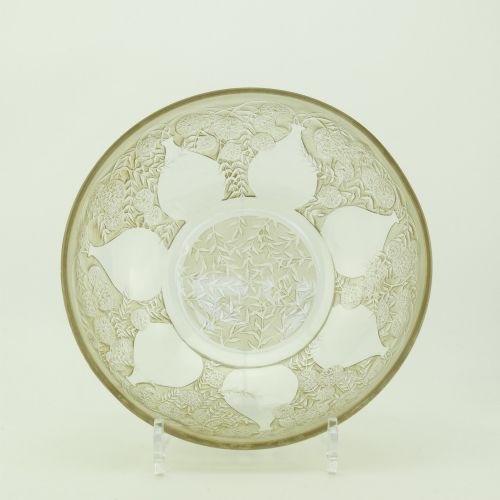
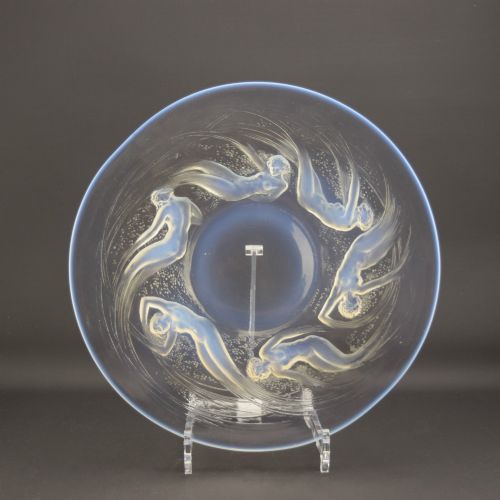
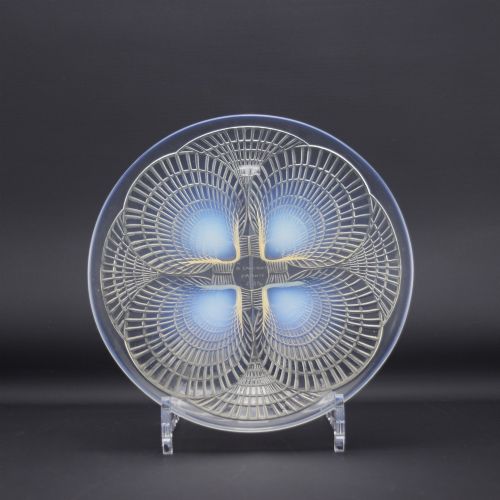

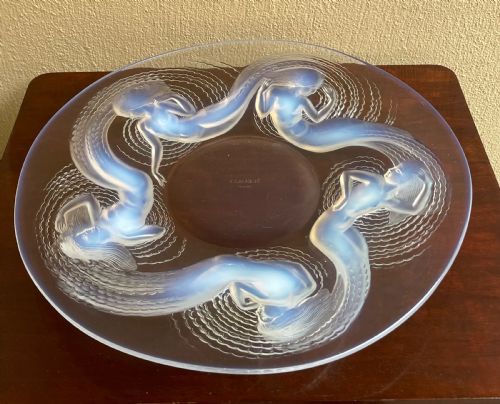


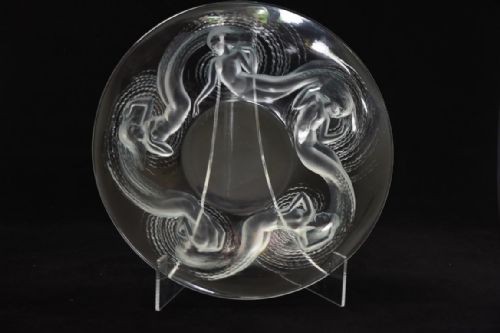


Art Deco Glass Charger
An art deco glass charger brings brilliant optical depth and striking geometric or natural relief to a dining table or wall.
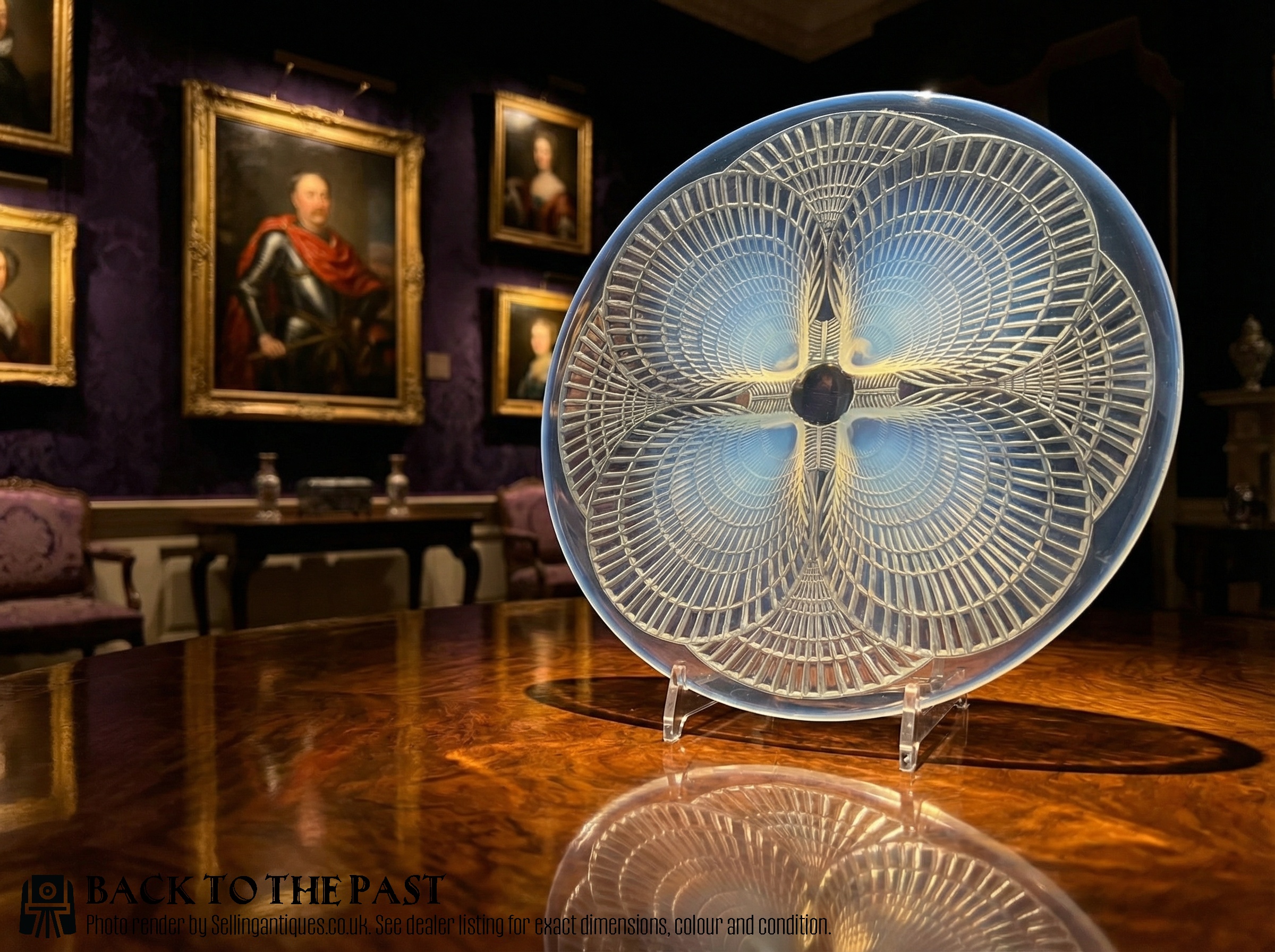
Art Deco Glass Charger
When you search for an art deco glass charger, you are looking at substantial circular display pieces designed primarily for visual impact rather than heavy daily service. These large plates and salvers anchor a room with their distinct diameter and flat or shallow well.
The versions you are most likely to meet on this page hail from the nineteen twenties and nineteen thirties, capturing the height of French decorative arts production. They span both organic Art Nouveau survivals and crisp Art Deco geometries, rendered in heavy pressed or moulded formats.
Forms range from deep decorative bowls and coupe vases to wide flat plates and formal chargers. Their utility shifted from functional tableware towards pure ornamental display, often mounted on stands or hung on walls to catch the light.
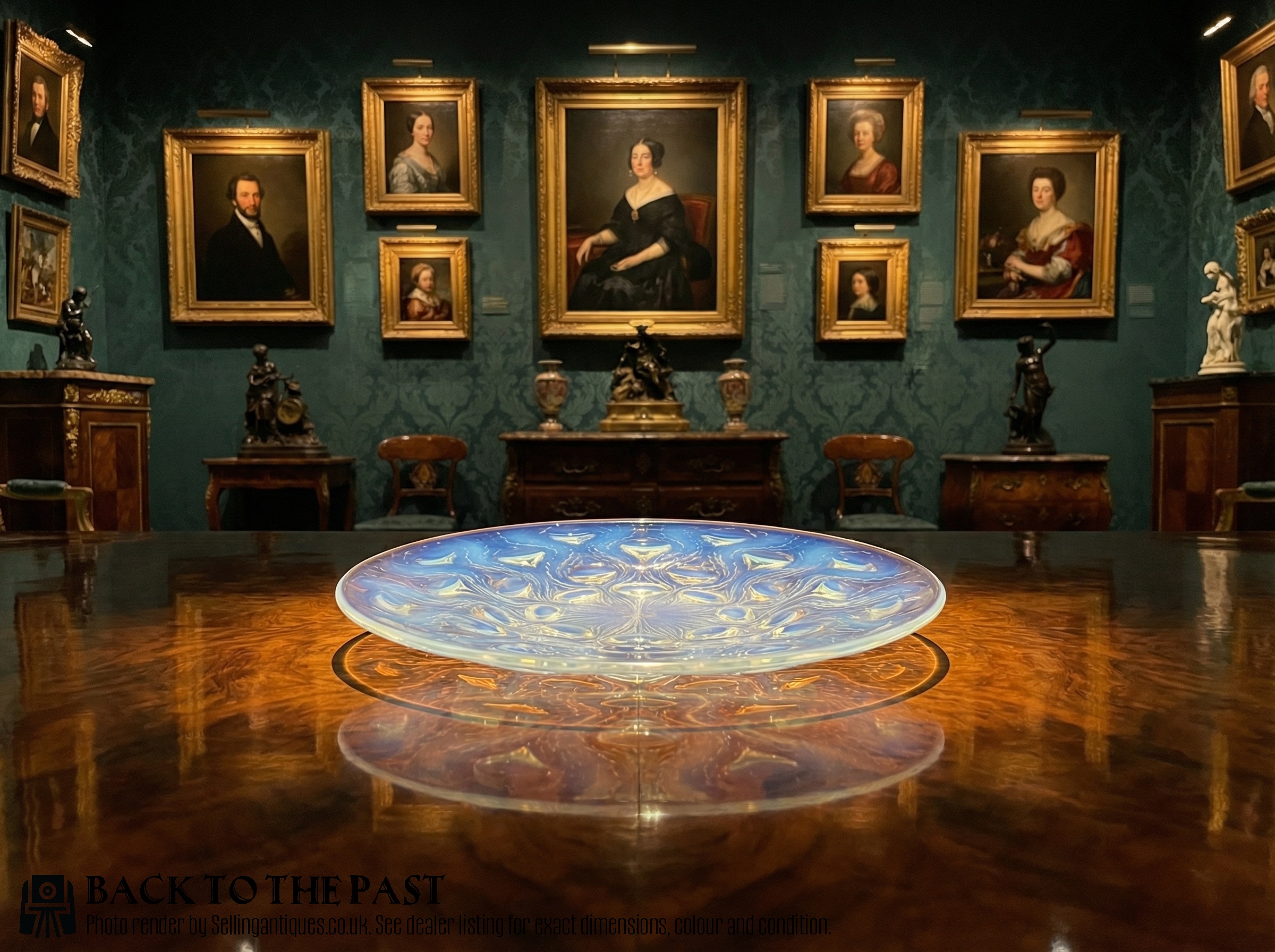
Materials and production techniques
Makers utilised heavy pressed or moulded glass to achieve thick walls capable of supporting deep relief decoration and complex sculptural motifs. This technique allowed workshops to produce intricate floral, animal and figurative designs with remarkable consistency.
Opalescent glass is the defining material signature of these pieces, scattering light to produce striking milky-blue highlights against darker backgrounds. Clear glass, frosted finishes and sepia staining were also employed to accentuate the depth of the moulded design.
Art Deco Glass Charger Retail Price Guide 2026
Typical asking prices for art deco glass charger among the pieces listed under this phrase on Sellingantiques today, from the lower quarter to the upper quarter. They describe what is for sale here now, not the wider market.
Listings feature items primarily from the nineteen twenties and nineteen thirties, executed in opalescent, frosted, and clear moulded glass.
Judging quality and finish
Quality rests heavily on the crispness of the mould and the subtlety of the opalescent effect within the glass. Superior pieces display sharp definition in high-relief elements like fish, foliage or female figures, whereas lesser examples lose fine detail in softer contours.
The depth of colour saturation and the uniform distribution of opalescence across the entire surface dictate the desirability of a charger. Pieces that catch the ambient light with vibrant blue and amber shifts stand apart from flat or dull specimens.
Rene Lalique·Sabino·Verlys·Etling
The Art Deco Glass Charger Glossary
- Charger
- A large decorative plate or salver, significantly broader than a standard dinner plate. It is typically used as a centrepiece or base for smaller tableware.
- Opalescent Glass
- Glass that milky-blue appearance when lit from the front, changing to amber or warm tones when viewed against the light. This optical property defines much of the period's output.
- Moulded Glass
- Glass formed by pressing molten metal into a heated metal or wooden mould under pressure. This process creates thick vessels with deep, tactile exterior or interior relief.
- Salver
- A flat ornamental tray or serving plate, often footed or raised on a small rim. In this context, it functions interchangeably with a large display charger.
- Coupe
- A shallow circular bowl or wide-rimmed plate with a gently sloping well. It provides an alternative silhouette to the flat-bottomed charger.
Art Deco Glass Charger: Frequently Asked Questions
What is an art deco glass charger used for?
These large plates function primarily as decorative display items rather than functional dining ware. Collectors often place them on sideboards, mount them on walls, or use them as centrepieces.
Because the glass is heavy and thick, they serve well to anchor a room's aesthetic by catching natural light from windows or lamps.
How do I clean and care for a glass charger?
Wash these pieces gently by hand using lukewarm water and mild soap. Avoid abrasive sponges or harsh chemicals that can scratch the delicate surface or damage frosted finishes.
Dry them immediately with a soft lint-free cloth to prevent water spots from dulling the opalescent sheen.
How can I tell a nineteen thirties charger from earlier work?
Pieces from the nineteen thirties often lean towards strict geometric patterns and streamlined motifs. Earlier items from the nineteen tens frequently retain softer Art Nouveau curves and organic floral styling.
Examining the signature style and relief subject helps place the charger within its specific decade of production.
Why do some chargers change colour in the light?
Opalescent glass scatters shorter light wavelengths, causing the glass to appear milky-blue when viewed directly from the front. When light passes through from behind, the same glass often shifts to warm amber or orange tones.
This optical duality is an intentional result of specific chemical additives used during the cooling process in French glassworks.