
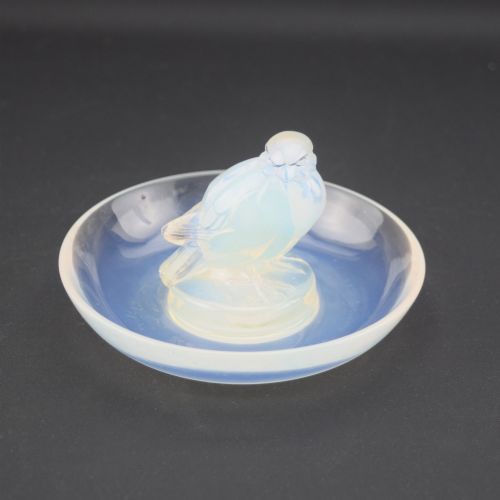
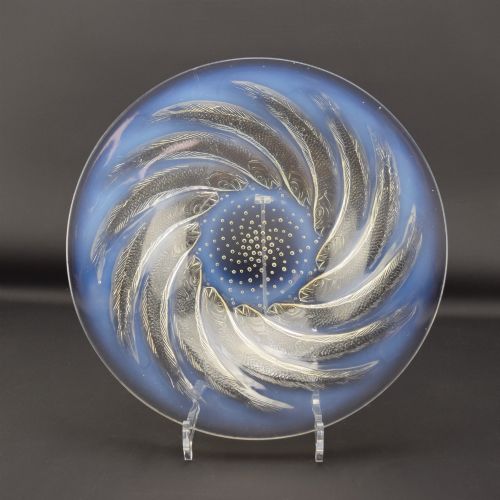
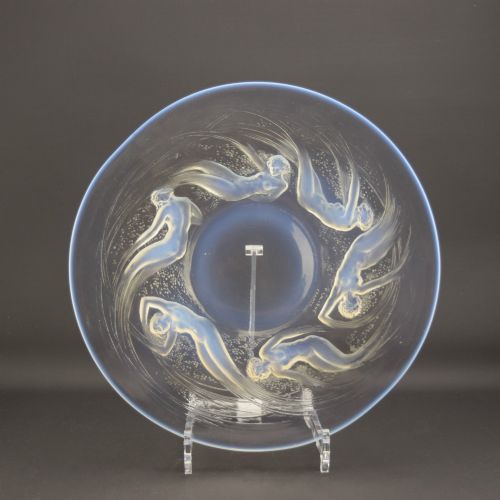
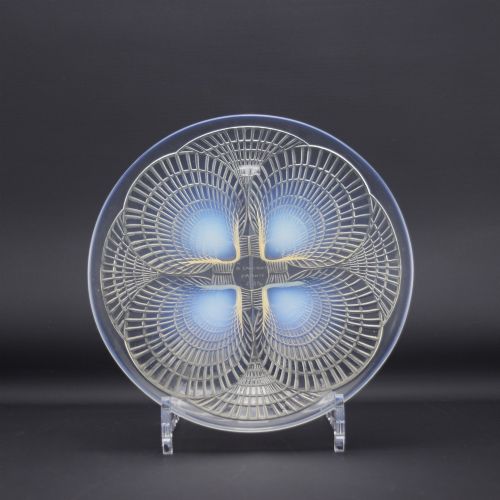
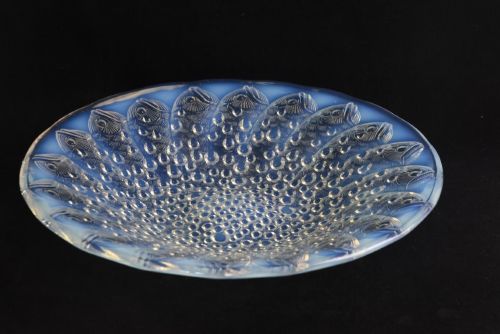

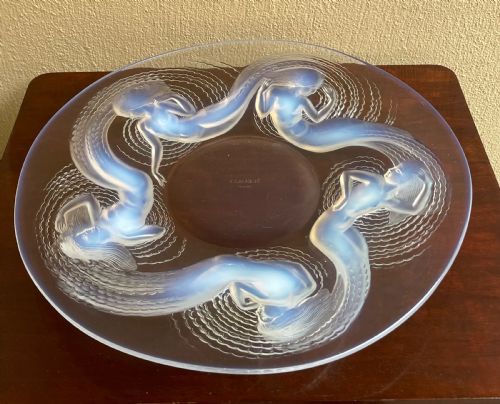


Blue Opalescent Dish
A blue opalescent dish brings a luminous milky-blue glow to a room, catching the light with every shift in perspective.
What these pieces are
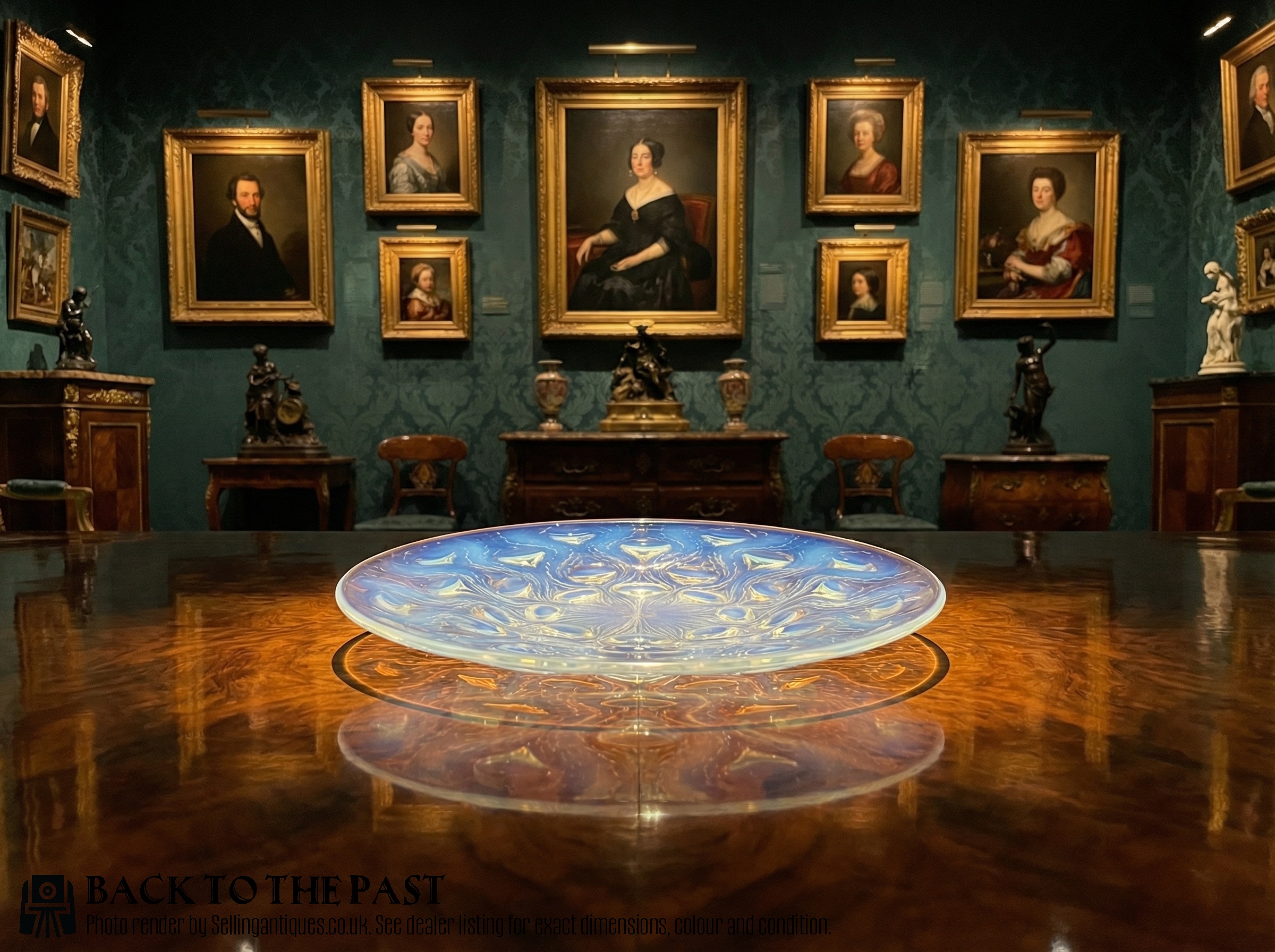
When you search for a blue opalescent dish, you encounter decorative bowls, plates, and dishes created during the Art Deco period. These pieces originate from the nineteen-twenties and nineteen-thirties, reflecting the design sensibilities of that era.
The versions you meet on this page include notable creations from French and British makers. Forms range from shallow decorative plates to deeper decorative bowls and dishes.
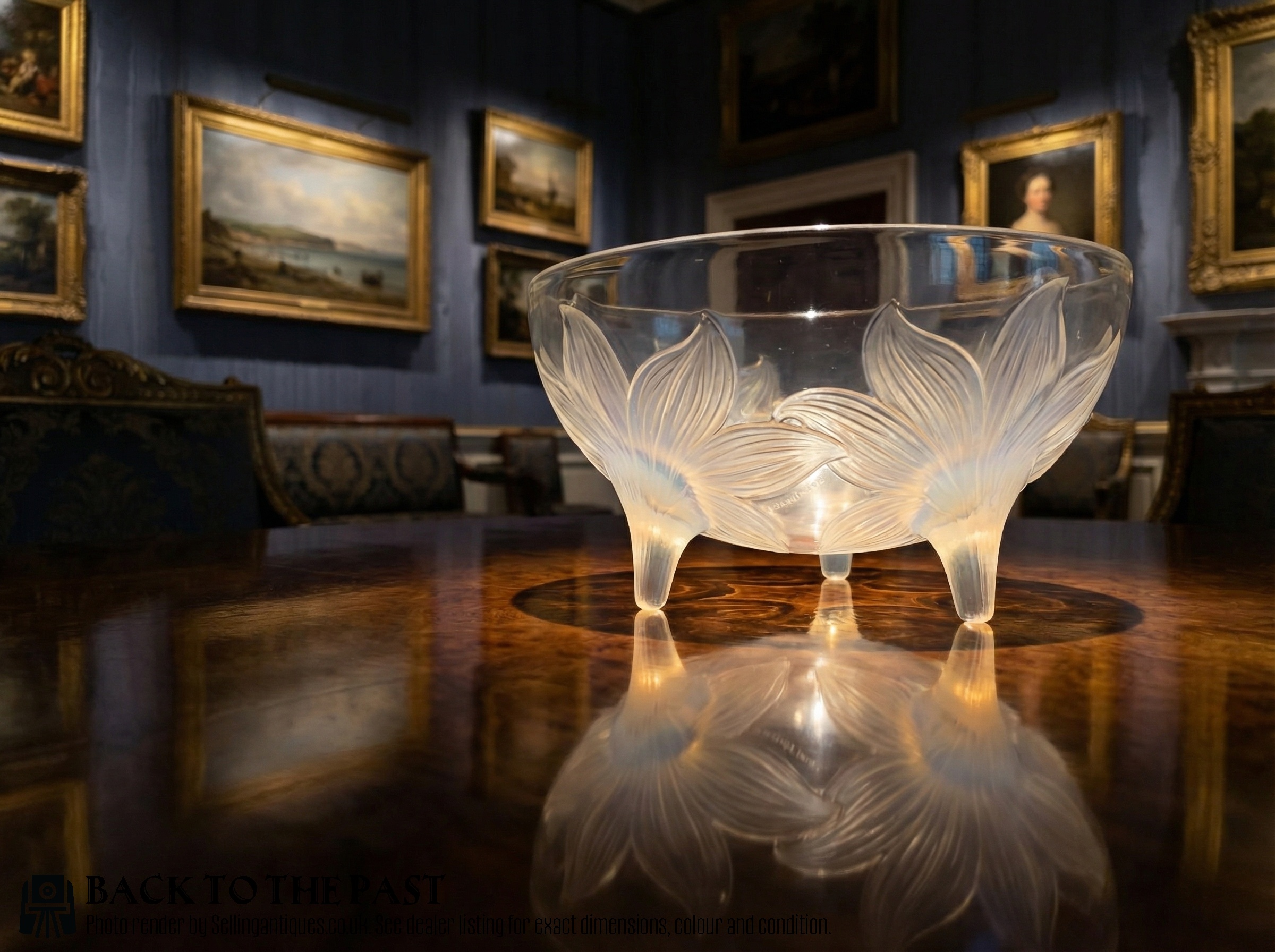
Moulded glass items dominate the selection, showcasing distinct botanical and aquatic motifs. Each piece serves primarily as a decorative object for display.

How they were made
These items consist of opalescent glass produced through press-moulded glass techniques. Molten glass is pressed into metal moulds to form intricate relief patterns.
The characteristic opalescent effect relies on specific chemical properties in the glass mixture that react to light. This creates a milky bluish appearance across raised surfaces while darker areas appear amber or yellowish when backlit.
Retail Price Guide 2026
Typical UK retail prices for blue opalescent dish, calculated from the Sellingantiques database of over a million retail prices indexed since 2003. This retail price guide relies exclusively on Sellingantiques data; no external sources or auction records are used, so the figures do not describe the wider market.
Every listed piece aligns with the Art Deco style, originating from the nineteen-twenties and nineteen-thirties.
What varies in quality
The distinction between standard examples and superior pieces rests on the crispness of the mould impression. Finer items exhibit sharply defined relief work where delicate details remain distinct and clear.
The intensity and distribution of the opalescence also dictate the visual strength of a piece. High quality glass displays an even, striking milk-blue luminescence that interacts dynamically with ambient light.
Rene Lalique·Jobling Opalique·Sabino French
The Blue Opalescent Dish Glossary
- Opalescent Glass
- Glass that exhibits a milky turbidity with a bluish appearance in reflected light and a warm yellowish tone in transmitted light. This optical phenomenon results from the controlled precipitation of particles within the glass matrix.
- Press-Moulded Glass
- A manufacturing method where hot glass is pressed into a metal mould using a plunger. This technique allows for rapid production of patterned tableware and decorative objects.
- Art Deco
- A design style spanning the nineteen-twenties and nineteen-thirties characterised by stylised motifs and geometric symmetry. It heavily influenced decorative arts and glass production across Europe.
- Regd
- An abbreviation used on British manufactured items to indicate a registered design number. This mark helps trace the official registration date of a specific pattern.
Frequently Asked Questions
What is a blue opalescent dish?
A blue opalescent dish is a moulded glass decorative item from the early twentieth century. It displays a characteristic milky-blue glow when light hits its surface.
These items were produced primarily as decorative bowls and plates during the Art Deco era. Makers utilised specialised glass recipes to achieve the shifting optical effect.
How do I date a glass dish?
Dating these glass pieces involves examining the stylistic markers of the Art Deco period alongside any registered design numbers or maker signatures. Most examples date from the nineteen-twenties and nineteen-thirties.
Consulting the specific mould motifs and maker marks provides a reliable timeframe for manufacture. French and British makers often signed their pieces or included registration stamps on the base.
How were these dishes used?
These pieces served primarily as decorative tablewares and ornamental objects in homes during the nineteen-twenties and nineteen-thirties. Their striking optical properties made them centrepieces for display.
Owners placed them on dining tables, sideboards, or mantelpieces to catch natural light. They function today as collectible art glass rather than utilitarian tableware.
How do I care for opalescent glass?
Caring for opalescent glass requires gentle cleaning with lukewarm water and mild soap. Avoid abrasive scrubbers or harsh chemical cleaners that might scratch the surface.
Display the pieces away from direct, intense heat sources and secure locations where they will not be knocked. Proper placement ensures the glass remains safe while catching ambient light effectively.