

Modular Stacking Cabinet
A modular stacking cabinet offers adaptable storage through interlocking tiers designed to house books and office papers in homes and professional rooms.
Modular Stacking Cabinet
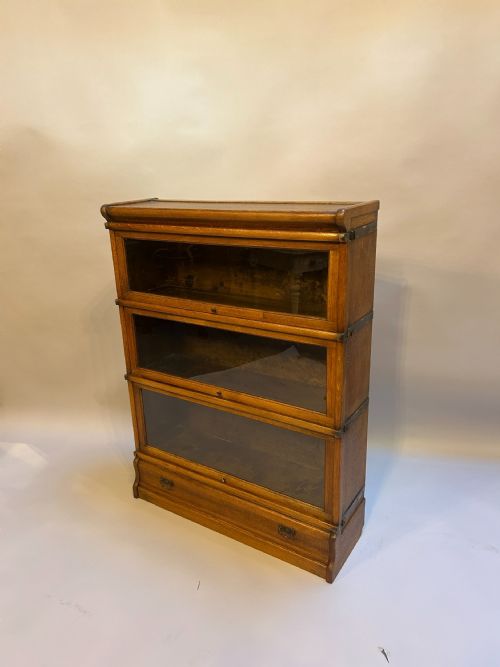
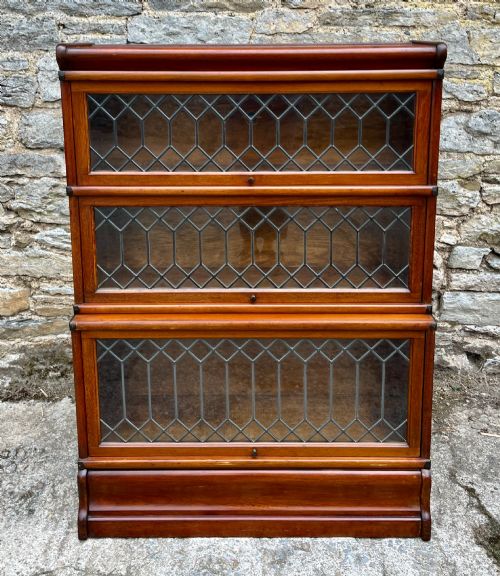
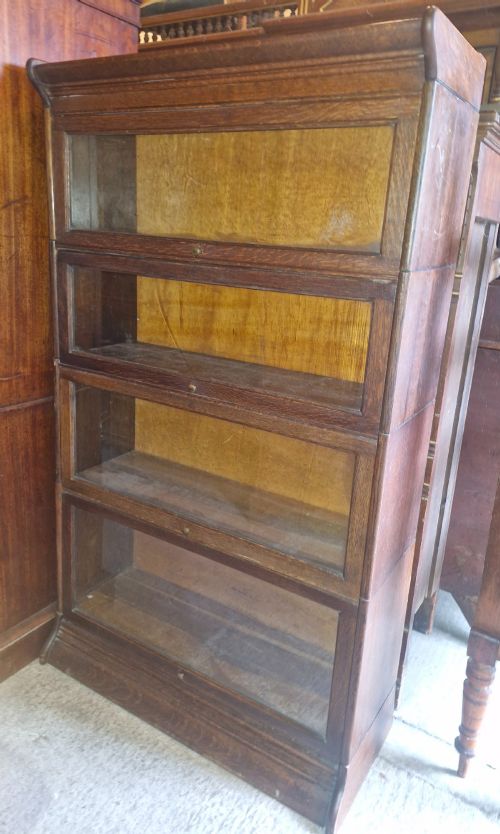
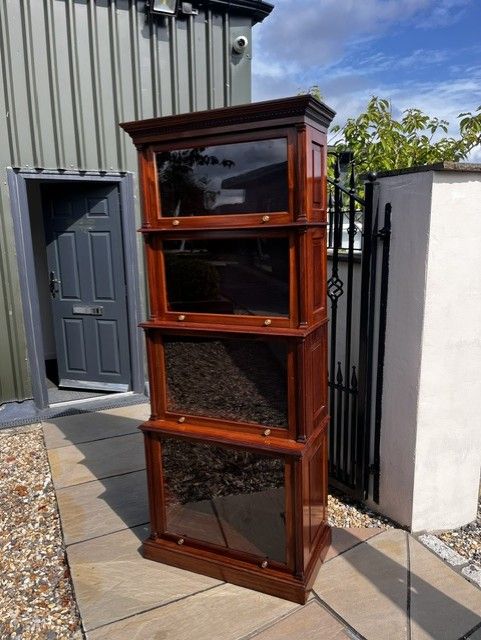
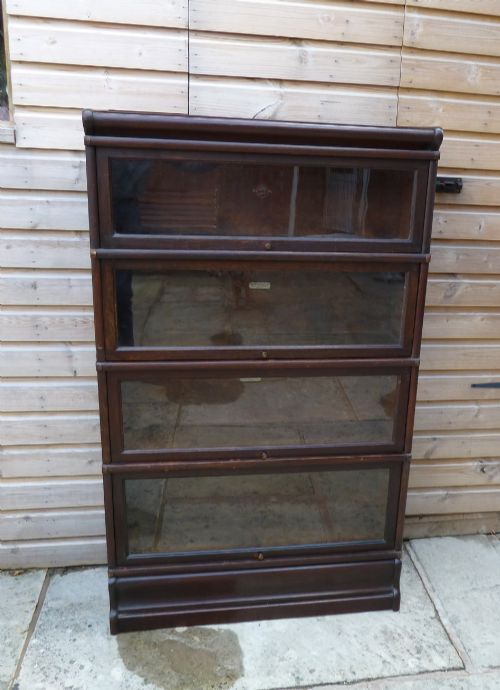
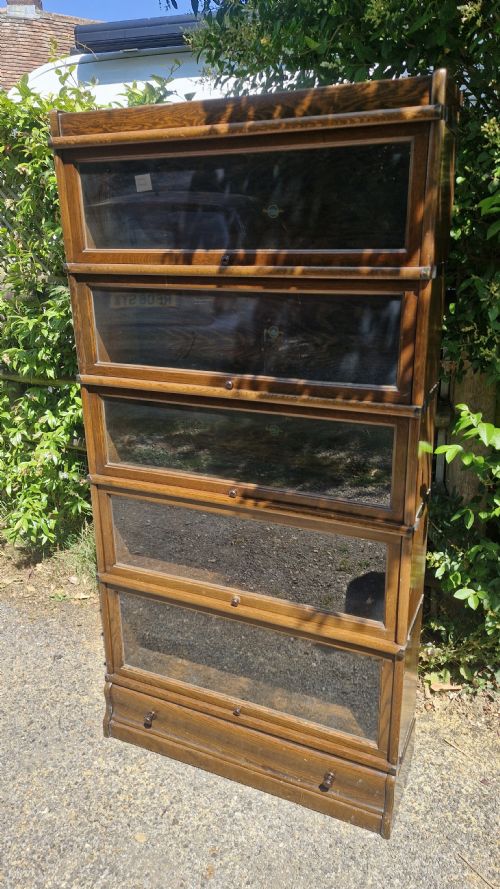
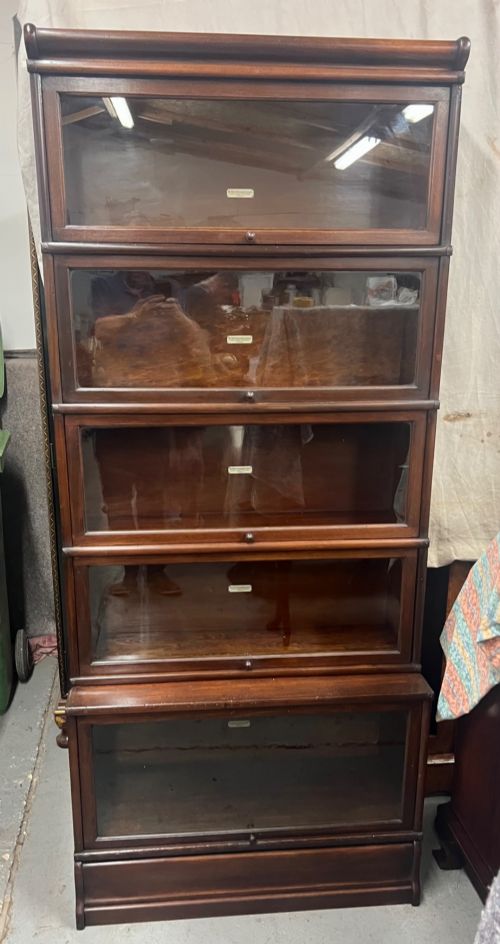
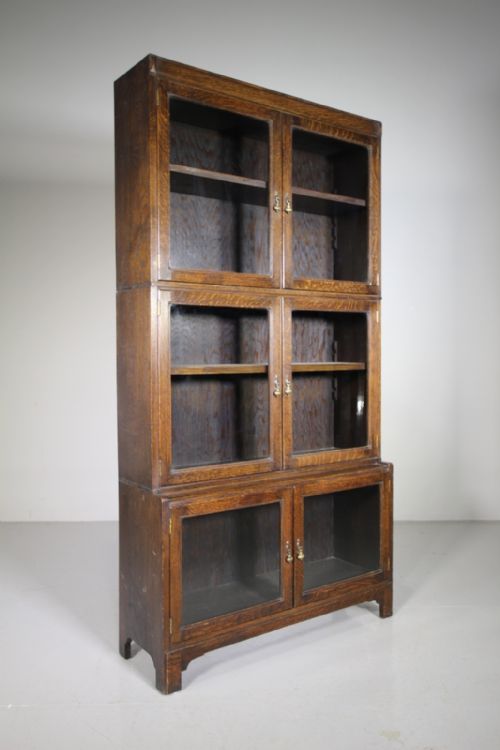
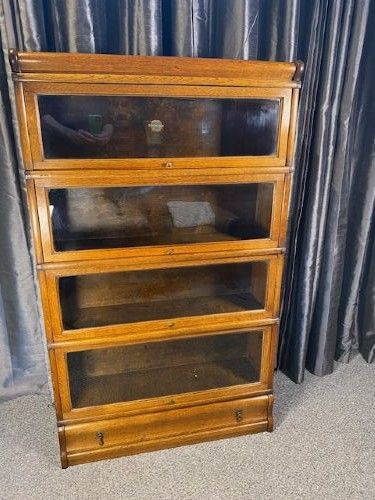
A modular stacking cabinet, frequently encountered as a barrister bookcase or sectional bookcase, consists of multiple tiers that assemble vertically without permanent fixings. These units appear primarily in oak and mahogany, spanning periods from the Edwardian era through the nineteen-thirties.
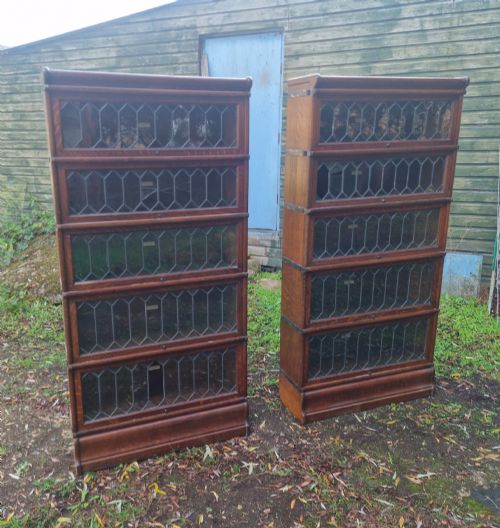
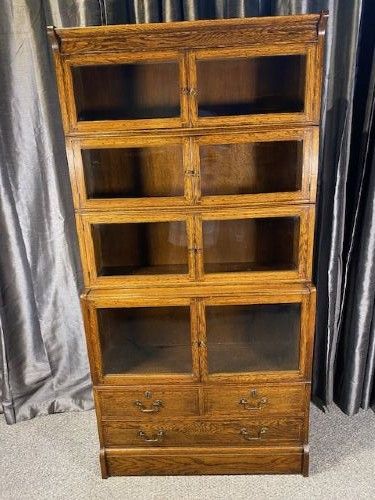
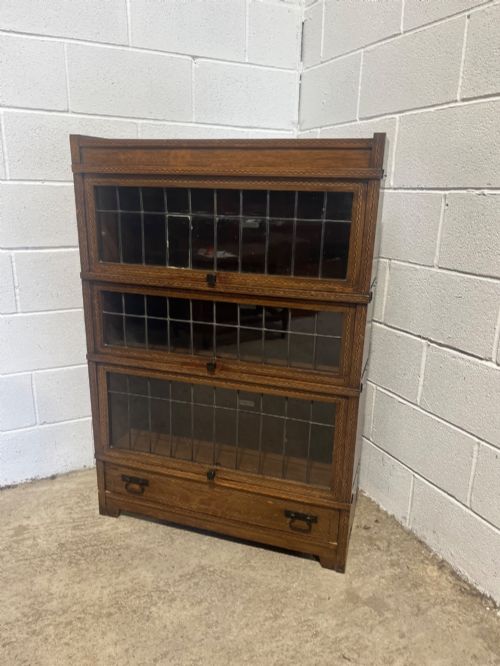
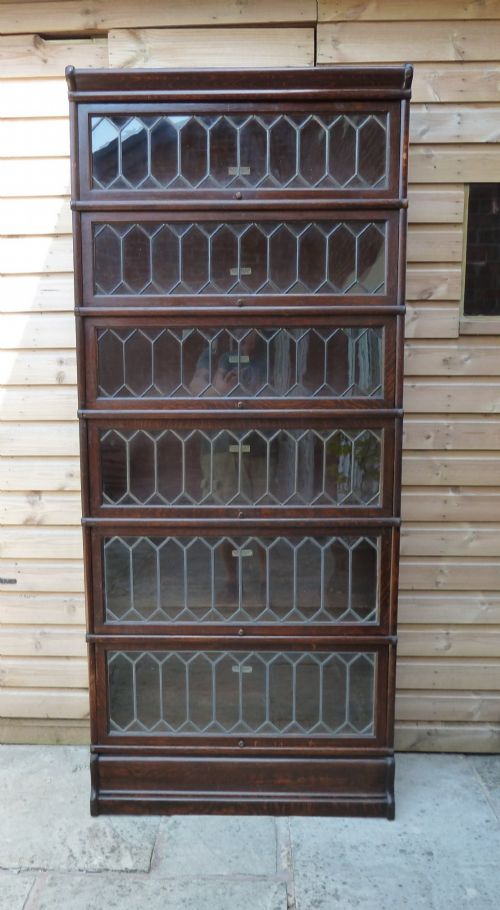
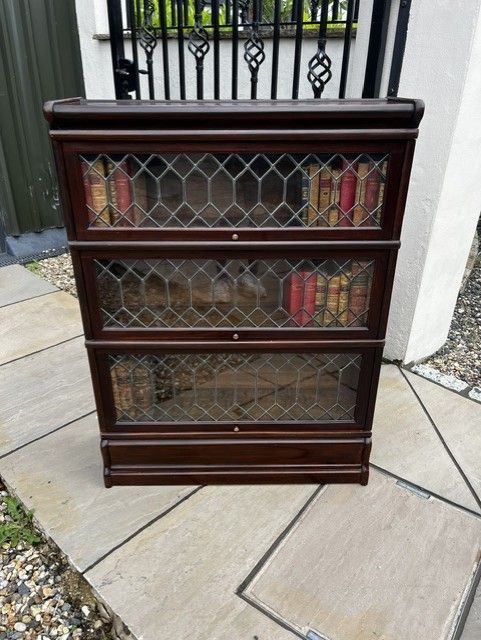
Makers such as Globe Wernicke, Lebus, Minty, Gunn, and Heal's dominate the forms seen on this page. Pieces range from tall four-section and five-tier variants to pairs and narrow configurations incorporating glass or leaded glass doors.
Materials and construction
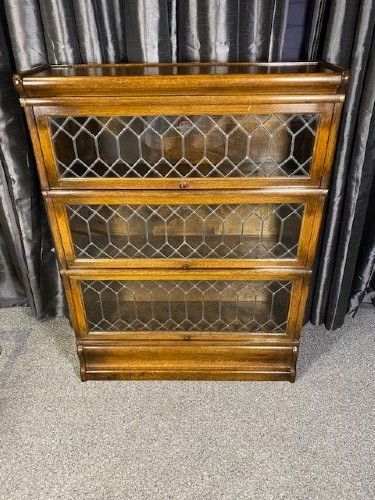
Construction relies heavily on solid oak and mahogany timbers, sometimes enhanced with inlay or finished in limed oak. Metal mechanisms and brass fittings support the functioning of glazed or leaded glass lifting doors on each independent tier.
Individual sections connect via interlocking joints and side panels, allowing tiers to stack securely. Glass panels are often held within wooden frames using lead or putty, while bases and cornices cap the top and bottom of the assembly.
Some barristers reportedly kept spare legal texts in the bottom tier while saving the top shelf for hats.
Judging construction and finish
Quality rests in the matching of timber grain across separate tiers and the precision of the stacking mechanism. Superior examples retain original glass, smooth door action, and well-defined mouldings on the cornice and base.
Makers known for specific output demonstrate distinct joinery standards and timber selection. Unmarked pieces or style copies vary according to the thickness of the solid wood used in the carcass and shelves.
Globe Wernicke·Lebus·Minty·Gunn·Heal's
The Modular Stacking Cabinet Glossary
- Barrister bookcase
- A sectional cabinet with glass doors that lift and slide inward above each shelf. Lawyers utilised these to protect books while transporting them.
- Sectional bookcase
- Alternative term for a modular stacking cabinet built in detachable tiers. Each tier functions as an independent box.
- Leaded glass
- Small panes of glass joined together by strips of lead. This technique creates decorative patterns within cabinet doors.
- Cornice
- The moulded projection that crowns the top of a cabinet. It provides a finished architectural look to the stacked tiers.
Modular Stacking Cabinet: Frequently Asked Questions
How do modular stacking cabinets work?
Each tier operates as an independent box with a glass door that lifts and slides back into the cabinet above the books. The sections simply rest one upon another without screws or glue.
This design allows the entire bookcase to be disassembled into manageable parts for moving or reconfigured by adding extra tiers.
Can I separate the tiers?
Yes, the individual sections lift apart easily once the top cornice and bottom base are removed. They rely on gravity and interlocking joints rather than permanent fixings.
Owners frequently take them apart when relocating or rearranging rooms to fit different ceiling heights.
What wood types are most common?
Oak is the predominant timber found in these sectional cabinets, particularly golden oak from the Edwardian period. Mahogany variants also appear frequently across the same eras.
Less common finishes include walnut and limed oak associated with nineteen-thirties production.
Are all stacking bookcases made by Globe Wernicke?
Globe Wernicke produced a vast quantity of these cabinets, but several other firms manufactured them in large numbers. Makers such as Minty, Lebus, Gunn, and Heal's created comparable sectional designs.
Many pieces bear manufacturer stamps or labels on the interior woodwork or back panels to confirm their origin.