
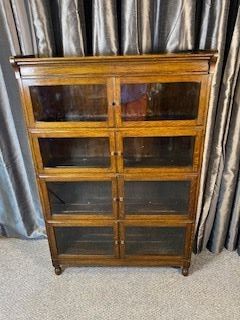
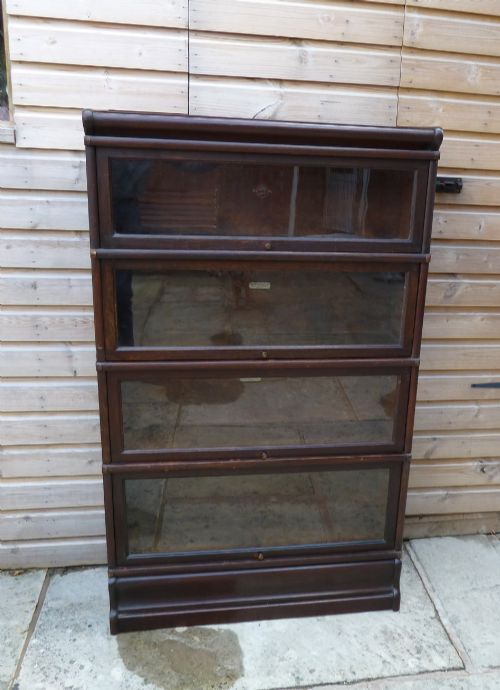
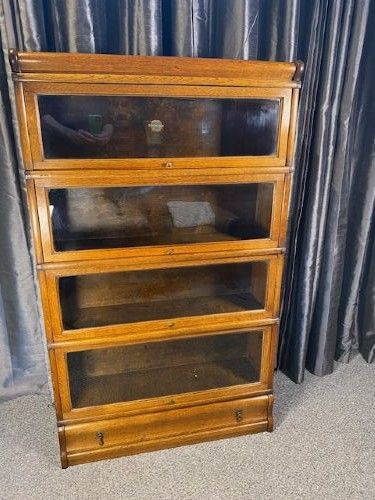


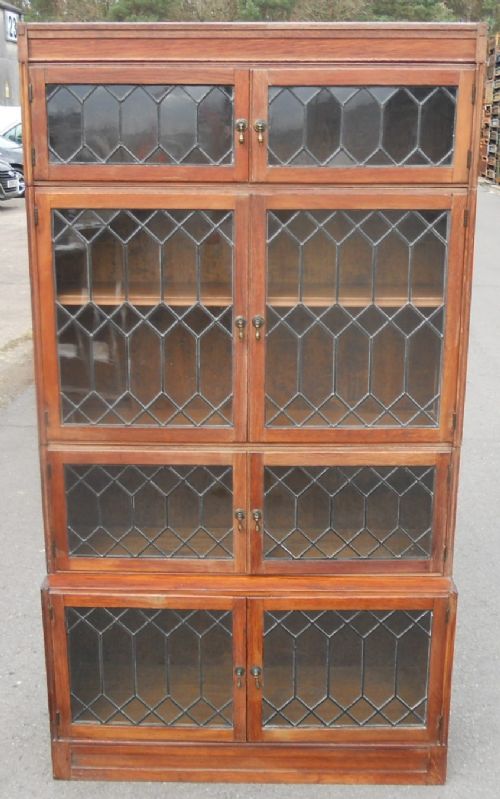
Four Tier Stacking Bookcase
A four tier stacking bookcase offers flexible modular storage that suits any room, bringing period character and practical shelving together.
Four Tier Stacking Bookcase
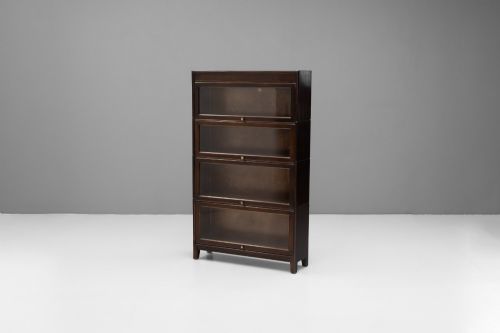
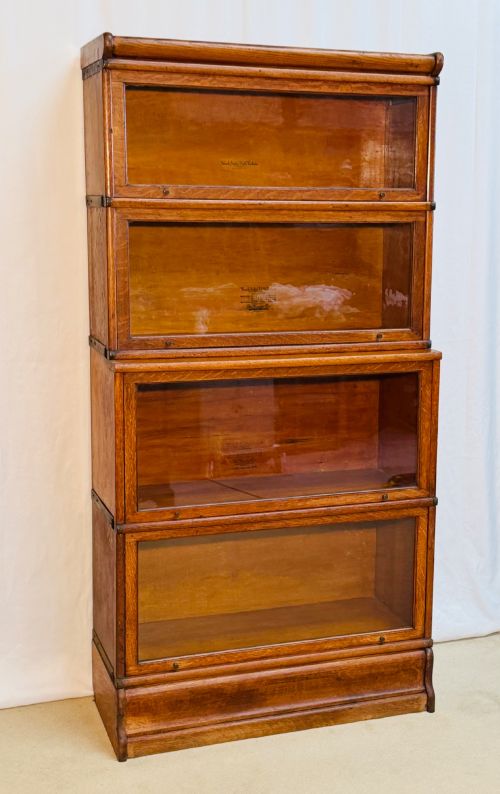
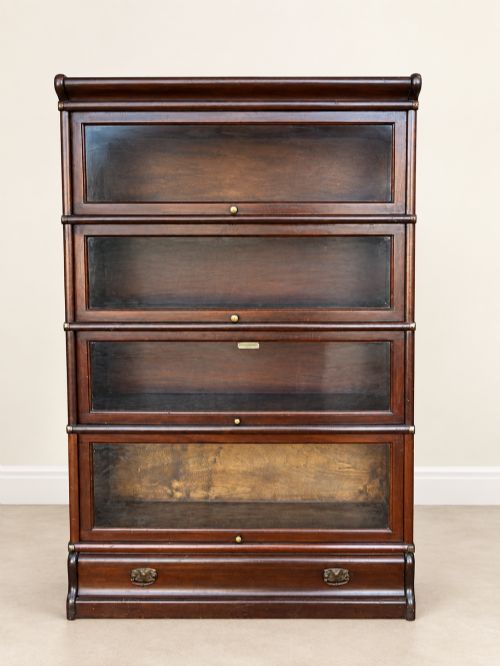
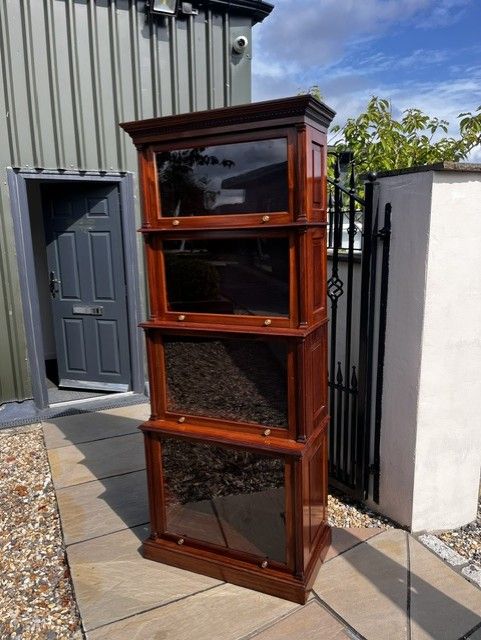
A four tier stacking bookcase consists of modular wooden sections stacked vertically, usually topped with a cornice and grounded on a base. This design allows individual sections to separate easily while maintaining a unified tall profile.
The pieces on this page originate from the Edwardian period and the early decades of the twentieth century, specifically around 1900, 1910, and 1920. Oak predominates, frequently appearing in golden tones, alongside solid mahogany examples.
Most entries follow the recognizable Globe Wernicke style or carry maker attributions such as Lebus and Gunn. These bookcases serve living spaces and studies by housing collections of books behind protective glazed doors.
How they were made
Makers constructed these sectional units primarily from oak and solid mahogany, incorporating brass and metal hardware for the mechanical lifting arms on the glass doors. Lead sometimes frames the glass panels in specific configurations.
The modular design relies on interlocking tiers that fit securely on top of one another without permanent fixings. Glazed front panels lift and slide smoothly into the cabinet above each shelf of books.
Four Tier Stacking Bookcase Retail Price Guide 2026
Typical asking prices for four tier stacking bookcase among the pieces listed under this phrase on Sellingantiques today, from the lower quarter to the upper quarter. They describe what is for sale here now, not the wider market.
Current listings feature oak and solid mahogany materials across pieces dated from 1900 to 1920.
What varies in quality
The choice of timber creates a primary distinction, with figured golden oak and solid mahogany sitting at the higher end of the range compared to standard utility finishes. Timber selection dictates the visual depth of the grain across the four stacked sections.
Original hardware, including brass fittings and working metal mechanisms for the glazed doors, preserves the integrity of the piece. Matching grain patterns across the stacked tiers indicate careful initial construction by the maker.
Globe Wernicke·Lebus·Gunn
The Four Tier Stacking Bookcase Glossary
- Sectional bookcase
- A tall bookcase built from separate modular tiers that stack together vertically. This design allows the entire unit to be dismantled into individual shelf boxes for transport.
- Glazed
- Fitted with glass panels, usually within doors that protect the contents from dust. In these bookcases, the glass fronts lift upwards on metal arms.
- Cornice
- The decorative moulded projection that sits atop the uppermost tier of the bookcase. It caps the structure and provides a finished architectural profile.
- Base
- The bottom plinth or feet upon which the entire stack rests. It elevates the lowest tier slightly off the floor.
- Modular
- Constructed using standardised units that fit together in various combinations. Each tier functions as an independent box while locking into the adjacent sections.
Four Tier Stacking Bookcase: Frequently Asked Questions
How do the glass doors work?
The glass doors feature metal arms on either side that allow the panel to lift upwards and slide back into the interior recess above the books.
This mechanism protects volumes while keeping titles visible and accessible during daily use.
Can the sections be separated?
Yes, the modular tiers lift apart independently from the base and cornice. This makes moving and rearranging the bookcase straightforward.
Each section remains structurally complete on its own when unstacked.
What wood types are most common?
Oak is the predominant timber found in these sectional bookcases, often appearing in a warm golden tone. Solid mahogany versions also occur within Edwardian and later twentieth-century production.
Metal and brass hardware complements both timber varieties.
How do I date these bookcases?
Dating relies on construction methods, timber choice, and maker stamps or patent marks. Most examples date from the Edwardian era through to the nineteen-twenties.
Stylistic cues and hardware designs help narrow the production decade.