

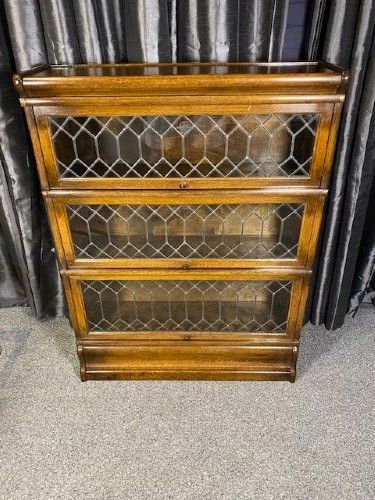
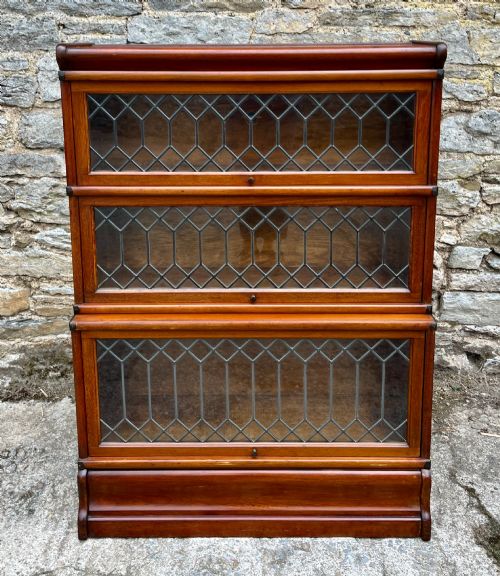

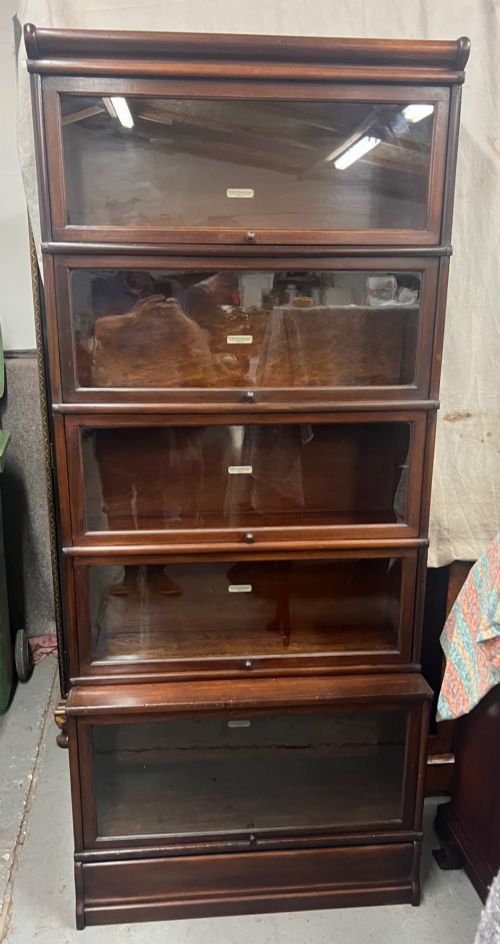


Mahogany Stacking Bookcase
A mahogany stacking bookcase offers modular storage with glazed sections, appealing for its practical flexibility and period charm.
Mahogany Stacking Bookcase
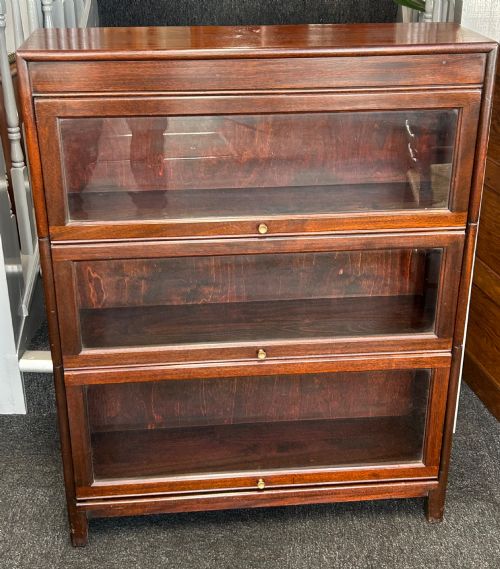
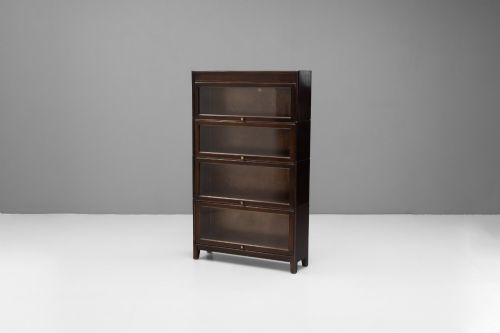
A mahogany stacking bookcase consists of modular, removable tiers that sit one upon another to form a tall display unit. When searching for a mahogany stacking bookcase, buyers encounter sectional designs that house collections of books behind protective glass doors. These adaptable pieces derive primarily from the Edwardian period, the 1920s, and the 1930s.
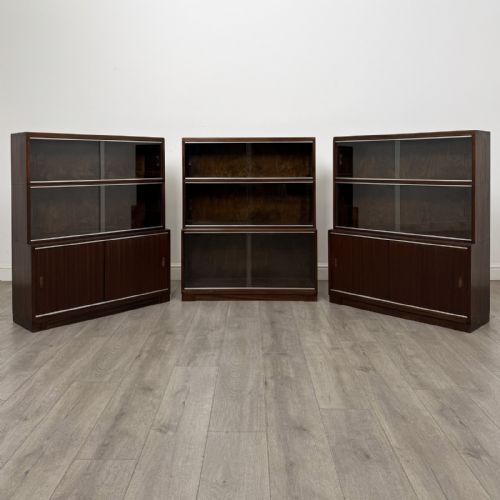
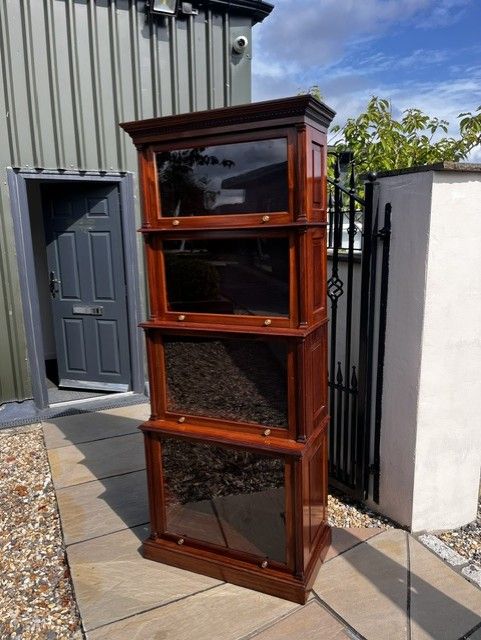
The form most frequently met combines solid mahogany and mahogany veneers with glazed lifting doors that slide into the cabinet above each tier. Examples vary from compact three-tier units to taller five-tier setups, sometimes incorporating corner shapes or waterfall graduations. Makers and retailers such as Globe Wernicke, Minty of Oxford, Lebus, and Heal's produced these versatile library cupboards.
Beyond standard upright configurations, variations include French haberdashery styles and double-stacking arrangements suited to office or domestic interiors. The sectional design allows the entire bookcase to be disassembled into individual shelves, a feature originally marketed for growing libraries. Surviving pieces retain their functional brass hardware and glass panels across various stylistic influences.
Materials and construction
Makers constructed these bookcases using solid mahogany, oak frames, and mahogany veneers over secondary timbers, often pairing the rich wood with brass hardware and leaded glass details. Individual tiers rely on precision joinery to stack securely without permanent fixings, while internal metal mechanisms guide the upward lift of the glazed doors.
Glass panels are fitted directly into wooden frames or secured with lead came, allowing visibility while protecting volumes from dust. Metal components such as brackets and pulls provide structural support and smooth operation for the modular shelving units.
Mahogany Stacking Bookcase Retail Price Guide 2026
Typical asking prices for mahogany stacking bookcase among the pieces listed under this phrase on Sellingantiques today, from the lower quarter to the upper quarter. They describe what is for sale here now, not the wider market.
Listings feature mahogany, oak, brass, lead, and glass across Edwardian, Art Deco, and 1930s French styles.
Distinctions in quality
Quality in these sectional units rests on the selection of timber figures, the precision of the stacking joints, and the smooth operation of the door mechanisms. Superior examples exhibit finely grained solid mahogany, robust brass fittings, and seamless alignment between tiers.
Lesser items may rely more heavily on simpler veneers or show wear in the mechanical tracks that guide the lifting glass doors. The integrity of the leaded or clear glass and the originality of the hardware further separate standard production from finer cabinetmaking.
Globe Wernicke·Minty of Oxford·W M Baker and Co·Lebus
The Mahogany Stacking Bookcase Glossary
- Sectional bookcase
- A piece of furniture built from separate, stackable tiers that rest one on top of another. This modular approach allowed owners to expand their shelving capacity simply by adding new sections.
- Barrister's bookcase
- A specialised stacking bookcase featuring glazed doors that lift and slide inside the cabinet above the books. The design protects law reports and volumes from dust while providing easy access.
- Globe Wernicke
- A prominent maker and style synonymous with sectional stacking bookcases. Their patented systems set the standard for modular office and library furniture.
- Leaded glass
- Glass panes held together within a network of lead cames. This technique appears in select cabinet doors to create decorative geometric patterns.
- Waterfall bookcase
- A stacking bookcase featuring tiers that graduate in depth from bottom to top. This creates a stepped profile reminiscent of cascading water.
Mahogany Stacking Bookcase: Frequently Asked Questions
What is a stacking bookcase?
A stacking bookcase is a modular shelving unit made of individual tiers that sit securely on top of a base and beneath a top cornice. This design lets owners add or remove sections as their library grows.
The separate boxes make the heavy furniture much easier to move and transport, as each tier lifts off independently.
How do the doors work?
The glazed doors typically feature a metal scissor mechanism or pivot arm attached to the sides. This allows the glass front to lift upward and slide smoothly into the recess above the books.
When closed, the door protects the contents from dust while remaining transparent for easy title viewing.
Can the sections be separated?
Yes, the individual tiers are designed to lift apart without tools. They rely on gravity and interlocking lips or dowels on the top and bottom edges to stay aligned.
This modularity means you can reconfigure the height or separate the tiers entirely when relocating the furniture.
How do I date these bookcases?
Dating relies on stylistic clues, patent dates stamped on the hardware, and maker marks from firms like Globe Wernicke or Minty. Most surviving examples date from the Edwardian era through the 1930s.
Earlier models often feature specific brass manufacturer plates and distinct timber grains that help narrow down their period of production.