
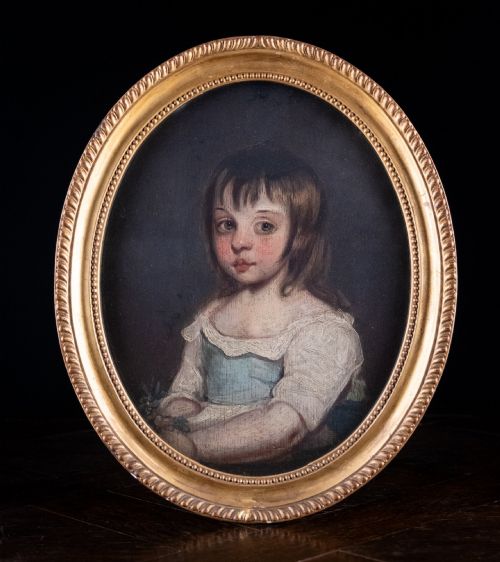
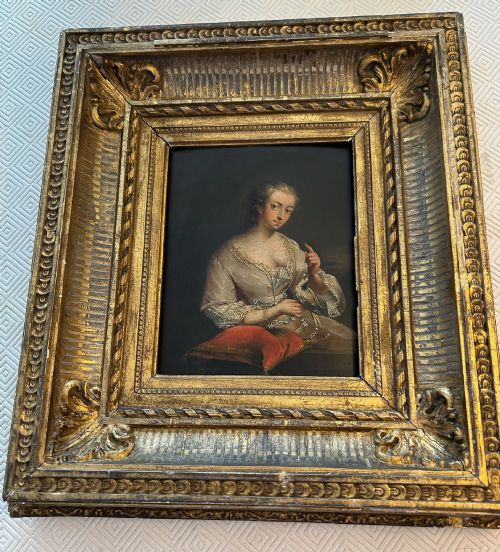


Miniature Oil Painting Portrait
These miniature oil painting portrait examples capture likenesses on a small scale, offering an intimate glimpse into past centuries through portable artistry.
Miniature Oil Painting Portrait
A miniature oil painting portrait captures a compact likeness on surfaces such as copper, wood, canvas, and tinplate, spanning periods from the seventeenth century through the nineteenth century including Georgian and Regency eras. Buyers encounter depictions of ladies, gentlemen, historical figures, and religious subjects rendered with fine brushwork.
The selection ranges from seventeenth-century works on copper to nineteenth-century interpretations of historical figures and family members. Smaller formats allow these artworks to function as personal keepsakes and portable wall pieces.
Originating across English, French, Danish, Scandinavian, and Italian schools, these works display diverse regional styles while maintaining a reduced scale. The subjects vary from nobility and religious figures to self-portraits and country girls.
Materials and construction methods
Artists painted oil on prepared supports including copper panels, oak panels, canvas, and tinplate, applying pigment in thin layers to achieve detail on a reduced scale.
Frames often incorporate gilt wood and glass to protect the delicate painted surface, whilst metal panels provide a rigid, smooth ground that preserves fine brushwork over centuries.
Several portraits preserve the likenesses of historical cats and dogs, proving our ancestors loved painting their pets just as much.
Assessing quality in small-scale portraits
Quality rests upon the precision of the facial rendering, the handling of light and shadow, and the expression captured within the small format. Skilled artists manage perspective and proportion despite the physical constraints of a reduced canvas or metal plate.
The preservation of the original paint surface and the compatibility of the surrounding frame contribute to the overall integrity of the piece.
Jean-Baptiste van Loo·William Egley·Louis Leopold Boilly·Adriaen Van der Werff·Sir Peter Lely·John Scougall·Elisabeth Vigee Le Brun·George Clint·John Michael Wright
The Miniature Oil Painting Portrait Glossary
- Copper panel
- A rigid metal sheet used as a painting support instead of canvas, offering a smooth surface that retains fine detail.
- Gilt wood
- Wood coated with a thin layer of gold leaf or gold paint, frequently utilised for historical picture frames.
- Miniature painting
- A small-scale artwork designed to convey detailed subjects within a compact area.
- Tinplate
- Thin sheet iron coated with tin, utilised as a lightweight metal support for regional paintings.
- Regency
- A period spanning the early nineteenth century associated with specific stylistic developments in British art and decor.
Miniature Oil Painting Portrait: Frequently Asked Questions
What are miniature oil painting portrait works?
These pieces are small-scale artworks executed in oil paint on supports such as copper, wood, or canvas. They depict individual subjects ranging from nobility to children.
Artists used fine brushes to achieve detailed likenesses within spaces often measuring only a few centimetres across.
How were these small portraits used?
Historical owners carried them as personal keepsakes, wore them as pendants, or displayed them in private chambers. Their portability allowed subjects to travel with their families.
Over time, many received protective gilt wood frames for display on interior walls.
How should I live with these paintings?
Display these works away from direct sunlight to protect the oil pigments and metal or wooden panels from temperature fluctuations. Position them at eye level in smaller spaces where their detail can be appreciated closely.
Keep them in stable indoor environments shielded from excessive humidity.
How do I identify the period of a portrait?
Examine the clothing, hairstyles, and framing styles, which often reflect the fashion of eras such as the Georgian period, the seventeenth century, or the Regency style. Inscriptions on the reverse frequently provide clues to the sitter or date.
Materials like copper panels or oak boards also help narrow down the production era.