




Oval Brass Framed Artwork
Oval brass framed artwork brings together miniature portraits, silhouettes, and delicate watercolours housed in metal surrounds.
Oval Brass Framed Artwork
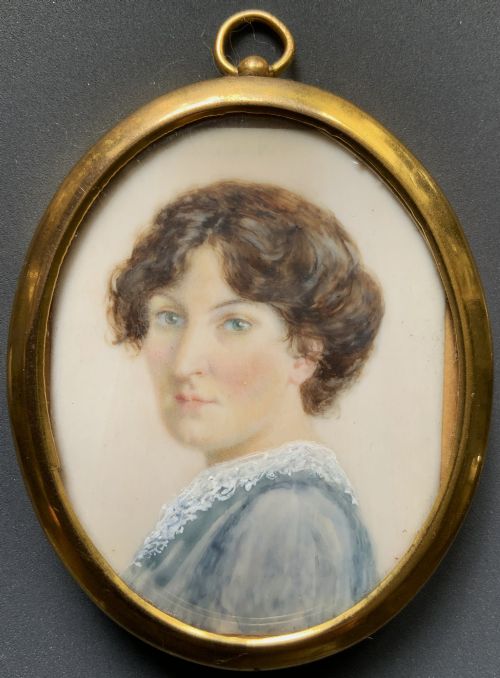
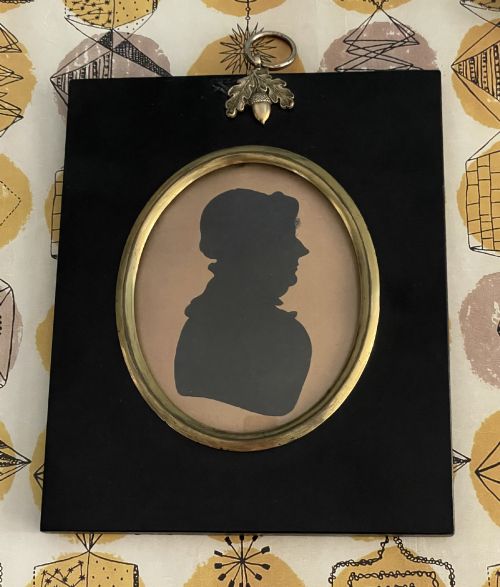
Oval brass framed artwork comprises small-scale pieces including portrait miniatures, painted silhouettes, cut silhouettes, watercolour portraits, butterfly prints, and miniature oil paintings. The selection spans the 18th century, Georgian period, Regency era, Victorian period, 19th century French styles, the 1920s, and 1940.
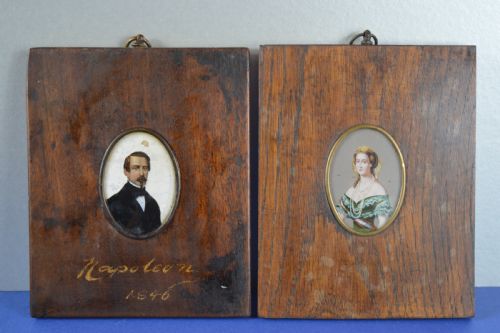
Buyers encounter framed silhouettes of children and males alongside hand-painted portraits of women, nudes, Napoleon, and Empress Eugenie. These works appear in vertical formats designed for wall display, often utilising ebonised wood or gilt metal alongside the characteristic brass frame.
How they were made
Makers formed the surrounds using brass and gilt metal, occasionally pairing the metalwork with ebonised wood to create contrast around the image. Paper, card, and ivory served as the base supports for intricate hand painting in watercolour and oil.
Artists executed detailed portrait miniatures and watercolours by hand, while others produced cut silhouettes or butterfly prints arranged behind glass. The physical construction combines delicate framing techniques with miniature painting and silhouette cutting.
Napoleon shares wall space with butterfly prints and anonymous children.
What varies in quality
The refinement of the hand painting distinguishes the standard of portrait miniatures, with finer brushwork and greater anatomical precision marking out superior examples. Portrait subjects identified by named artists or accompanied by documented provenance add historical weight to individual pieces.
The craftsmanship of the metal surround influences the overall character, where heavier brass casting and careful gilding elevate the presentation of the artwork. The preservation of the glass and the stability of the underlying paper or ivory support dictate the physical integrity of each item.
James Gillespie·Susie Lassam·Jeremiah Steele
The Oval Brass Framed Artwork Glossary
- Portrait Miniature
- A small, highly detailed painting, typically executed on ivory, card, or paper during the Georgian and Victorian eras. These works often depict specific individuals and required considerable technical skill from the artist.
- Silhouette
- An image representing the outline of a subject, usually a profile, filled in with a solid dark colour or cut from paper. This technique gained popularity in the 18th and 19th centuries for affordable likenesses.
- Ebonised Wood
- Timber treated to resemble dense, black ebony wood. Makers utilised this dark material to create sharp visual borders on small framed works.
- Gilt Metal
- Base metal treated with a thin layer of gold or gold-coloured finish to provide a metallic sheen. It frequently appears alongside brass in period frames.
Oval Brass Framed Artwork: Frequently Asked Questions
What periods do these pieces come from?
The listings encompass works from the 18th century, Georgian and Regency eras, the Victorian period, and the 20th century up to 1940.
Specific dated pieces include items from the 1780s, the 1820s, 1830, and the 1880s alongside general 19th-century examples.
What materials make up the frames?
Frames primarily consist of brass and gilt metal, often combined with ebonised wood to mount the artwork.
Glass protects the delicate paper, card, watercolour, or ivory surfaces contained within these surrounds.
How were these artworks displayed originally?
These small pieces functioned as wall art, designed for intimate domestic interiors of the Georgian and Victorian periods.
The compact scale allowed owners to group multiple framed portraits and silhouettes together in tight arrangements.
What subjects appear in the miniature paintings?
Portraits frequently show named historical figures such as Napoleon and Empress Eugenie, alongside unidentified ladies, gentlemen, and children.
Other examples feature nude studies, flapper ladies from the 1920s, and decorative butterfly prints.