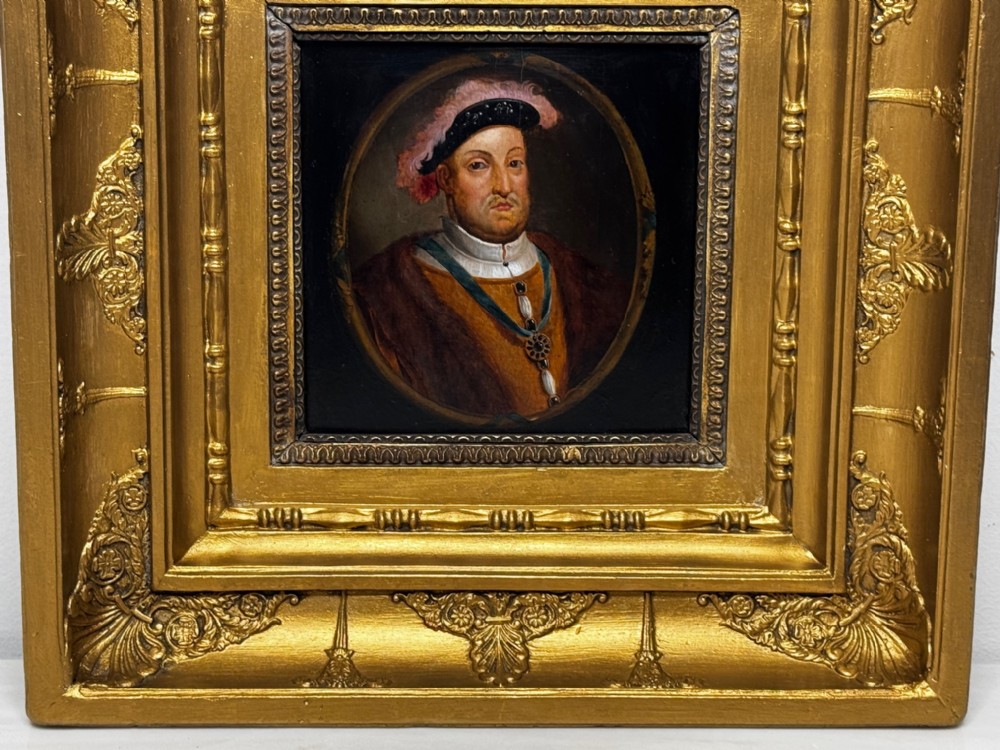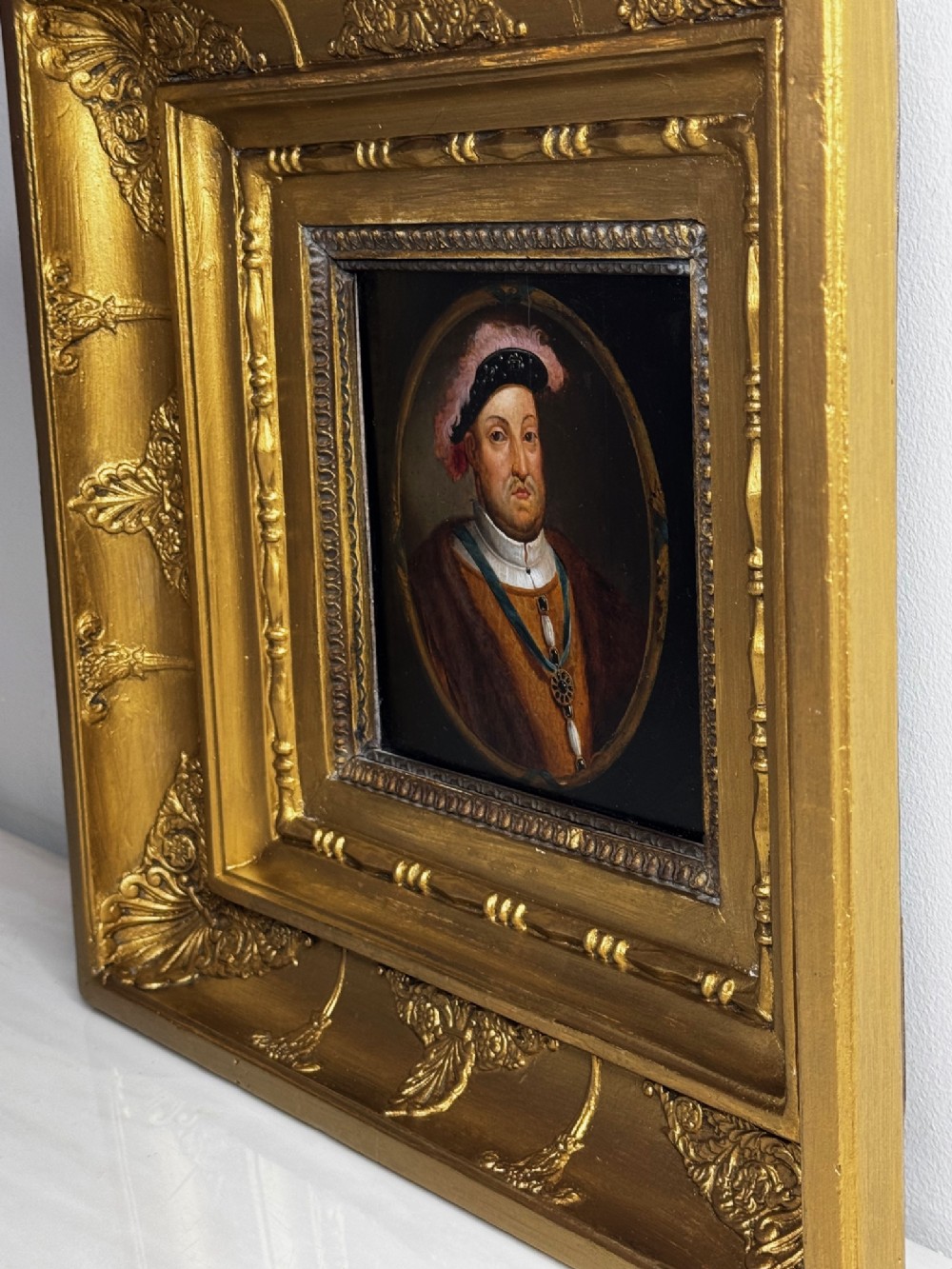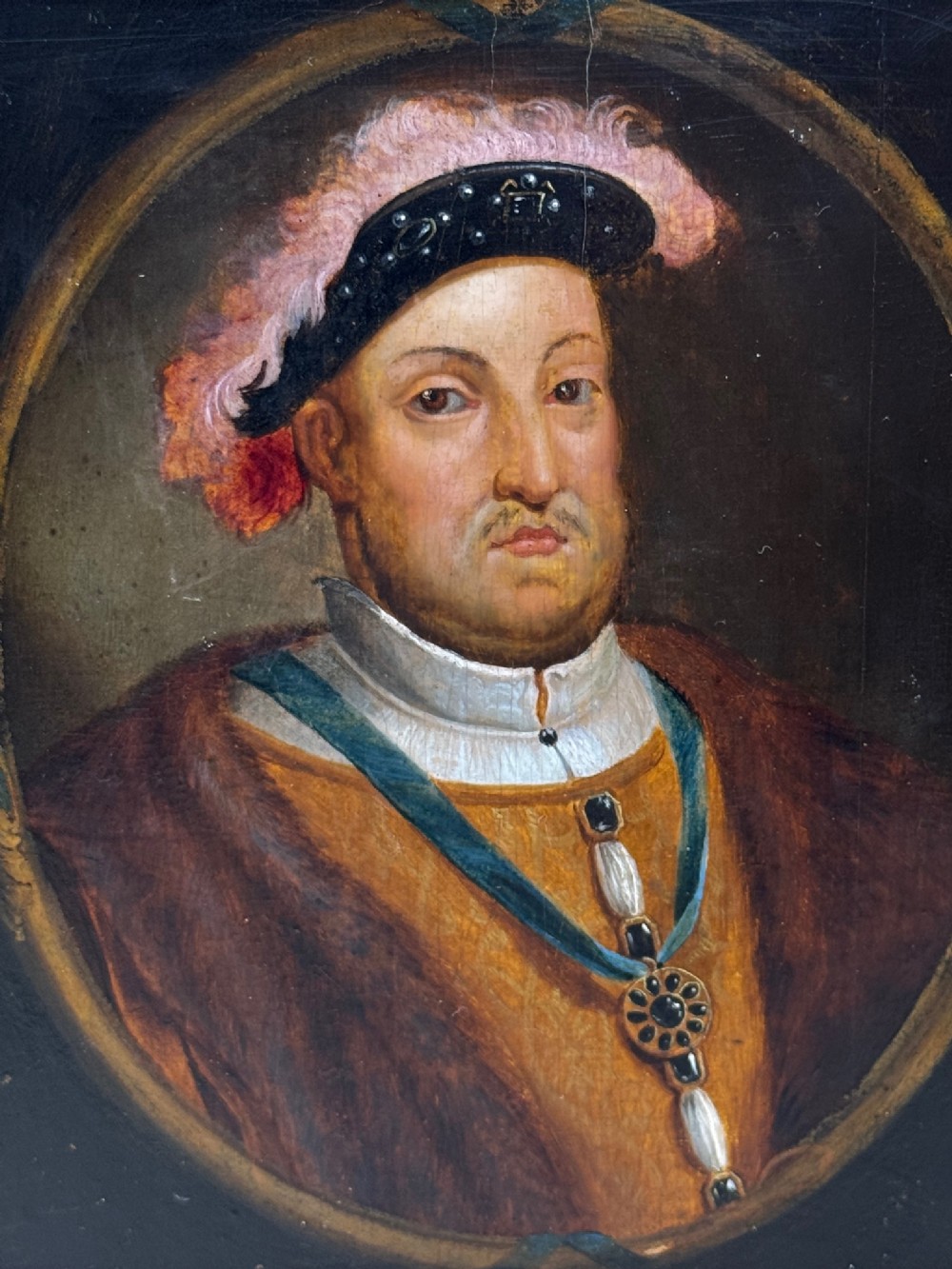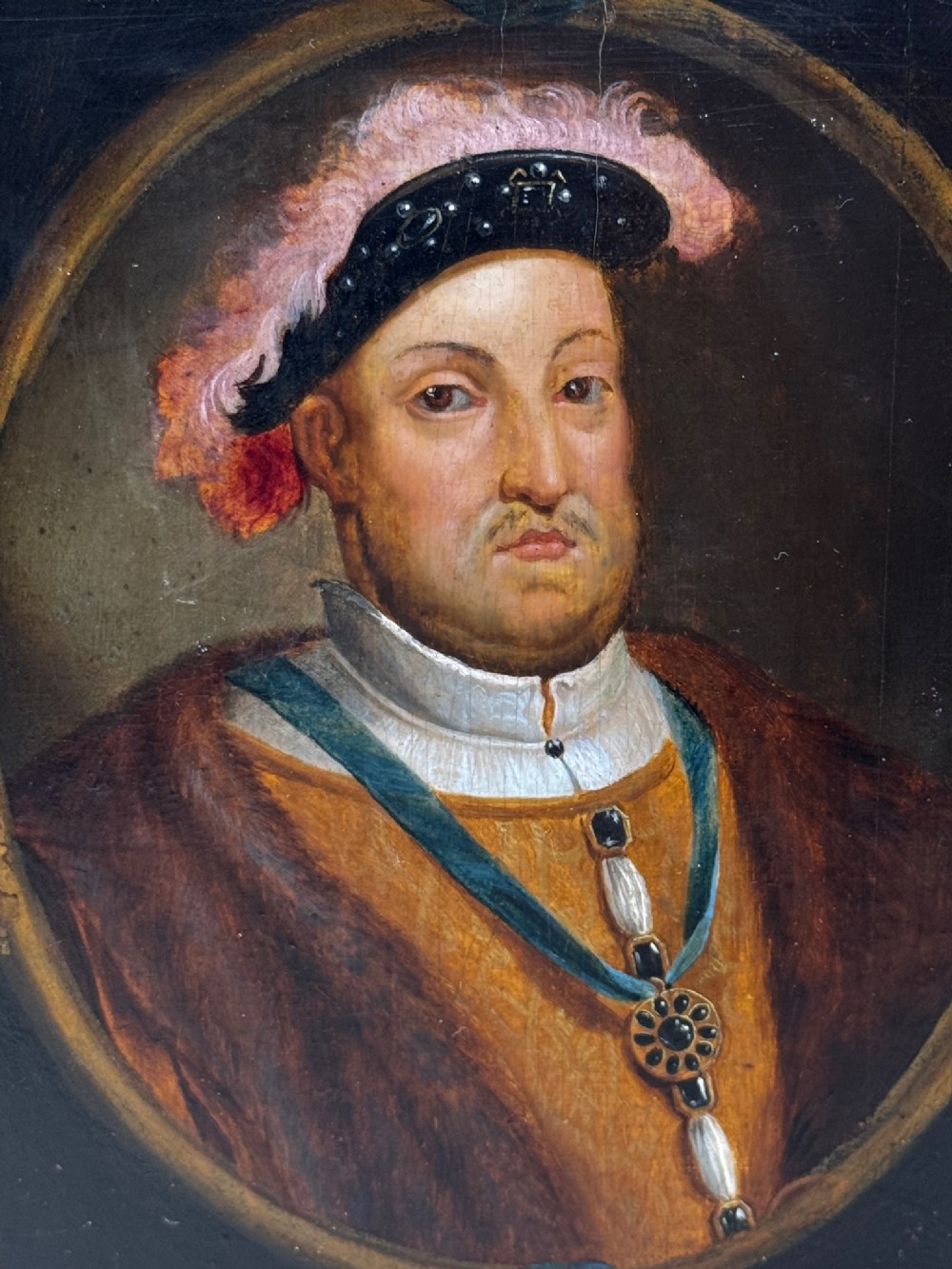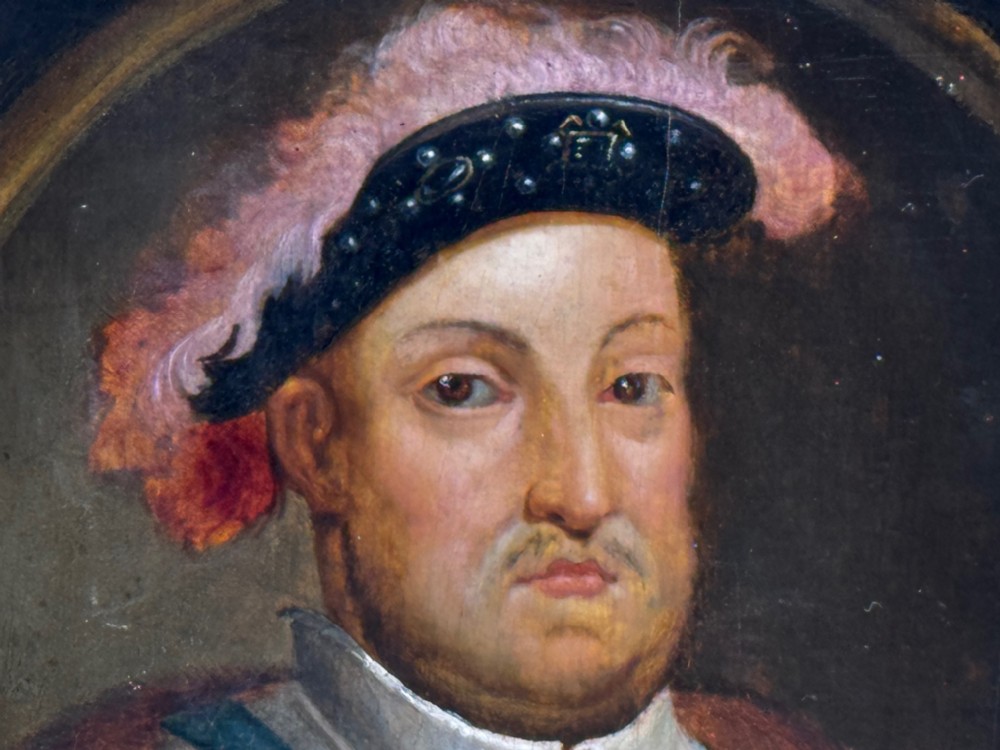
Cheshire Antiques Consultant Ltd has dated this King Henry VIII Oil Portrait to the 18th Century.
Following the Prototype, Wearing the Badge of the Order of the Garter
After Hans Holbein the Younger
English School, circa 1750
Subject & Medium
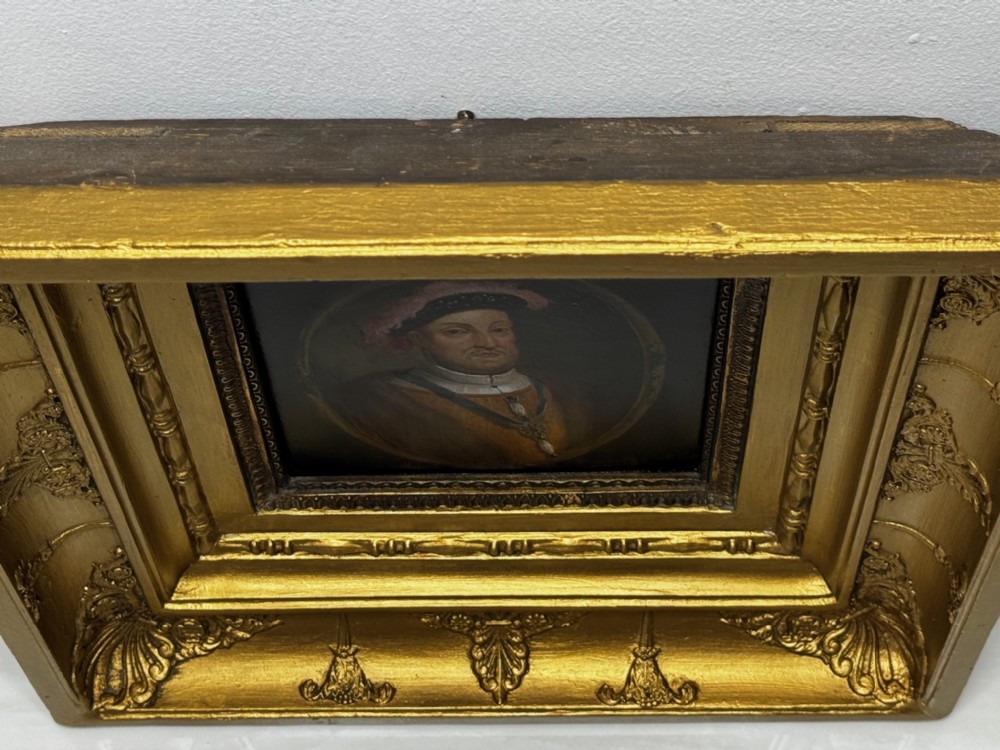
Oil on single chamfered oak panel
Panel: 15 cm × 15 cm
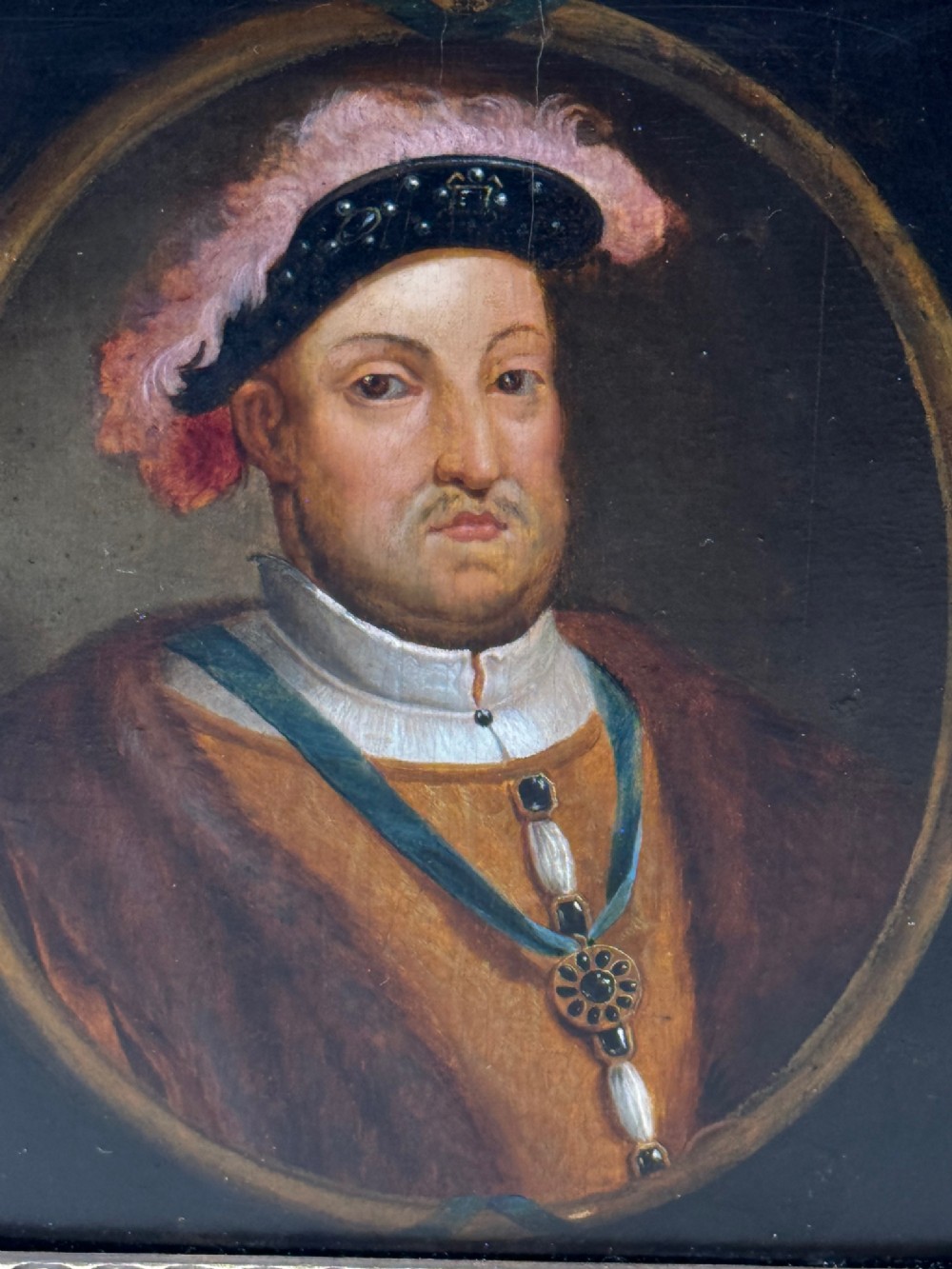
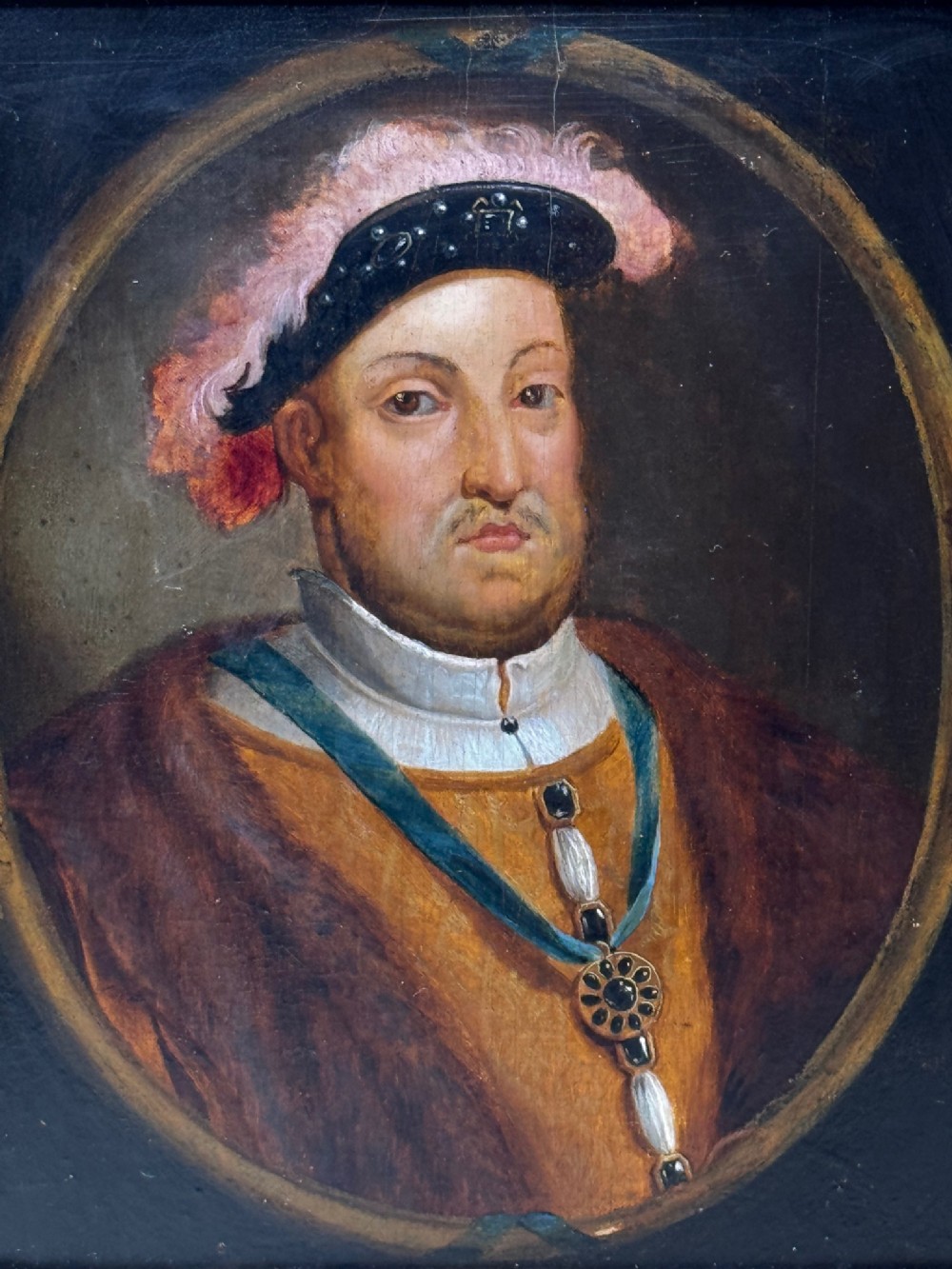
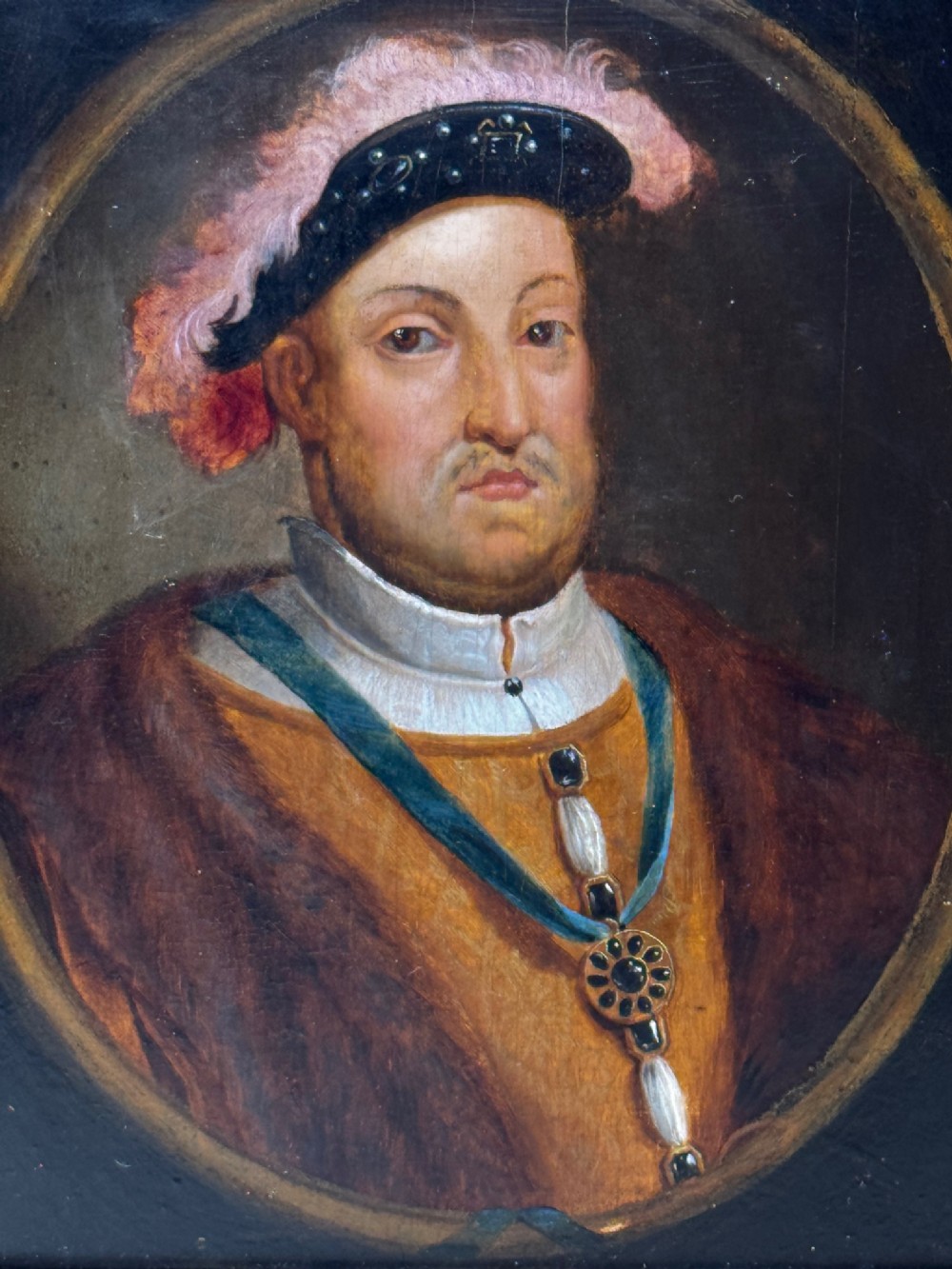
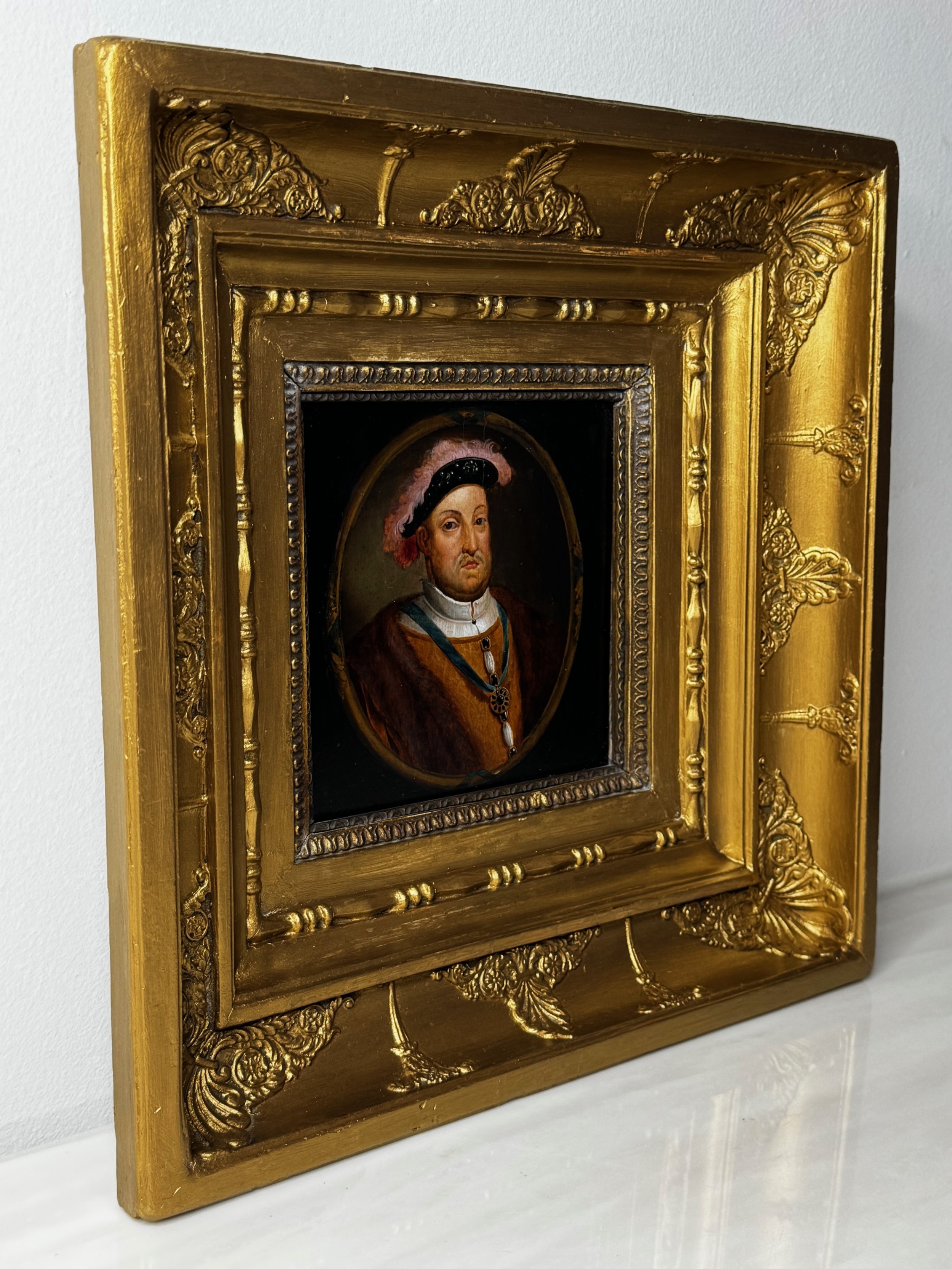
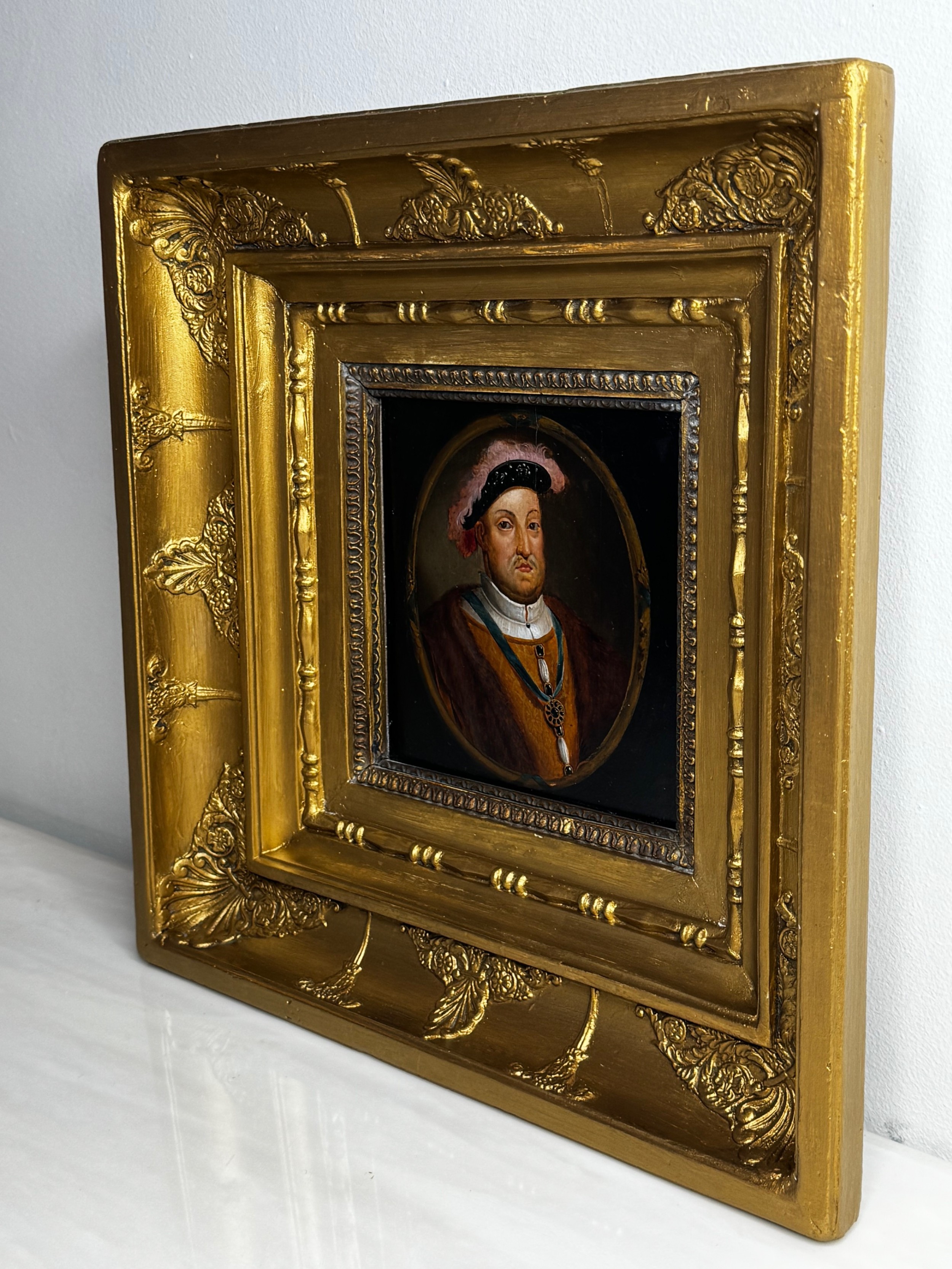
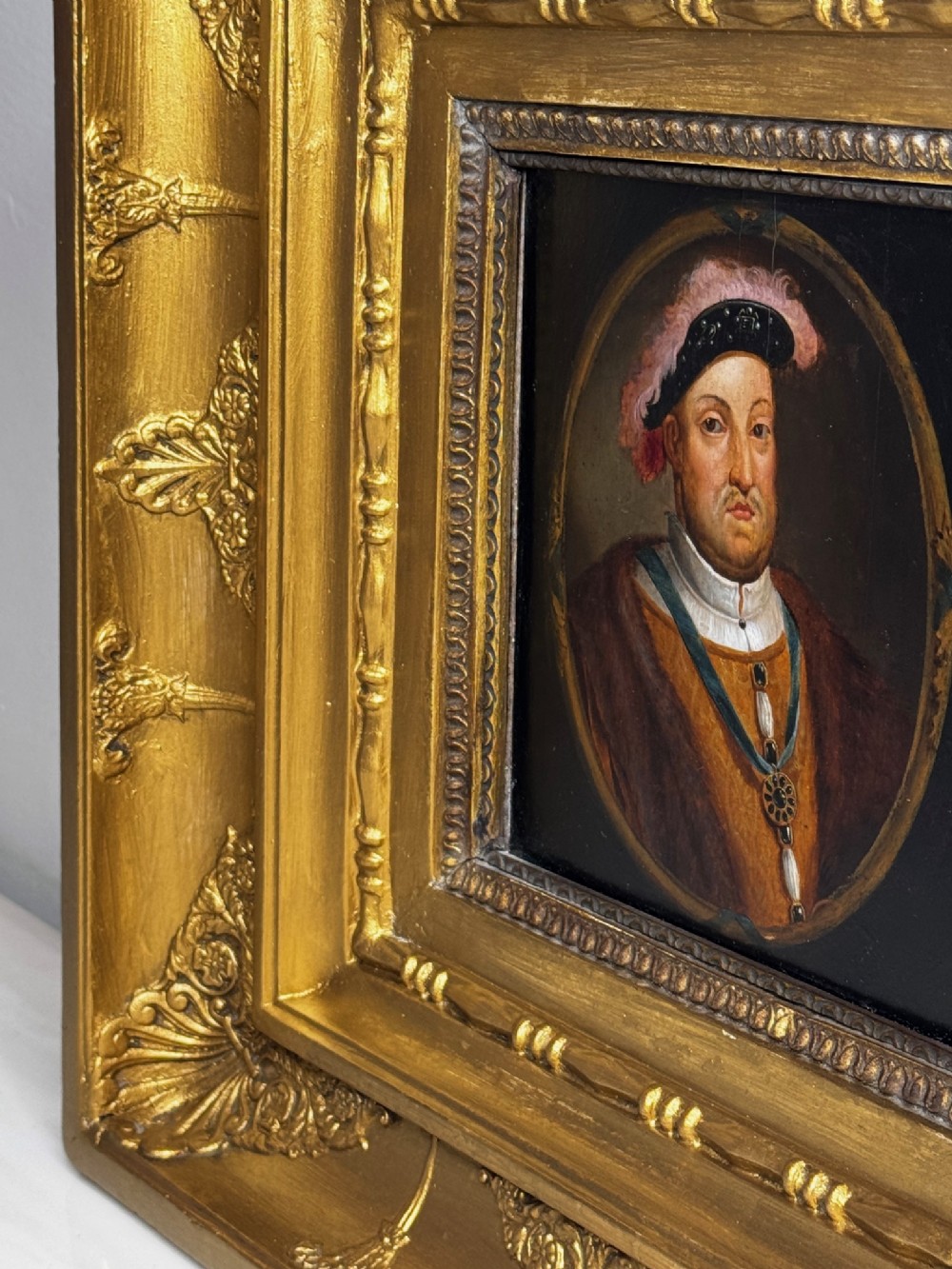
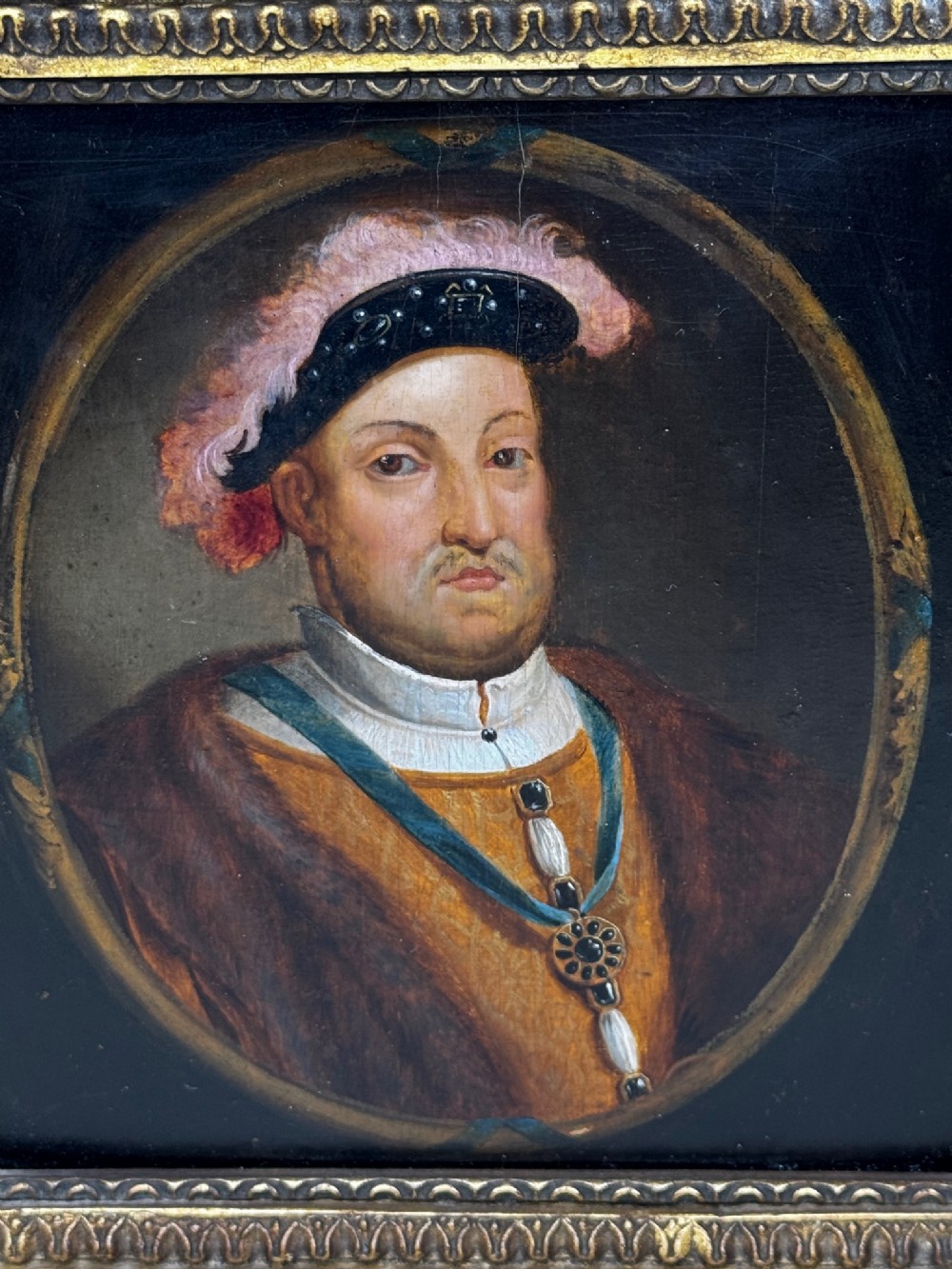
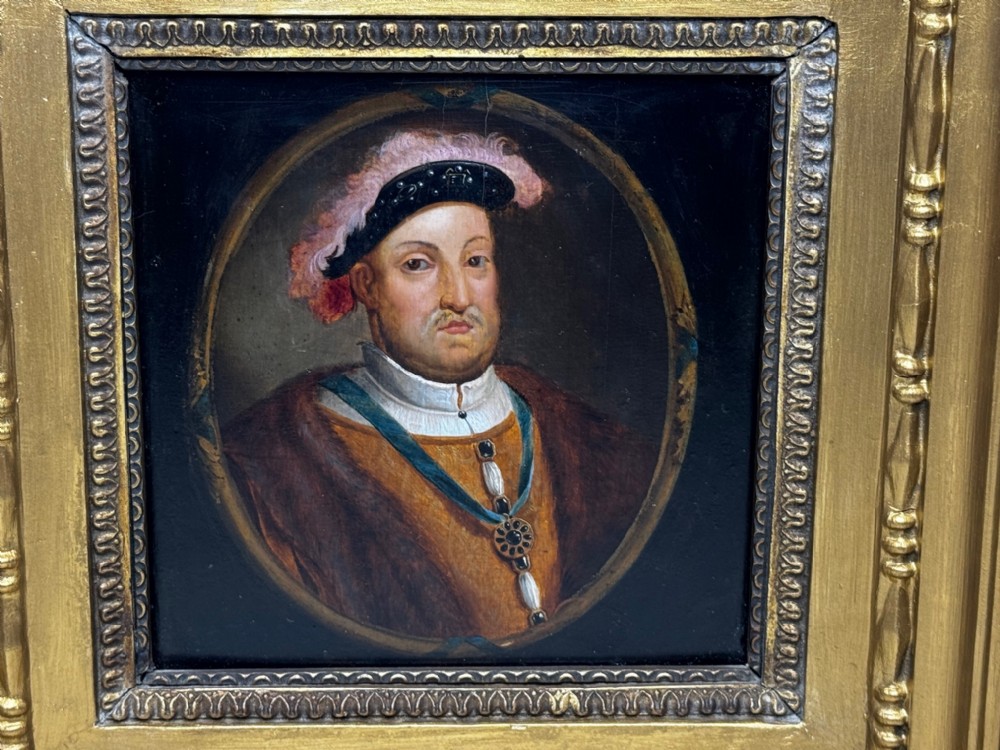
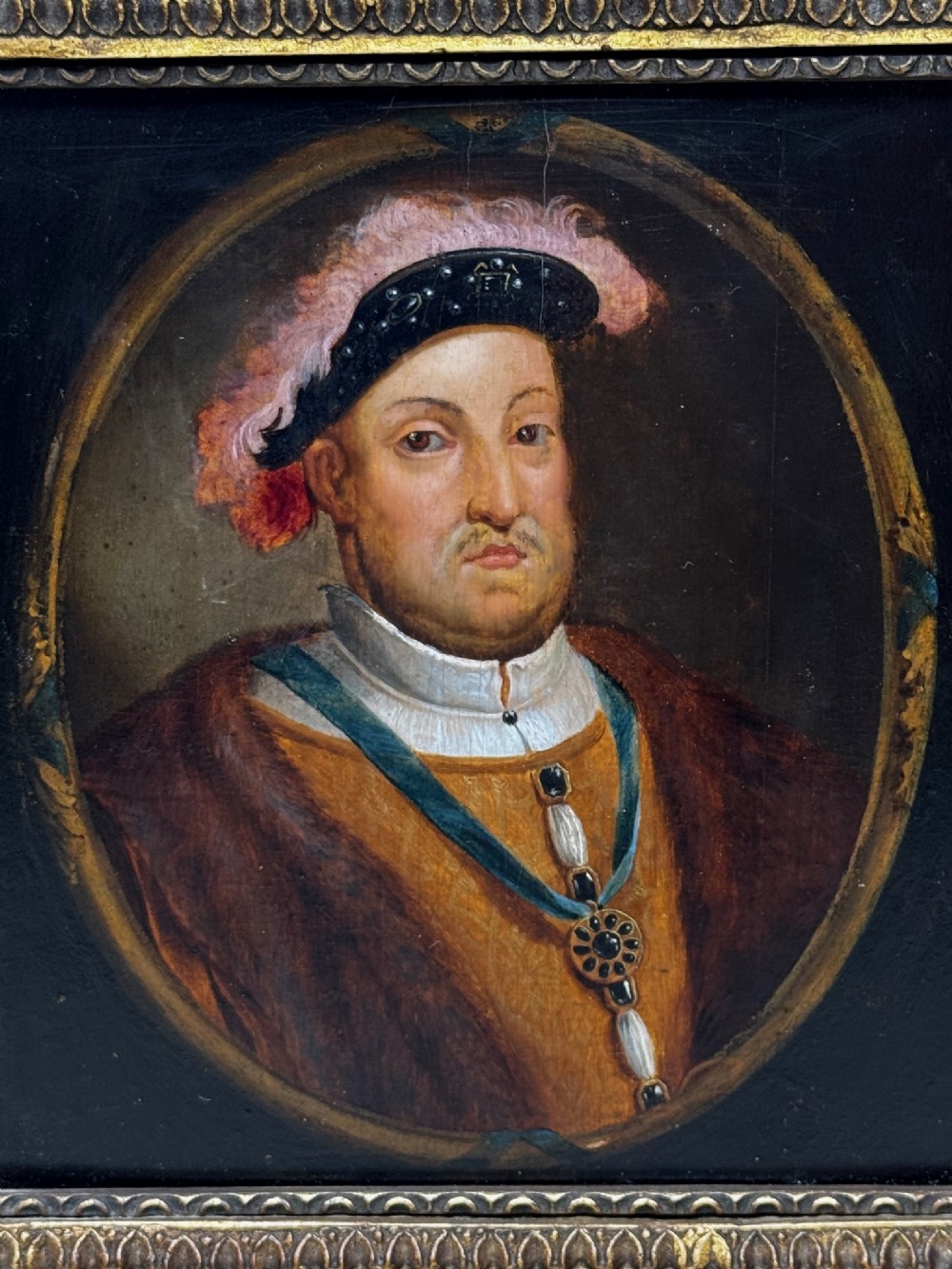
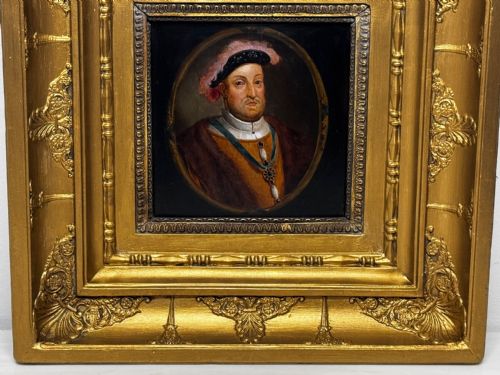
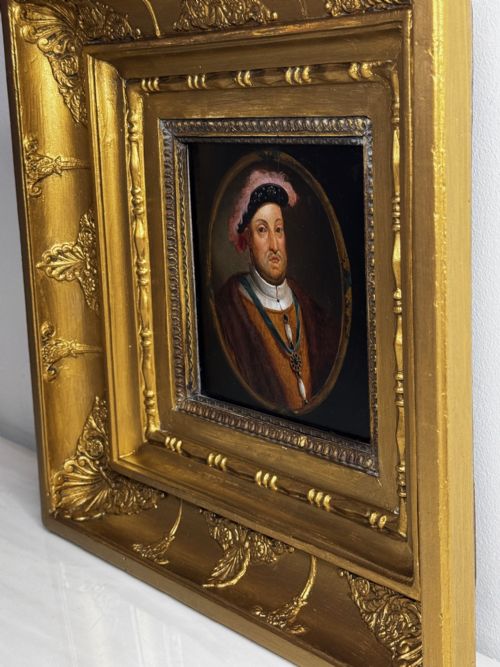
This intimate mid-18th-century portrait depicts King Henry VIII in bust-length within a painted feigned oval, following the 1561 prototype derived from the now-lost 1537 Whitehall Palace mural by Hans Holbein the Younger.
Holbein’s Whitehall composition established the canonical image of Henry VIII — a visual declaration of dynastic permanence and sovereign authority. Disseminated through painted copies and engravings across centuries, it became one of the most recognisable royal images in European history. The present work sits firmly within that enduring tradition.
Composition & Technique
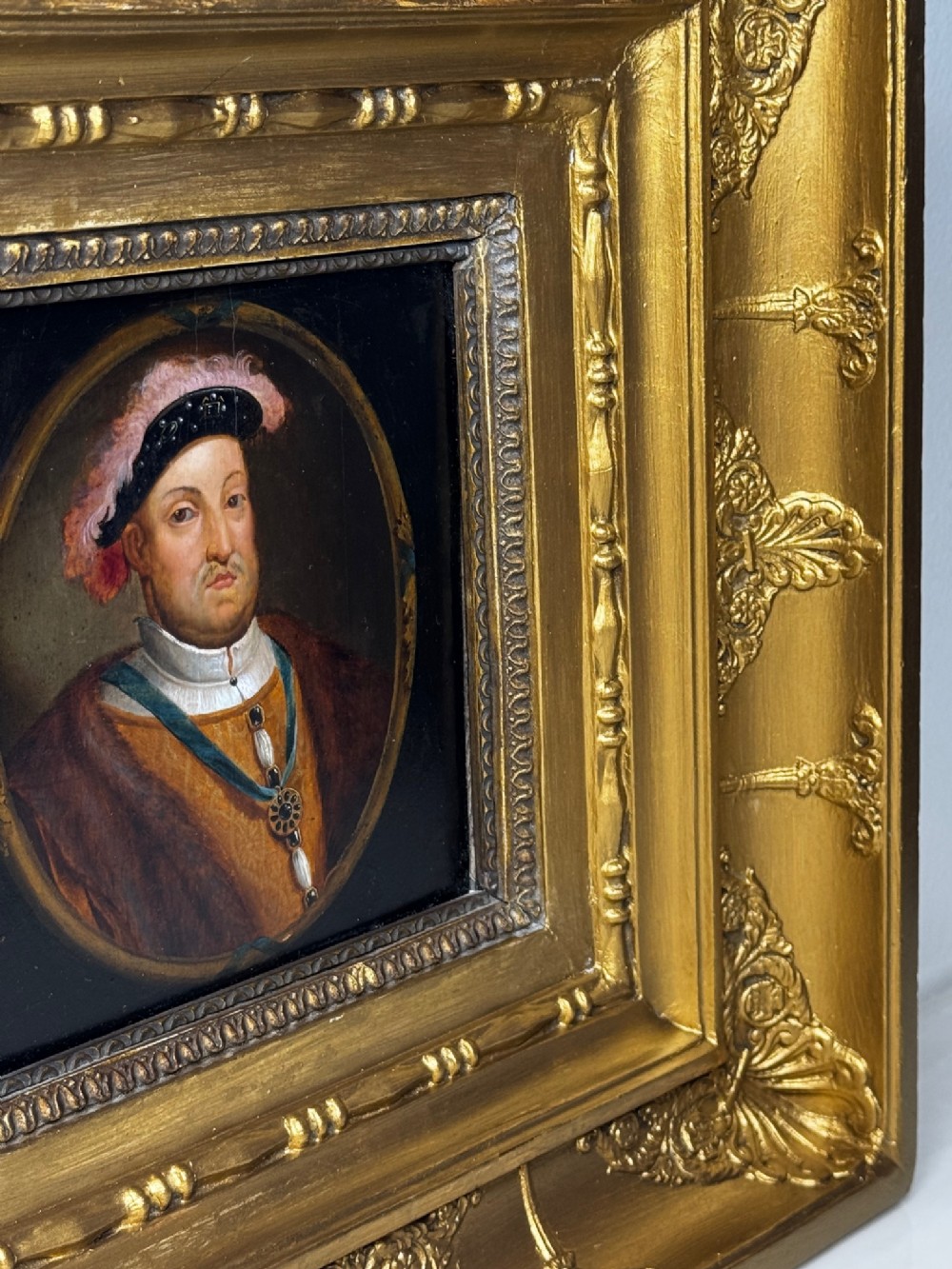
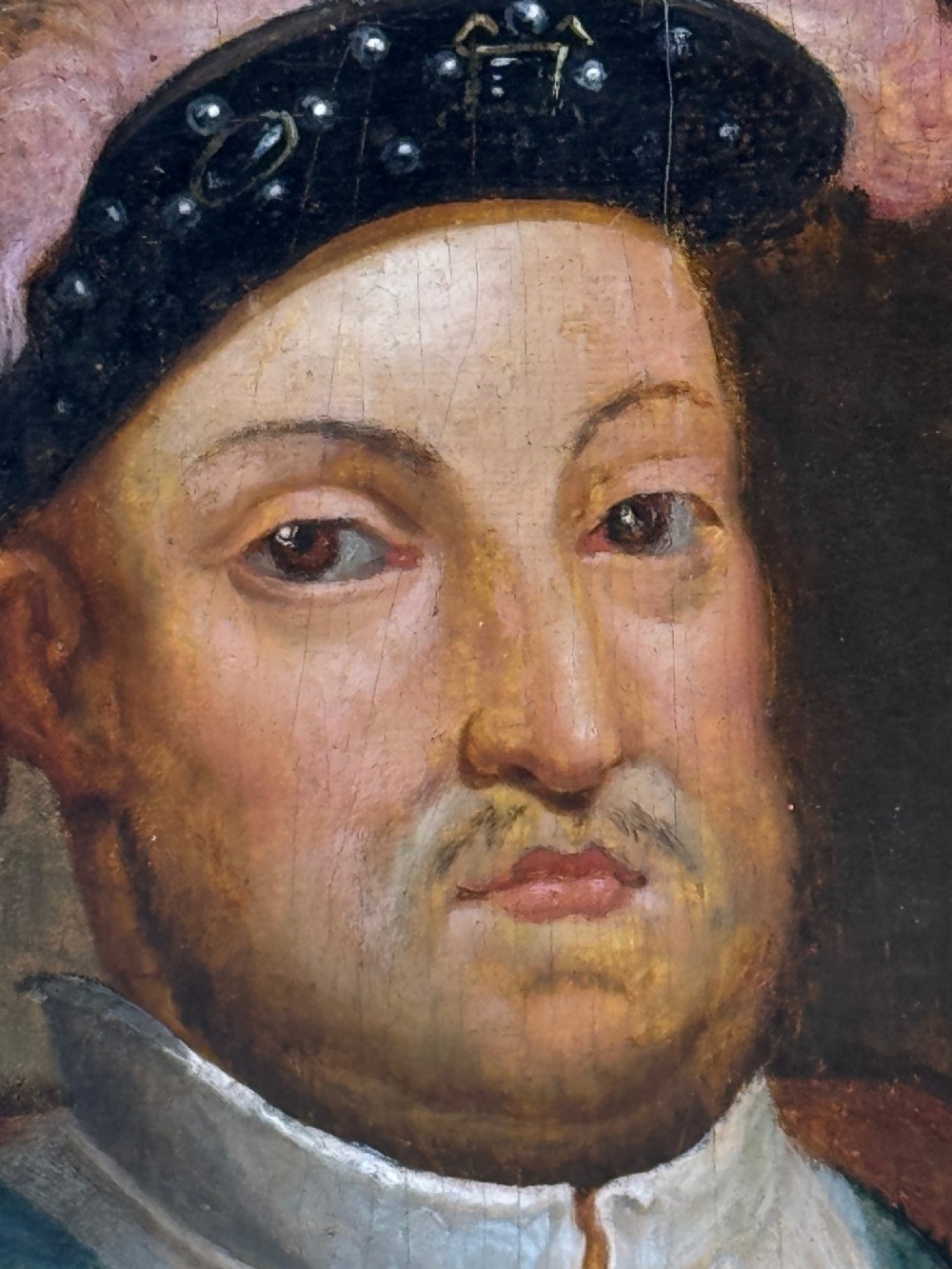
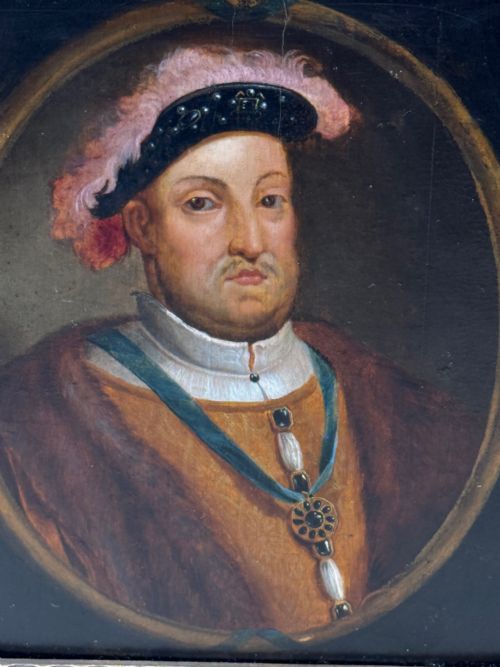
Henry is presented frontally, slightly turned, with a steady, sovereign gaze. The painted oval creates a medallion-like framing, isolating the monarch and enhancing both authority and cabinet intimacy.
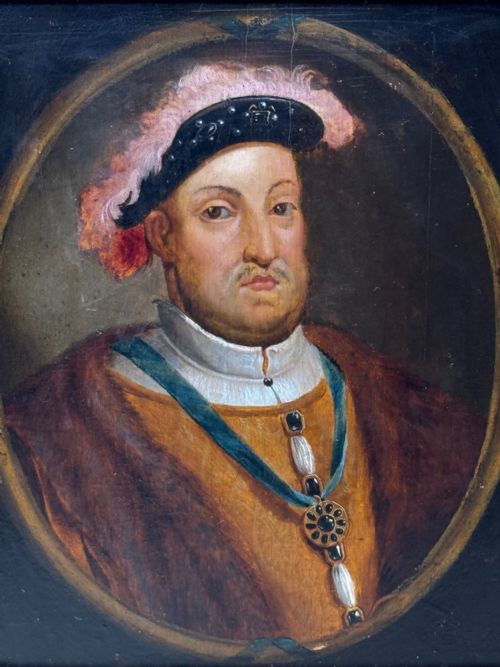
The modelling reflects mid-18th-century antiquarian production:
Controlled linear rendering of facial structure
Restrained tonal transitions in flesh
Simplified yet precise costume articulation
Balanced chromatic contrast between warm garment tones and dark ground
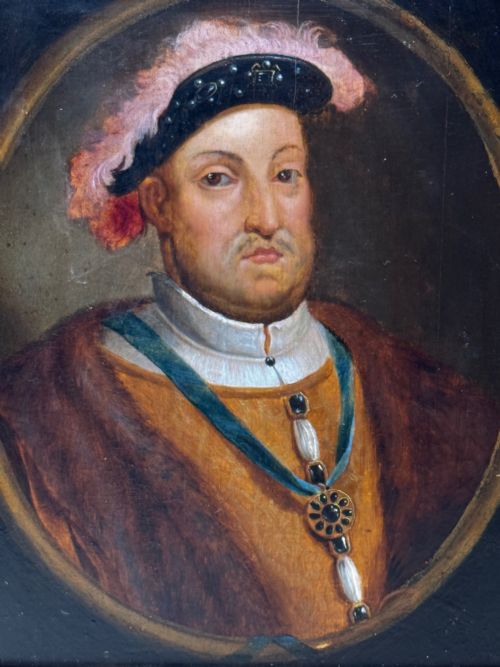
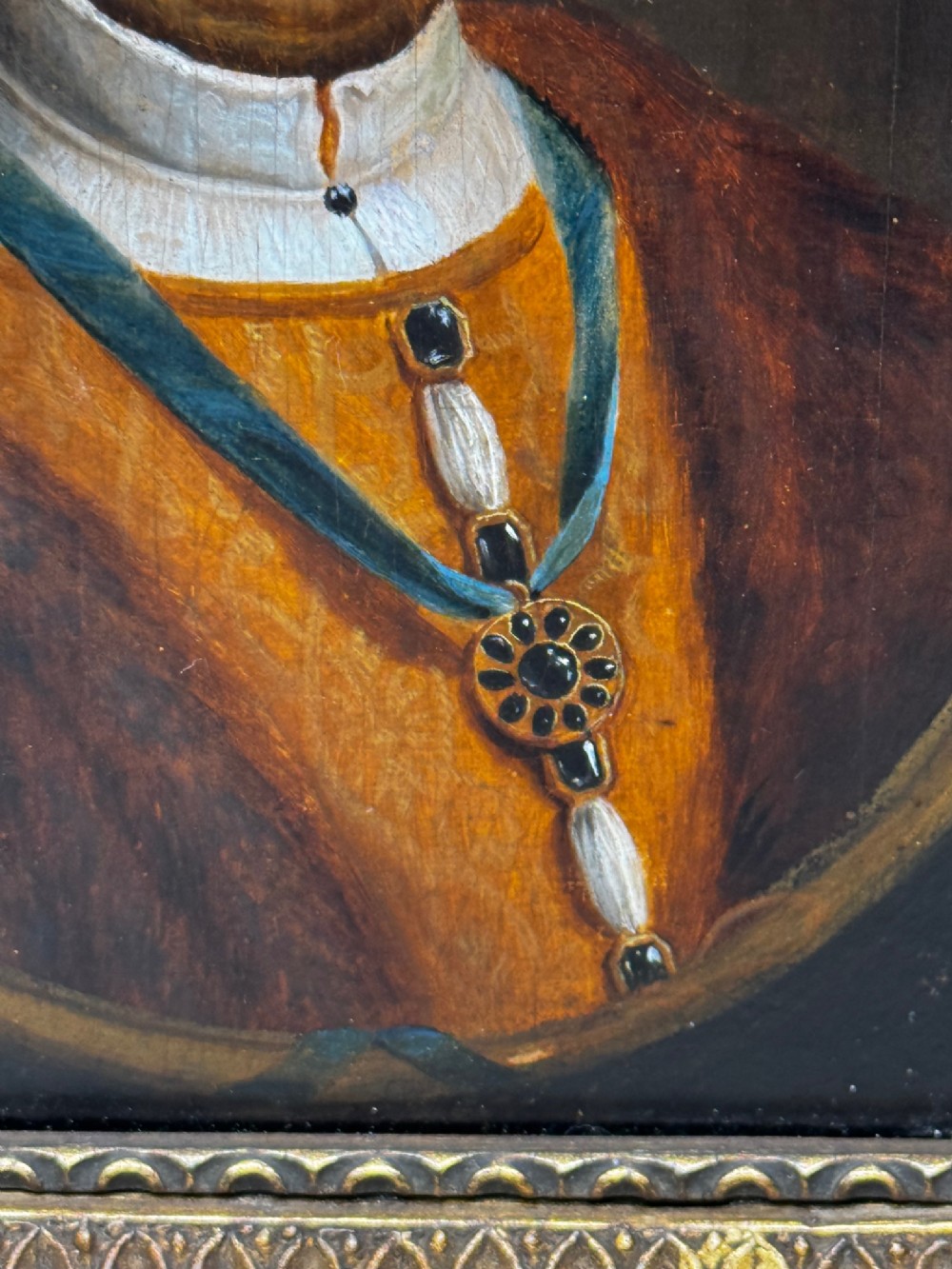
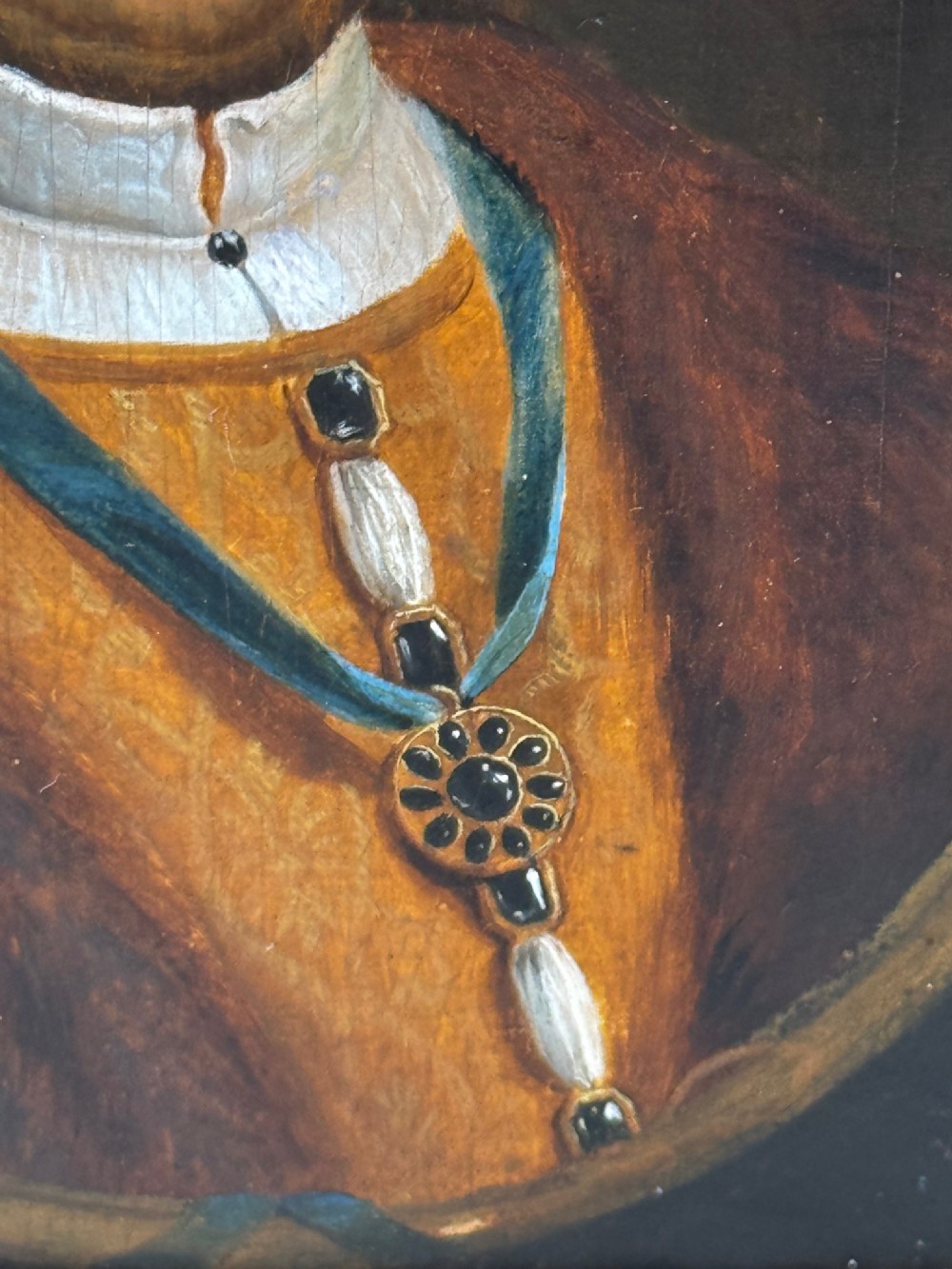
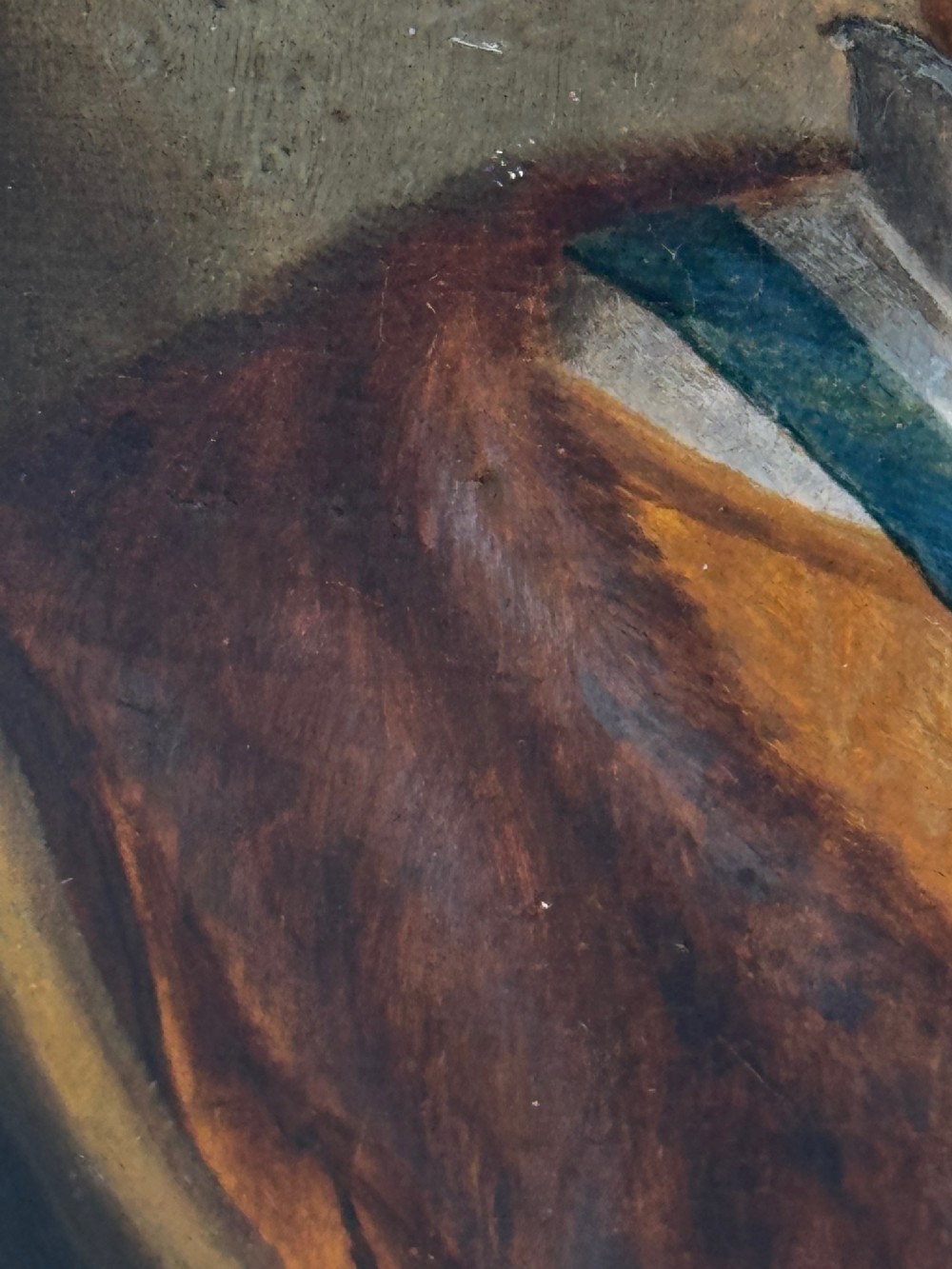
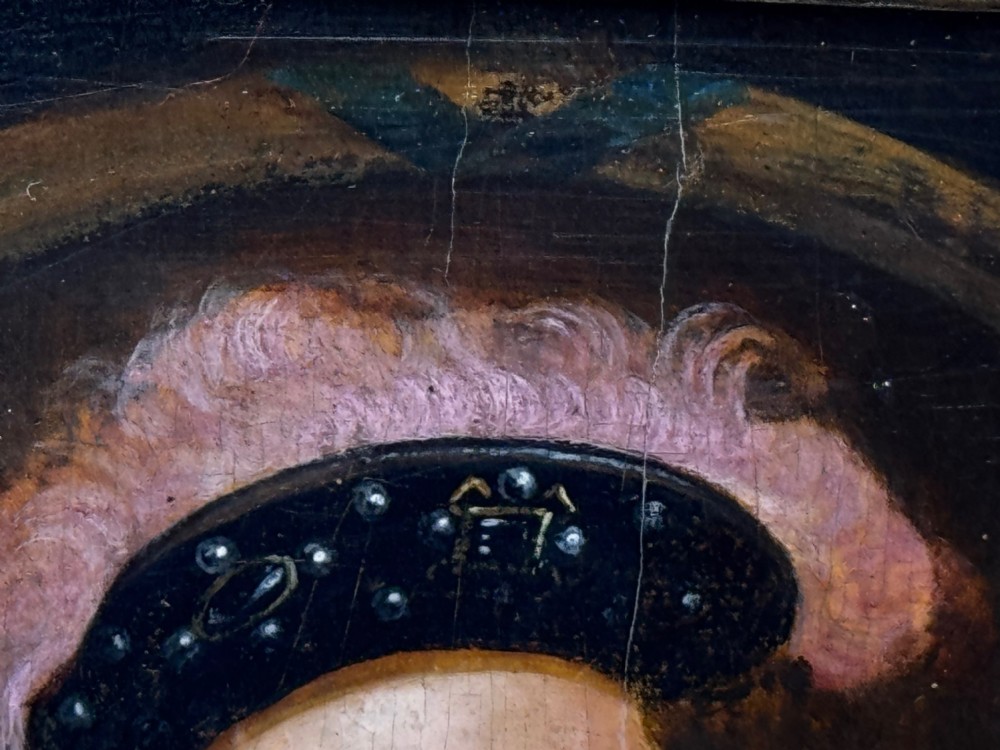
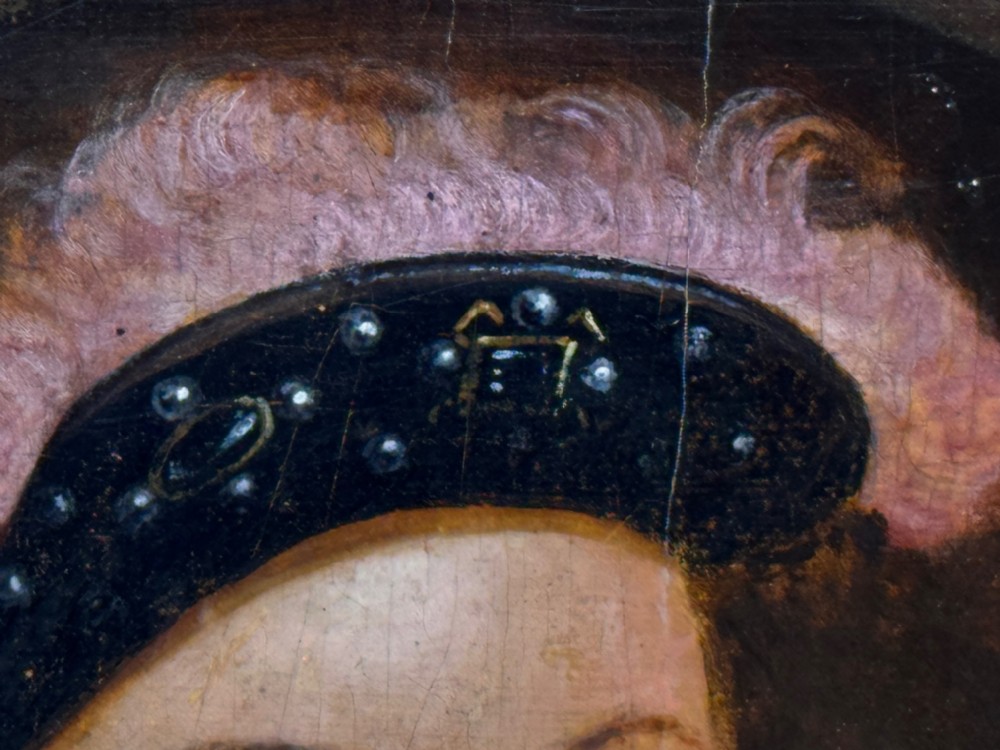
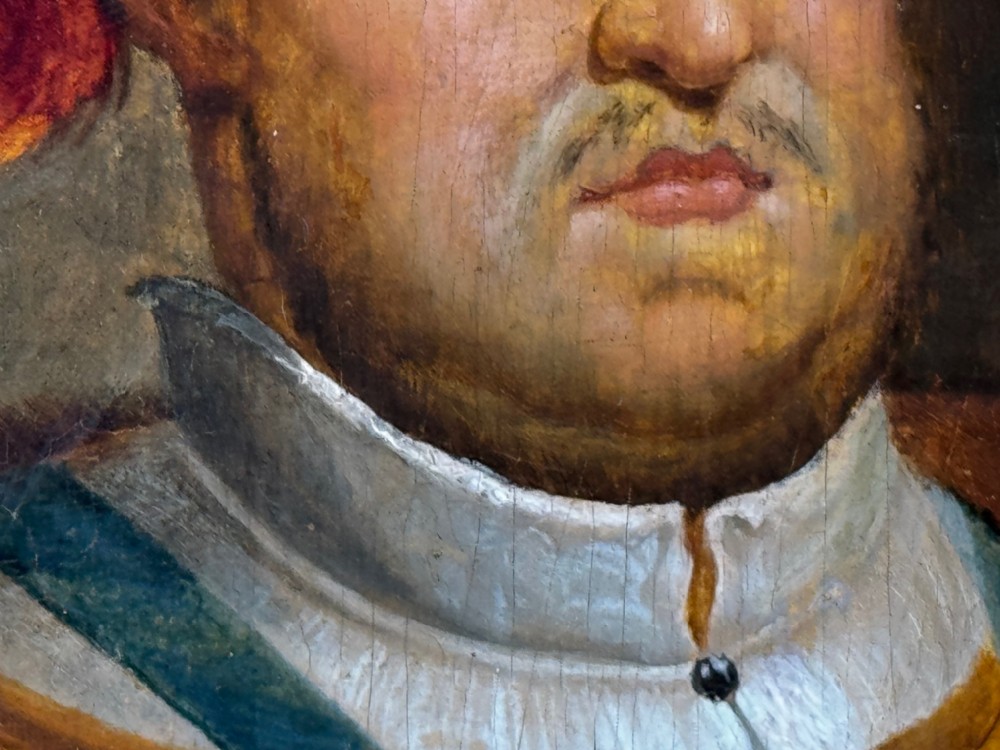
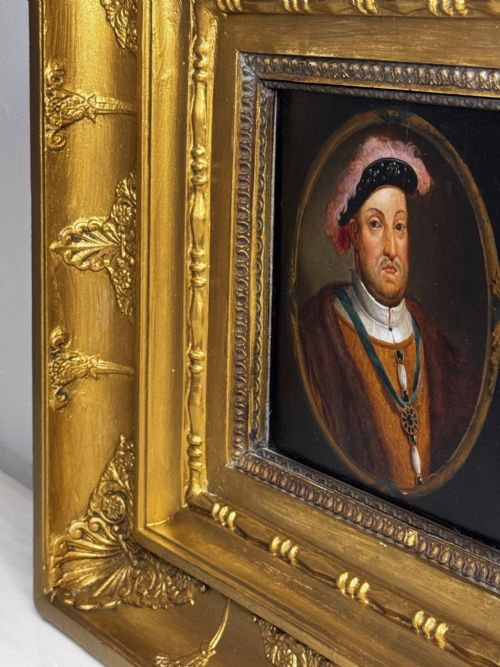
The jewelled cap and feather plume are crisply defined, while highlights across the collar and insignia provide dimensional lift. Age-consistent craquelure reinforces authenticity without disrupting visual coherence.
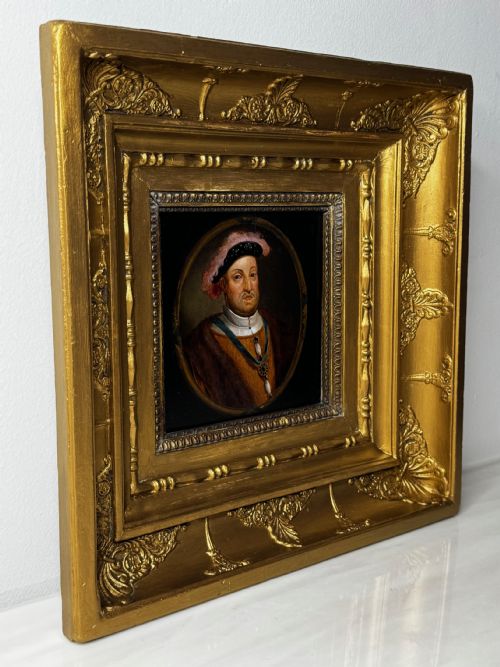
The use of a single chamfered oak panel is entirely consistent with Georgian cabinet construction.
The Sitter
Henry VIII (1491–1547), King of England from 1509 to 1547, remains one of the most consequential monarchs in British history:
Founder of the Church of England
Central figure of the English Reformation
Architect of Tudor dynastic authority
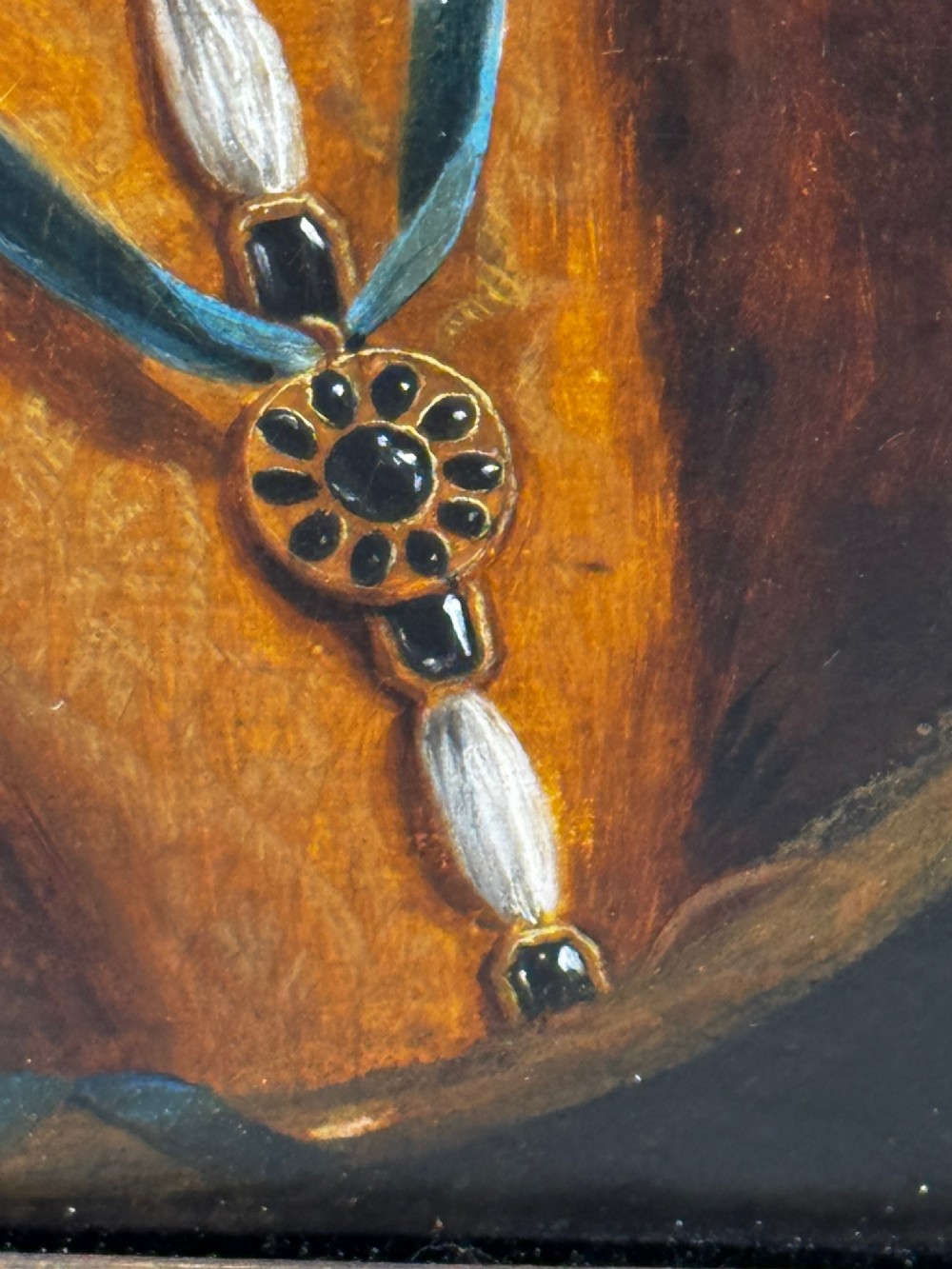
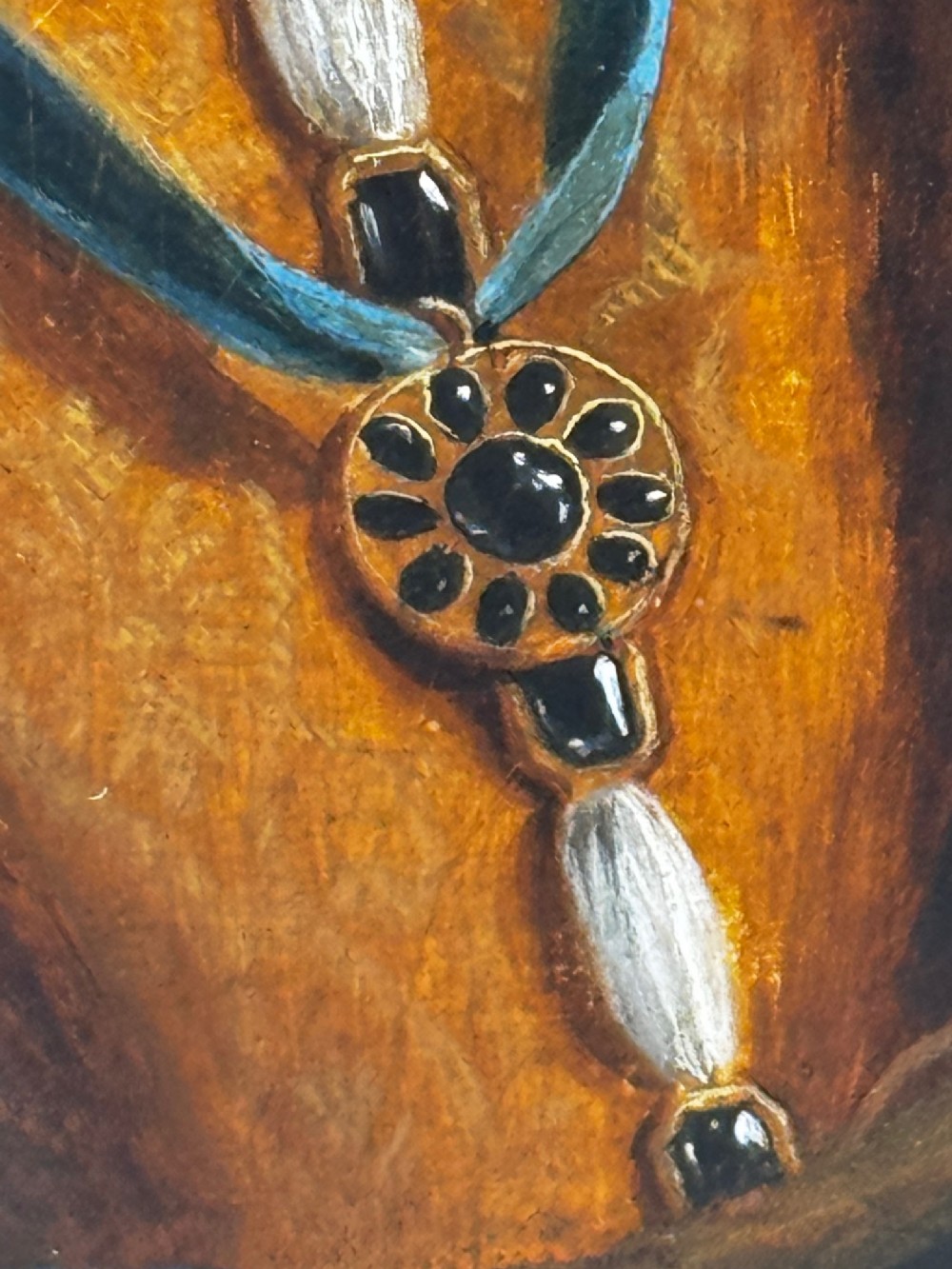
He is shown wearing a simplified rendering of the badge of the Most Noble Order of the Garter, of which he was Sovereign.
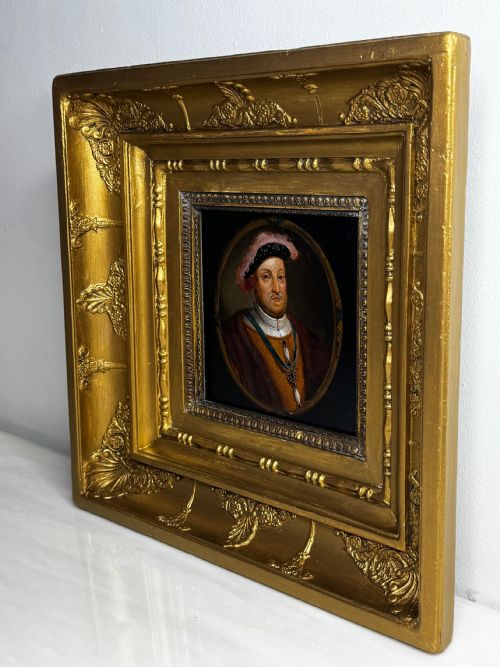
In full Tudor state portraits, Henry appears adorned with the elaborate Garter collar and “Great George” pendant. In 18th-century engravings and painted derivatives, this insignia was frequently schematised into a radiating jewelled roundel with pendant drop, as seen here, confirming adherence to established royal iconography.
Historical Significance
Executed circa 1750, this work belongs to the Georgian antiquarian revival, a period in which Britain turned intellectually toward its Tudor past.
Collectors of the period sought historic royal portraits for display in:
Libraries
Gentleman’s studies
Country houses
Antiquarian cabinets
The engraver George Vertue (1684–1756) played a central role in standardising Tudor imagery through print culture, ensuring that Holbein’s lost Whitehall mural remained embedded in the national consciousness.
This painting is therefore not simply a likeness, but an 18th-century act of dynastic remembrance.
An early German descriptive label on the reverse confirms later Continental ownership, demonstrating the cross-channel circulation and appreciation of English royal imagery.
The Artist
English School, mid-18th century.
Unsigned, as is typical for Georgian antiquarian cabinet portraits, the work demonstrates:
Engraving-derived compositional fidelity
Linear modelling
Oak panel cabinet execution
A restrained, historically informed approach
Such works were produced within London’s antiquarian milieu for collectors engaged with scholarship and national heritage.
Signature
Unsigned, consistent with period cabinet production.
Frame
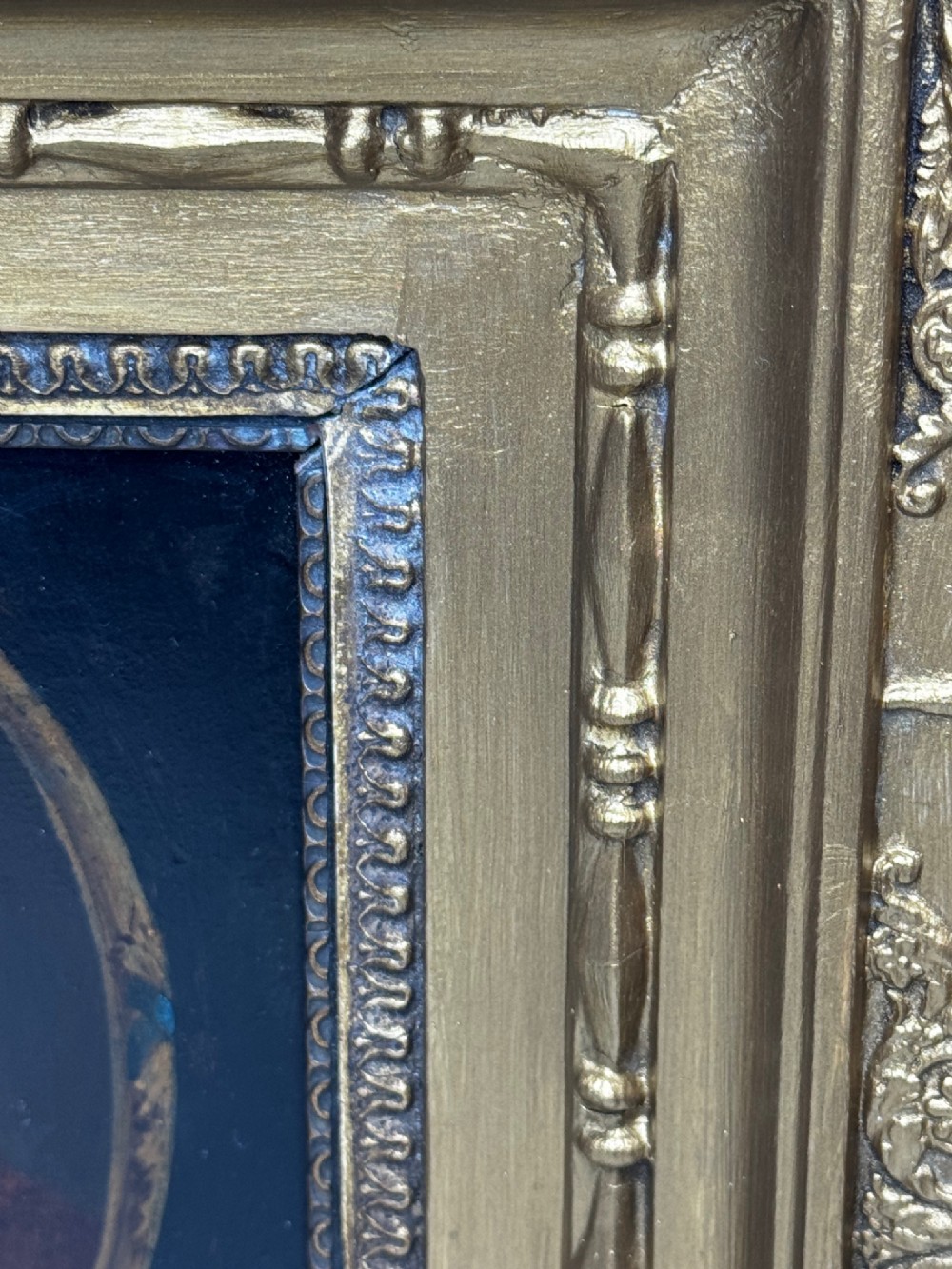
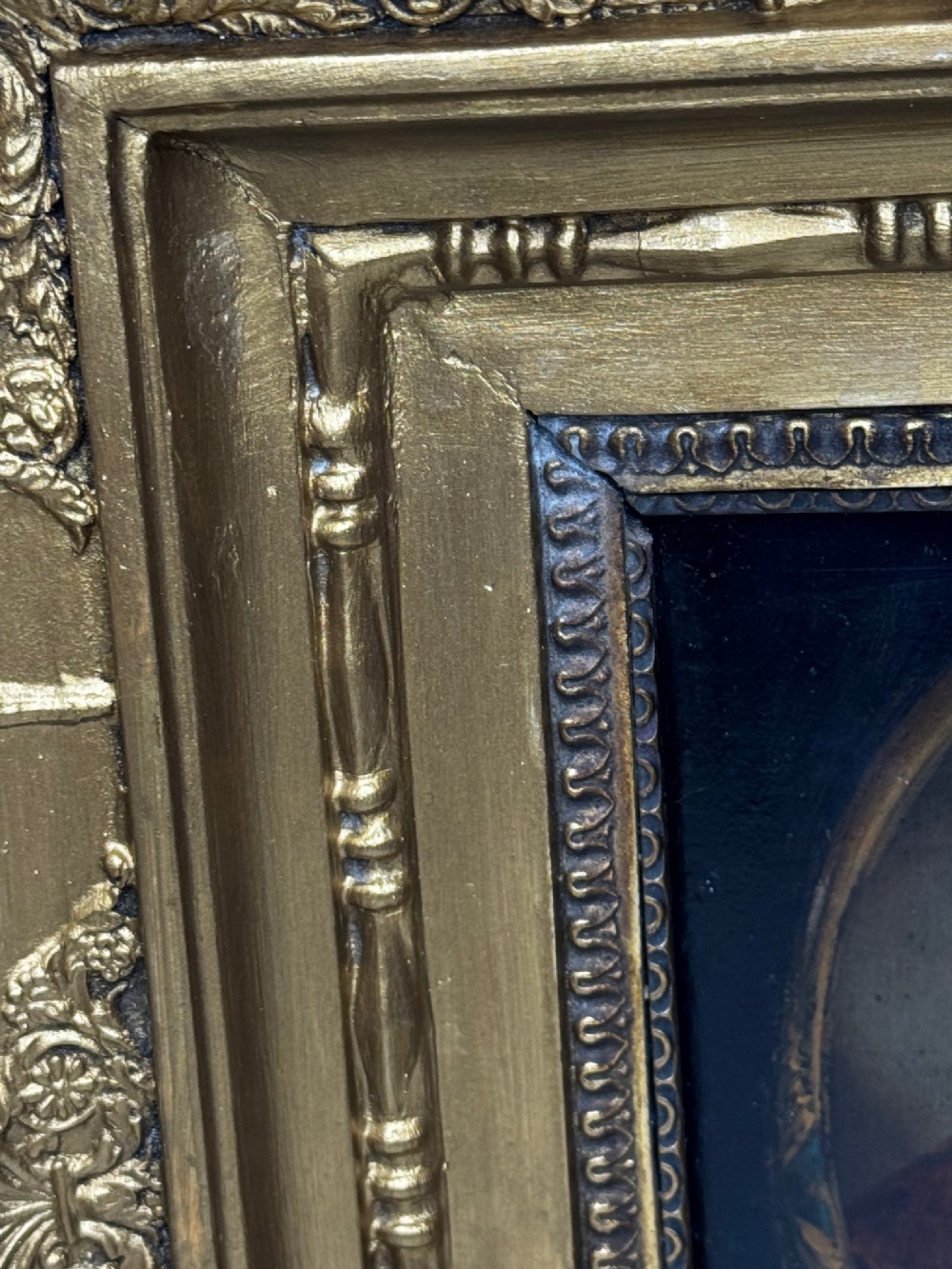
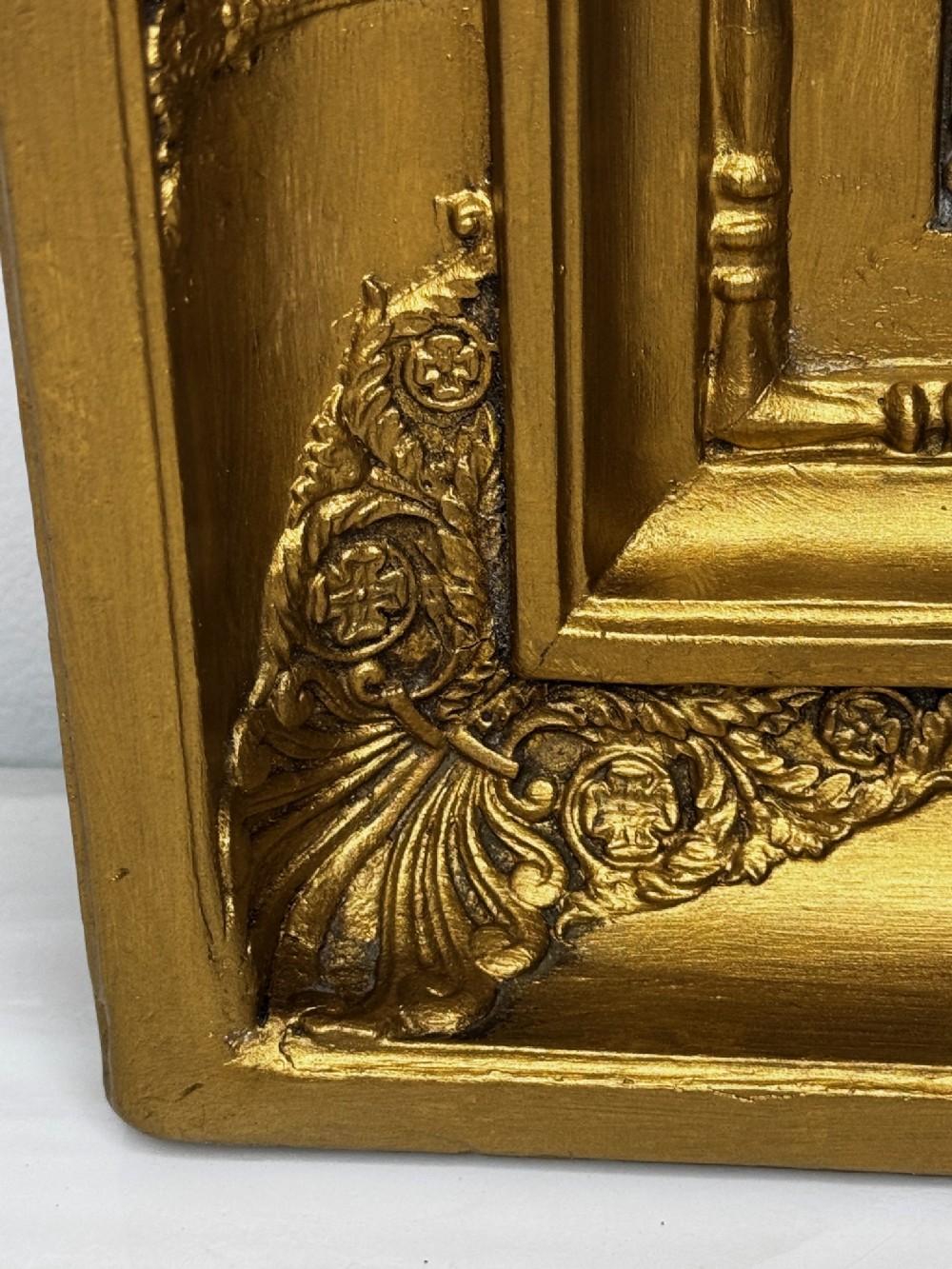
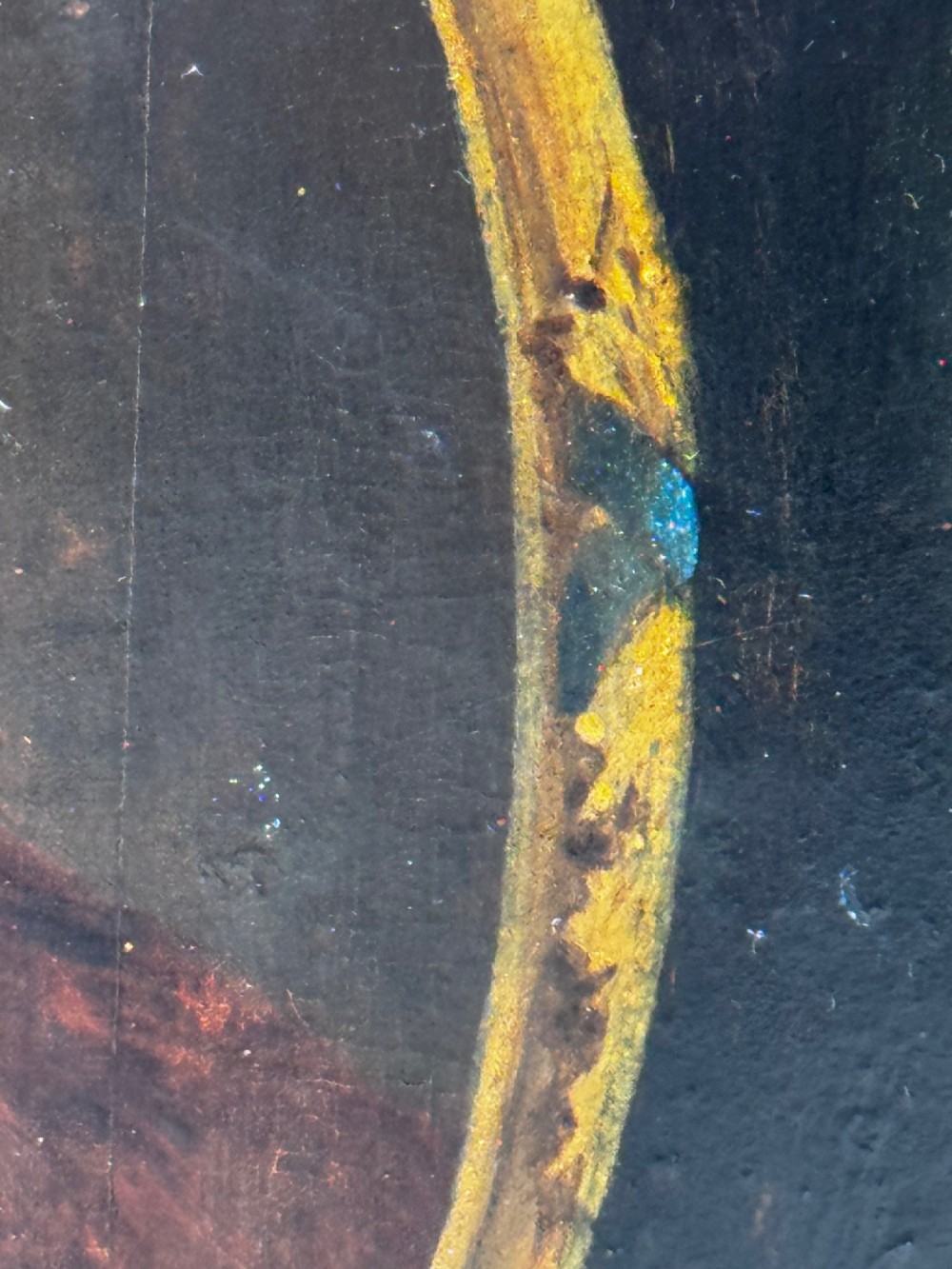
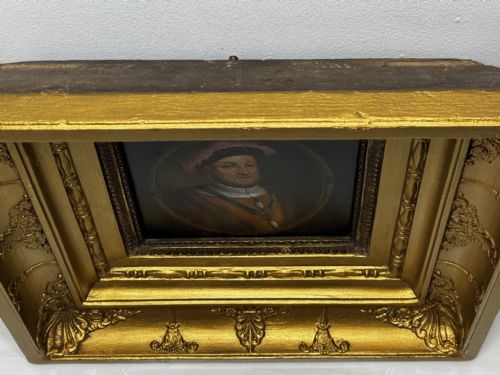
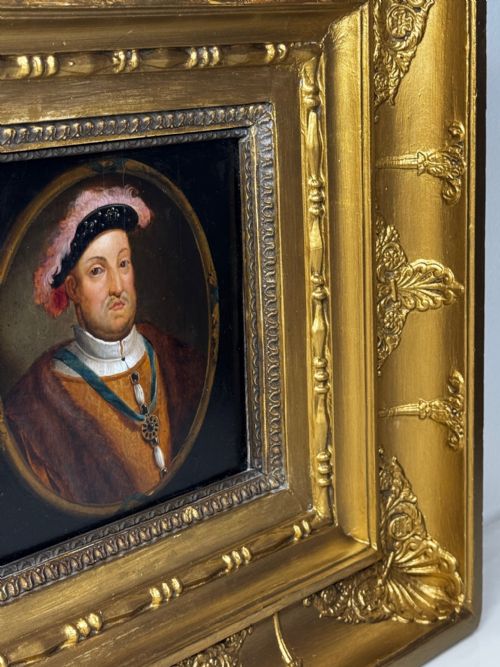
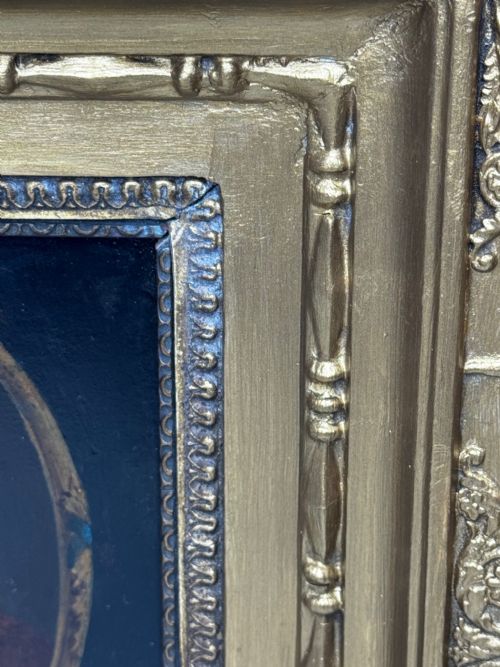
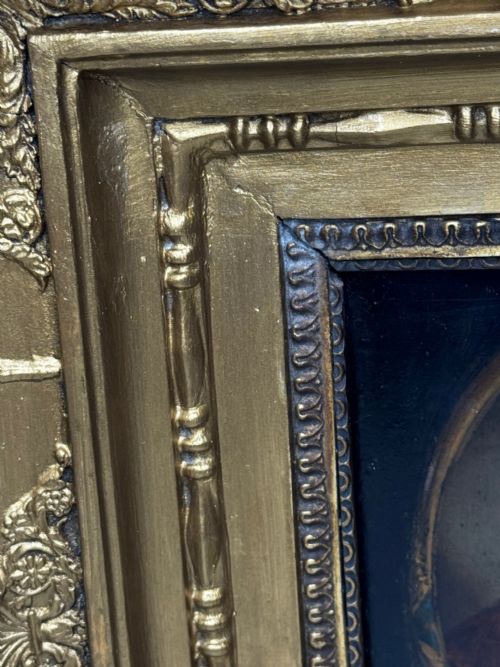
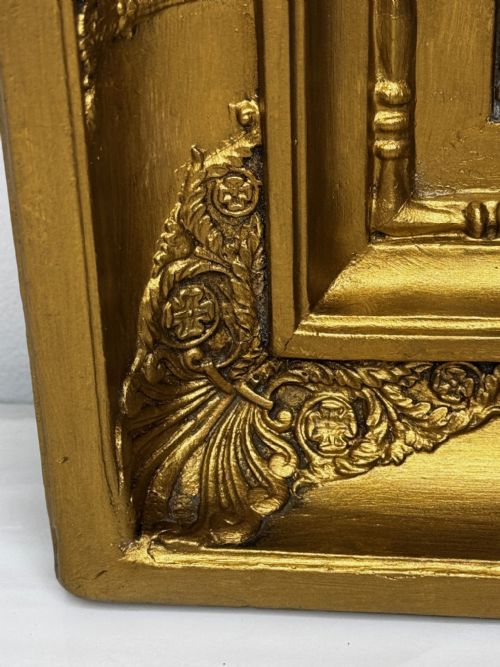
Presented in its original 18th-century carved wooden gilt frame, period to the panel. The frame retai
Cheshire Antiques Consultant Ltd has dated this King Henry VIII Oil Portrait to the 18th Century.
Source the historic in 17th, 18th, 19th & 20th century fine arts, painting, sculptures & collectibles
You can view the stock and full dealer information on the Cheshire Antiques Consultant Ltd Profile Page
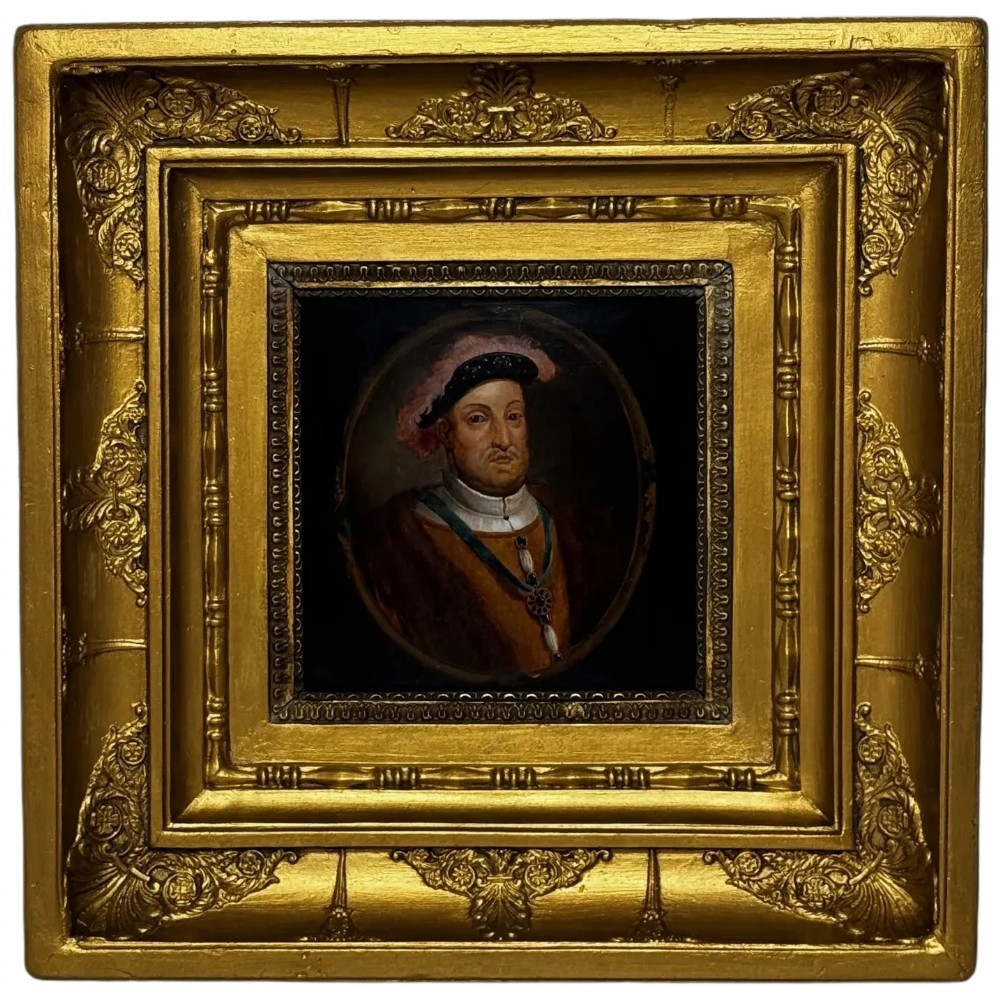
Oil Portrait King Henry VIII Wearing Badge of the Order of the Garter