
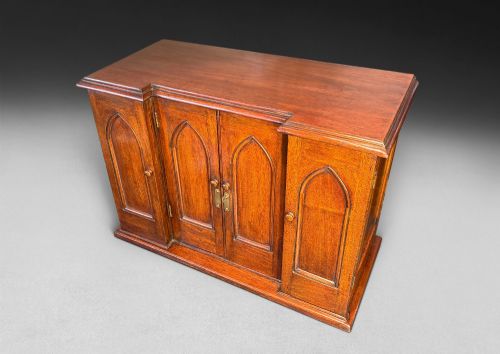


Mini Oak Chest
A mini oak chest packs the presence of full-scale joinery into a compact desk or table-top footprint.

Mini Oak Chest
When you search for a mini oak chest, you encounter small-scale furnishings produced across several centuries, ranging from Georgian spice cabinets to Victorian apprentice pieces and vernacular Welsh coffer bach examples. These compact pieces served practical storage roles for valuables, documents, tea, or medical specimens before makers scaled them down for display or demonstration.
On this page, the most frequent forms are miniature chests of drawers and tabletop collectors cabinets fashioned in solid oak, accompanied by occasional mule chests and tea caddies. Dating spans from the eighteenth century through the Georgian and Victorian eras up to interwar commercial designs.
How They Were Made
Joiners built these miniature pieces using solid timber carcass construction, frequently pairing oak with secondary woods like pine or mahogany, and occasionally applying simulated paint finishes or burr oak veneers. Surface detail often includes brass handles, escutcheons, and glass panels.
Cabinetmakers employed traditional dovetail joints for drawer construction and panel-and-frame techniques for carcases, sometimes incorporating parquetry, inlay wood, or carved Gothic motifs to elevate the smaller scale.
Recorded styles include Welsh Vernacular, Gothic Revival, Arts & Crafts, and Regency.
What Varies In Quality
Quality rests in the fidelity of proportion and the crispness of the miniature joinery, where skilled makers maintained the structural integrity of full-sized furniture at a fraction of the scale. Pieces with hand-cut dovetails and well-figured timber distinguish finer cabinetwork from simpler utility boxes.
The degree of original hardware survival and the restraint of any later restoration also determine how successfully a piece retains its historical integrity across Georgian and Victorian examples.
The Mini Oak Chest Glossary
- Coffer bach
- A traditional Welsh miniature chest or coffer, often fitted with a drawer beneath the main compartment and historically given as a wedding gift.
- Apprentice piece
- A small item of furniture demonstrated by a craftsman to prove skill before gaining guild admission, though many served simply as high-end cabinet samples.
- Mule chest
- A storage chest featuring one or more drawers at the base beneath a hinged lid, scaled down into a miniature format in these listings.
- Parquetry
- Geometric mosaic woodwork formed of small wooden tiles arranged in patterns across drawer fronts or tops.
- Spice cabinet
- A small tabletop cabinet containing multiple tiny internal drawers designed originally for culinary or apothecary stores.
Mini Oak Chest: Frequently Asked Questions
What were mini oak chests used for?
These small chests stored high-value commodities such as tea, spices, documents, and jewellery on tabletops or counters.
Craftsmen also produced them as portable specimen cases, apothecary storage, or demonstrations of joinery skill.
How do I date an oak miniature chest?
Dating relies on examining construction methods, timber selection, and hardware styles relative to Georgian or Victorian conventions.
Hand-cut dovetails, secondary wood choices, and period-specific decorative motifs like Gothic revival carving offer clear chronological markers.
What is a Welsh coffer bach?
A coffer bach is a traditional Welsh miniature chest featuring a lidded top compartment above one or more base drawers.
Historical examples in oak often date to the eighteenth century and reflect domestic vernacular woodworking traditions.