
Small Oak Storage Box
These small oak storage box pieces span centuries of utilitarian woodworking, offering compact storage with substantial character.

Small Oak Storage Box
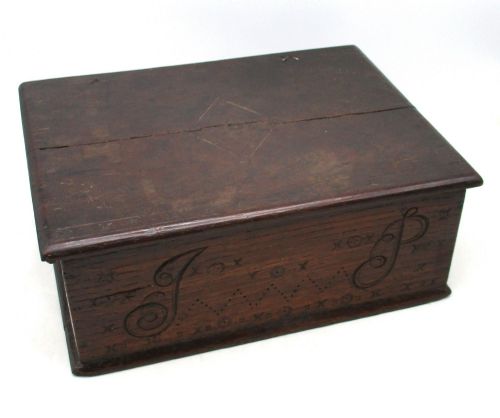
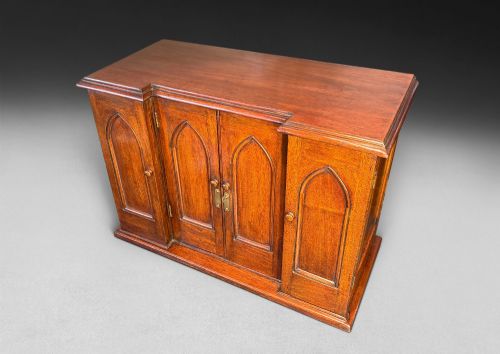
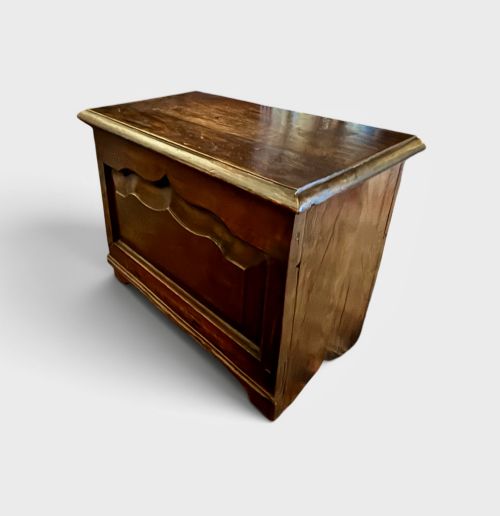
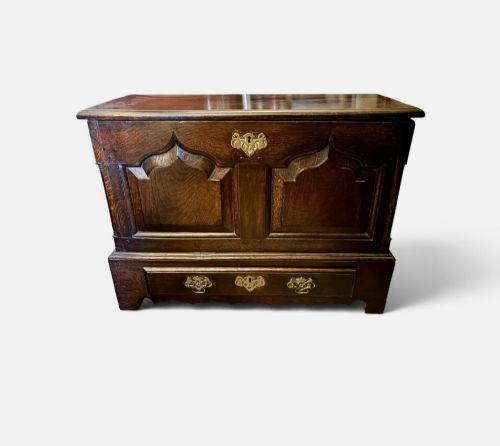
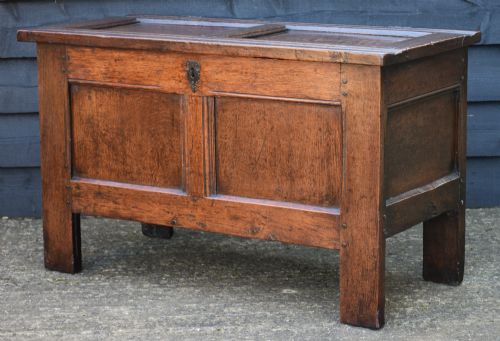
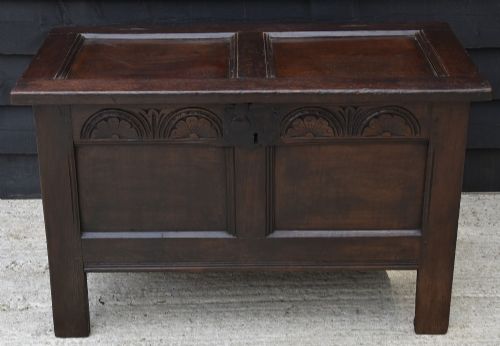
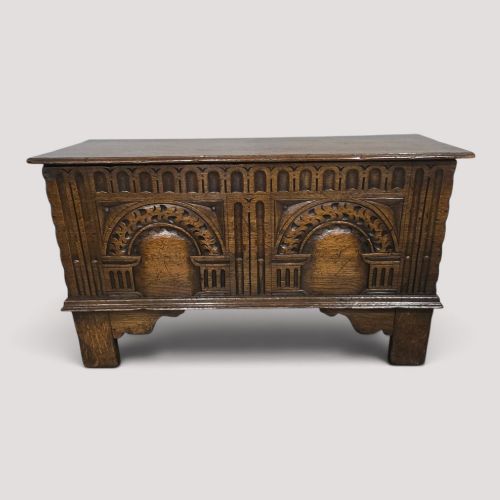
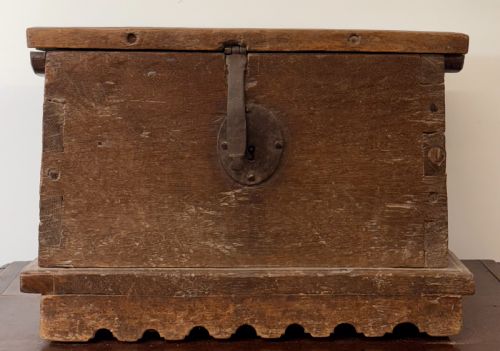
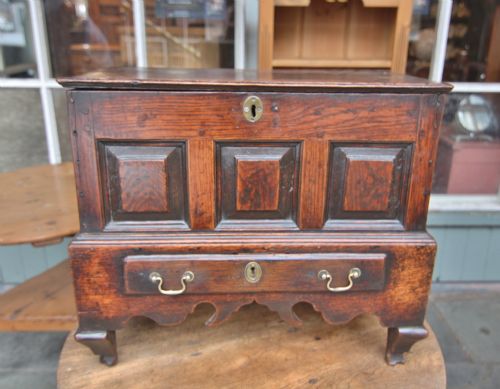
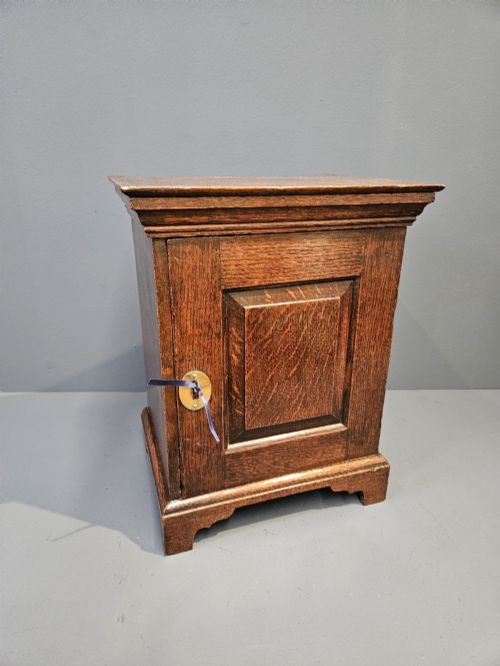
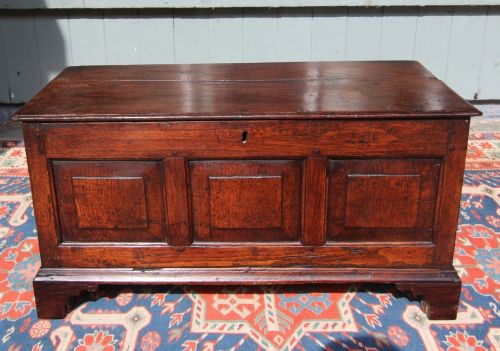
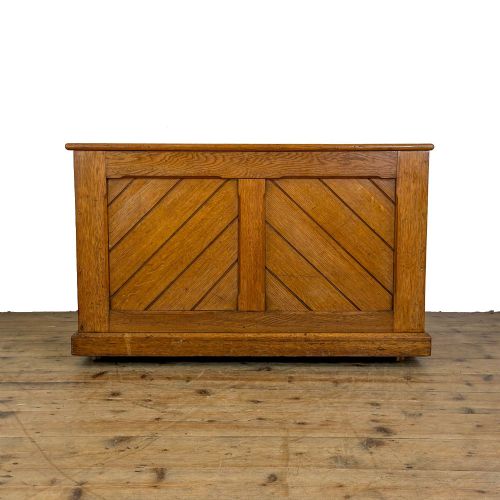
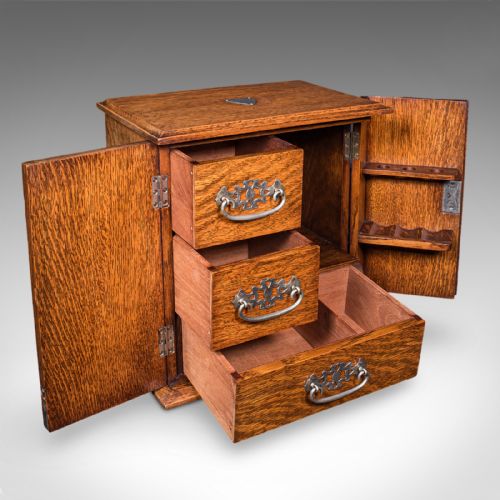
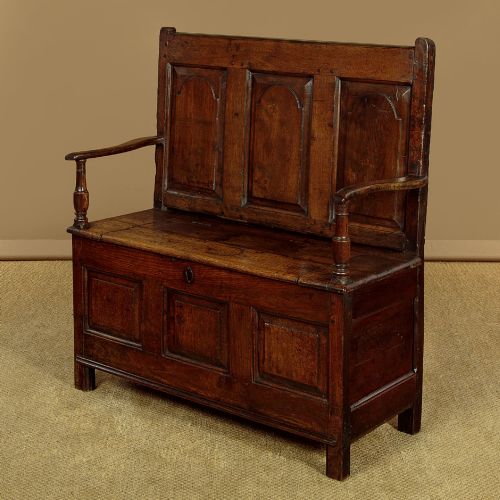
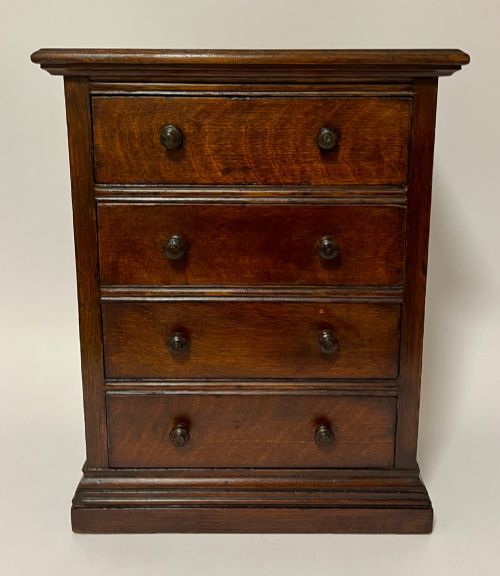
A small oak storage box takes several traditional forms, most notably the coffer, coffer bach, document box, and tabletop cabinet. These items served domestic and professional purposes across multiple centuries.
The versions most frequently met here range from seventeenth-century paneled examples to eighteenth-century Welsh vernacular pieces and later revival boxes.
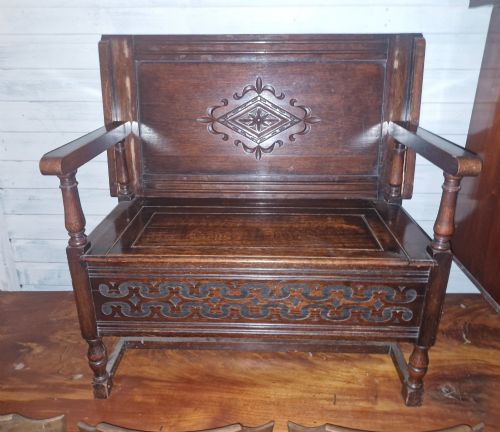
Compact proportions define these objects, allowing them to function as desktop storage, blanket boxes, or decorative furniture in modern interiors.
Materials and construction
Makers relied primarily on solid oak, utilising timber planks joined by framing, panels, and traditional joints rather than modern adhesives.
Hardware such as iron hinges, brass escutcheons, and steel locks provided structural reinforcement and security for valuable documents or household goods.
Secondary timbers like pine appear occasionally in internal compartments or backing boards, while painted finishes alter the natural wood surface on select nineteenth-century examples.
Listings feature items spanning from the sixteenth century through the Edwardian period, constructed predominantly in solid oak with occasional painted finishes.
Factors of quality and execution
The division between standard items and superior examples lies in the crispness of hand-carved ornamentation, such as linen fold panels, geometric mouldings, or figural carvings.
Construction integrity determines lasting value, with tight joinery, original hardware, and minimal timber replacement commanding greater attention from collectors.
The Small Oak Storage Box Glossary
- Coffer
- A heavy wooden chest traditionally used for storing valuables, linens, or documents. These pieces often feature hinged lids and sturdy paneled construction.
- Coffer bach
- A Welsh term translating to little coffer, denoting a miniature chest typically raised on feet or a small drawer base. Such pieces served as presentation items or personal storage.
- Linen fold
- A carved wooden motif resembling stiffly folded fabric, popular on panels during the sixteenth and seventeenth centuries. This design adds textural depth to flat surfaces.
- Mule chest
- A traditional storage chest featuring one or more drawers beneath the main lift-top compartment. They bridge the functional gap between basic coffers and modern chests of drawers.
- Vernacular
- Furniture built by local craftsmen using regional traditions and readily available materials rather than following high-style metropolitan designs. These pieces emphasise utility and local aesthetic preferences.
Small Oak Storage Box: Frequently Asked Questions
What were small oak storage boxes used for originally?
These boxes held domestic valuables, legal documents, spices, and textiles securely within the household.
Smaller tabletop variants accommodated specialised trades like watchmaking or medical practice, keeping delicate instruments organised.
How do I date an antique oak box?
Dating relies on observing construction methods, tool marks, joinery styles, and the evolution of decorative carving from the sixteenth century onward.
Hardware types and timber shrinkage patterns also provide reliable physical evidence of age.
Where should I place a small oak box in my home?
Their compact size allows these boxes to sit comfortably on tabletops, sideboards, or deep windowsills without dominating a room.
Floor-standing miniature coffers function well as occasional tables or subtle accent pieces in hallways and living spaces.
What is the difference between a coffer and a coffer bach?
A standard coffer is a full-sized or mid-sized storage chest built for heavy household goods.
A coffer bach is a distinct Welsh miniature version, often fitted with drawers underneath, traditionally made as a gift or dowry piece.