




Mid Victorian Walnut Chair
These mid victorian walnut chair examples combine rich dark timber with comfortable upholstered seating for everyday sitting rooms and formal dining spaces.
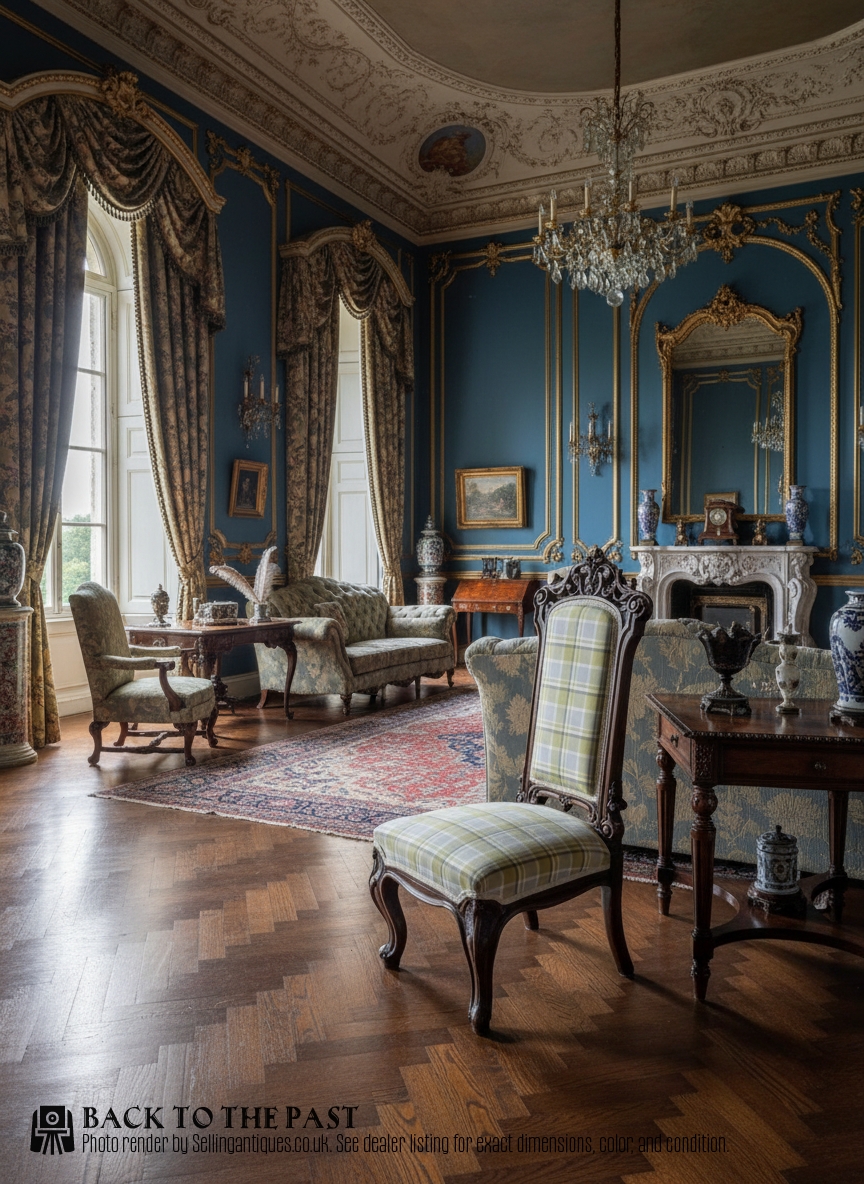
What a mid victorian walnut chair is
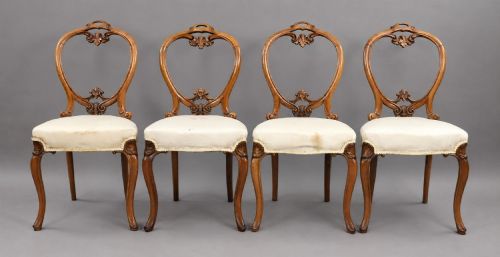
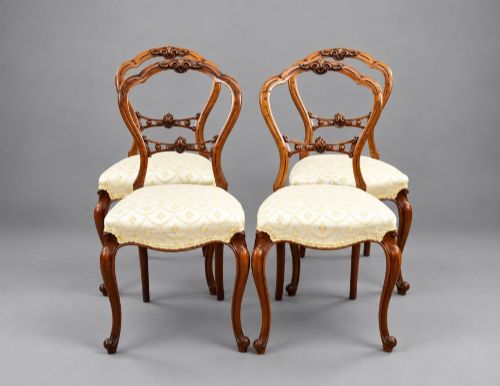
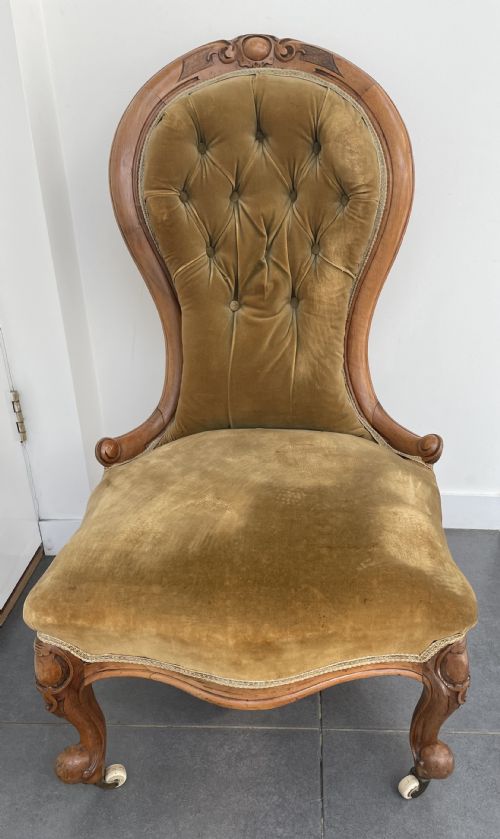
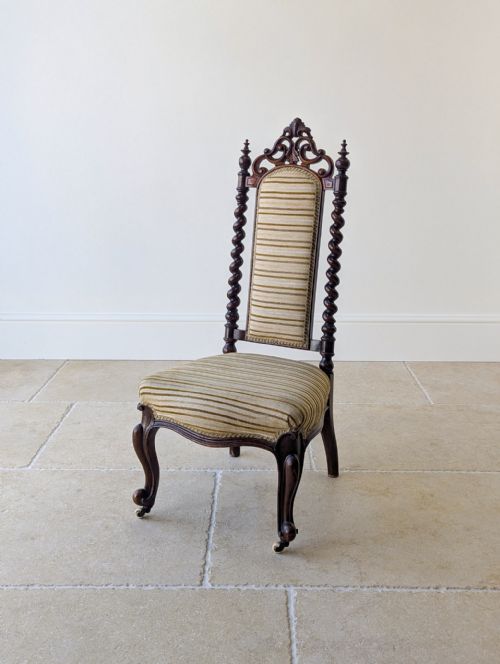
A mid victorian walnut chair brings substantial nineteenth-century seating into modern interiors through varied forms such as ladies chairs, nursing chairs, side chairs, and dining chairs. These pieces suit sitting rooms, bedrooms, and dining tables equally well.
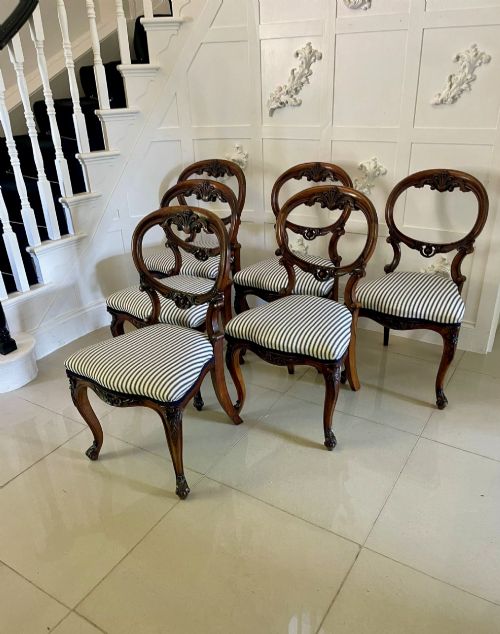
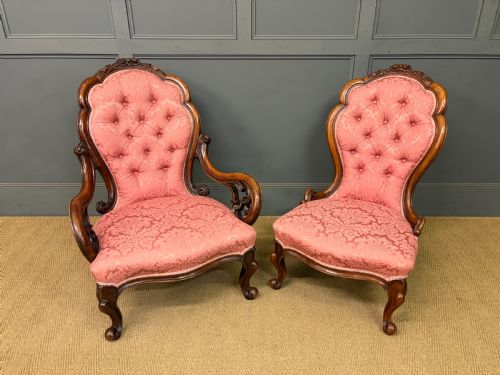
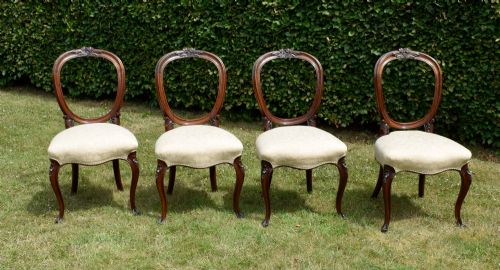
The evidence shows a strong presence of Victorian Rococo Revival styling, featuring characteristic spoon backs and balloon backs alongside carved frames. Buyers most frequently encounter single armchairs, pairs of bedroom chairs, and sets of six dining chairs.
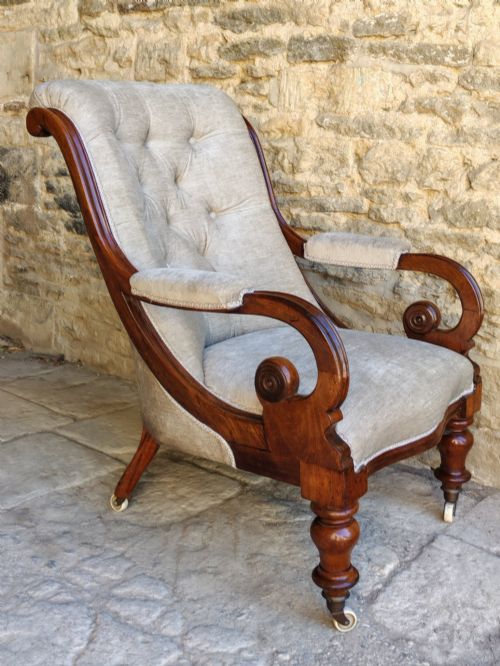
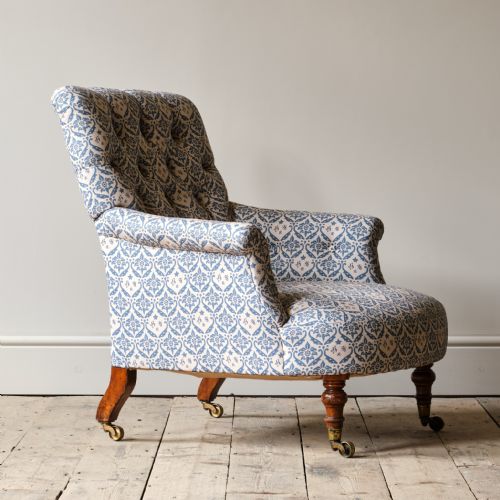
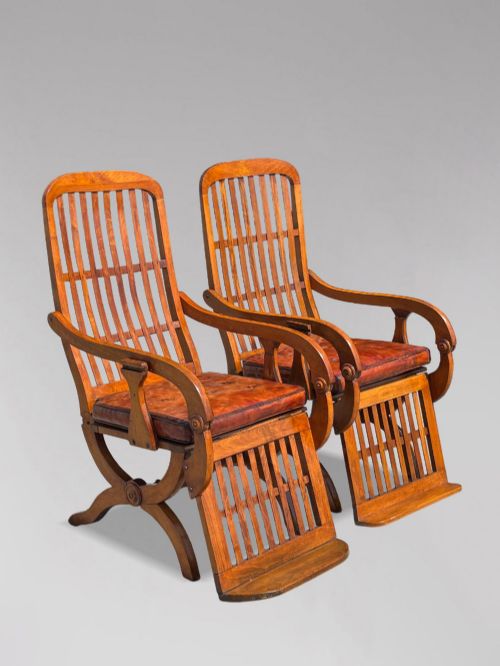
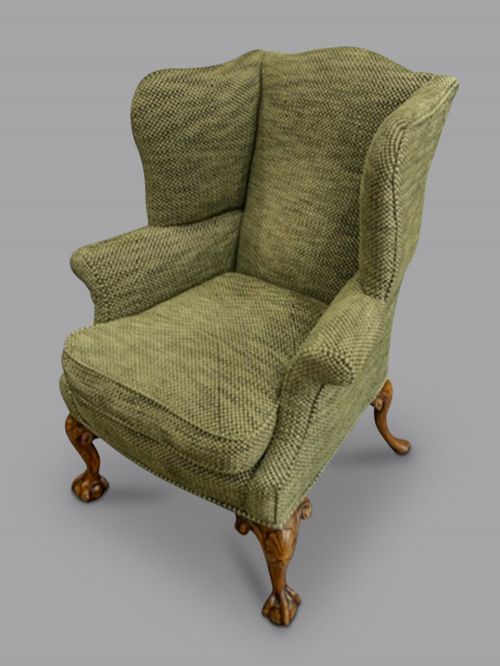
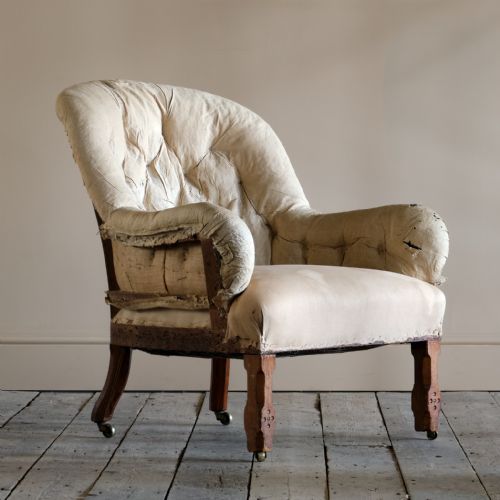
Functional seating types range from low fireside armchairs and open armchairs to reclining armchairs, desk chairs, and throne chairs. Each specific form serves a distinct domestic purpose while sharing the signature walnut construction of the period.
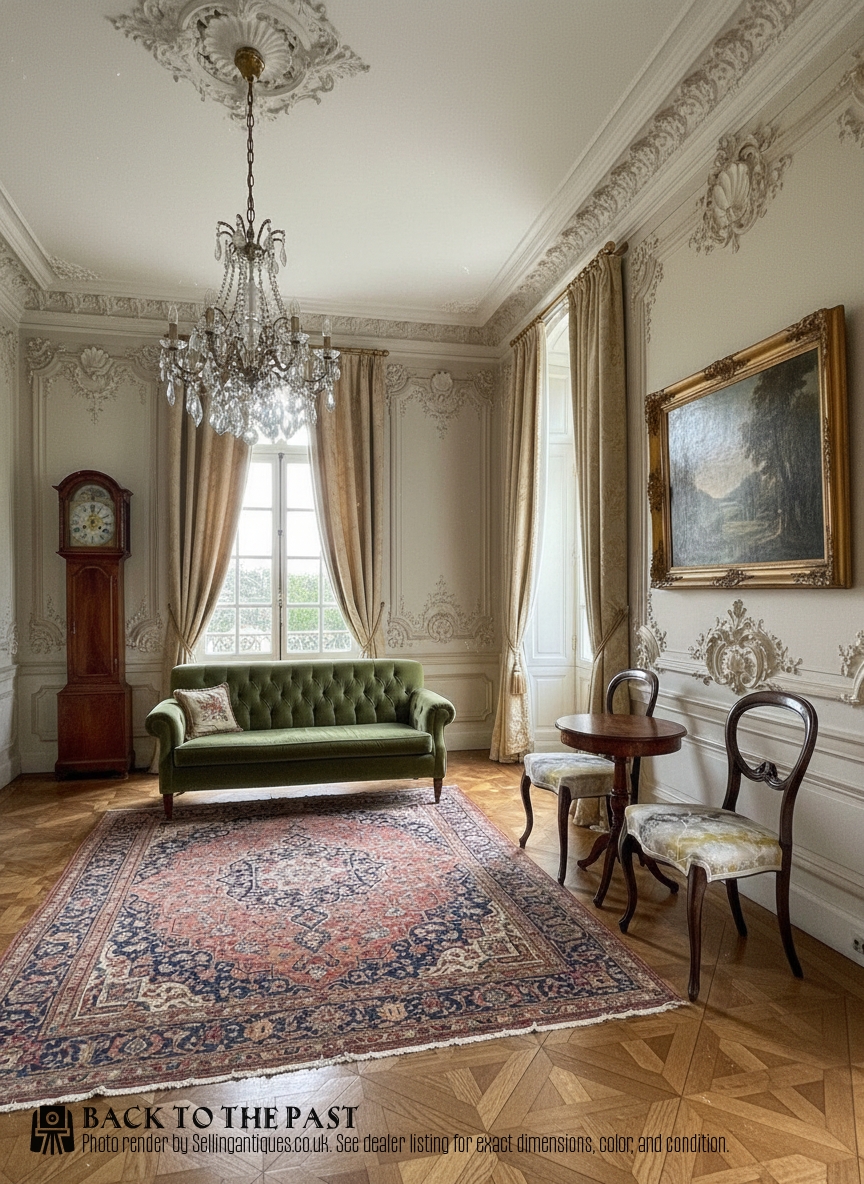
How they were made
Makers built these frames using solid walnut timber, often shaped with carved details across the crest rails and cabriole legs. The wood provides a deep natural grain and dark tone that defines the aesthetic of the period.
Upholstery forms an integral part of the construction, utilising traditional textile covers, wool, and needlepoint tapestry. Skilled craftspeople secured these fabrics over padded foundations to create supportive seats and backs.
Retail Price Guide 2026
Typical UK retail prices for mid victorian walnut chair, calculated from the Sellingantiques database of over a million retail prices indexed since 2003. This retail price guide relies exclusively on Sellingantiques data; no external sources or auction records are used, so the figures do not describe the wider market.
Nursing chairs sat low to the floor so Victorian ladies could tend fires without scorching their dresses.
What varies in quality
The crispness of the wood carving determines the distinction between standard production and finer examples. Deeply articulated botanical motifs and clean lines on the walnut frame indicate superior workshop execution.
The choice of covering material and the complexity of the frame design elevate certain pieces. Matched sets of dining chairs and matched pairs of gentleman and ladies chairs represent higher tiers of craftsmanship.
The Mid Victorian Walnut Chair Glossary
- Walnut
- A dense hardwood utilised for furniture framing throughout the nineteenth century. Its rich brown colour and strong grain made it a favoured material for decorative revival styles.
- Spoon back
- An upholstered chair back shaped in a concave oval resembling the bowl of a spoon. This ergonomic form supports the sitter's spine.
- Balloon back
- A continuous loop backrest resembling the shape of a floating balloon. This design is frequently found on dining chairs from the period.
- Needlepoint tapestry
- A stitched textile worked by hand on an open-weave canvas ground. It provides durable and decorative upholstery for nineteenth-century seats.
Frequently Asked Questions
What rooms suit a mid victorian walnut chair?
Smaller side chairs and nursing chairs fit comfortably into bedrooms, dressing rooms, and reading corners. Larger armchairs and fireside chairs find a natural home in living spaces as standalone accent seating.
Dining chairs work best gathered around a dining table in sets of six. Their varied silhouettes allow them to serve both decorative and practical functions throughout the home.
How do I care for walnut chair frames?
Keep wooden frames away from direct sunlight and strong heat sources to prevent the timber from drying out. Dust the carved walnut regularly with a soft, dry cloth to maintain its finish.
Avoid applying harsh chemical polishes that can damage the nineteenth-century surface. Gentle cleaning preserves the natural character of the wood over time.
Are these chairs comfortable for daily use?
The upholstery and padded backs provide supportive seating for reading, relaxing, or sitting at a desk. Different forms offer varying degrees of recline and arm support depending on their original purpose.
Chairs designed as desk seats or dining chairs offer an upright posture, whilst fireside and easy chairs invite a more relaxed seating position.
How do I distinguish dining chairs from side chairs?
Dining chairs generally appear in matched sets of six and feature straight or slightly curved backs designed to fit neatly around a table. Their proportions prioritise uniform height and space efficiency.
Side chairs and bedroom chairs often feature individual decorative carvings, lower seats, or distinctive balloon and spoon back profiles meant to stand alone against a wall.