



Meiji Period Satsuma Urn
A meiji period satsuma urn brings intricate earthenware ceramic artistry, rich enamel, and fine gold leaf into a room.
Meiji Period Satsuma Urn
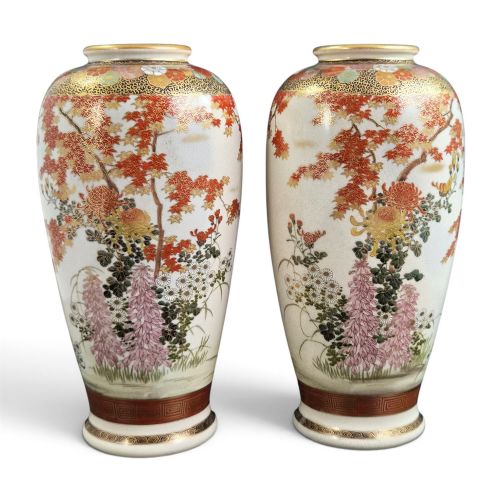
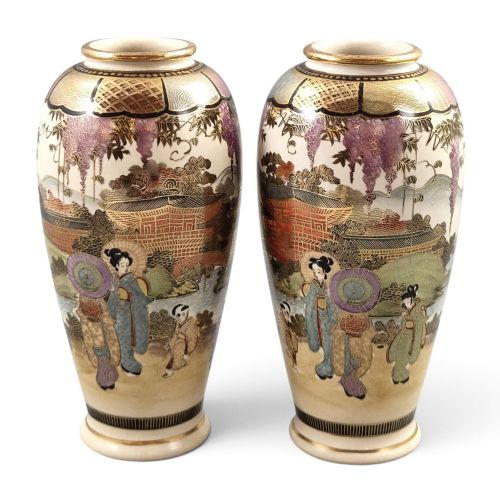
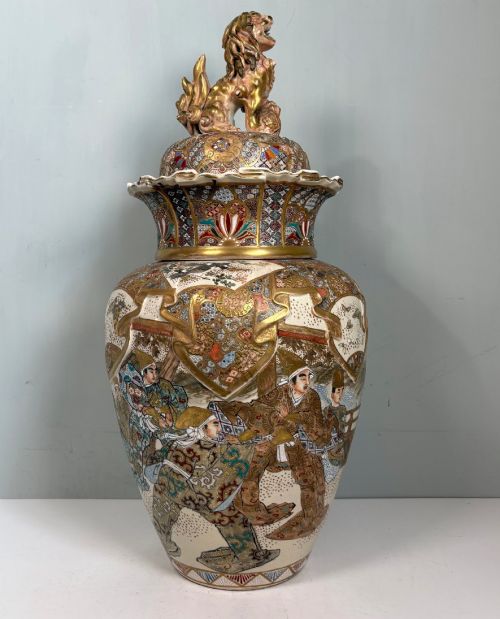
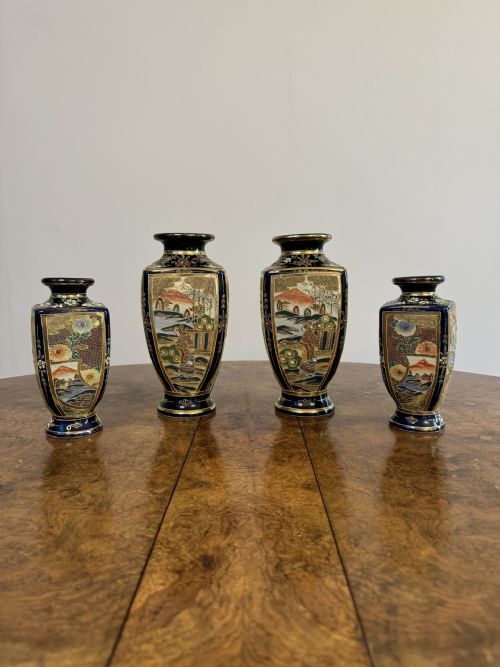
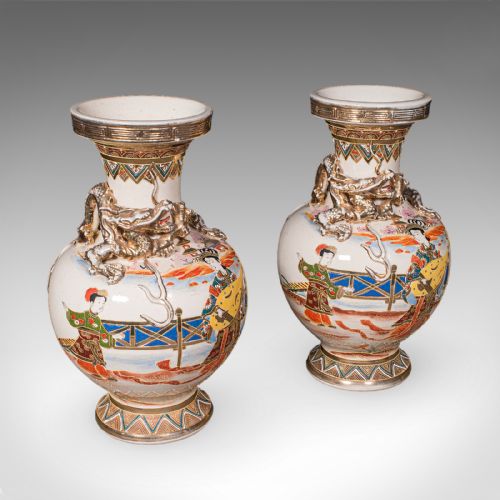
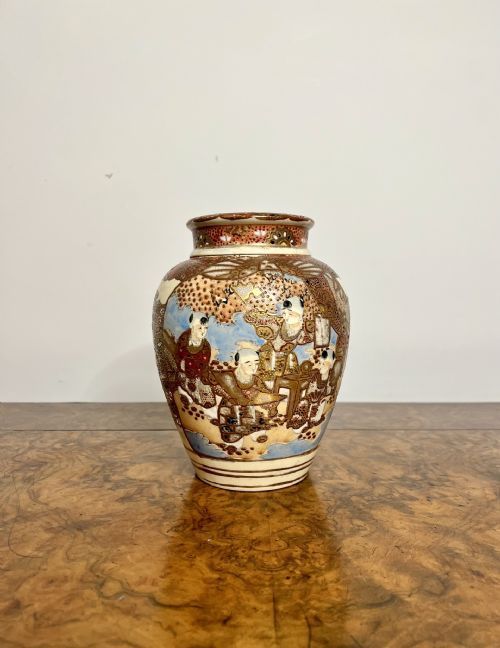
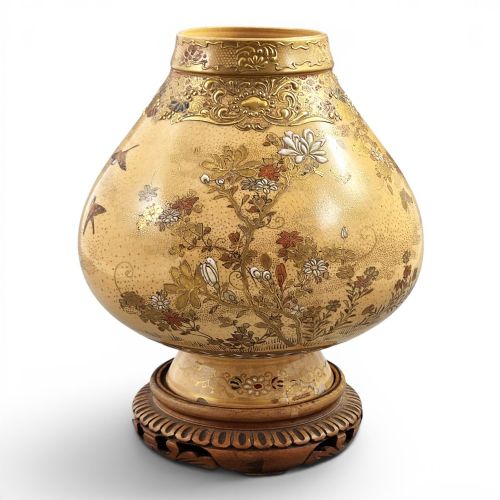
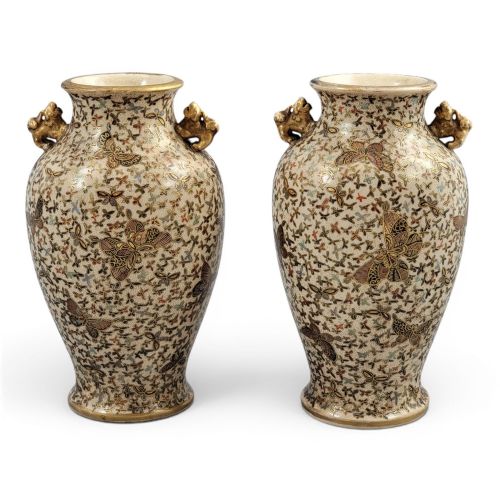
A meiji period satsuma urn encompasses decorative vases, lidded jars, incense burners, and table lamps shaped from earthenware ceramic. These items emerge primarily from the nineteenth century and the early decades of the twentieth century, carrying distinct Japanese styles.
Buyers encounter globular vessels, baluster profiles, and hexagonal forms alongside covered jars. Many examples display detailed figurative panels featuring court figures, arhats, and family scenes, while others showcase floral motifs and landscapes.
The objects frequently originate from workshops in Kyoto, spanning the Meiji through to the Taisho periods. Pieces range from monumental proportions down to miniature works.
How they were made
Maker's workshops shape earthenware ceramic into vessels, applying a characteristic glaze that develops a fine crackle pattern across the surface. Artisans then build detailed designs upon this base using enamel and pigment.
Skilled painters add extensive gold leaf and gilt work to highlight figures, borders, and backgrounds. Raised moriage techniques add texture and dimension to robes, foliage, and decorative elements.
Some miniature vases pack an entire procession of one thousand arhats into a space smaller than a teacup.
What varies in quality
The precision and density of the painted brushwork separate standard items from superior workshop output. Master painters execute minute facial expressions and complex drapery folds with remarkable clarity.
The application of gold leaf and the intricacy of the raised moriage ornamentation dictate the visual depth of a vessel. Subtlety in the glaze crackle and the harmonious balance of cobalt grounds further distinguish exceptional pieces.
Maruni Kobe·Shozan·Kinkōzan Workshop·Kinzan·Hotoda·Chosei·Nanzan·Seiko-en Chokei·Yamashu·Kizan·Hakusan·Tagawa
The Meiji Period Satsuma Urn Glossary
- Moriage
- A decorative technique using slip applied in raised dots or lines to create textured relief patterns. This method frequently outlines figures and floral details on ceramic bodies.
- Koro
- A traditional Japanese incense burner fitted with a cover. These pieces often feature perforated lids and tripod supports.
- Shimazu Mon
- A family crest or badge associated with the Satsuma domain lords. This mark appears on the body of numerous exported ceramic pieces.
- Earthenware
- Porous pottery fired at lower temperatures than porcelain. It forms the standard ceramic body for Satsuma ware.
- Baluster
- A vase shape featuring a rounded body that tapers toward a narrow neck and flared rim. This profile supports elaborate figurative panels.
Meiji Period Satsuma Urn: Frequently Asked Questions
How do I identify a Satsuma urn?
Satsuma wares display a characteristic cream-coloured earthenware body covered in a fine network of glaze crackles. Hand-painted enamel designs heavily accented with gold leaf typically cover the exterior.
Many pieces also feature maker signatures or family crests on the base, pointing to specific Kyoto workshops and period production.
What is the Meiji period?
The Meiji period spans the reign of the Emperor Meiji from 1868 to 1912, marking an era of major cultural exchange between Japan and the West. Japanese ceramic artists produced remarkable export wares specifically for international exhibitions during this time.
Objects from this era often combine traditional craftsmanship with ambitious scale and meticulous detail.
Where should I display my urn?
Place these decorative vessels in spaces away from direct sunlight to protect the delicate enamel colours and gold leaf accents. Stable surfaces such as cabinets or console tables safeguard the earthenware body from accidental knocks.
Ensure adequate clearance around the piece so the painted panels and raised detailing remain fully visible.
How do I clean my ceramic urn?
Dust the surface gently using a soft, dry brush or a clean microfibre cloth to remove particles. Avoid using water, damp cloths, or chemical cleaning solutions, as moisture can penetrate the glaze crackles and damage the old pigments.
Handle the vessel by its body rather than delicate applied handles or covers during any maintenance.