


Meiji Period Display Cabinet
A meiji period display cabinet brings intricate craftsmanship and exotic timber into a room to hold treasured curios.

Meiji Period Display Cabinet
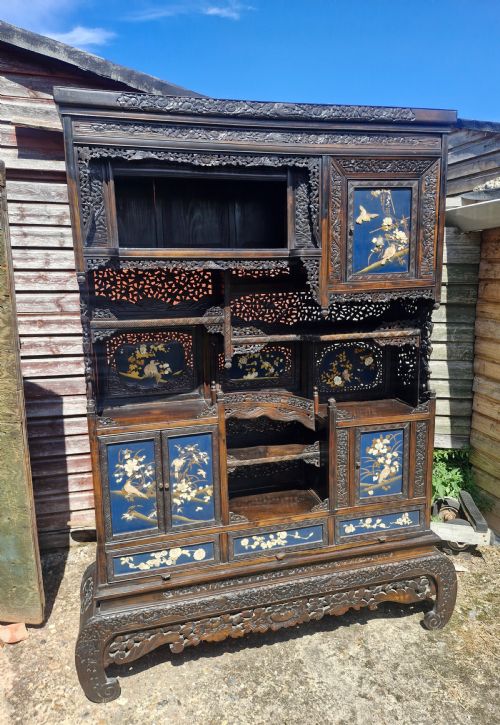
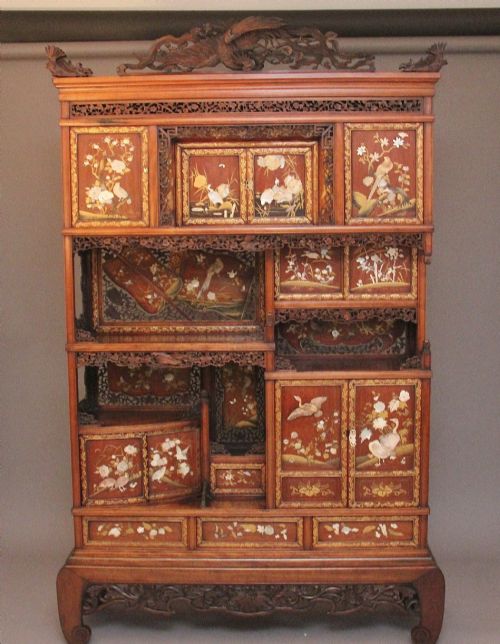
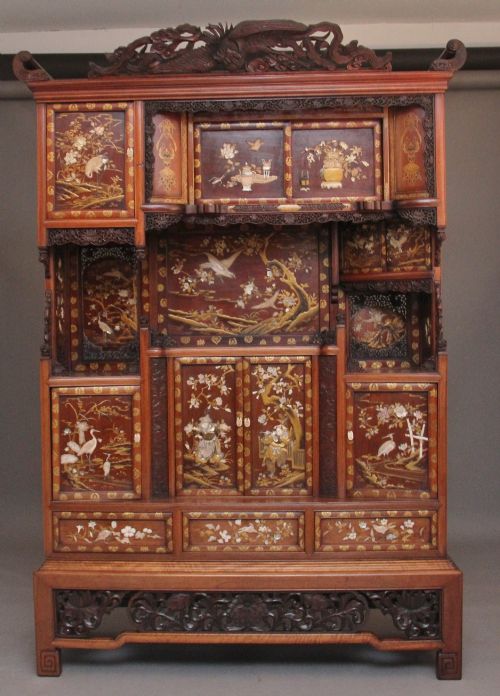
A meiji period display cabinet is primarily a wooden structure designed for showcasing decorative items, appearing mainly as a shodana or a larger freestanding cabinet. These pieces originate from the late nineteenth and early twentieth centuries, capturing the artistic output of the Meiji era. Buyers often encounter elaborate tiered shelving alongside small cupboards and drawers.
The selection ranges from compact hanging versions to substantial cabinets on stands. Alongside these wooden display pieces, the category frequently includes related porcelain plates and chargers bearing traditional Japanese Imari patterns. This mix reflects the broader decorative arts exported from Japan during the period.
Dated examples span the 1880s through to the 1920s, with a heavy concentration of pieces attributed to the nineteenth century. The construction often incorporates specific traditional forms like the shodana, which utilise asymmetrical shelving arrangements. Collectors seek these works for their distinct structural complexity.
Materials and construction
Makers utilised dense hardwood as the primary structural material for these cabinets, carving the wood to form intricate frames and panels. Surfaces were frequently treated with lacquer, providing a smooth, dark finish that protected the timber while offering a base for further embellishment. Gold leaf was applied selectively to highlight key decorative motifs.
Inlaid decoration forms a defining characteristic of the construction, employing materials such as mother-of-pearl, bone, and enamel. Artisans set these contrasting elements directly into the wood or lacquer ground to create pictorial scenes of birds, flowers, and landscapes. The precision of this inlay work dictates much of the visual appeal.
Porcelain elements incorporated into related items rely on traditional glazing techniques, seen particularly in Imari chargers and decorative plates. These ceramics feature cobalt blue and iron red pigments fired beneath a clear glaze. The combination of fine woodwork and detailed ceramic artistry defines the output of the workshops.
Listings combine hardwood shodana cabinets with porcelain Imari plates and Cloisonné wares from the late nineteenth and early twentieth centuries.
Factors of quality
The calibre of a meiji period display cabinet rests heavily on the intricacy and preservation of its inlaid decoration. Pieces featuring dense, finely cut mother-of-pearl and bone inlay sit at the upper end of the range. Simpler carved wooden surfaces without complex embellishment represent a more modest tier of production.
Structural complexity also dictates worth, with multi-tiered shodana cabinets requiring greater joinery skill than standard rectangular cupboards. The condition of the original lacquer finish plays a major part in an evaluation, as unblemished surfaces demand high levels of initial craftsmanship. Intact stands and original hardware complete the stronger examples.
Shuzan for Yasuda·Fukagawa
The Meiji Period Display Cabinet Glossary
- Shodana
- A traditional Japanese tiered display cabinet featuring asymmetrical shelving, small cupboards, and sliding doors. These pieces were designed to exhibit small decorative objects in a scholar's room or parlor.
- Imari
- A style of Japanese porcelain decorated in underglaze blue and iron red, often supplemented with gold. This ware was extensively exported to the West during the Meiji period.
- Shibayama
- A decorative technique involving inlay using semi-precious materials such as mother-of-pearl, ivory, bone, and tortoise shell. The method creates raised pictorial designs on lacquer or wood grounds.
- Cloisonné
- A metalwork technique where thin wire creates compartments that are filled with enamel paste and fired. Pieces using this method appear frequently alongside ceramic items in the category.
- Charger
- A large decorative plate intended for display rather than dining use. These items often feature dense hand-painted motifs across the surface.
Meiji Period Display Cabinet: Frequently Asked Questions
What is a shodana cabinet?
A shodana is a Japanese cabinet featuring asymmetrical shelves, small drawers, and compartments.
These pieces were built for displaying small artistic objects and curiosities.
How do I date a meiji cabinet?
Dating relies on stylistic markers, construction methods, and recorded production eras from the late nineteenth and early twentieth centuries.
Many pieces carry specific decade attributions matching the Meiji period reign.
What items were displayed inside them?
Owners placed small porcelain dishes, metalwork figures, and carved okimono inside these cabinets.
The varied shelf heights accommodated objects of different shapes and sizes.
Are imari plates Japanese?
Imari plates are traditional Japanese porcelains produced in the town of Arita and exported in large quantities.
They are distinguished by their cobalt blue, iron red, and gilt palette.