




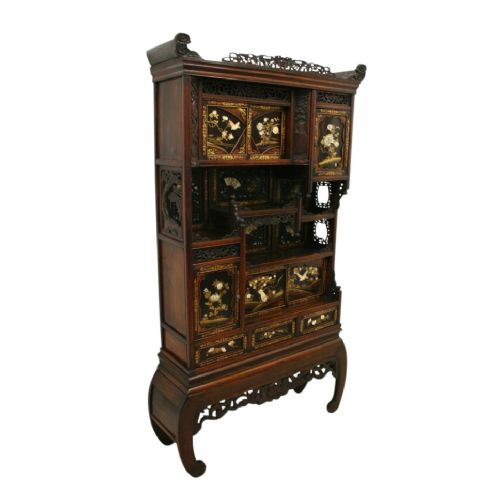
Carved Oriental Shelf Unit
A carved oriental shelf unit brings intricate woodwork and tiered display space into a room, offering both surface charm and practical storage.
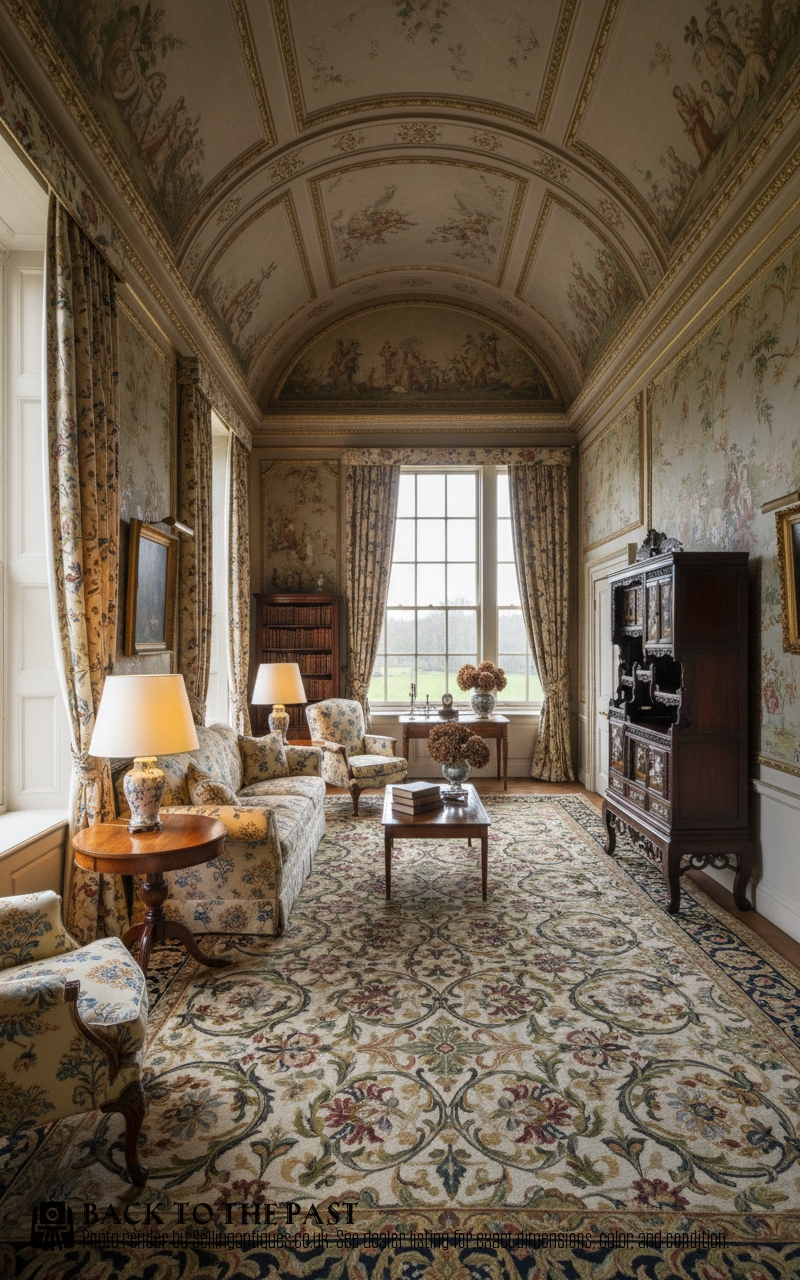
Carved Oriental Shelf Unit
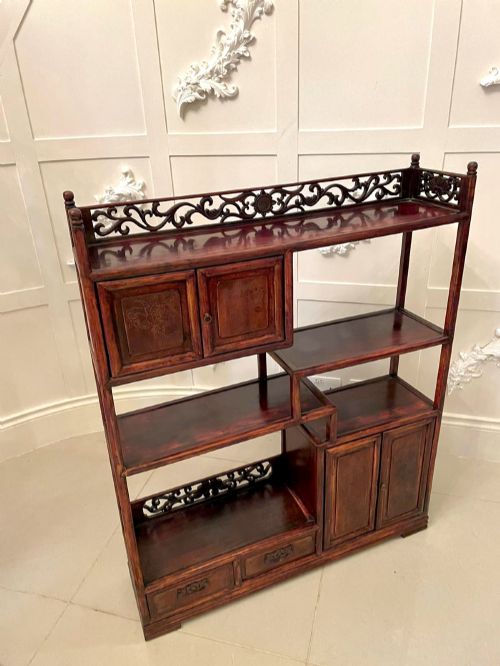
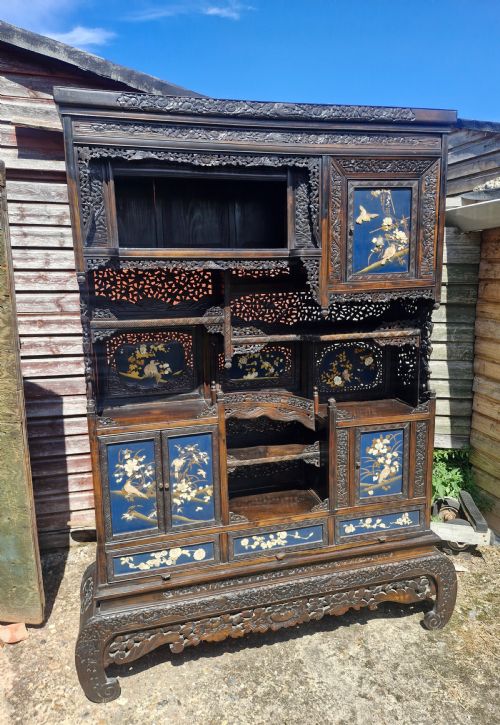
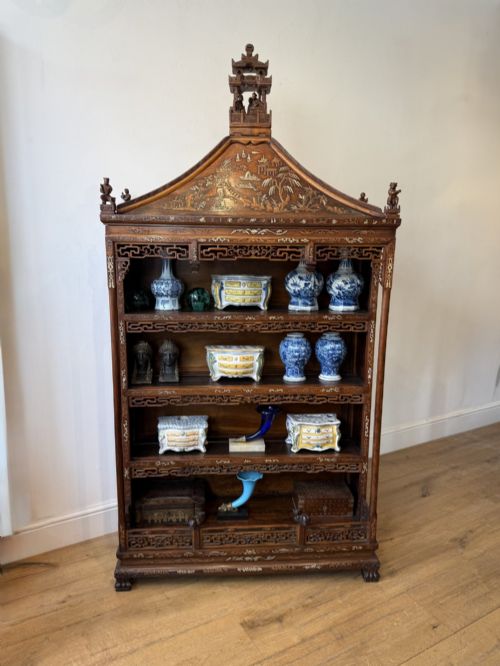
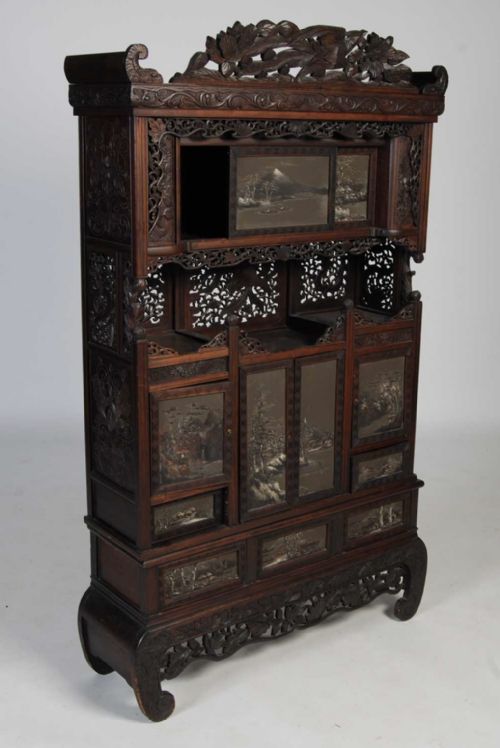
A carved oriental shelf unit encompasses tiered cabinets, wall shelves, and side pieces originating from nineteenth-century workshops in China, Japan, and Burma. These forms include the traditional shodana cabinet, pagoda display cabinets, and bamboo whatnots designed for exhibiting small ornaments and curiosities.
The versions most commonly met on this page date from the nineteenth century, ranging across the Meiji period, Qing Dynasty, and the British Aesthetic Movement. They combine structural display tiers with enclosed compartments, frequently standing upon integrated frames or stands.
Buyers look for these shelf units to introduce asymmetrical partitioning and rich carved detail into domestic interiors. Their multi-tiered layouts provide varied surfaces for arrangement while maintaining a distinct regional aesthetic.
How they were made
Construction relies upon dense hardwoods, teak, and bamboo frameworks assembled with traditional joinery methods that support multi-tiered shelving and cabinetry. Artisans shaped these materials into complex architectural profiles, incorporating structural compartments alongside open display areas.
Surface embellishment involves deep relief carving, bone inlay, mother of pearl accents, and lacquer work applied to panels and frames. Metal elements such as brass fixtures often reinforce corners, doors, and drawer pulls on the cabinets.
Listings feature items spanning the nineteenth century, including pieces from the Meiji period, Qing Dynasty, and the Aesthetic Movement.
What varies in quality
The standard of a carved oriental shelf unit rests upon the depth and precision of the wood carving across panels, aprons, and galleries. Pieces with crisp, undercut relief work and cleanly fitted joinery show a higher degree of workshop skill than simpler, flatter ornamentation.
Integration of secondary materials such as bone inlay and mother of pearl dictates visual distinction. Careful placement and secure seating of these decorative elements separate standard production items from more ambitious cabinetwork.
The Carved Oriental Shelf Unit Glossary
- Shodana
- A Japanese display cabinet featuring asymmetrical shelving and small cupboards. These units were designed for holding precious objects and tea ceremony items.
- Whatnot
- A piece of furniture consisting of open shelves for displaying ornaments. They gained popularity during the nineteenth century for domestic display.
- Qing Dynasty
- The final imperial dynasty of China, lasting from sixteen hundred and forty-four to nineteen hundred and twelve. Cabinets from this period often display deep hardwood carving and formal symmetry.
- Meiji Period
- The era in Japanese history spanning from eighteen hundred and sixty-eight to nineteen hundred and twelve. Work from this period frequently exhibits naturalistic motifs and intricate shodana layouts.
- Aesthetic Movement
- A nineteenth-century British design movement that championed art for art's sake. It drew heavy inspiration from Japanese and Chinese decorative arts.
Carved Oriental Shelf Unit: Frequently Asked Questions
What is a shodana cabinet?
A shodana is a traditional Japanese cabinet built with asymmetrical tiers, open shelves, and small sliding or hinged doors. They were originally used to exhibit scholarly objects and decorative art.
These pieces emphasise varied compartments rather than uniform symmetry, offering numerous small spaces to arrange collections.
How were these shelf units used?
Owners used these units to display porcelain, ivories, bronzes, and other treasured curiosities within reception rooms and parlours. The combination of open shelving and enclosed cupboards allowed both exhibition and storage.
In nineteenth-century European interiors, they also served to showcase imported Asian wares during periods of intense interest in Eastern design.
How do I care for hardwood and bamboo?
Keep these items away from direct heat sources and strong sunlight to prevent the timber or bamboo from drying out and splitting. Dust gently with a dry, soft cloth.
Avoid using modern silicone polishes, as they can build up on carved surfaces and soften intricate details over time.
How do I distinguish Meiji period from Qing pieces?
Japanese Meiji period pieces often feature asymmetrical shodana arrangements with lighter woods, lacquer, and delicate carving reflecting natural forms. Chinese Qing style or export items typically utilise heavier hardwoods, deep symmetrical or architectural carving, and pagoda motifs.
Examining the construction methods and decorative motifs reveals the regional workshop traditions behind each specific unit.