


Rosewood Oriental Cabinet
A rosewood oriental cabinet brings dense timber, intricate carving and shelves for display into a room.
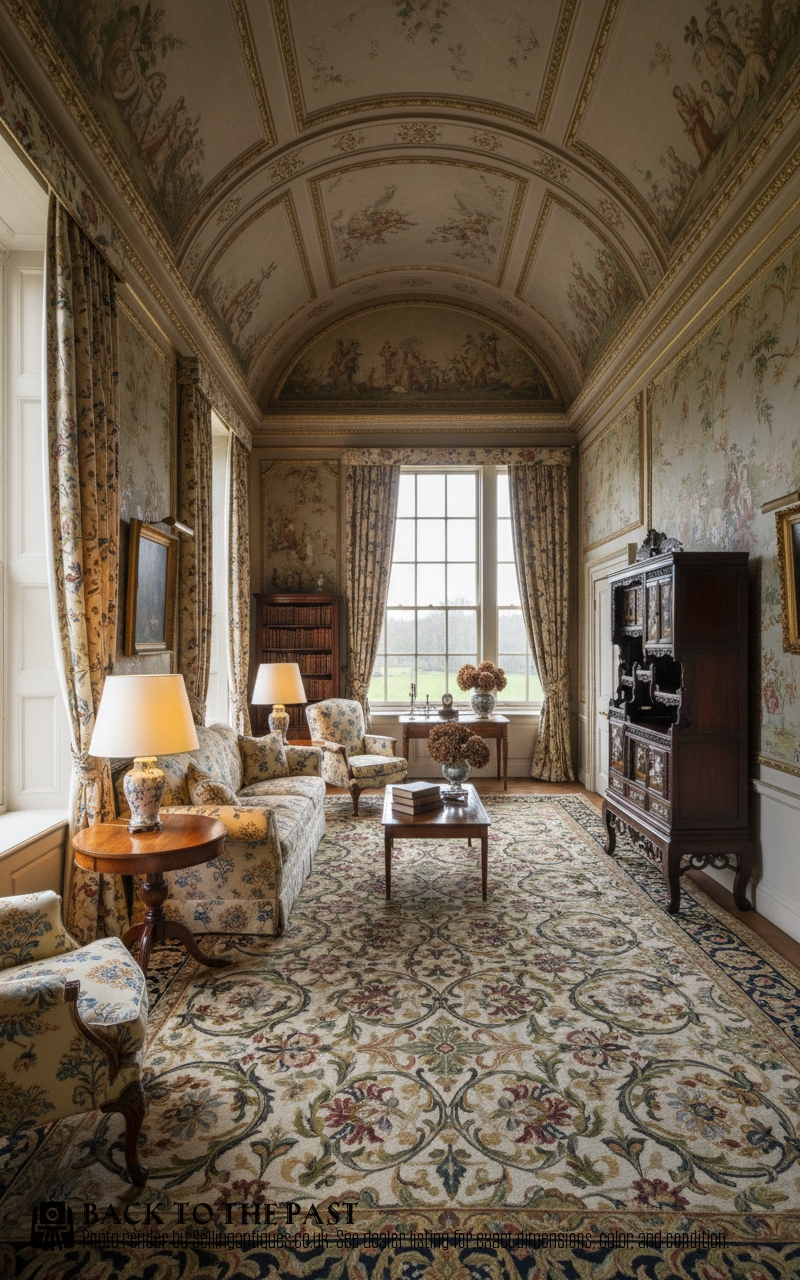
Rosewood Oriental Cabinet
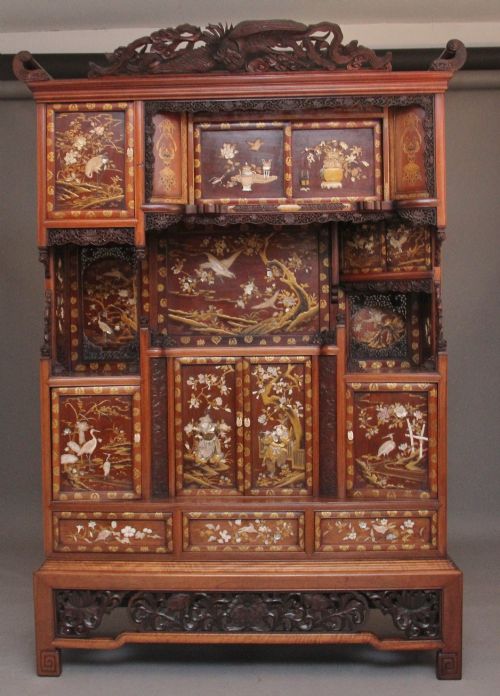
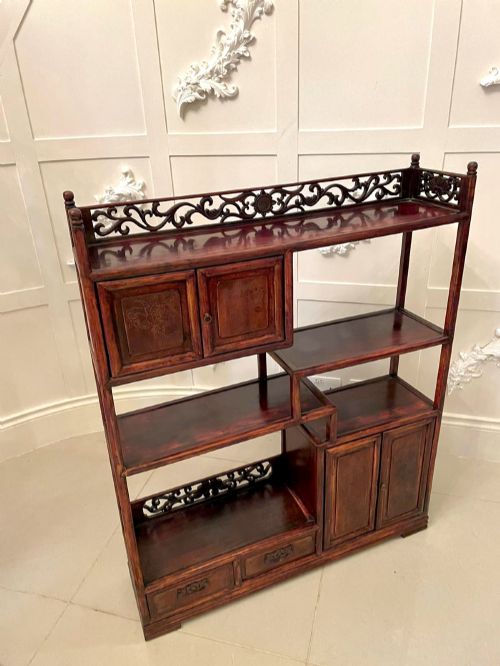
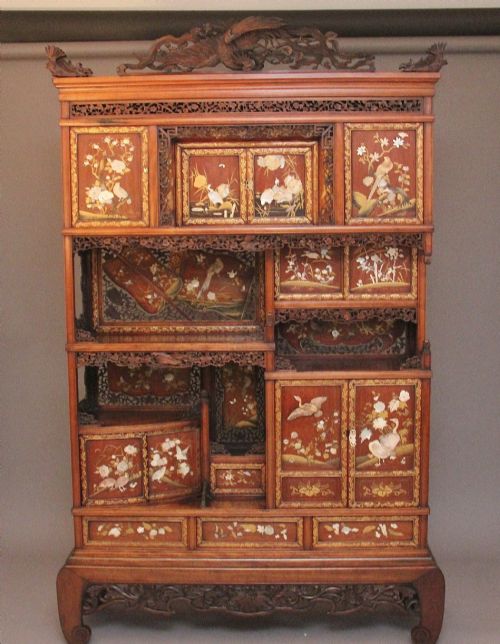
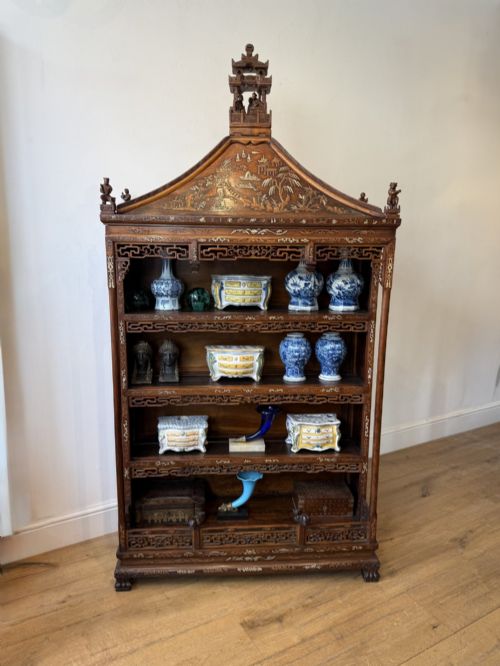
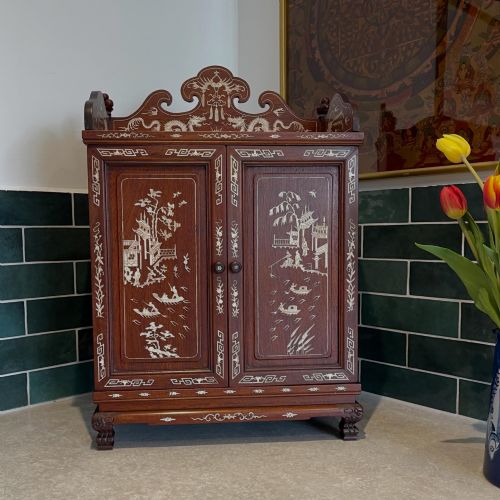
A rosewood oriental cabinet encompasses various forms designed for display and storage, ranging from compact table cabinets to large floor-standing glazed units. When searching for a rosewood oriental cabinet, buyers encounter pieces originating from Chinese export workshops, the Qing Dynasty, and the Japanese Meiji period.
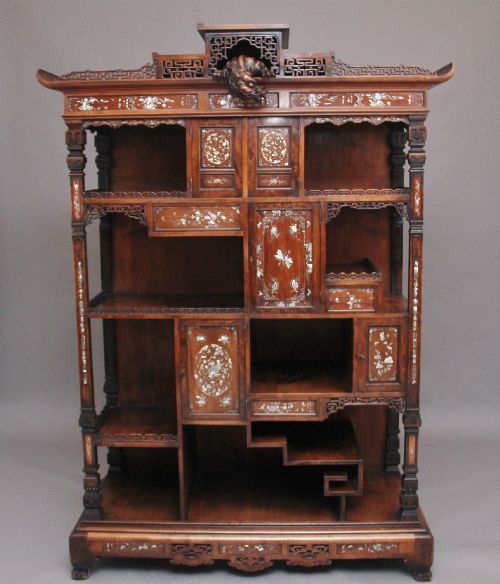
The selection includes specialised furniture such as shodana display cabinets, pagoda cabinets, and open shelf units alongside enclosed storage. These items date from the nineteenth and early twentieth centuries, spanning periods like the 1880s, 1890s, and 1920s.
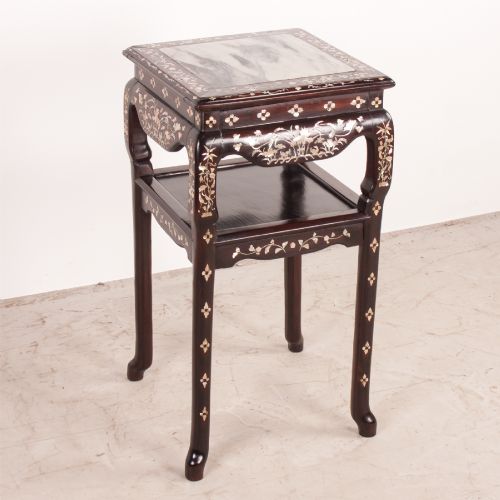
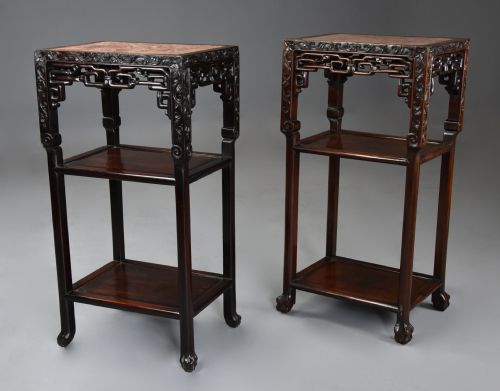
Alongside tall cabinets, related forms appear frequently, including occasional tables, plant stands, and bedside side tables incorporating similar materials. Each piece reflects the cross-cultural exchange of the Chinoiserie and Japonisme movements alongside traditional Asian craftsmanship.
Materials and construction methods
Construction relies heavily on dense exotic timbers, primarily identified as rosewood, hongmu, and general hardwood. These heavy woods provide the structural integrity required for intricate openwork carving and heavy shelving.
Surface decoration integrates contrasting media directly into the timber frame, utilising mother-of-pearl inlay, brass fittings, glass panels, and carved lacquer. Marble inserts also appear frequently on tabletops and pedestals, adding weight and a cool tactile surface.
Intricate mother-of-pearl inlay catches candlelight just as well today as it did in Victorian parlours.
Evaluating craftsmanship and detail
Quality rests primarily on the depth and crispness of the carving, distinguishing deeply undercut foliage and figures from shallow, mechanical incision. The integration of structural joinery without visible modern fasteners marks superior workshop output.
The selection of materials dictates upper tiers of manufacture, particularly where figured rosewood or dense hongmu shows consistent grain. Furthermore, the precision of mother-of-pearl inlay and the smoothness of sliding doors or cabinet drawers separate standard utility pieces from fine decorative examples.
Mercier Frères
The Rosewood Oriental Cabinet Glossary
- Shodana
- A Japanese tiered display cabinet featuring staggered shelves and small cupboards. These pieces showcase varied joinery and decorative panels suited for ornaments.
- Hongmu
- A dense, dark tropical hardwood translated literally as red wood. It serves as a primary material for high-status Qing dynasty furniture.
- Chinoiserie
- European artistic style reflecting Chinese motifs and decorative techniques. This aesthetic heavily influenced nineteenth-century cabinet production.
- Meiji Period
- Japanese historical era spanning from 1868 to 1912. Cabinets from this time often exhibit highly decorative mixed-media surfaces.
- Japonisme
- The influence of Japanese art on Western design during the late nineteenth century. It appears in European interpretations of oriental furniture forms.
Rosewood Oriental Cabinet: Frequently Asked Questions
What is a shodana cabinet?
A shodana is a Japanese cabinet featuring asymmetrical staggered shelves and small compartments.
These pieces were traditionally used to display small art objects and curiosities.
How do I clean rosewood furniture?
Dust the timber regularly with a soft, dry cloth to prevent accumulation in carved recesses.
Avoid chemical polishes and keep the cabinet away from direct sunlight and heat sources.
What is hongmu wood?
Hongmu is a heavy, durable tropical hardwood prized in Chinese furniture making.
Its dark natural colour and tight grain allow for intricate, crisp carving.
Where were these cabinets placed?
Owners placed these cabinets in reception rooms, studies, and parlours to display collections.
Smaller table cabinets sat atop desks or larger pieces of furniture.