

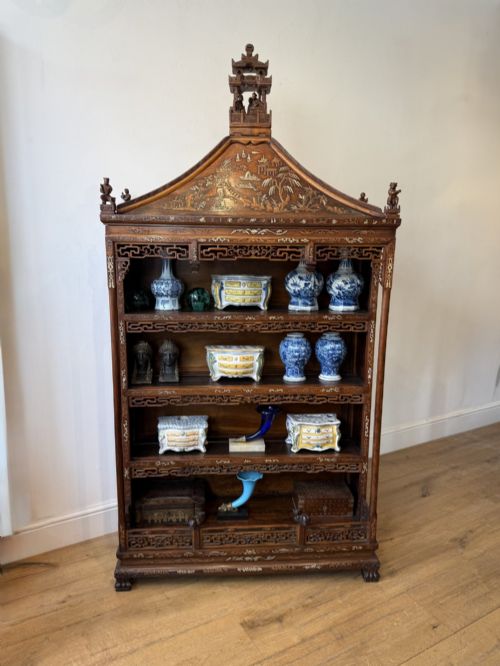


Mother of Pearl Display Cabinet
A mother of pearl display cabinet offers an exquisite stage for small treasures, combining lustrous inlay with refined woodwork.
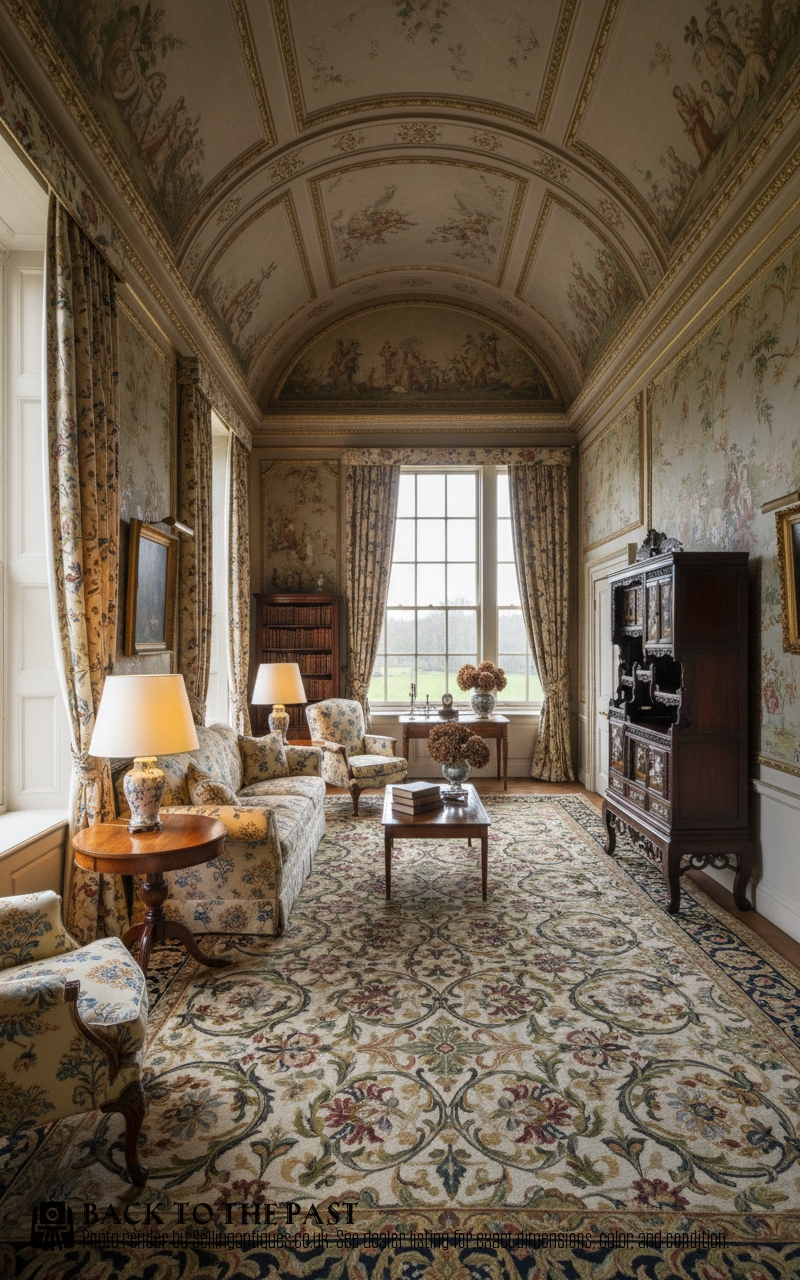
Mother of Pearl Display Cabinet
When you search for a mother of pearl display cabinet, you encounter a remarkable cross-cultural blend of European cabinetry and Asian decorative arts spanning the eighteenth, nineteenth, and early twentieth centuries. These pieces function primarily to showcase precious objects, porcelain, and curiosities behind glazed or open shelving.
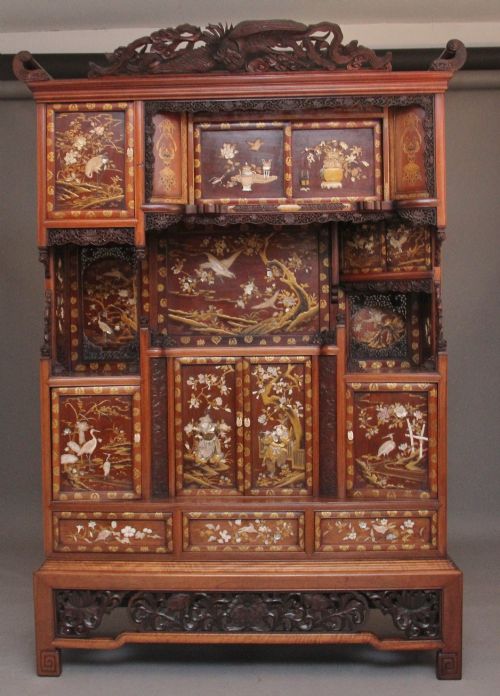
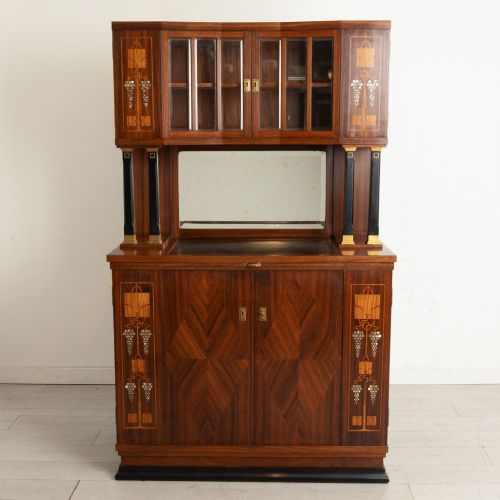
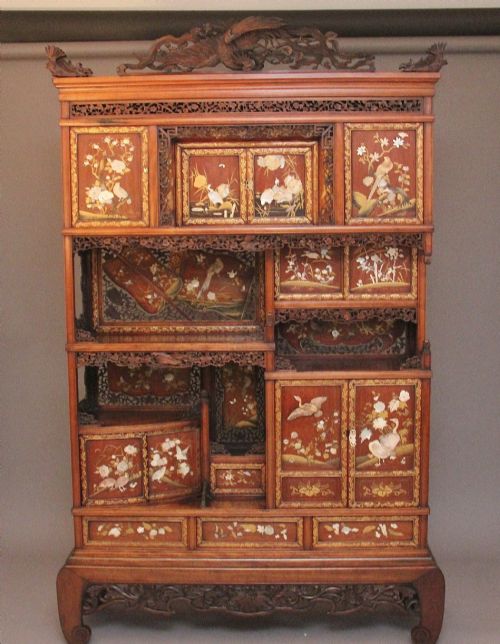
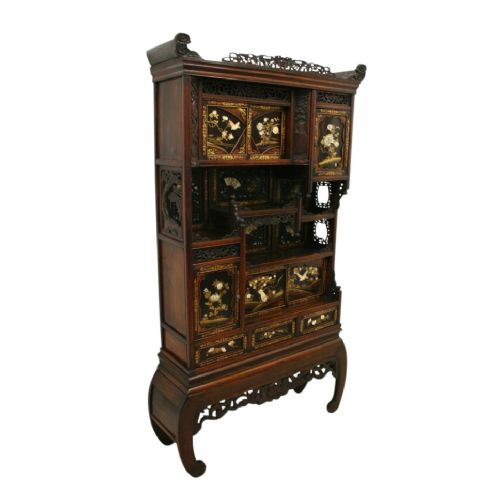
The versions most frequently met on this page include nineteenth-century Japanese Meiji period shodana cabinets, Chinese export tables and cabinets featuring intricate shell inlay, and European interpretations influenced by the Aesthetic Movement and Viennese Secessionism. Forms range from compact corner cupboards to large, highly decorative standing cabinets with varied compartment layouts.
Makers and workshops from diverse traditions utilised distinct regional aesthetics, applying iridescent shell fragments to dark hardwoods, lacquer surfaces, and walnut. Whether exploring an Austrian vitrine or an East Asian shodana, the fundamental purpose remains the display of valued possessions through sophisticated joinery and surface ornamentation.
Materials and construction methods
Construction relies heavily on dense hardwoods such as rosewood and walnut, alongside lacquered surfaces that provide a deep, dark ground for decorative elements. Cabinet makers shaped these materials into structural frames, shelves, and doors designed to support heavy porcelain and glass components.
Mother-of-pearl, bone, and carved ivory were meticulously shaped and inlaid into recesses within the wood or lacquer, creating shimmering pictorial scenes and geometric borders. This labour-intensive marquetry technique requires immense precision to ensure the shell sits flush with the surrounding surface.
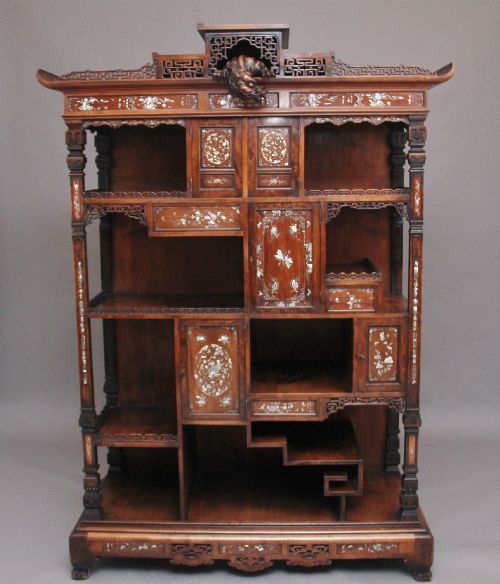
Pagoda display cabinets bring miniature architectural rooflines indoors, letting you house your miniature teacups beneath tiny tiled eaves.
Assessing craftsmanship and condition
Quality separates along the intricacy of the inlay work and the structural integrity of the timber framing. Superior pieces demonstrate tightly secured shell fragments with minimal loss, alongside crisp carving on structural elements like pagoda roofs or pierced galleries.
The sophistication of the internal layout and the quality of the glass panes also distinguish finer examples from standard production. Cabinets that retain their original polished finish and stable joinery without extensive replacement parts command greater appreciation among collectors.
August Ungethüm·Liberty and Company
The Mother of Pearl Display Cabinet Glossary
- Shodana
- A Japanese tabletop or floor-standing display cabinet featuring asymmetrical shelving, sliding doors, and small cupboards designed for the presentation of art objects. These pieces often incorporate elaborate carving and lacquer finishes.
- Marquetry
- The art and craft of applying pieces of veneer to a structure to form decorative designs, commonly utilising mother-of-pearl, bone, and exotic hardwoods. This technique transforms a plain wooden surface into a pictorial or geometric canvas.
- Chinoiserie
- European artistic styles that reflect Chinese artistic influences, popular in furniture decoration and lacquerwork. This aesthetic frequently appears alongside mother-of-pearl inlay on cabinets from various periods.
- Viennese Secessionist
- An artistic movement associated with turn-of-the-century Austrian design, rejecting historicism in favour of clean lines and geometric forms. Cabinets from this circle display a distinct structural austerity compared to earlier nineteenth-century works.
Mother of Pearl Display Cabinet: Frequently Asked Questions
How do I care for mother of pearl?
Mother-of-pearl inlay requires gentle maintenance to preserve its iridescent lustre and prevent the delicate shell sections from loosening within their wooden matrices. Dust the surface regularly with a soft, dry cloth and avoid harsh chemical cleaners.
Keep the cabinet away from direct sunlight and fluctuating humidity levels, which can cause the underlying hardwood to expand and destabilise the inlaid sections.
What is Chinese export furniture?
Chinese export furniture refers to pieces manufactured in China specifically for Western markets during the eighteenth and nineteenth centuries. These works combined traditional Asian materials, such as lacquer and hardwood, with European furniture forms.
The inclusion of mother-of-pearl inlay and intricate pagoda motifs catered to European fascination with Eastern aesthetic traditions during the period.
How do I identify Meiji period pieces?
Meiji period works date from the late nineteenth to the early twentieth century, a time of significant opening in Japanese trade and craftsmanship. Cabinets from this era often feature highly detailed carving, lacquerwork, and extensive shibayama or pearl inlay.
Examining the construction methods, joinery style, and decorative motifs helps differentiate these Japanese pieces from subsequent European revivals.