




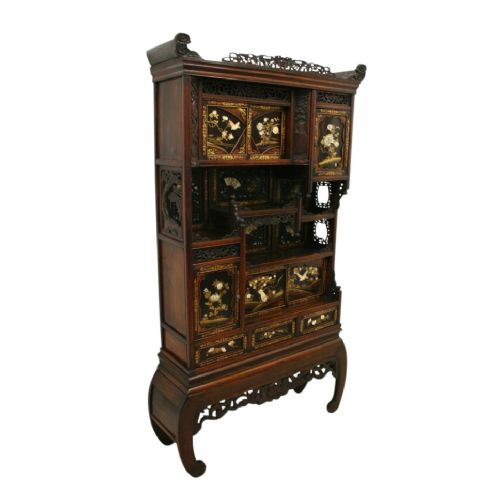
Carved Meiji Period Furniture
These carved meiji period furniture pieces bring intricate Japanese craftsmanship into British rooms, offering the rich display cabinets and tables collectors seek.
Carved Meiji Period Furniture
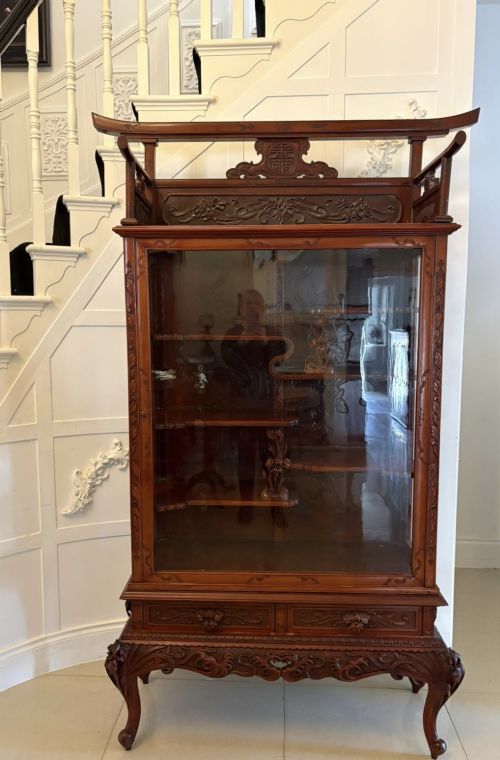
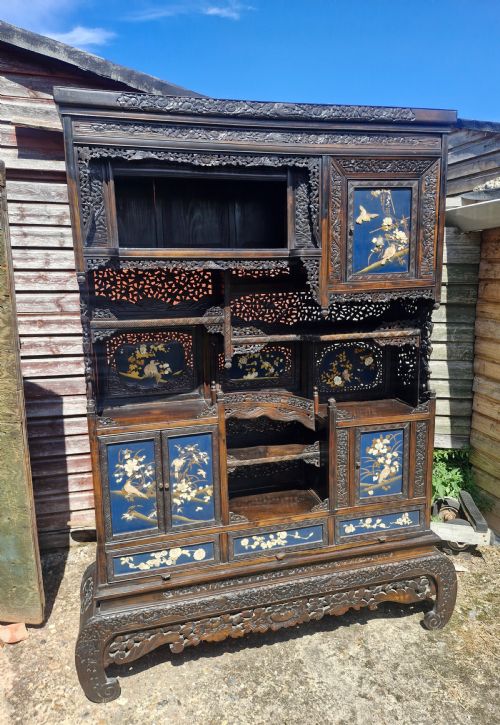
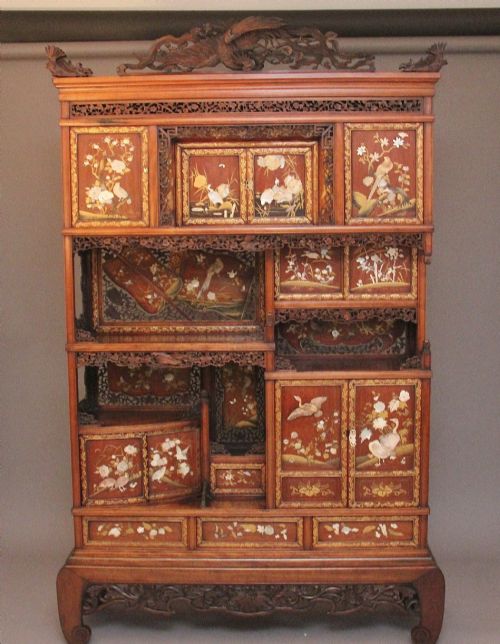
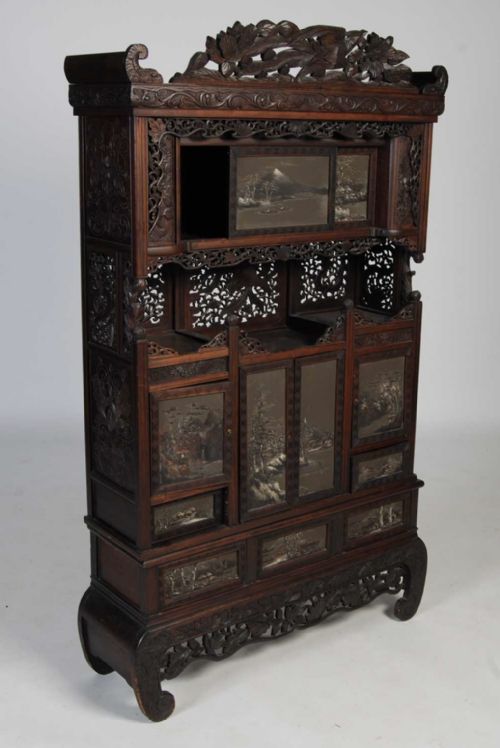
When you search for carved meiji period furniture, you enter a field defined by elaborate woodwork originating from Japan during the late nineteenth and early twentieth centuries. The selection centres heavily on elaborate Shodona display cabinets, alongside desks, side tables, and plant stands that reveal distinct export influences.
The pieces span periods including the nineteenth century, nineteen hundred, nineteen twenty, eighteen ninety, eighteen eighty, and the Victorian era. Shodona cabinets dominate the forms alongside cylinder desks and work tables, often displaying the intricate carving that defines the aesthetic of the period.
Objects originate from Japanese workshops and international export markets, bridging Eastern motifs with Victorian tastes. Collectors encounter items ranging from monumental cabinets to compact occasional tables designed for domestic display.
How they were made
Makers utilised dense hardwood and traditional lacquered wood as the primary structural foundations for these cabinets and desks. Surface enrichment relied on meticulous bone inlay, mother of pearl, and specialised Yosegi marquetry techniques.
Carvers applied deep relief work directly to the timber substrates, creating dimensional foliage and animal motifs. Component parts joined through traditional cabinetry methods to support heavy decorative elements like tiered shelving and enclosed display compartments.
Japanese export craftsmen cleverly engineered multi-tiered Shodona cabinets with so many secret compartments that owners spent decades misplacing their visiting cards.
What varies in quality
Quality rests upon the depth and precision of the wood carving, where crisper foliage and figures distinguish finer output from simpler commercial pieces. The complexity of the structural form, such as multi-tiered Shodona cabinets with numerous compartments, dictates the ambition of the maker.
Material selection further separates standard items from exceptional ones, particularly the inclusion of intricate bone inlay and iridescent mother of pearl panels. The integration of specialised decorative techniques, such as Yosegi geometric marquetry on cylinder desks, marks the upper tier of production.
The Carved Meiji Period Furniture Glossary
- Shodona
- A traditional Japanese display cabinet featuring asymmetrical shelving, cupboards, and sliding doors designed for ornaments. These structures represent the primary cabinetry form found within this collection.
- Yosegi
- A complex Japanese wood mosaic technique utilising naturally coloured woods assembled into geometric patterns. This method appears on specialised cylinder desks.
- Shibayama
- A decorative technique involving inlaid precious materials such as mother-of-pearl, ivory, and bone to create pictorial subjects. Pieces utilising this method demonstrate high-status export manufacturing.
- Jardiniere
- A decorative stand or receptacle specifically designed to hold plants and floral arrangements. These stands often incorporate carved wooden framing suited to Victorian interiors.
- Aesthetic Movement
- A late nineteenth-century design current emphasising visual beauty over narrative or moral function. Furniture from this stylistic group often reflects Japanese artistic influences.
Carved Meiji Period Furniture: Frequently Asked Questions
What is a shodona cabinet?
A Shodona is a Japanese display cabinet featuring tiered shelving, small cupboards, and sliding doors. Makers designed them to exhibit small art objects and precious ornaments.
These pieces served as focal points in Victorian and Edwardian reception rooms. Their asymmetrical layouts offered varied spaces for displaying collections.
How do I identify Meiji furniture?
Meiji furniture is identified through dense hardwood construction, deep relief carving, and specific Japanese forms like the Shodona. Many pieces incorporate bone inlay or mother of pearl.
Dates generally span the late nineteenth to early twentieth centuries. Export pieces often combine traditional Japanese motifs with forms suited to Western homes.
Where were these pieces used?
These items were primarily used in principal reception rooms, drawing rooms, and studies of period homes. They provided both functional workspaces, such as cylinder desks, and display areas for decorative objects.
Export furniture of this type was specifically manufactured for international markets. British buyers integrated them into eclectic Victorian and Aesthetic interiors.
What is Yosegi woodwork?
Yosegi is a Japanese marquetry technique that uses natural woods of various colours to create intricate geometric patterns. Craftsmen shave thin veneers from glued timber blocks to cover surfaces.
This technique appears on specialised cylinder desks and tables. It showcases precise carpentry without relying on applied paint or heavy lacquer.