




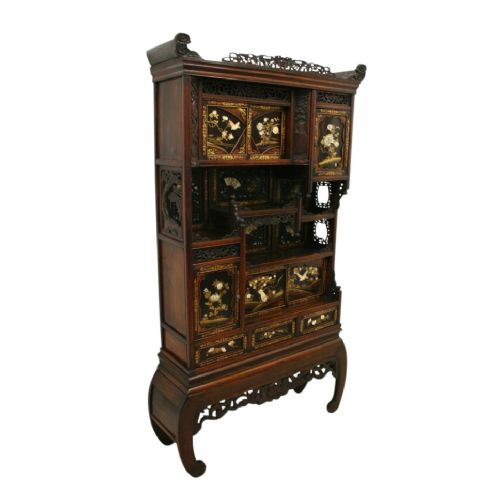
Meiji Carved Wood Cabinet
These meiji carved wood cabinet examples are intricate display pieces that bring remarkable craftsmanship and rich detail to any interior.
Meiji Carved Wood Cabinet
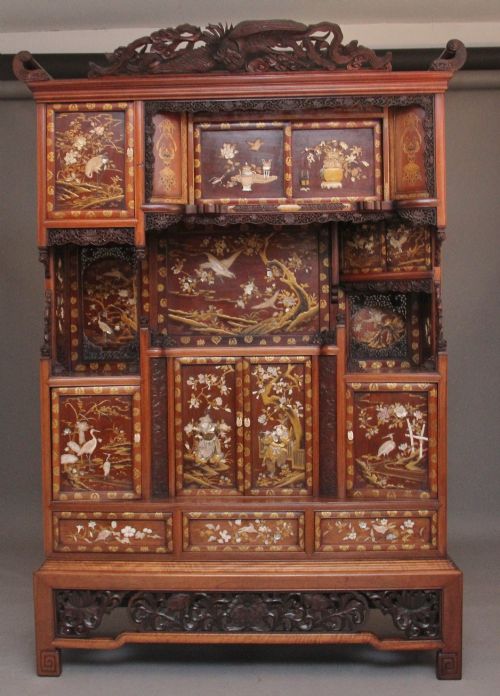
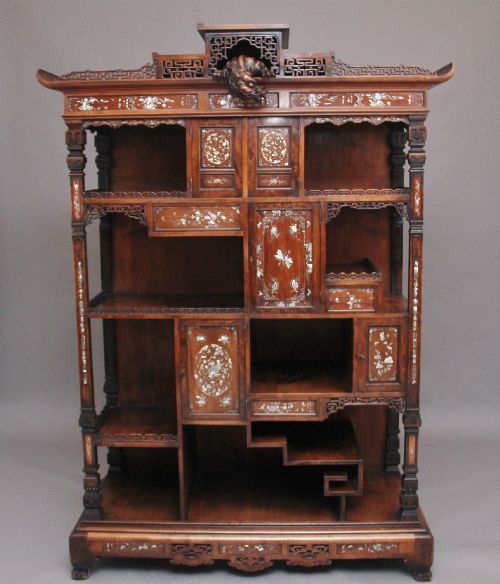
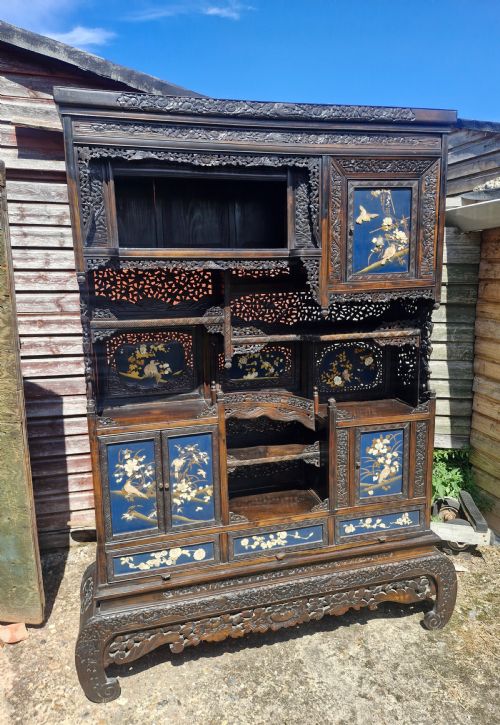
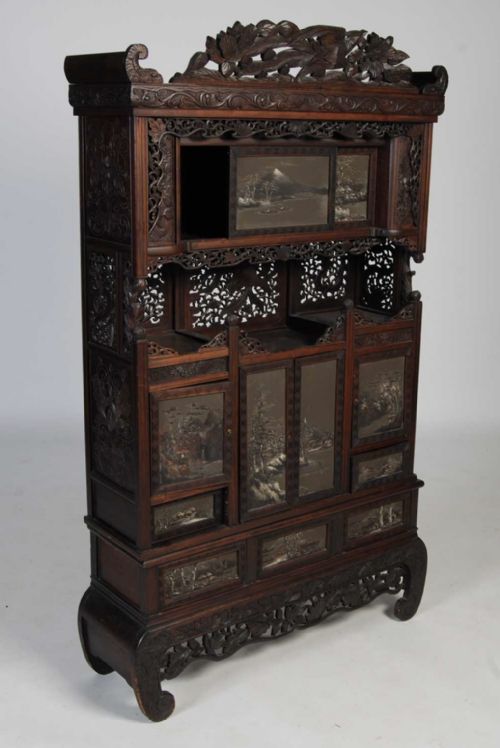
When you search for a meiji carved wood cabinet, you find pieces primarily spanning the late nineteenth century and the early twentieth century. The forms appearing here centre on the shodana or display cabinet, often raised on a stand for a more commanding presence in a room.
These items reflect various aesthetic influences, from the Japanese Meiji period and Taisho era to European interpretations like French Japanese shodona, Japonisme, and Chinoiserie. They function both as storage and as focal points for exhibiting small treasures.
The selection ranges from large freestanding cabinets to refined pieces featuring intricate carving and applied decoration. Each example demonstrates the distinct design vocabulary of its period of origin.
How they were made
Makers utilised dense hardwoods and rosewood as the primary structural materials, providing a sturdy foundation for intricate carving. Surfaces were frequently ebonised or finished with lacquer to create deep, dark backgrounds.
Decoration relied on skilled inlay work, incorporating bone, mother-of-pearl, and metal to build contrasting pictorial scenes and floral motifs. Cinnabar lacquer also appears, offering a heavily carved, tactile red surface.
Construction techniques combined traditional joinery with applied decorative elements, creating asymmetrical shelving and compartments characteristic of the shodana form.
Some cabinets hide tiny secret drawers behind sliding panels, originally intended for storing personal letters and tiny curiosities.
What varies in quality
Quality rests principally on the depth and precision of the carved wood elements and the security of the inlays. Pieces with tightly fitted bone and mother-of-pearl details show greater hand skill than those with simpler surface treatments.
The choice of materials also divides the range, with solid hardwoods and complex lacquer finishes marking out the more ambitious examples. Overall cohesion in the design of stands and multiple compartments determines the visual success of each piece.
The Meiji Carved Wood Cabinet Glossary
- Shodana
- A Japanese multi-shelf display cabinet designed for ornaments and curiosities. These pieces feature asymmetrical shelving and enclosed compartments.
- Meiji Period
- The era of Japanese history lasting from eighteen sixty-eight to nineteen twelve, noted for opening trade with the West. Objects from this time often combine traditional craft with international appeal.
- Cinnabar Lacquer
- A technique involving numerous layers of red lacquer applied to a core and carved deeply with intricate patterns. This method produces a durable, richly textured surface.
- Japonisme
- A Western style of the late nineteenth century influenced by Japanese art and design. It appears in European decorative arts and furniture of the period.
- Ebonised
- Wood treated to imitate the dark, dense appearance of ebony. This finish was popular in late nineteenth-century cabinet making to create stark contrast with inlaid materials.
Meiji Carved Wood Cabinet: Frequently Asked Questions
What is a shodana cabinet?
A shodana is a traditional Japanese display cabinet featuring asymmetrical shelves, sliding doors, and small compartments. They were built to exhibit valued ceramics and decorative objects.
On this page, these cabinets often appear with elaborate carving and stands, reflecting both Japanese domestic forms and export tastes of the late nineteenth and early twentieth centuries.
How do I date a Meiji cabinet?
Dating relies on stylistic markers, construction methods, and materials recorded across the nineteenth and early twentieth centuries. Pieces associated with the Meiji or Taisho periods show specific shifts in carving depth and export focus.
Examining the integration of inlays like bone and mother-of-pearl alongside lacquer types helps narrow the decade of production.
Where should I place a display cabinet?
These cabinets suit reception rooms or studies where their detailed carving and reflective inlay can be appreciated up close. Placing them away from direct heat sources protects the lacquer and hardwood structures.
Because many sit on dedicated stands, ensure the floor surface is level to maintain stability for the tall structure.
What is the difference between Meiji and Taisho pieces?
Meiji period items date from eighteen sixty-eight to nineteen twelve, a time of rapid international trade and elaborate craftsmanship in export wares. Taisho era pieces follow immediately after, beginning in nineteen twelve.
Both periods utilise carved wood and intricate inlays, though Taisho examples sometimes incorporate slightly later stylistic adaptations while retaining traditional forms.