



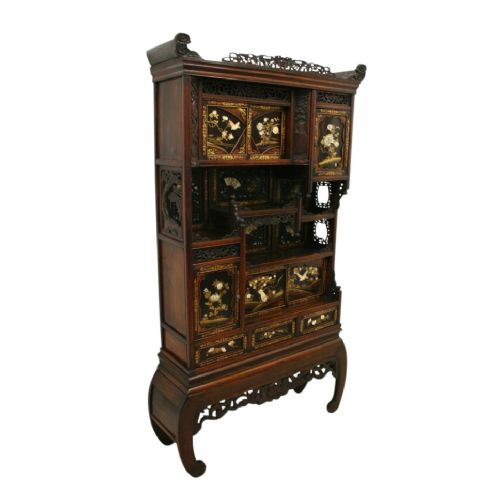

Japanese Lacquer Display Stand
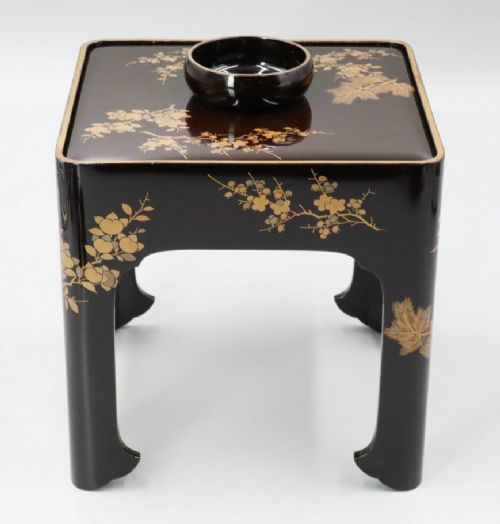
These japanese lacquer display stand pieces are finely finished stages for treasured objects, bringing distinct ornamental form and polished surface to a room.
Japanese Lacquer Display Stand
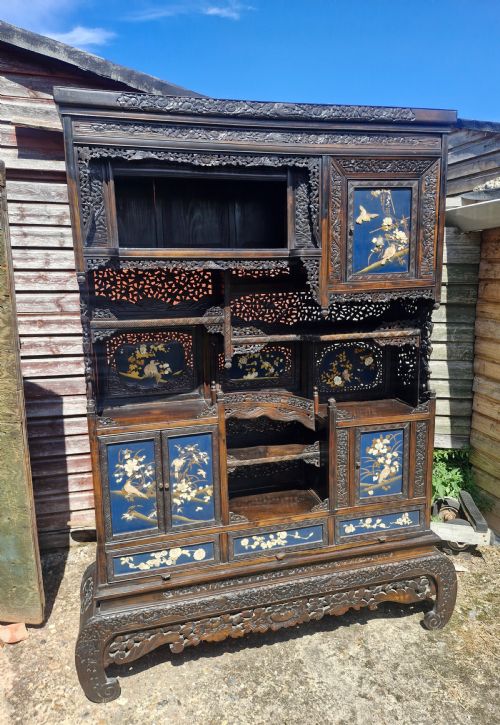
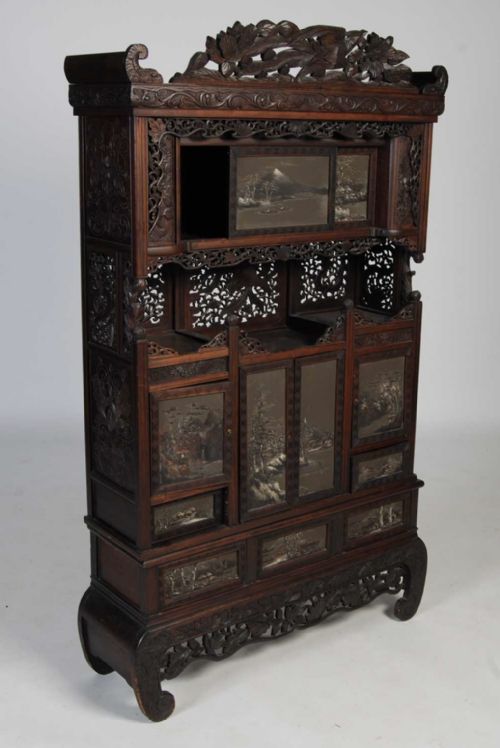
A japanese lacquer display stand brings together traditional cabinetwork and decorative finishes originating from Japanese Meiji period workshops and later interpretations. Buyers find forms ranging from multi-tiered shodana cabinets on stands to side tables and jardiniere pedestals designed to elevate ornamental items.
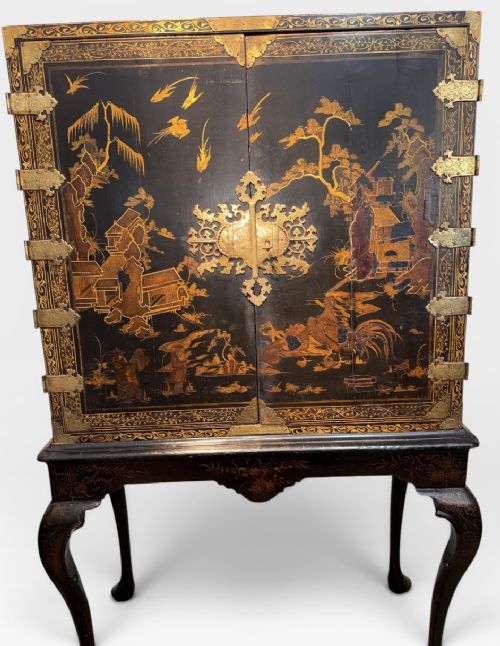
The selection on this page relies heavily on nineteenth and early twentieth century examples, including Victorian and Edwardian interpretations such as Chinoiserie and Aesthetic Movement pieces. These works utilise wood and lacquer foundations enriched with bone inlay, mother of pearl, and gold leaf.
Among the pieces encountered, cabinet-on-stand formats and low display tables predominate, offering compartmented storage or open surfaces. Each item serves a specific structural and decorative role, whether holding sake cups or supporting heavier jardinieres.
How they were made
Constructed primarily from hardwood and standard timber substrates, these pieces receive multiple coats of lacquer to build a deep, protective ground. Artisans then apply surface enrichment including gold leaf, intricate bone inlay, and mother of pearl detailing.
Meiji period makers and nineteenth-century cabinetmakers employed meticulous carving and joinery techniques to mount delicate cabinets securely onto supportive stands or tables. Cinnabar lacquer techniques are also represented, where thick layers of carved red lacquer create dimensional patterns across the surface.
Listings here span the eighteenth, nineteenth, and early twentieth centuries, featuring lacquer, wood, gold leaf, and mother of pearl.
What varies in quality
Quality rests in the precision of the lacquer finish and the stability of the underlying wood construction. Finer examples display smooth, even surfaces without distortion, while lesser pieces may show uneven hardening or surface cracking.
The execution of decorative elements such as bone inlay and mother of pearl work distinguishes standard items from superior ones. Tighter joinery, crisper carving, and more refined gold leaf application mark the upper tier of these stands and cabinets.
The Japanese Lacquer Display Stand Glossary
- Shodana
- A traditional Japanese multi-tiered display cabinet featuring staggered shelves and small cupboards designed for ornaments.
- Cinnabar lacquer
- A decorative technique using multiple layers of red lacquer that are carved deeply once hardened.
- Meiji period
- The era in Japanese history spanning from eighteen sixty-eight to nineteen twelve, known for refined metalwork and lacquerware.
- Aesthetic Movement
- A nineteenth-century design style that emphasised visual beauty over narrative subject matter, incorporating Japanese influences.
- Chinoiserie
- A European artistic style reflecting Chinese and broader East Asian motifs, often applied to furniture and lacquer cabinets.
Japanese Lacquer Display Stand: Frequently Asked Questions
What is a shodana cabinet?
A shodana cabinet is a traditional Japanese display piece featuring asymmetrical shelves and small doors.
These structures were made to hold small ornamental objects and scholar's items in formal rooms.
How are these stands used?
They serve to elevate and display decorative objects, plants, or ceremonial vessels within an interior.
The taller pedestals and cabinets create varied focal heights across a room.
What periods do these pieces date from?
The selection spans the nineteenth century through to the early twentieth century.
Key periods represented include the Meiji era, the Victorian period, and the Edwardian era.
What materials make up the surface?
Surfaces typically consist of wood coated with multiple layers of lacquer.
Many examples incorporate additional decorative elements such as gold leaf, mother of pearl, and bone inlay.