
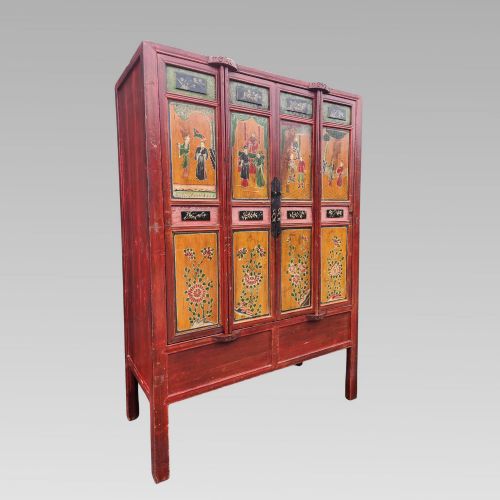


Red Lacquer Display Cabinet
A red lacquer display cabinet brings vivid colour and intricate orientalism into a room, offering both storage and a striking focal point.
Red Lacquer Display Cabinet
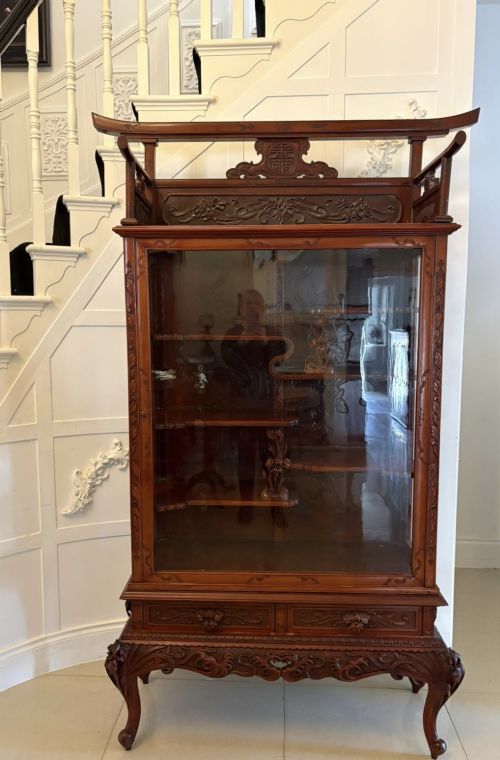
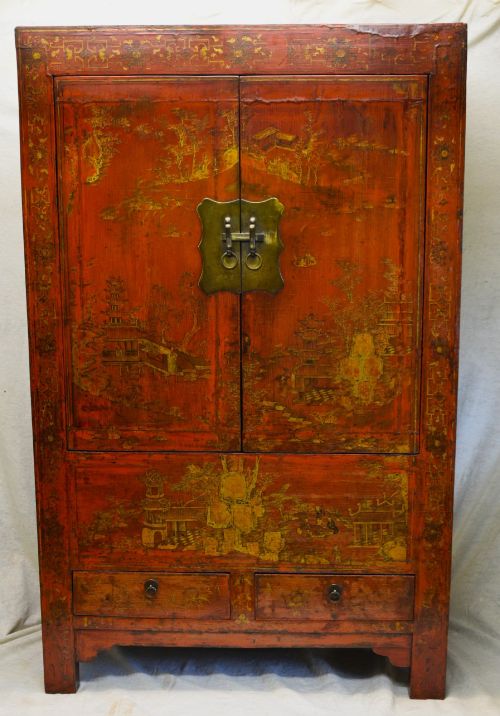
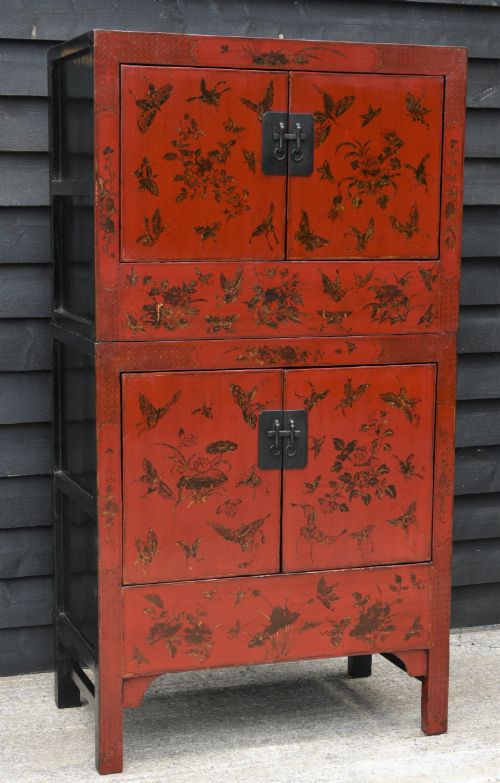
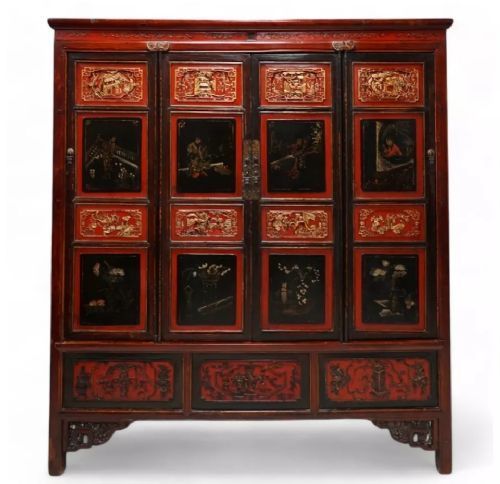
A red lacquer display cabinet is a striking storage piece defined by its vibrant scarlet finish, often taking the form of traditional wedding cabinets, marriage cabinets, or formal display units. These items draw heavily from Qing Dynasty traditions, Chinoiserie aesthetics, and Japanese revival styles, spanning the nineteenth century and the Edwardian era.
Buyers frequently encounter large wedding and storage cupboards alongside smaller glass-fronted display cabinets and corner cupboards. The forms range from monumental Chinese elm storage pieces to delicate bamboo bijouterie tables and tiered shelving units.
The aesthetic bridges traditional Eastern craftsmanship with Western decorative tastes, particularly through Edwardian and Victorian Chinoiserie adaptations. Each piece serves to showcase curiosities while functioning as a dominant visual centrepiece within a room.
Materials and construction methods
These cabinets rely on a solid wooden carcass, frequently constructed from hardwood, elm, or bamboo, which provides a sturdy foundation for the layered finish. Artisans apply multiple coats of lacquer to build up the characteristic smooth, lustrous surface.
Decoration is often enhanced through carved panels, floral motifs, and contrasting brass or iron hardware. Glass panels are integrated into the doors of specific display variants to protect and reveal the contents within.
Marriage cabinets were traditionally packed with blankets and household goods, destined to be paraded through the village during wedding ceremonies.
Assessing quality and craftsmanship
Quality rests heavily on the depth and execution of the lacquering process, where superior examples exhibit a rich, resilient finish built through careful layering. The complexity of the carved details and the integration of decorative panels further distinguish finer outputs from simpler utility pieces.
Structural integrity of the timber carcass and the original condition of brass or iron mountings dictate the durability of the cabinet. Finer specimens maintain crisp decorative motifs and stable joinery across panels and doors.
The Red Lacquer Display Cabinet Glossary
- Lacquer
- A durable resin finish applied in multiple layers to wood, creating a smooth, protective, and decorative surface. It is traditionally built up over weeks to achieve its characteristic depth.
- Chinoiserie
- The European interpretation and imitation of Chinese and East Asian artistic traditions, popular in furniture and decorative arts during the Victorian and Edwardian periods.
- Shodana
- A traditional Japanese tiered display cabinet featuring staggered shelves and compartments, designed for exhibiting small objects of art.
- Bijouterie table
- A glass-topped table or cabinet specifically designed for displaying small valuables, jewellery, and curiosities.
- Cinnabar
- A bright scarlet mineral form of mercuric sulphide, used traditionally to create deeply carved red lacquer surfaces.
Red Lacquer Display Cabinet: Frequently Asked Questions
What is a red lacquer display cabinet?
A red lacquer display cabinet is a storage or exhibition piece finished with vibrant red lacquer, spanning Chinese wedding cabinets and British Chinoiserie furniture.
These pieces combine functional storage with decorative visual impact, utilising materials like hardwood, elm, and bamboo.
How do I date a lacquered cabinet?
Dating relies on examining the construction timber, hardware style, and decorative motifs, which range from Qing Dynasty designs to Edwardian revivals.
Nineteenth-century examples often employ heavy elm or hardwood carcasses, whereas later Edwardian pieces reflect distinct Chinoiserie adaptations.
Where should I place this cabinet?
These cabinets suit living rooms, dining spaces, or hallways where their vibrant finish can act as a primary visual focal point.
Tall wedding cupboards require substantial wall space, while corner cupboards and smaller display tables fit into more compact areas.
How do I care for lacquer furniture?
Maintain lacquer surfaces by keeping them away from direct sunlight and extreme humidity fluctuations to prevent cracking or fading.
Dust gently with a soft, dry cloth and avoid harsh chemical cleaners that can damage the delicate resin finish.
What is the difference between Chinoiserie and Chinese pieces?
Chinese pieces originate from workshops within China, often following traditional forms like marriage cabinets and utilising native timbers such as elm.
Chinoiserie items are typically British or European creations from the Victorian or Edwardian eras that imitate Eastern decorative styles.