


Carved Hardwood Bookcase
A carved hardwood bookcase brings dense relief work and deep timber tones into a room, offering display space for books alongside curiosities.
Carved Hardwood Bookcase
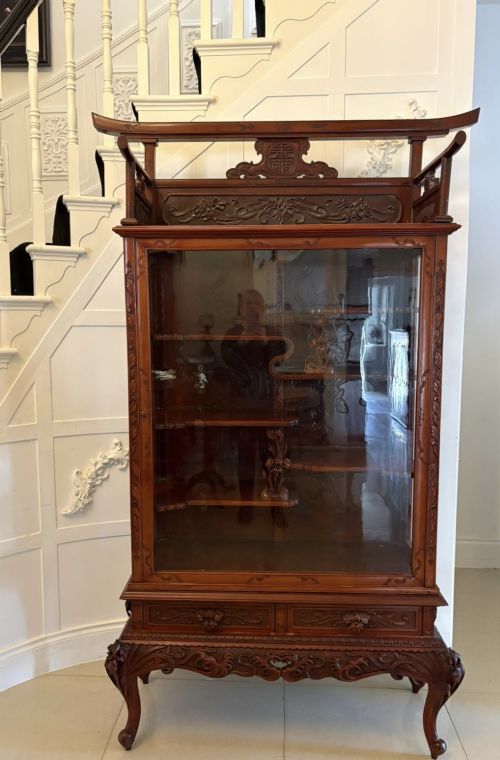
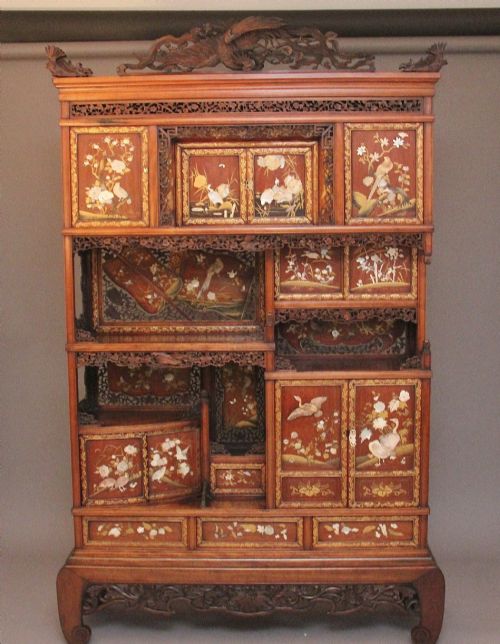
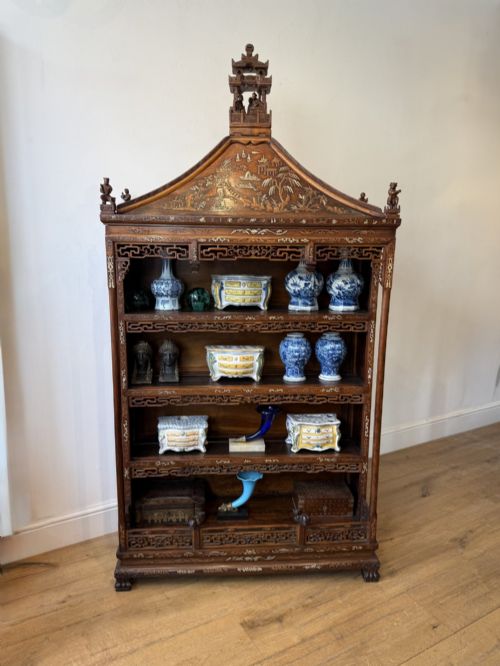
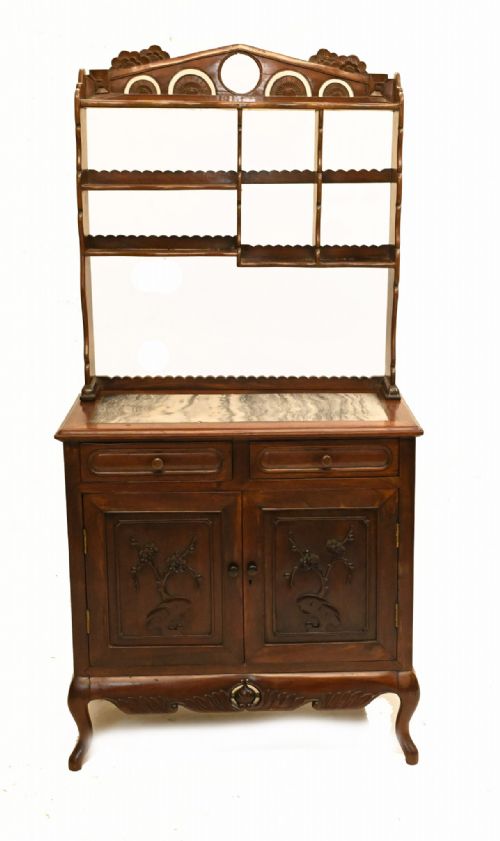
A carved hardwood bookcase takes several forms across this selection, appearing as display cabinets, dressers, display shelves, and shodana units. These pieces emerge primarily from nineteenth-century workshops in China and Japan, alongside Anglo-Indian interpretations.
Buyers will most frequently meet nineteenth-century Chinese creations, often featuring glazed doors, open shelving, and lower cupboards. The construction accommodates both book storage and the display of decorative objects.
Regional variations span from Qing Dynasty export pieces to Japanese Meiji period examples and Anglo-Indian designs. Each origin brings distinct carving motifs and structural proportions to the category.
How they were made
The construction relies heavily on dense timbers such as rosewood, cherrywood, and general hardwood, chosen for their weight and stability. Artisans utilised traditional joinery alongside intricate hand-carving to build these substantial cabinets.
Surface decoration frequently incorporates bone, bone inlay, and mother-of-pearl details set flush into the timber panels. Glazing is integrated into doors to protect the contents while maintaining visibility across the shelves.
Listings in this category span the nineteenth century up to the early twentieth century, featuring rosewood, cherrywood, and bone inlay.
What varies in quality
The depth and crispness of the carving separate standard examples from finer works, particularly where relief scenes and foliage are rendered with high definition. Profuse carving executed with precision marks the upper tier of production.
The integration of decorative inlays such as mother-of-pearl and bone influences the overall refinement of a piece. Clean execution around these contrasting materials indicates superior workshop standards.
The Carved Hardwood Bookcase Glossary
- Shodana
- A Japanese tiered display cabinet featuring staggered shelves and small cupboards. These pieces originated during the Meiji period for the display of art objects.
- Hongmu
- A category of dense, heavy Asian hardwoods translated literally as red wood. This timber provides the dark, durable structure for many nineteenth-century cabinets.
- Anglo-Indian
- A style describing furniture made in India by local craftsmen for British residents, blending traditional regional carving with Western cabinet forms. This hybrid aesthetic creates distinctive display pieces.
- Chinoiserie
- European decorative style reflecting Chinese artistic motifs. Pieces under this influence often employ intricate lacquer and carved details.
- Qing Dynasty
- The final imperial dynasty of China, spanning from the seventeenth to the early twentieth century. Furniture from this era often exhibits deep relief carving and formal symmetry.
Carved Hardwood Bookcase: Frequently Asked Questions
What is a shodana?
A shodana is a Japanese cabinet with staggered shelves and small compartments, designed for exhibiting small ornaments.
These pieces arrived in Western homes during the late nineteenth century alongside other Asian export furniture.
Are these cabinets suitable for modern books?
Many of these pieces feature adjustable or varied shelf heights that accommodate standard book sizes.
Care should be taken with heavy volumes to ensure shelf depths and timber supports remain appropriate.
How do I identify Chinese export furniture?
Chinese export furniture typically combines traditional domestic forms with motifs intended for Western markets.
Materials such as rosewood and dense hardwoods appear alongside characteristic carving styles like those seen in Qing Dynasty pieces.
What maintenance does hardwood require?
Regular dusting with a dry cloth keeps the dense surfaces clean without stripping the natural finish.
Maintaining stable room humidity prevents the hardwood and any delicate bone inlays from shifting.