



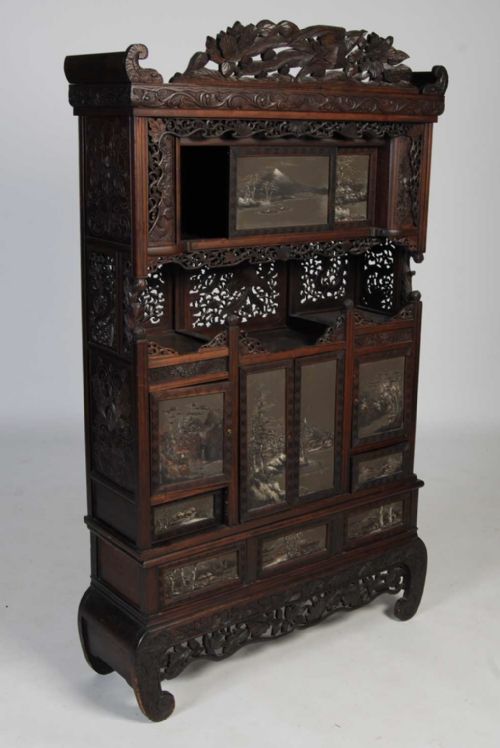

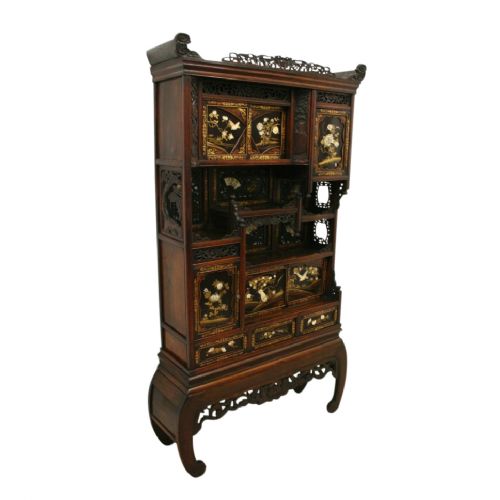

Lacquered Japanese Display Cabinet
Lacquered japanese display cabinet pieces combine intricate surface work with structured storage, offering both decorative presence and practical display space for small treasures.

Lacquered Japanese Display Cabinet
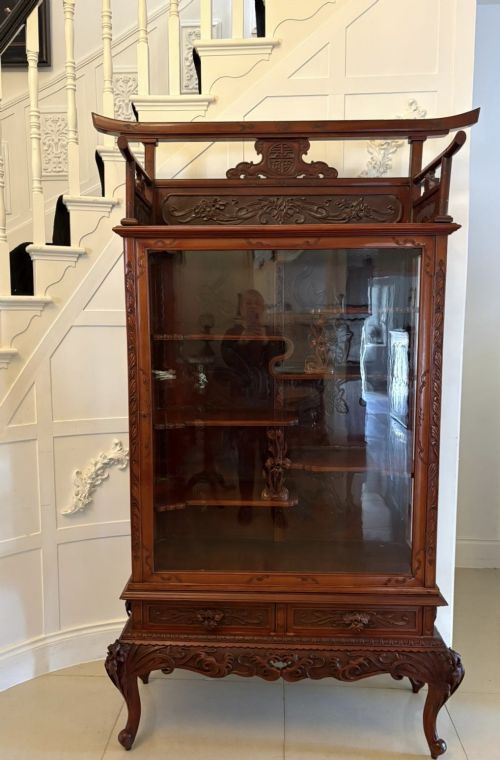
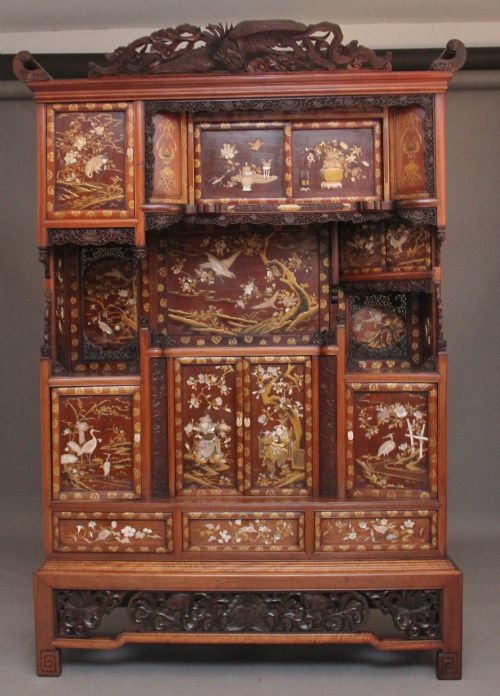
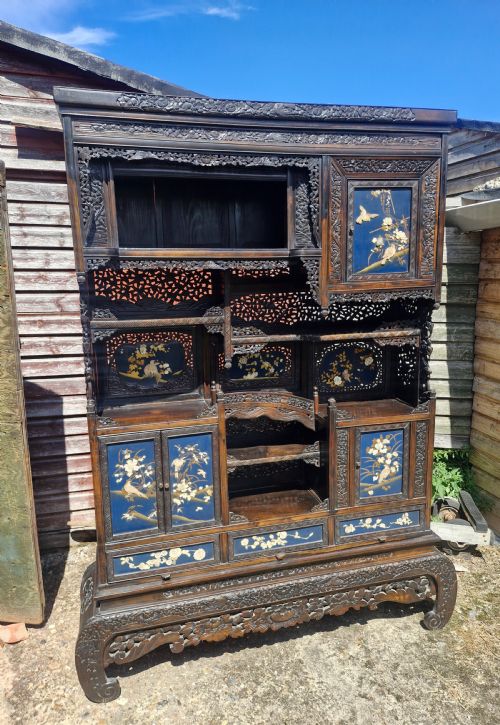
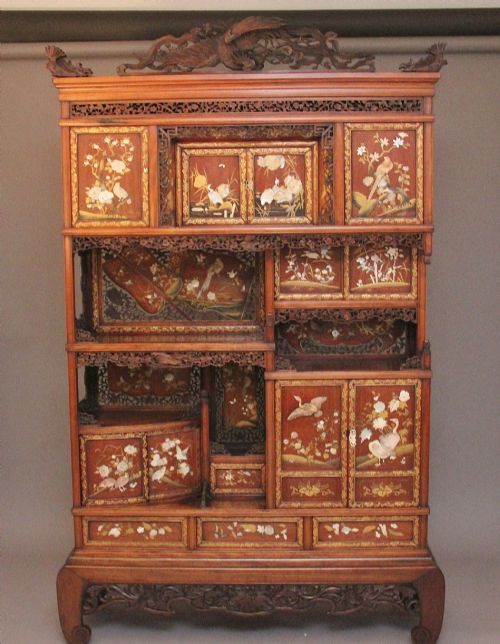
A lacquered japanese display cabinet encompasses complex forms such as the traditional shodana and cabinets on stands. These pieces predominantly date from the 19th century and the Meiji period, reflecting distinct Asian aesthetic movements.
Buyers frequently encounter intricate red lacquer, black lacquer, and cinnabar lacquer constructions alongside Chinoiserie and Japanese Revival interpretations. The structural formats vary from large standing cabinets to smaller side cabinets designed for domestic display.
Materials and construction methods
The construction relies heavily on hardwood frames coated in layers of lacquer, sometimes enhanced with gold leaf details. Artisans incorporated organic materials such as bone and mother-of-pearl to create pictorial panels and decorative inlay work.
Many examples feature carved elements and specialised lacquer techniques applied to wood substrates. Brass fittings and stands provide structural support and functional closure mechanisms for the storage compartments.
Lacquered Japanese Display Cabinet Retail Price Guide 2026
Typical asking prices for lacquered japanese display cabinet among the pieces listed under this phrase on Sellingantiques today, from the lower quarter to the upper quarter. They describe what is for sale here now, not the wider market.
The listings show pieces spanning from the 18th century through the Edwardian era, predominantly featuring hardwood, lacquer, bone, and mother-of-pearl.
Judging quality and craftsmanship
Quality manifests in the depth and precision of the lacquer surface, alongside the refinement of inlaid bone and mother-of-pearl motifs. Superior examples display crisp carving and tight joinery within the complex shelving arrangements of a shodana.
The integration of decorative panels into the hardwood structure indicates the hand of a skilled maker. Finer pieces maintain stable lacquer surfaces without extensive flaking, preserving the clarity of the original gold leaf and carved details.
The Lacquered Japanese Display Cabinet Glossary
- Shodona
- A traditional Japanese tabletop or floor cabinet featuring asymmetric shelving and cupboards. These multi-tiered storage pieces were designed for displaying small artistic objects.
- Cinnabar
- A carved lacquer technique utilising layers of red mercuric sulphide pigment. Artisans carved deep relief designs directly into the hardened lacquer buildup.
- Shibayama
- A decorative style involving delicate inlays of shell, ivory, bone, and metal. These materials are set into a lacquer or wood ground to form pictorial scenes.
- Chinoiserie
- A European artistic style reflecting Chinese and Japanese aesthetic influences. It appeared in British furniture production through lacquer cabinets and stands.
- Meiji Period
- The era in Japanese history spanning from 1868 to 1912. Pieces from this time demonstrate highly detailed craftsmanship aimed at both domestic and international markets.
Lacquered Japanese Display Cabinet: Frequently Asked Questions
What is a shodana?
A shodana is a traditional Japanese display cabinet characterised by its stepped, asymmetric shelving and enclosed compartments. These units served as functional furniture for exhibiting precious objects.
The form prioritises varied sightlines and diverse storage spaces, distinguishing it from symmetrical European cabinetry of the same period.
How do I care for lacquer furniture?
Lacquered surfaces require stable environmental conditions away from direct sunlight and excessive humidity. Regular dusting with a soft, dry cloth preserves the finish without abrasive cleansers.
Avoid placing damp items directly onto the wood or lacquer to prevent surface clouding and staining over time.
What distinguishes Meiji period pieces?
Meiji period items exhibit exceptional technical precision in surface decoration, often combining carved lacquer with mother-of-pearl and bone inlay. The period marked an opening of trade that influenced decorative arts.
Makers during this era produced elaborate display cabinets tailored to showcase traditional Japanese motifs for discerning collectors.
Where were these cabinets placed?
These cabinets functioned primarily in reception rooms and drawing rooms to display small porcelain, ivories, and curiosities. Their decorative panels and compact sizes suited varied interior settings.
They provided both secure storage behind small doors and open platforms for visual arrangement.