



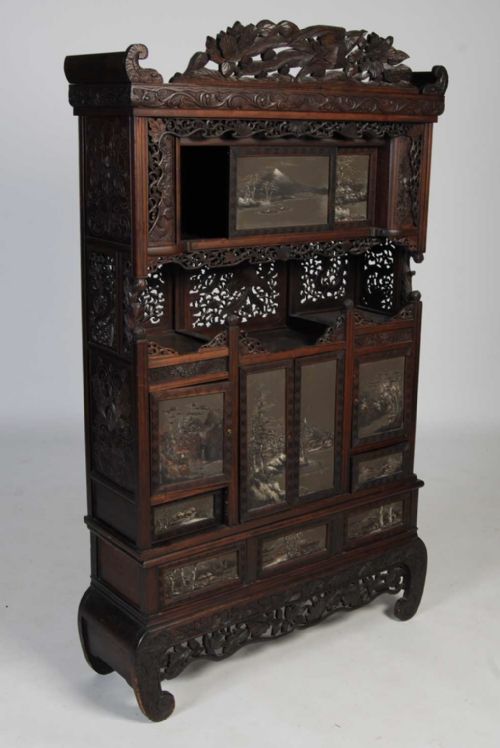


Oriental Curio Display Cabinet
An oriental curio display cabinet brings together intricate joinery and prized possessions, offering a dedicated stage for small treasures.

Oriental Curio Display Cabinet
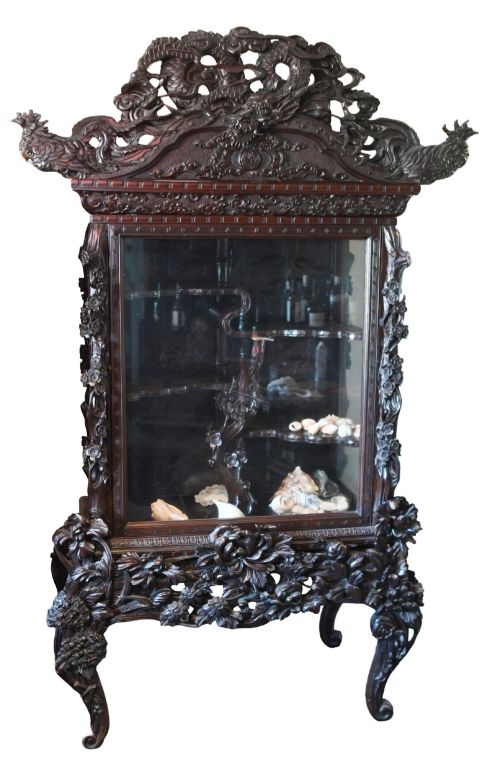
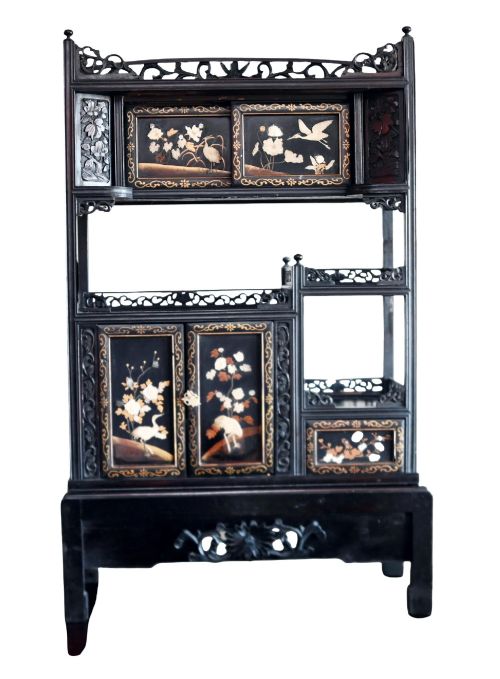
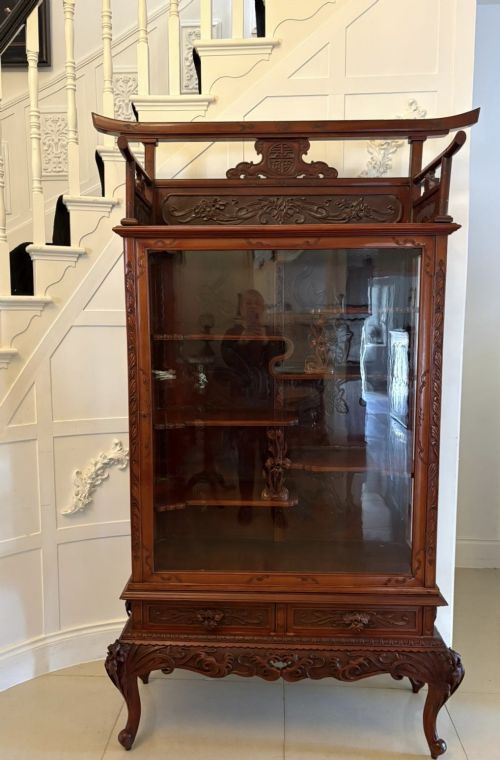
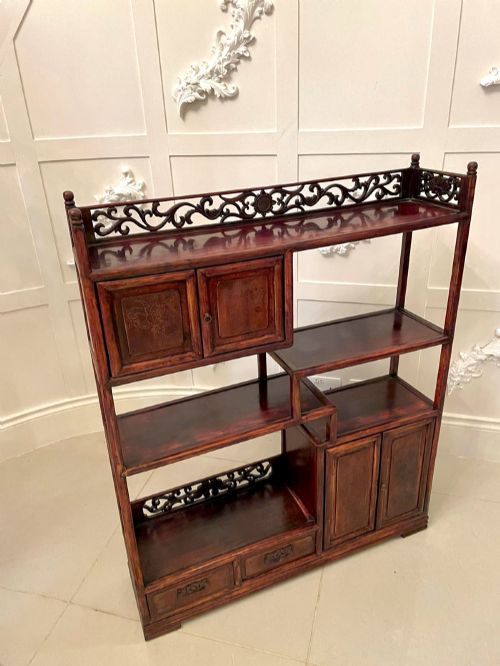
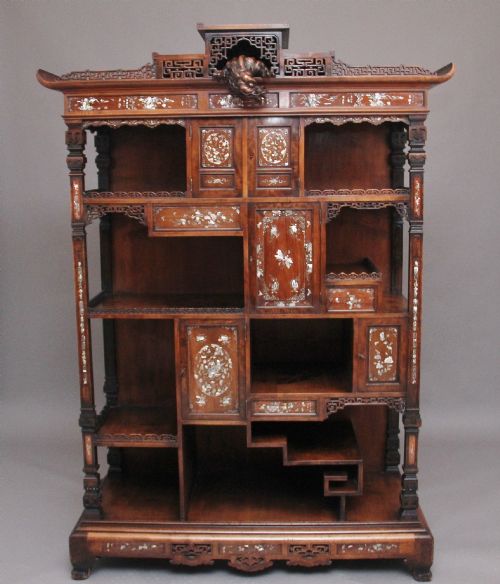
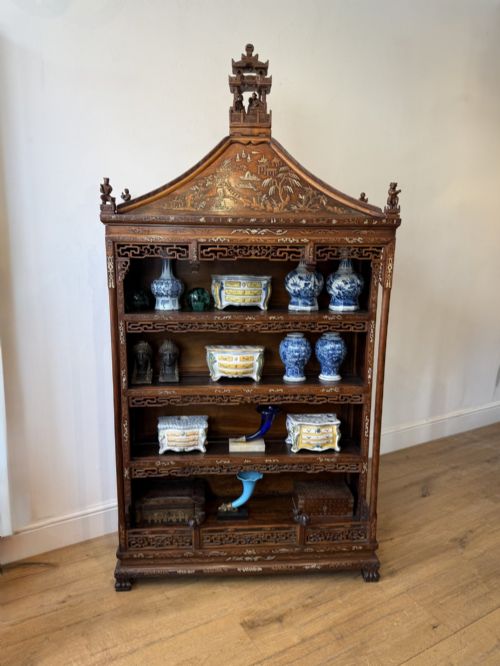
An oriental curio display cabinet provides stepped shelves and enclosed sections designed specifically to hold small ornaments, vases, and scholar's objects. These pieces range from open frameworks to glazed cabinets, each offering a distinct way to arrange a collection.
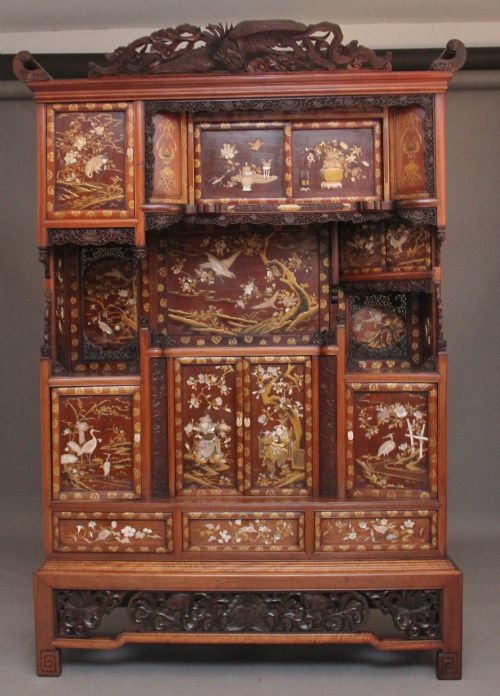
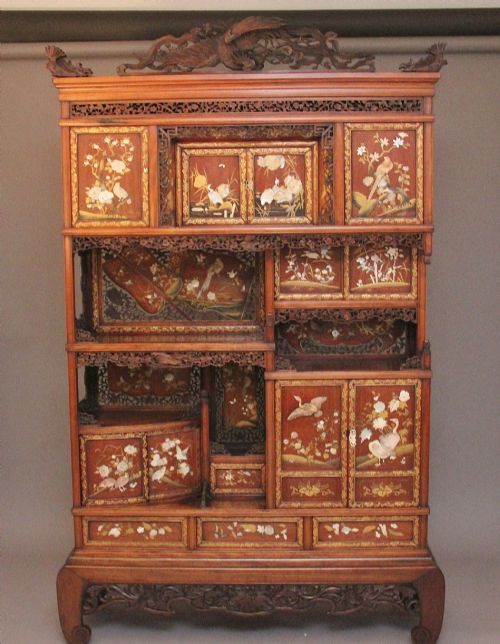
Most examples found here date from the nineteenth and early twentieth centuries, encompassing Japanese Meiji period shodona pieces alongside Chinese hardwood and lacquered cabinets. Buyers encounter both compact display stands and larger cabinetry featuring asymmetric shelving.
The regional styles visible on this page reflect both Chinese export workshops and Japanese traditional woodworking traditions. Every variant uses specialised spatial arrangements to show off porcelain, metalwork, and carved trinkets to maximum effect.
Materials and construction methods
Makers utilised dense timbers such as hongmu and general hardwood to build these structures, relying on precise joinery that held heavy loads without metal fasteners. These dark woods provided a stable foundation for intricate carving and inlay work.
Surface decoration frequently involved red lacquer, mother-of-pearl inlay, and bone elements applied directly to the wooden frame. Glass panes appear on glazed doors, protecting delicate contents while maintaining visibility from multiple angles.
Oriental Curio Display Cabinet Retail Price Guide 2026
Typical asking prices for oriental curio display cabinet among the pieces listed under this phrase on Sellingantiques today, from the lower quarter to the upper quarter. They describe what is for sale here now, not the wider market.
Listings feature pieces spanning the nineteenth century through the nineteen-twenties, incorporating both Japanese Meiji works and Chinese export furniture.
Distinctions in craftsmanship
Quality rests in the precision of the joinery and the depth of the carving across the structural members. Finer examples display meticulous attention to detail in every recessed shelf and pierced panel, whereas simpler pieces rely on basic assembly.
The integration of decorative elements like mother-of-pearl inlay distinguishes exceptional cabinets from standard production. Smooth operation of doors and drawers, combined with the balanced weight of the timber, marks the upper tier of these works.
The Oriental Curio Display Cabinet Glossary
- Shodona
- A traditional Japanese multi-shelved cabinet designed for displaying small decorative objects. These pieces feature asymmetrical compartments and sliding doors.
- Hongmu
- A dense, dark Chinese hardwood prized for its stability and rich natural grain. It frequently forms the primary structure of export cabinetry.
- Chinoiserie
- Western interpretation and imitation of Chinese artistic traditions and motifs. This style appears on European-made pieces adopting oriental forms.
- Mother-of-Pearl
- The iridescent inner layer of mollusc shells used for inlay work. Craftsmen cut this material into delicate shapes to ornament cabinet doors and panels.
Oriental Curio Display Cabinet: Frequently Asked Questions
What went inside an oriental curio display cabinet?
These cabinets held scholar's objects, small ceramics, carved jade, and metalwork collected by households. The varied shelf heights accommodated diverse items without clutter.
Owners curated these displays to showcase personal taste and cultural pursuits to visiting guests.
How do I tell Chinese and Japanese cabinets apart?
Japanese shodona pieces often feature distinctly asymmetrical shelving arrangements and sliding doors. Chinese cabinets lean toward formal symmetry, carved panels, and inset mother-of-pearl decoration.
Examining the wood species and carving style quickly reveals the workshop origin.
Are these cabinets suitable for modern homes?
Their compact footprints make them ideal for placing against living room or study walls. They offer functional storage for collections while adding rich texture to a room.
Proper lighting nearby helps highlight the intricate woodwork and displayed items.
How should I clean the wood and lacquer?
Dusting with a dry, soft cloth prevents particulate buildup on carved surfaces and lacquer. Avoid chemical polishes that can damage traditional finishes.
Keeping the cabinet away from direct sunlight preserves the deep tone of the hardwood.